I recently had the pleasure of visiting the St. Michael and St. Gudula Cathedral in Brussels, and it was nothing short of breathtaking. This majestic cathedral is not only a spiritual haven but also a towering symbol of Belgium’s rich religious, cultural, and architectural heritage.
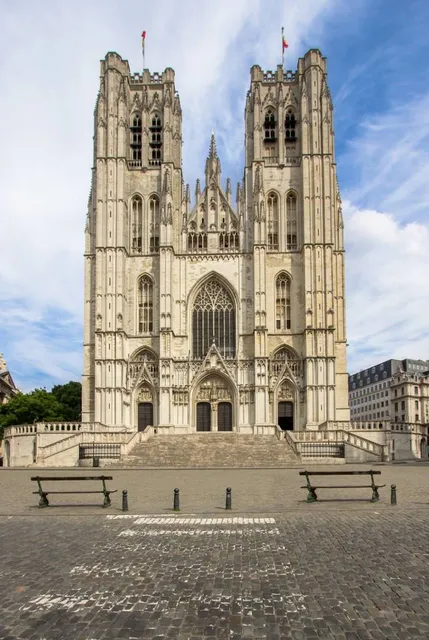
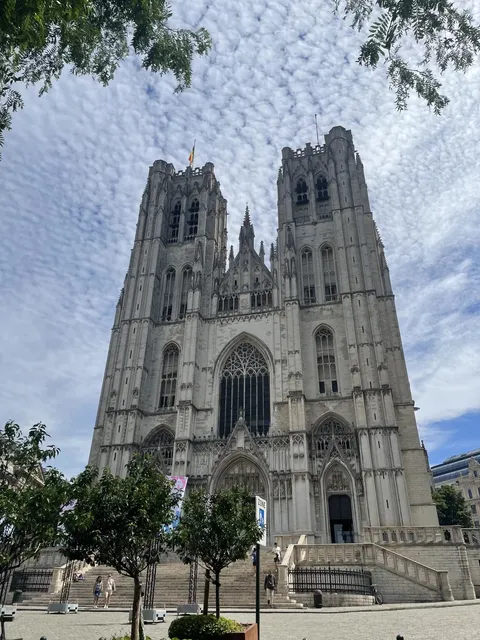
As you approach the cathedral, it rises like a solemn sentinel above the city. The twin towers, each soaring 64 meters high, immediately evoke a sense of reverence and grandeur. The Gothic façade, with its pointed arches, ribbed vaults, and flying buttresses, commands attention and admiration. Despite its magnificence, the space also exudes tranquility—an oasis of solemnity in the bustle of Brussels.
The site has been a place of worship for centuries. Originally a 9th-century chapel dedicated to St. Michael, it was rebuilt in 1047 to house the relics of St. Gudula, a local saint venerated by the people of Brabant. This merger of patrons gave the cathedral its double name. Construction of the current Gothic structure began around 1226 and continued for nearly 300 years, with its final stages completed in the 15th century. It was designated as a cathedral in 1962, becoming the official co-cathedral of the Archdiocese of Mechelen-Brussels. Over time, it has served as the venue for royal weddings, state funerals, and national religious ceremonies, anchoring its role in both Belgium's spiritual life and national identity.
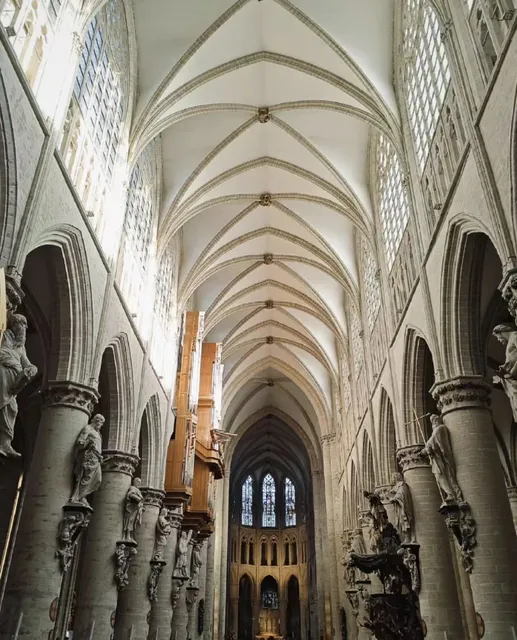
The architectural detail is stunning. The twin towers are symmetrical and crowned with openwork spires, while the central portal is adorned with statues of apostles and saints, delicate tracery, and intricate stone carvings. Inside, the high vaulted ceilings and slender columns draw the eye heavenward. The Baroque pulpit, carved by Henri-François Verbruggen in the late 1600s, is a masterpiece of dramatic storytelling, featuring scenes from Genesis and figures of angels in exquisite detail.
The stained glass windows, dating mainly from the 16th century, are vibrant and richly symbolic, many donated by the Habsburgs and depicting royal patrons alongside saints and biblical scenes. Beneath the choir lies an archaeological crypt with remnants of earlier Romanesque foundations and medieval tombs. The cathedral also houses a magnificent Grenzing organ with more than 4,000 pipes—an impressive blend of historic setting and modern craftsmanship.
Whether you're religious or not, the interior evokes a profound sense of contemplation and awe. Sunlight filters through the colored glass, casting patterns of light across the stone floors and pews. The space feels deeply sacred, a place for quiet thought and appreciation. Occasionally, the solemn silence is gently broken by the soft echo of footsteps or the ethereal tones of an organ rehearsal.
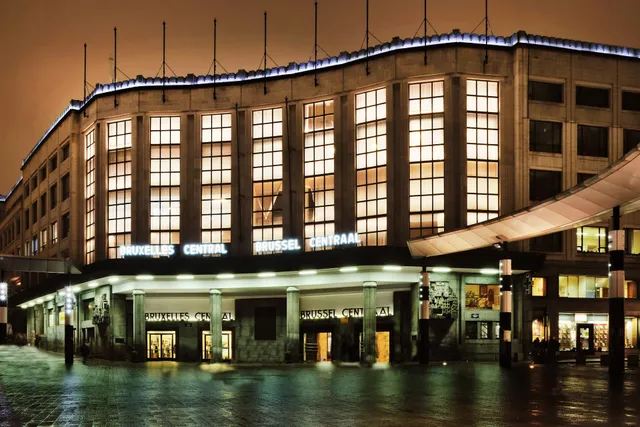
Photography is permitted (without flash), and the cathedral is easily accessible, just a short walk from Brussels Central Station. Entry is generally free, with donations encouraged.
Visiting the St. Michael and St. Gudula Cathedral was a highlight of my time in Brussels. It is more than just a monument—it is a living part of the city’s soul. With its blend of sacred history, architectural brilliance, and cultural weight, it offers a deeply enriching experience. Whether you're a history lover, architecture enthusiast, or simply a curious traveler, this cathedral is not...
Read moreThe Cathedral of St. Michael and St. Gudula in Brussels stands as a magnificent testament to centuries of history, art, and faith. Here's a review highlighting its key aspects: A Historical Tapestry: Originating as an 11th-century Romanesque church, the current Gothic structure began construction in the 13th century and wasn't completed until the 16th century. This lengthy construction period showcases the evolution of Brabantine Gothic architecture. It gained cathedral status in 1962 and serves as the co-cathedral of the Archdiocese of Mechelen-Brussels, underscoring its religious significance in Belgium. Historically significant events, including royal weddings and state funerals, have taken place within its walls, solidifying its place in the nation's history. Architectural Grandeur: A prime example of Brabantine Gothic architecture, the cathedral boasts impressive soaring twin towers reaching 64 meters. The strong vertical lines and robust buttresses of the western facade are particularly striking. Unlike French Gothic cathedrals with their characteristic rose windows, St. Michael and St. Gudula features large, pointed arch windows, typical of the Brabantine style. The exterior is constructed from stone sourced from the Gobertange quarry, giving it a distinctive hue and texture. Interior Treasures: While the interior is noted for its relative sparseness compared to some Gothic churches, this draws attention to the elaborate ceiling arches. A highlight is the magnificent Baroque pulpit carved from wood in 1699, considered one of the most spectacular in the country. The cathedral houses a significant Grenzing organ with over 4,000 pipes and four keyboards, contributing to its rich musical heritage. Regular concerts showcase its impressive sound. Stunning stained glass windows, some dating back to the 16th century, depict biblical scenes and the lives of saints, filling the interior with vibrant colors when sunlight streams through. Points of Interest: Beneath the cathedral lies the preserved remains of the 11th-century Romanesque church and crypt, offering a glimpse into the site's earlier history (accessible for a small fee). The Treasury houses a collection of religious artifacts, liturgical objects, and historical documents, including intricate gold and silver pieces. The tranquil cloister, located behind the cathedral, provides a peaceful retreat with a beautiful garden, stone arcades, and fountains. Overall Experience: Visiting the Cathedral of St. Michael and St. Gudula is a must for anyone exploring Brussels. Its impressive Gothic architecture, rich history, and notable artistic and religious features offer a profound and enriching experience. Whether admiring the intricate facade, exploring the serene interior, or delving into the underground Romanesque remains, the cathedral provides a powerful connection to Brussels' past and present. Consider attending a Sunday service to hear the 49 bells chime or checking the schedule for concerts to fully appreciate the cathedral's cultural...
Read moreVisiting St. Michael and St. Gudula Cathedral in Brussels is a profoundly enriching experience, blending historical grandeur with spiritual serenity. As one of Belgium's most significant Gothic structures, the cathedral stands as a testament to the city's architectural and cultural heritage.
Upon approaching the cathedral, you are immediately struck by its imposing twin towers, which dominate the skyline and invite you to explore its intricate façade. The detailed stone carvings and towering spires are quintessential examples of Gothic architecture, reflecting both the artistry and religious devotion of the era.
Inside, the vast nave and towering columns create a sense of awe and reverence. The light filtering through the stunning stained glass windows bathes the interior in a kaleidoscope of colors, adding to the spiritual ambiance. These windows, some of which date back to the 16th century, depict biblical scenes and historical events, offering a visual narrative that complements the cathedral's rich history.
One of the highlights of the visit is the magnificent Baroque pulpit, crafted by the renowned sculptor Hendrik Frans Verbruggen. This intricately carved wooden masterpiece depicts the expulsion of Adam and Eve from the Garden of Eden, serving as both a work of art and a poignant reminder of biblical teachings.
The cathedral also houses an impressive organ, renowned for its sound quality and craftsmanship. Attending a concert or a service where the organ is played enhances the experience, filling the vast space with resonant, uplifting music.
Exploring the crypt reveals layers of history, including remnants of earlier churches that stood on the site, offering a fascinating glimpse into the cathedral's evolution over the centuries.
St. Michael and St. Gudula Cathedral is not just a place of worship but a living museum of Brussels' religious and architectural heritage. Whether you are a history buff, an architecture enthusiast, or simply seeking a moment of reflection, this cathedral offers a profound and memorable experience. The serene atmosphere, combined with the breathtaking art and architecture, makes it a must-visit destination...
Read more