At Toronto Pearson International Airport, two radically different design philosophies collide across a sprawling 4,600-acre site northwest of downtown. The result is a fascinating case study in how airports reflect—and shape—our relationship with flight itself.
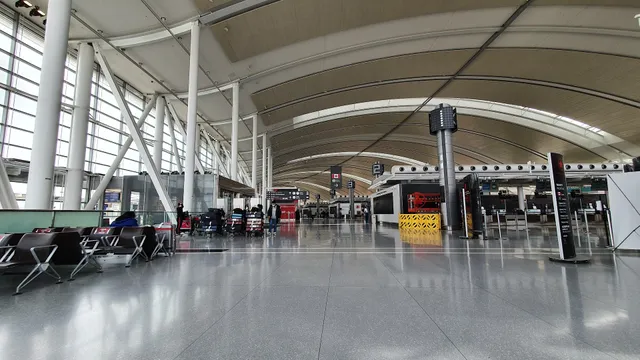
Terminal 1, which opened in 2004, emerged from one of architecture's most unusual collaborations: a three-way marriage between Skidmore, Owings & Merrill's corporate modernism, Moshe Safdie's humanistic brutalism, and Toronto's Adamson Associates. The $1.8 billion project created what Safdie calls a "light-following" experience—passengers literally navigate by pursuing daylight through the terminal's crystalline geometry.
The design's most striking feature is its inverted logic: arriving passengers ascend to a mezzanine overlooking baggage carousels below, sharing visual space with departing travelers. South-facing skylights puncture the roof like celestial windows, flooding even the basement baggage level with natural light. Steel ribs stretch across 4.2 million square feet in swooping arcs that recall both aircraft wings and Gothic vaulting.
By contrast, Terminal 3 (1991) by B+H Architects channels the romance of rail travel's golden age. Its soaring "Grand Hall" evokes Pennsylvania Station's lost grandeur, with a curved glass vault that transforms the mundane act of check-in into theater. The terminal's dual piers radiate from this central space like arms embracing the sky.
Yet for all their architectural ambition, both terminals struggle with a peculiarly Canadian problem: the absence of exit controls means passengers cannot easily transfer between international and domestic flights. This bureaucratic quirk forces the kind of labyrinthine circulation that drove one traveler to clock 1.5 miles between gates.
The airport's current $3 billion LIFT renovation, beginning construction in 2025, promises to address these circulation nightmares while preparing for 65 million annual passengers by 2030. The project represents a fascinating experiment in retrofitting existing architecture for an uncertain future of air travel.
Pearson has collected impressive hardware: seven consecutive "Best Large Airport" awards from the Airports Council International, plus recognition from the American Institute of Steel Construction for Terminal 1's innovative structural engineering. Pentagram's wayfinding system, with its sculptural overhead signs echoing the terminal's curved rooflines, earned design awards despite passenger complaints about confusing navigation.
Perhaps most tellingly, the airport commissioned Richard Serra installations specifically for Terminal 1—monumental steel sculptures that communicate "the essence of flight." It's a bold gesture that elevates functional space into art, even as travelers below struggle with more prosaic concerns like finding their gates.
The airport's design legacy reflects broader tensions in contemporary architecture: between spectacular form and everyday function, between global ambition and local navigation, between the poetry of flight and the prose of processing 47 million annual passengers. As Pearson embarks on its next transformation, it offers a compelling reminder that airports are among our most complex architectural challenges—and our most public stages for architectural...
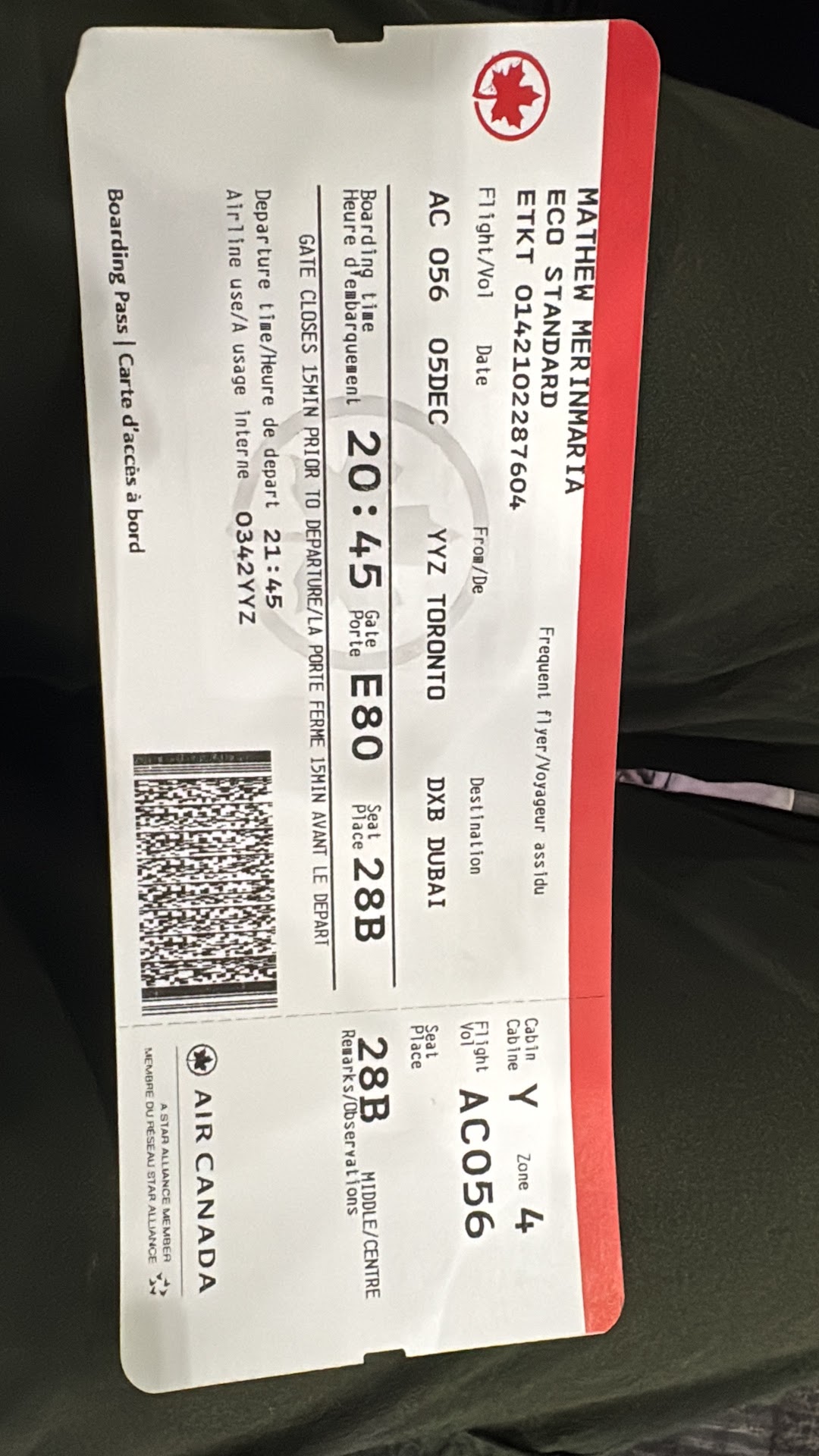
Read moreReview of Air Canada Flight AC056 (Toronto to Dubai, December 5, 2024)
My husband and I had an extremely distressing experience with Air Canada on flight AC056 from Toronto to Dubai (Gate E80, seats 27B and 28B). We had booked separate flights—Toronto to Dubai with Air Canada and Dubai to India with Emirates—allowing a 7-hour layover in Dubai. Before traveling, we confirmed with both airlines that no transit or visit visa was required since our landing and departure in Dubai were within Terminal 3 and the layover was less than 24 hours.
However, when we arrived at Toronto Pearson Airport at 5:45 PM for our 9:50 PM flight, the check-in process turned into a nightmare. The staff at the desk, particularly one lady (of North Indian origin, speaking Hindi to another customer), was unreasonably rude and dismissive. She told us outright that we could not travel without a transit visa, ignoring our prior confirmation with both airlines. She refused to listen to us, demanded that we cancel our tickets and rebook with Air Canada for the entire journey, and even shouted at us when we tried to explain our situation. To make matters worse, this lady did not have a name card on her vest, making it impossible to identify her properly.
We reached out to Emirates customer service, and they reassured us that we did not need a visa under UAE immigration rules. The Emirates representative was even willing to explain this directly to the Air Canada staff. Unfortunately, the lady at the desk and her manager, Mr. Jose, both refused to engage with anyone from Emirates or even the Air Canada customer service team, who also confirmed over the phone that we were eligible to travel without a visa.
The situation only improved when Mr. Johnson, a higher-ranking manager, intervened after seeing me in tears. He directed us to two other staff members for assistance. Despite the first lady’s efforts to interfere and discourage them, one of the staff members finally helped us. She informed us that we needed to make a payment to an agency in Dubai, Marhaba, to transfer our luggage from Air Canada to Emirates. After enduring nearly three hours of mental and emotional stress, we were finally allowed to board.
Upon arriving in Dubai, the Emirates office staff went above and beyond to resolve the issue. They transferred our luggage to the Emirates flight without charging any fees, showing professionalism and care that was sorely lacking in Air Canada’s service.
Final Thoughts While the flight itself was fine, the experience at the check-in desk was one of the worst I have ever encountered. The unprofessionalism, lack of empathy, and outright rudeness of the ground staff in Toronto left a lasting negative impression. The fact that the rude staff member was not wearing a name card adds to the accountability issues. Air Canada must train its staff to handle such situations with more knowledge and sensitivity. A simple willingness to communicate or listen could have saved us hours of unnecessary stress. Emirates’ outstanding service in Dubai was the only silver lining in an otherwise...
Read moreGeneral Overview
Toronto Pearson serves as a major hub for both domestic and international flights. It connects Canada to over 180 destinations worldwide. As a primary hub for Air Canada, the airport sees significant passenger traffic, and while its size and facilities are impressive, its scale can sometimes overwhelm travelers.
Pros
Facilities and Amenities
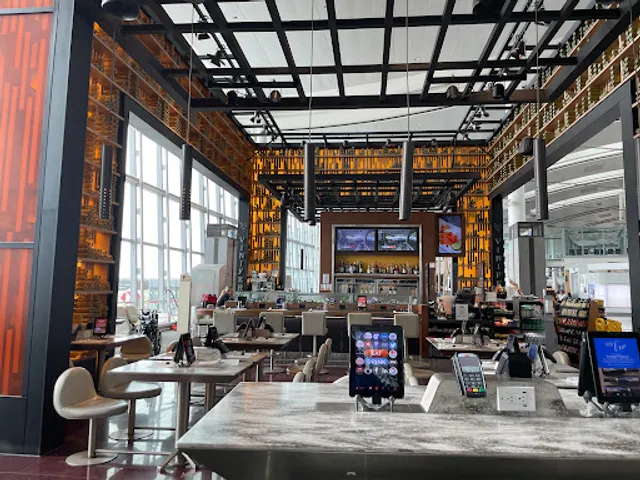
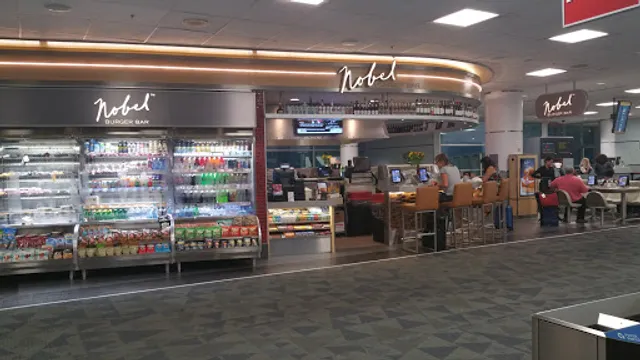
The airport offers a wide range of dining options, from quick bites (like Tim Hortons and Starbucks) to sit-down restaurants with international cuisine.
Shopping options are solid, with duty-free stores, boutiques, and Canadian-themed souvenirs.
Free Wi-Fi is widely available and generally reliable.
Plenty of charging stations for electronic devices.
Connectivity
Well-connected to downtown Toronto via the UP Express train, which gets you to Union Station in about 25 minutes.
Multiple bus and shuttle services link the airport to nearby cities and areas.
Modern Terminals
Terminals 1 and 3 are modern, clean, and spacious with lots of natural light.
Automated kiosks for check-in and customs clearance speed up the process for travelers.
Customer Service
Staff members are generally friendly and professional, even during busy periods.
Efficiency
Security and customs have made strides in speeding up passenger processing. Programs like NEXUS and eGates for international travelers improve efficiency.
Cons
Crowding and Long Lines
As Canada’s busiest airport, Toronto Pearson frequently faces heavy passenger traffic, especially during holidays and summer. This can lead to long lines at check-in, security, and customs.
Delays
The airport has a reputation for flight delays and cancellations, often due to weather conditions or its sheer traffic volume.
Navigation
While signage is adequate, the airport is massive, and navigating between gates or terminals can be time-consuming. Passengers with tight connections might struggle.
Parking and Traffic
Parking can be expensive, and traffic around the airport, particularly on highways like the 401, can cause delays.
Shuttle services to/from parking areas sometimes take longer than expected.
Cleanliness in Peak Hours
Though generally clean, washrooms and seating areas can get messy during high-traffic times.
Notable Features
Art Installations: The airport features Canadian art and sculptures that enhance the ambiance.
Wellness Spaces: There are nursing pods, quiet zones, and even a few spas for passenger comfort.
Family-Friendly Options: Designated play areas for kids in both terminals.
Verdict
Toronto Pearson International Airport stands out as a modern and well-equipped airport that connects Canada to the world. While it excels in amenities, connectivity, and facilities, its size and high passenger traffic can cause delays and crowding. It’s best to arrive early, especially during peak seasons, and plan ahead for navigation and...
Read more