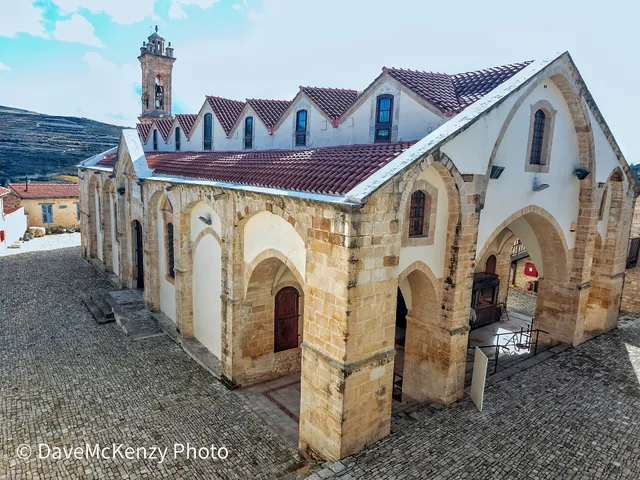
Timios Stavros Monastery (Monastery of the Holy Cross) in Odomos is one of the oldest of Cyprus’ monasteries and is thought to have been founded by Saint Helen. The monastery’s main relics: part of the Life-giving Cross, a fragment of the Holy Rope, the remains of St. Nicholas the Wonderworker and John the Baptist, the skull of the Apostle Phillip, the incorruptible remains of the Apostle Barnabas — the founder of the Church of Cyprus, the saints Hilarion, Pantaleon, Procopius, Tryphon, and the martyrs Mary, Anastacia, and Photina. Legend has it that before St. Helen’s arrival in Cyprus, local residents of the village of Kupetra (the former name of the village of Omodos), discovered a cross that worked wonders in one of the nearby caves. A small church was built over the small cave chapel where the miraculous Cross had been discovered, which later went on to become the monastery’s cloister. When the Empress Helen was making her return from a pilgrimage to the Holy Land, she sheltered from a storm off the coast of Cyprus and stayed the night at the monastery in the village of Omodos. A miracle occured — the Cross she had brought with her from Jerusalem disappeared and soared over Mount Stavrovouni. Saint Helen decided to establish a number of churches and monasteries in Cyprus and gave a piece of the Life-giving Cross to the monastery that had taken her in that night. A cross with a fragment of the Life-giving Cross can still be seen in the monastery’s main church. Helen also gave the monastery a piece of the Holy Rope that had been used to tie Christ to the cross, which still had traces of the Saviour’s blood. This is confirmed in the writings of the chronicler Neophytes Rodinos and the Russian pilgrim Vasily Grigorovich-Barsky. The monastery is no longer open but its main church works as the parish church. The monastery complex took on its modern-day appearance in the early 19th century when the ancient Byzantine church was expanded. It is now a three-nave basilica with large windows and a tall bell tower. The church stands in the center of the courtyard and is surrounded by buildings framed by arched galleries. Its stained glass windows bear images of the Holy Cross. Inside the church, you’ll find a lot of frescoes with scenes depicting Christ being removed from the Cross and the Myrrhbearers at the empty tomb. There is a carved three-tiered gilded iconostasis with coloured inserts, which is the main focus of the church’s altar. There is a cross in a silver frame that contains a piece of the Holy Rope in the iconostasis of the central nave next to the image of the Saviour. To the right of the iconostasis, the southern part of the church is home to a large silver cross with a fragment of the True Cross. The western part of the monastery houses the museum of Byzantine art. This is where you can see ancient icons and holy vessels. You can also visit the rooms of the Synod, where you’ll find the National...
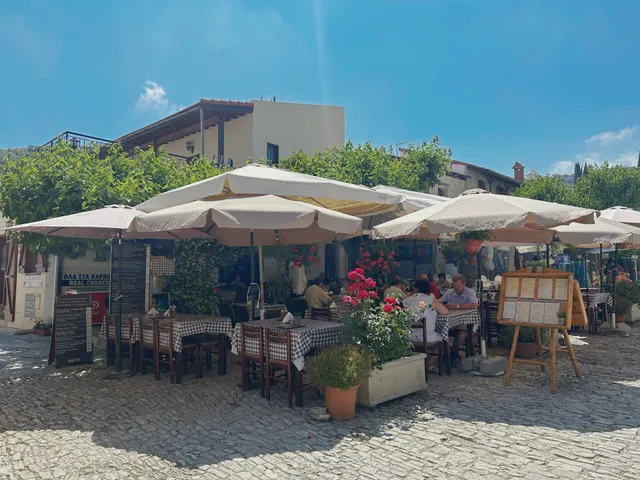
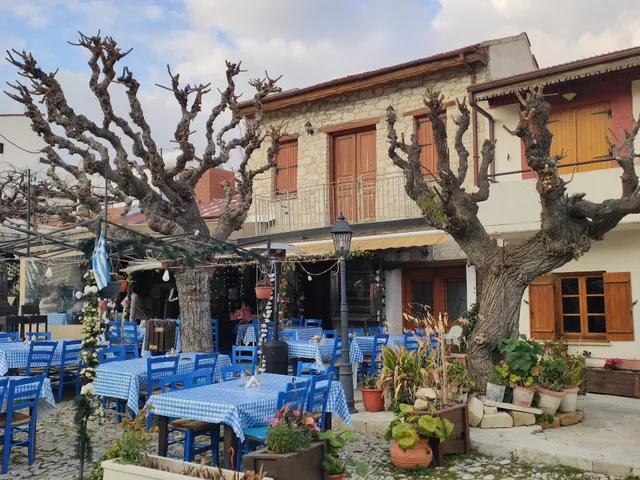
Read moreThe atmosphere in the village was incredibly calming; a genuine sense of peace settled over me as I walked its narrow, stone-paved streets. The shops were a fascinating mix, each one showcasing the local craftsmanship with an array of unique items. I spent time browsing the handmade pottery, the intricately woven textiles, and the locally produced olive oils. The restaurants had a lively, yet relaxed feel, with the sounds of conversation and the clinking of cutlery adding to the ambiance. A short, but impactful visit to the old Monastery offered a glimpse into the region's history, the weathered stone walls and the quiet courtyard creating a sense of timelessness. Leaving the Monastery, I continued my exploration, drawn by the sounds and sights of the village. I sampled some of the local liquors, each with a distinct flavor that spoke of the area's traditions. The glass blowing workshops were a highlight; watching the artisans manipulate the molten glass was mesmerizing, their skill and precision evident in every movement. The air was filled with the gentle hum of activity, the conversations of locals and visitors mingling together. The sounds of traditional music drifted from a nearby taverna, adding another layer to the village’s character. I observed the details: the aged facades of the buildings, the way the sunlight caught the stone, the patterns of the cobblestones underfoot. The pace of life here was slower, more deliberate, allowing for a deeper appreciation of the surroundings and the culture. It was a place where you could easily lose track of time, absorbed in the simple pleasures of observation and quiet enjoyment. The variety of goods, the authentic atmosphere, and the historical significance of the Monastery created a...
Read moreThe Monastery of the Holy Cross in Omodos is one of the oldest and most revered monasteries in Cyprus, located in the heart of the charming wine village of Omodos. Its origins date back to the early Byzantine period, and tradition holds that the monastery was founded on the spot where a fragment of the True Cross — the cross upon which Jesus was crucified — was miraculously discovered.
Over the centuries, the monastery became an important center of faith and pilgrimage, attracting visitors from across the island. The current structure, dating mainly from the 18th century, is a beautiful example of traditional Cypriot monastic architecture, with stone buildings, arched galleries, and a tranquil central courtyard.
Inside the church, visitors can admire the relic of the Holy Cross, ornate wood-carved iconostasis, and centuries-old icons and frescoes that reflect the deep spiritual devotion of the Orthodox community. The site also houses a small ecclesiastical museum with religious artifacts, manuscripts, and vestments.
Set against a backdrop of vineyards and mountain scenery, the Monastery of the Holy Cross combines history, spirituality, and local tradition, making it a must-visit destination for anyone exploring the Troodos region and the cultural...
Read more