HTML SitemapExplore
logo
Find Things to DoFind The Best Restaurants

Turku Cathedral — Attraction in Turku sub-region

Name
Turku Cathedral
Description
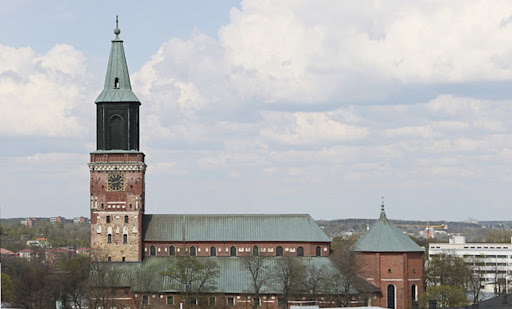
Turku Cathedral is the only medieval basilica in Finland and the Mother Church of the Evangelical Lutheran Church of Finland. It is the central church of the Lutheran Archdiocese of Turku and the seat of the Lutheran Archbishop of Finland, Tapio Luoma.
Nearby attractions
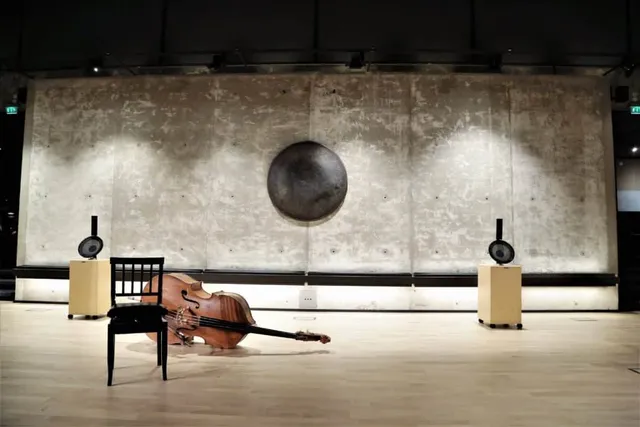
Sibeliusmuseum
Piispankatu 17, 20500 Turku, Finland
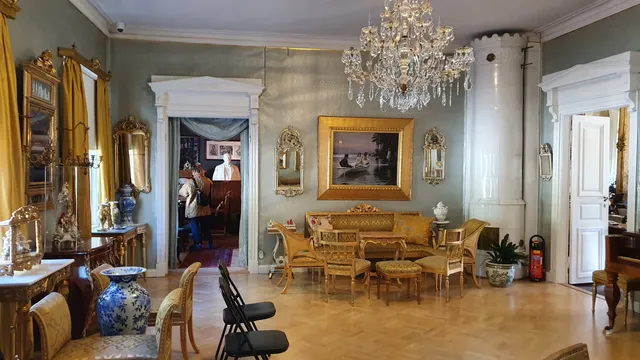
Ett Hem Museum
Piispankatu 14, 20500 Turku, Finland
Aboa Vetus Ars Nova
Itäinen Rantakatu 4-6, 20700 Turku, Finland
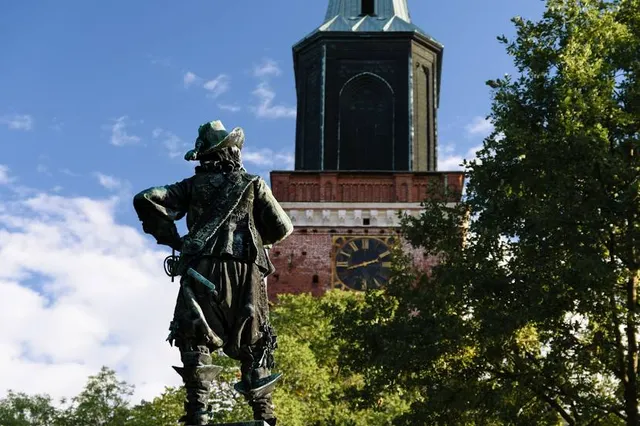
The Per Brahe statue
20500 Turku, Finland
Porthan’s Park
Uudenmaankatu 1, 20500 Turku, Finland
Monastery Avenue
Luostarin Välikatu, 20700 Turku, Finland
Luostarinmäki Open-Air Museum
Vartiovuorenkatu 2, 20101 Turku, Finland
Panimoravintola Koulu
Eerikinkatu 18, 20100 Turku, Finland
Kupittaa Park
20520 Turku, Finland
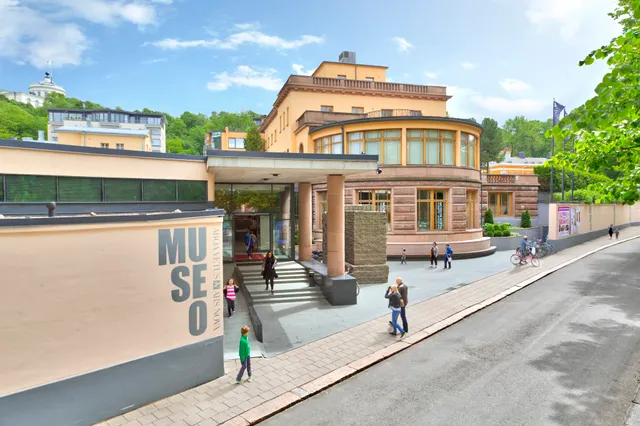
Turku Art Museum
Aurakatu 26, 20100 Turku, Finland
Nearby restaurants
Pizzeria Via Tribunali Turku
Vanha Suurtori 2, 20500 Turku, Finland
Afrodite Greek Tavern
Hämeenkatu 9, 20500 Turku, Finland
Restaurant Gustavo
Linnankatu 1, 20100 Turku, Finland
Trattoria Romana
Hämeenkatu 9, 20500 Turku, Finland
Grädda
Piispankatu 15, 20500 Turku, Finland
Tårget
Linnankatu 3a, 20100 Turku, Finland
Delhi Darbar
Hämeenkatu 8, 20500 Turku, Finland
Mami
Linnankatu 3, 20100 Turku, Finland
Yangtze River
Hämeenkatu 9, 20500 Turku, Finland
Ravintola Carlina
Aninkaistenkatu 3, 20100 Turku, Finland
Related posts
Keywords
Turku Cathedral tourism.Turku Cathedral hotels.Turku Cathedral bed and breakfast. flights to Turku Cathedral.Turku Cathedral attractions.Turku Cathedral restaurants.Turku Cathedral travel.Turku Cathedral travel guide.Turku Cathedral travel blog.Turku Cathedral pictures.Turku Cathedral photos.Turku Cathedral travel tips.Turku Cathedral maps.Turku Cathedral things to do.
Turku Cathedral things to do, attractions, restaurants, events info and trip planning
Turku Cathedral
FinlandMainland FinlandTurku sub-regionTurku Cathedral

Basic Info

Turku Cathedral

Mother Church of the Evangelical Lutheran Church of Finland, Tuomiokirkonkatu 1, 20500 Turku, Finland
4.6(2.2K)
Open 24 hours
Save
spot

Ratings & Description

Info

Turku Cathedral is the only medieval basilica in Finland and the Mother Church of the Evangelical Lutheran Church of Finland. It is the central church of the Lutheran Archdiocese of Turku and the seat of the Lutheran Archbishop of Finland, Tapio Luoma.

Cultural
Accessibility
attractions: Sibeliusmuseum, Ett Hem Museum, Aboa Vetus Ars Nova, The Per Brahe statue, Porthan’s Park, Monastery Avenue, Luostarinmäki Open-Air Museum, Panimoravintola Koulu, Kupittaa Park, Turku Art Museum, restaurants: Pizzeria Via Tribunali Turku, Afrodite Greek Tavern, Restaurant Gustavo, Trattoria Romana, Grädda, Tårget, Delhi Darbar, Mami, Yangtze River, Ravintola Carlina
logoLearn more insights from Wanderboat AI.
Phone
+358 40 3417100
Website
turuntuomiokirkko.fi

Plan your stay

hotel
Pet-friendly Hotels in Turku sub-region
Find a cozy hotel nearby and make it a full experience.
hotel
Affordable Hotels in Turku sub-region
Find a cozy hotel nearby and make it a full experience.
hotel
The Coolest Hotels You Haven't Heard Of (Yet)
Find a cozy hotel nearby and make it a full experience.
hotel
Trending Stays Worth the Hype in Turku sub-region
Find a cozy hotel nearby and make it a full experience.

Reviews

Nearby attractions of Turku Cathedral

Sibeliusmuseum

Ett Hem Museum

Aboa Vetus Ars Nova

The Per Brahe statue

Porthan’s Park

Monastery Avenue

Luostarinmäki Open-Air Museum

Panimoravintola Koulu

Kupittaa Park

Turku Art Museum

Sibeliusmuseum

Sibeliusmuseum

4.4

(197)

Open 24 hours
Click for details
Ett Hem Museum

Ett Hem Museum

4.7

(53)

Open 24 hours
Click for details
Aboa Vetus Ars Nova

Aboa Vetus Ars Nova

4.4

(1.1K)

Open 24 hours
Click for details
The Per Brahe statue

The Per Brahe statue

4.4

(14)

Open until 12:00 AM
Click for details

Nearby restaurants of Turku Cathedral

Pizzeria Via Tribunali Turku

Afrodite Greek Tavern

Restaurant Gustavo

Trattoria Romana

Grädda

Tårget

Delhi Darbar

Mami

Yangtze River

Ravintola Carlina

Pizzeria Via Tribunali Turku

Pizzeria Via Tribunali Turku

4.0

(551)

$$$

Click for details
Afrodite Greek Tavern

Afrodite Greek Tavern

4.7

(327)

$$

Click for details
Restaurant Gustavo

Restaurant Gustavo

4.4

(417)

Click for details
Trattoria Romana

Trattoria Romana

4.3

(305)

$$

Click for details
Get the Appoverlay
Get the AppOne tap to find yournext favorite spots!
Wanderboat LogoWanderboat

Your everyday Al companion for getaway ideas

CompanyAbout Us
InformationAI Trip PlannerSitemap
SocialXInstagramTiktokLinkedin
LegalTerms of ServicePrivacy Policy

Get the app

© 2025 Wanderboat. All rights reserved.
logo

Posts

Jordy ValderramaJordy Valderrama
Turku Cathedral (Finnish: Turun tuomiokirkko, Swedish: Åbo domkyrka) is the previous Catholic cathedral of Finland, today the Mother Church of the Evangelical Lutheran Church of Finland. It is the central church of the Lutheran Archdiocese of Turku and the seat of the Lutheran Archbishop of Finland, Tapio Luoma. It is also regarded as one of the major records of Finnish architectural history. Considered to be the most important religious building in Finland, the cathedral has borne witness to many important events in the nation's history and has become one of the city's most recognizable symbols. The cathedral is situated in the heart of Turku next to the Old Great Square, by the river Aura. Its presence extends beyond the local precinct by having the sound of its bells chiming at noon broadcast on national radio. It is also central to Finland's annual Christmas celebrations. The cathedral was originally built out of wood in the late 13th century, and was dedicated as the main cathedral of Finland in 1300, the seat of the Catholic bishop of Turku. It was considerably expanded in the 14th and 15th centuries, mainly using stone as the construction material. The cathedral was badly damaged during the Great Fire of Turku in 1827, and was rebuilt to a great extent afterwards. History Edit Turku Cathedral plan. Turku Cathedral cross section. As the town of Turku began to emerge in the course of the 13th century as the most important trading centre in Finland, the Bishop's see of the Diocese of Finland was transferred from its previous location at Koroinen, some distance further up on the bank of Aura river, to the middle of the town. By the end of the 13th century, a new stone church had been completed on the site of the former wooden-built parish church on Unikankare Mound, and it was consecrated in 1300 as the Cathedral Church of the Blessed Virgin Mary and Saint Henry, the first Bishop of Finland. Throughout the Middle Ages, the High Altar was located opposite the easternmost pillars of the nave, until it was transferred to its present location in the apse, in what had previously been the Chapel of All The major later addition to the cathedral is the tower, which has been rebuilt several times, as a result of repeated fires. The worst damage was caused by the Great Fire of Turku in 1827, when most of the town was destroyed, along with the interior of both the tower and the nave and the old tower roof. The present spire of the tower, constructed after the great fire, reaches a height of 101 meters above sea level, and is visible over a considerable distance as the symbol of both the cathedral and the city of Turku itself. In the reformation the cathedral was taken by the Lutheran Church of Finland (Sweden). Most of the present interior also dates from the restoration carried out in the 1830s, following the Great Fire. The altarpiece, depicting the Transfiguration of Jesus, was painted in 1836 by the Swedish artist Fredrik Westin. The reredos behind the High Altar, and the pulpit in the crossing, also both date from the 1830s, and were designed by german architect Carl Ludvig Engel, known in Finland for his several other highly regarded works. The walls and roof in the chancel are decorated with frescos in the Romantic style by the court painter Robert Wilhelm Ekman, which depict events from the life of Jesus, and the two key events in the history of the Finnish Church: the baptism of the first Finnish Christians by Bishop Henry by the spring at Kupittaa, and the presentation to King Gustav Vasa by the Reformer Michael Agricola of the first Finnish translation of the New Testament. Wikipedia.
Amir FaridhashemiAmir Faridhashemi
Turku Cathedral, also known as Turun tuomiokirkko in Finnish, is a historic cathedral located in Turku, Finland. It is the mother church of the Evangelical Lutheran Church of Finland and one of the most iconic landmarks in the country. The cathedral was originally constructed in the 13th century and has undergone several renovations and modifications over the centuries. It features a stunning Gothic architectural style and is known for its impressive interior and beautiful organ. Turku Cathedral is an important religious and cultural site in Finland and is open to visitors interested in its history and architecture.
Lucja SlazykLucja Slazyk
This place is very impressive, there is a museum with many interesting objects related to the cathedral or the history of Christianity in Finland (if someone is afraid that due to lack of historical knowledge there is no reason to go there, don't worry, the objects are described, so they may be interesting for everyone, even from abroad). Overall, the architecture of this cathedral is amazing and I think it could be an interesting place even for non-religious people. Additionally, there is a tree where people can share their opinions about the museum, which makes it a more family-friendly place.
See more posts
See more posts
hotel
Find your stay

Pet-friendly Hotels in Turku sub-region

Find a cozy hotel nearby and make it a full experience.

Turku Cathedral (Finnish: Turun tuomiokirkko, Swedish: Åbo domkyrka) is the previous Catholic cathedral of Finland, today the Mother Church of the Evangelical Lutheran Church of Finland. It is the central church of the Lutheran Archdiocese of Turku and the seat of the Lutheran Archbishop of Finland, Tapio Luoma. It is also regarded as one of the major records of Finnish architectural history. Considered to be the most important religious building in Finland, the cathedral has borne witness to many important events in the nation's history and has become one of the city's most recognizable symbols. The cathedral is situated in the heart of Turku next to the Old Great Square, by the river Aura. Its presence extends beyond the local precinct by having the sound of its bells chiming at noon broadcast on national radio. It is also central to Finland's annual Christmas celebrations. The cathedral was originally built out of wood in the late 13th century, and was dedicated as the main cathedral of Finland in 1300, the seat of the Catholic bishop of Turku. It was considerably expanded in the 14th and 15th centuries, mainly using stone as the construction material. The cathedral was badly damaged during the Great Fire of Turku in 1827, and was rebuilt to a great extent afterwards. History Edit Turku Cathedral plan. Turku Cathedral cross section. As the town of Turku began to emerge in the course of the 13th century as the most important trading centre in Finland, the Bishop's see of the Diocese of Finland was transferred from its previous location at Koroinen, some distance further up on the bank of Aura river, to the middle of the town. By the end of the 13th century, a new stone church had been completed on the site of the former wooden-built parish church on Unikankare Mound, and it was consecrated in 1300 as the Cathedral Church of the Blessed Virgin Mary and Saint Henry, the first Bishop of Finland. Throughout the Middle Ages, the High Altar was located opposite the easternmost pillars of the nave, until it was transferred to its present location in the apse, in what had previously been the Chapel of All The major later addition to the cathedral is the tower, which has been rebuilt several times, as a result of repeated fires. The worst damage was caused by the Great Fire of Turku in 1827, when most of the town was destroyed, along with the interior of both the tower and the nave and the old tower roof. The present spire of the tower, constructed after the great fire, reaches a height of 101 meters above sea level, and is visible over a considerable distance as the symbol of both the cathedral and the city of Turku itself. In the reformation the cathedral was taken by the Lutheran Church of Finland (Sweden). Most of the present interior also dates from the restoration carried out in the 1830s, following the Great Fire. The altarpiece, depicting the Transfiguration of Jesus, was painted in 1836 by the Swedish artist Fredrik Westin. The reredos behind the High Altar, and the pulpit in the crossing, also both date from the 1830s, and were designed by german architect Carl Ludvig Engel, known in Finland for his several other highly regarded works. The walls and roof in the chancel are decorated with frescos in the Romantic style by the court painter Robert Wilhelm Ekman, which depict events from the life of Jesus, and the two key events in the history of the Finnish Church: the baptism of the first Finnish Christians by Bishop Henry by the spring at Kupittaa, and the presentation to King Gustav Vasa by the Reformer Michael Agricola of the first Finnish translation of the New Testament. Wikipedia.
Jordy Valderrama

Jordy Valderrama

hotel
Find your stay

Affordable Hotels in Turku sub-region

Find a cozy hotel nearby and make it a full experience.

Get the Appoverlay
Get the AppOne tap to find yournext favorite spots!
Turku Cathedral, also known as Turun tuomiokirkko in Finnish, is a historic cathedral located in Turku, Finland. It is the mother church of the Evangelical Lutheran Church of Finland and one of the most iconic landmarks in the country. The cathedral was originally constructed in the 13th century and has undergone several renovations and modifications over the centuries. It features a stunning Gothic architectural style and is known for its impressive interior and beautiful organ. Turku Cathedral is an important religious and cultural site in Finland and is open to visitors interested in its history and architecture.
Amir Faridhashemi

Amir Faridhashemi

hotel
Find your stay

The Coolest Hotels You Haven't Heard Of (Yet)

Find a cozy hotel nearby and make it a full experience.

hotel
Find your stay

Trending Stays Worth the Hype in Turku sub-region

Find a cozy hotel nearby and make it a full experience.

This place is very impressive, there is a museum with many interesting objects related to the cathedral or the history of Christianity in Finland (if someone is afraid that due to lack of historical knowledge there is no reason to go there, don't worry, the objects are described, so they may be interesting for everyone, even from abroad). Overall, the architecture of this cathedral is amazing and I think it could be an interesting place even for non-religious people. Additionally, there is a tree where people can share their opinions about the museum, which makes it a more family-friendly place.
Lucja Slazyk

Lucja Slazyk

See more posts
See more posts

Reviews of Turku Cathedral

4.6
(2,153)
avatar
5.0
5y

Turku Cathedral (Finnish: Turun tuomiokirkko, Swedish: Åbo domkyrka) is the previous Catholic cathedral of Finland, today the Mother Church of the Evangelical Lutheran Church of Finland. It is the central church of the Lutheran Archdiocese of Turku and the seat of the Lutheran Archbishop of Finland, Tapio Luoma. It is also regarded as one of the major records of Finnish architectural history. Considered to be the most important religious building in Finland, the cathedral has borne witness to many important events in the nation's history and has become one of the city's most recognizable symbols. The cathedral is situated in the heart of Turku next to the Old Great Square, by the river Aura. Its presence extends beyond the local precinct by having the sound of its bells chiming at noon broadcast on national radio. It is also central to Finland's annual Christmas celebrations.

The cathedral was originally built out of wood in the late 13th century, and was dedicated as the main cathedral of Finland in 1300, the seat of the Catholic bishop of Turku. It was considerably expanded in the 14th and 15th centuries, mainly using stone as the construction material. The cathedral was badly damaged during the Great Fire of Turku in 1827, and was rebuilt to a great extent afterwards.

History Edit

Turku Cathedral plan.

Turku Cathedral cross section. As the town of Turku began to emerge in the course of the 13th century as the most important trading centre in Finland, the Bishop's see of the Diocese of Finland was transferred from its previous location at Koroinen, some distance further up on the bank of Aura river, to the middle of the town. By the end of the 13th century, a new stone church had been completed on the site of the former wooden-built parish church on Unikankare Mound, and it was consecrated in 1300 as the Cathedral Church of the Blessed Virgin Mary and Saint Henry, the first Bishop of Finland.

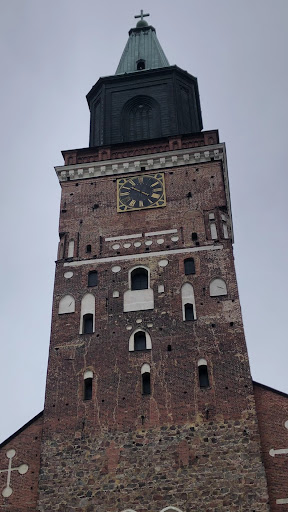
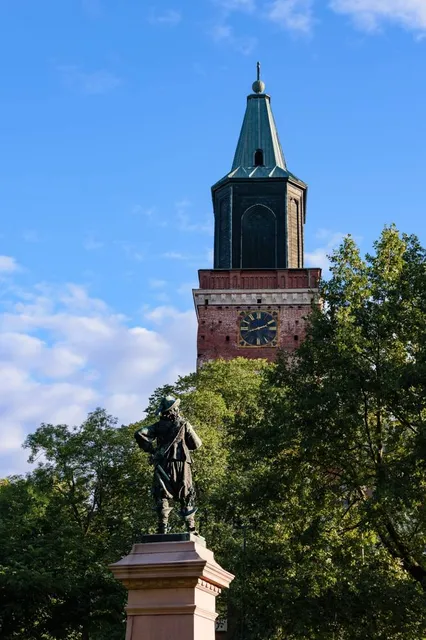
Throughout the Middle Ages, the High Altar was located opposite the easternmost pillars of the nave, until it was transferred to its present location in the apse, in what had previously been the Chapel of All The major later addition to the cathedral is the tower, which has been rebuilt several times, as a result of repeated fires. The worst damage was caused by the Great Fire of Turku in 1827, when most of the town was destroyed, along with the interior of both the tower and the nave and the old tower roof. The present spire of the tower, constructed after the great fire, reaches a height of 101 meters above sea level, and is visible over a considerable distance as the symbol of both the cathedral and the city of Turku itself.

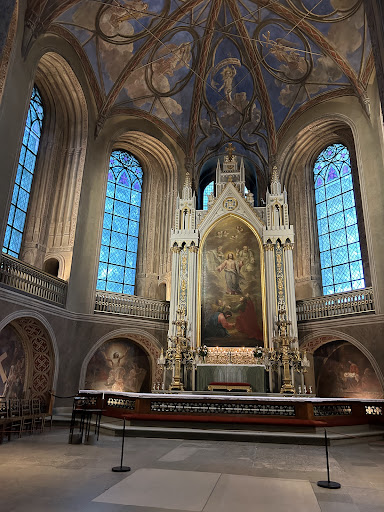
In the reformation the cathedral was taken by the Lutheran Church of Finland (Sweden). Most of the present interior also dates from the restoration carried out in the 1830s, following the Great Fire. The altarpiece, depicting the Transfiguration of Jesus, was painted in 1836 by the Swedish artist Fredrik Westin. The reredos behind the High Altar, and the pulpit in the crossing, also both date from the 1830s, and were designed by german architect Carl Ludvig Engel, known in Finland for his several other highly regarded works. The walls and roof in the chancel are decorated with frescos in the Romantic style by the court painter Robert Wilhelm Ekman, which depict events from the life of Jesus, and the two key events in the history of the Finnish Church: the baptism of the first Finnish Christians by Bishop Henry by the spring at Kupittaa, and the presentation to King Gustav Vasa by the Reformer Michael Agricola of the first Finnish translation of the New...

   Read more
avatar
3.0
6y

Keskiaikainen kirkko joka 'kyhätty' eri materiaaleista, sen ajan mukaan. Tiiltä, puuta, savea ja isoja mahtikiviä. On siinä ollut hommaa!

Alunperin taisi olla jokin kumpare, josta näki uhkaavia venelaivoja ulkomailta, jotka puhuivat vieraskieltä. Lähes vihollisia.

Nimeltään aikoinaan Unikankare. Oliskohan Suomen kristillästämisen aikaa 1100-1300 -ajalla jälkeen Kristuksen nimeltään Unikankare tai Unhola tai Muisto? Tieteilijät tietävät hyvin paljon.

Turun tuomiokirkossa pitäisi olla kait katolisen uskonlevittäjä englantilaisen Henrikin luita tai jotain hampaita on joskus esillä. Niistä evlut-kirkko kiistelee uskon tai tieteen nimissä vielä 2019 vuonna. Tänäänkin 6.1.2019. Katolinen paavi Fransiscus Roomassa ei paavibullassaan kommentoi, kenen luu on Turun tuomiokirkossamme.

Turun tuomiokirkossa järjestetään ekumeenisia tapahtumia kristillisen uskon hyväksi ja puolesta. Radiossaan ja televisioidaan mm ennen joulua säännöllisesti.

Jumalanpalvelusten kieliä en muista. Ainakin englannin kielisiä tilaisuuksiakin on viikottain.

Alunperin Turun tuomiokirkon paikalla taisi olla ns. pakanallinen henkinen kultti -ja muistopaikka edesmenneille ja kristillinen yhteisö alkoi tiili tiileltä rakentamaan nykyistä tuomiokirkkoa. Aluksi oli jokin pyhitetty maja, nyt iso jähmeä kirkko.

On kahvila, ja toisinaan messun jälkeen tilaisuuksia Eerikinkatu 3:ssa. Se on niinku totanoi seurakuntatila, jossa kerran kuukaudessa "Nojatuolimatka" su klo 18- 19.30. Siellä halukkaat esittävät kuvin ja sanoin matkoistaan maailmalla - ja myös kotimaastamme. Siis ei hengellistä pakkosyöttöä vaan matkajuttujaan, ja neuvoja ja vinkkejä.

Tuomiokirkko. Oikeastaan arkkitehtuurisesti on jotenkin goottilainen mutta on mielestäni sekasikiö. Jokainen aikakausi päivä päivältä halunnut tehdä muutoksia jotta pääsisi maallisesta elosta nopeasti taivaaseen, ja hengelliseen johdatukseen.

On arkkitehtonisesti lähes katolinen kirkko ja se näkyy niissä monissa holveissa, joissa käytiin ja toivottiin rikkautta, terveyttä ja onnea lähimmäksemme.

Akustiikka on haastava laulajille ja soittajille. Urat mahtipontisen erinomaiset.

Jotkut kehuvat alttarimaalauksia, ja jotkut ei tykkää niin yhtää.

Muistaakseni professori Juhani Rinne teki jonkinlaisen argeologis-arkkitehtuuri selvityksen 1900-luvun vuosikymmeninä.

Alueelle haudattiin isosti, mutta lopulta hautauskäytäntö siirtyi Uudelle Hautausmaalle, jossa todella upeita hautareliefejä ja muistomerkkejä.

Keskiaikaisia freskoja ei taida olla Turun tuomiokirkossa, mutta Turun Katariinan kirkossa niitä on silmiemme iloksi. On Katariinassa kuvattu freskoina piruja ja pyhimyksiä ja lähes enkeleitä.

Tuomiokirkossa on aulassa info joka päivä. Agricolan patsas taitaa olla joko sisällä tai varmasti (vakuutan) ulkona eteläpuolella.

On hyvät siistit vessat lapsille, naisille, miehille ja invoille.

Sisäänpääsy mielestäni riittämätön. Usein kesäisin sulkeutuu klo 18, vaikka turistibusseja useita ja ulkomaalaiset kolkuttaa ovea. Aukioloajat pitäisi olla kesäisin joustavampia, noin klo 21 asti!

Sopimuksella voi varata Tarkk'ampujan kappelin vihkitilaisuuteen. Siellä cembalokin viritettynä.

Tuomiokirkon ulkoportaikko on edustava ja hyviä valokuvia saa.

On myös kuoro- ja virsitilaisuuksia säännöllisesti kappelissa.

On jouluseimi ja kahvila auki sesongin mukaan.

Eräät mediassa ja somessa kirjoittavat ehtimis joulukiireiltään: että Suomen (1917-) joulun ykköskuusi on siellä led-valoineen. Perinnejulkisuus valtakunnan Ykköskuusesta on pitkä kuin Turun Joulurauhan julistaminen lähellä tuomiokirkkoa, Suurtorilla.

Turun tuomiokirkon kellot söivät juuri ennen Joulurauhan julistusta koko maailmalle. Kirkon kellot soivat myös usein YleRadiossa klo tasan 12.

Niin ... Tämä kuusipuu on nykyään Varsinais-Suomen tai Lounais-Suomen kotipihasta, ja kuusen 'haltijat' haluavat ilmaiseksi luovuttaa hyväntuulisen kuusen monien...

   Read more
avatar
5.0
4y

A Gem of a cathedral, very different to other Finnish Cathedrals. It has been able to retain its medieval sensibility. You can feel its history when you walk inside. Though most of it dates to after the 1827 fire, its reconstruction as been respectful. Enough of the original, which is at hight level survives to give one the sence of what the rest would have looked like before the fire. You are still able to walk with the Kings and lay people that have worshipped God with in these walls. If religion is not your thing or you are of a different faith, the architecture and it's history is would still able to move you, in a...

   Read more
Page 1 of 7
Previous
Next