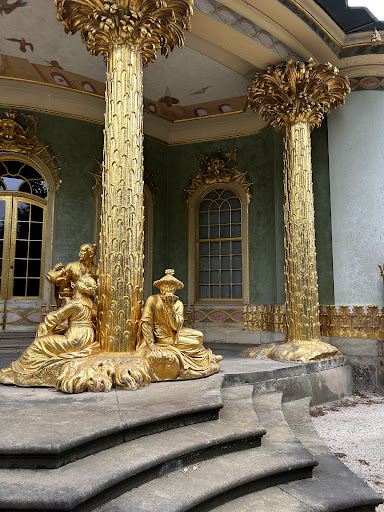
The Enchanting Chinese House in Sanssouci Park: A Gem of Prussian Rococo Nestled within the captivating beauty of Potsdam's Sanssouci Park, the Chinese House stands as a testament to the exquisite fusion of Western and Eastern architectural styles. This delicate and charming pavilion is not only a pivotal part of Frederick the Great's dreamlike Sanssouci Palace complex but also a symbol of the Prussian monarch's fascination with exoticism and artistic innovation. In this article, we'll delve into the history and aesthetics of the Chinese House, exploring its cultural significance and the lasting allure that continues to captivate visitors from around the world.
A Symbol of Enlightenment Fascination
The Chinese House was constructed between 1755 and 1764, during the reign of Frederick the Great, one of Prussia's most celebrated monarchs. This period in history, known as the Enlightenment, saw a deep fascination with all things exotic, from distant lands and cultures. The fascination with China, in particular, permeated the artistic and intellectual circles of Europe during this era, and this fascination is beautifully reflected in the architecture of the Chinese House.
Architecture and Aesthetics
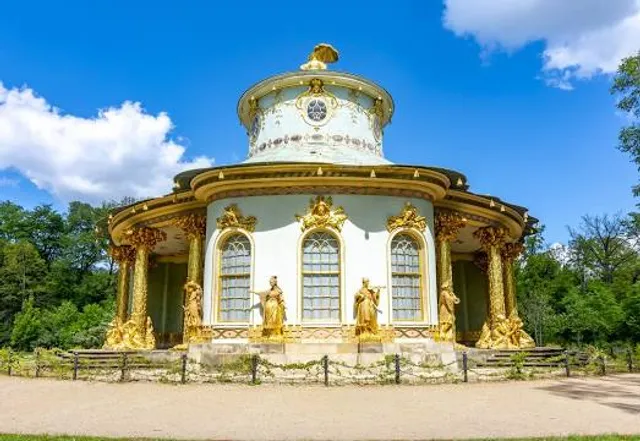
Designed by the renowned architect Johann Gottfried Bßring, the Chinese House is a testament to the Rococo architectural style. Its design draws inspiration from the Chinoiserie trend of the 18th century, blending Chinese and European elements harmoniously. The façade of the pavilion is adorned with intricate porcelain tiles and vibrant murals that depict scenes from Chinese life and mythology, while its pagoda-style roof and dragon-shaped rain spouts further exemplify the Chinese influence.
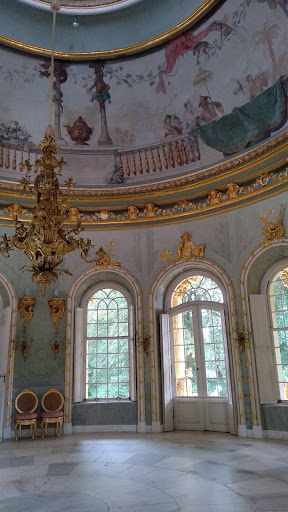
The interior of the Chinese House is no less stunning. The main hall, adorned with lavish stucco work, mirrors the Rococo style popular in Europe during that time. The room is completed with authentic Chinese and Japanese porcelain, including a unique collection of over 200 blue-and-white porcelain figurines.
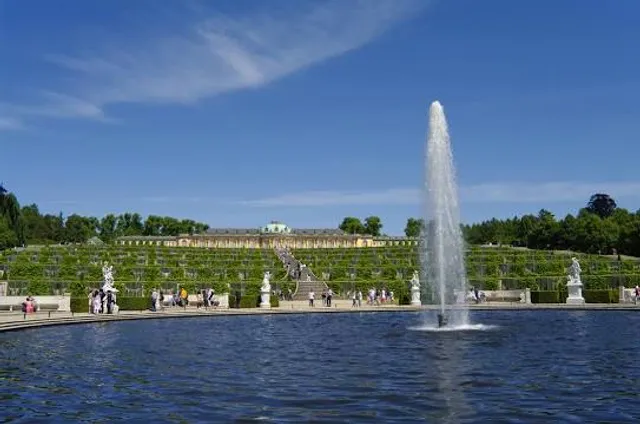
Frederick the Great intended the Chinese House to serve as a personal retreat, and the serenity that this structure exudes makes it easy to understand why. The beautifully landscaped gardens that surround the pavilion add to its charm, creating an atmosphere of tranquility.
Cultural Significance
Beyond its architectural beauty, the Chinese House carries cultural significance as well. It represents a tangible link between the Enlightenment era's interest in exotic cultures and modern ideas of cultural appreciation. It demonstrates how Western societies began to engage with Eastern cultures, paving the way for the intercultural exchanges we see today.
Today's Appeal
The Chinese House, along with the rest of Sanssouci Park, is a UNESCO World Heritage Site, drawing tourists and art enthusiasts from around the world. Its historical and aesthetic significance is celebrated, not only as an architectural marvel but also as a piece of living history. Visitors can explore the interior of the pavilion and immerse themselves in the unique blend of Chinese and European design.
The Chinese House in Sanssouci Park stands as a testament to the Prussian monarch's fascination with the exotic, the Enlightenment's quest for knowledge, and the enduring charm of architectural innovation. This enchanting pavilion is a must-visit for those exploring Potsdam and its rich cultural history. As visitors stroll through the picturesque gardens and admire the delicate porcelain and Rococo beauty of the Chinese House, they are not only experiencing the past but also participating in a rich cultural dialogue that transcends time and place. This timeless gem in Sanssouci Park invites all to appreciate the harmonious blending of artistic styles and the enduring fascination with all things exotic. Usefull? Follow...
   Read moreThe Chinese House, or Chinesisches Haus in German, is a charming and historically significant structure located in Sanssouci Park in Potsdam, Germany. It is one of the many beautiful buildings and architectural features within the park. Here is some information about the Chinese House:
Architecture and Design: The Chinese House was built in the mid-18th century, during the reign of Frederick the Great, who had a fascination with Chinese culture and art. The architecture of the Chinese House reflects a chinoiserie style, which was popular in Europe during the Rococo period. It is adorned with intricate, oriental-style ornaments and has a distinct pagoda-like appearance.
Purpose: The Chinese House was not used as a residence but rather as a garden pavilion or tea house. It was intended as a place for relaxation and social gatherings within the picturesque setting of Sanssouci Park.
Location: The Chinese House is situated in a scenic spot overlooking a pond within the park. Its setting is designed to create a harmonious and peaceful atmosphere that complements the surrounding natural beauty.
Interior: The interior of the Chinese House is decorated with Chinese and Asian-inspired motifs, paintings, and furnishings. Visitors can explore the rooms and experience the architectural and decorative elements that reflect the fascination with Eastern culture during the 18th century.
Restoration: The Chinese House underwent extensive restoration work in the 20th century to preserve its historical and architectural significance. The restoration aimed to recreate the original design and decoration of the pavilion.
Visitor Attraction: The Chinese House is open to the public, and it remains a popular tourist attraction within Sanssouci Park. Visitors can admire the unique architecture, explore the interior, and appreciate the tranquil surroundings.
UNESCO World Heritage Site: Like the rest of Sanssouci Park, the Chinese House is part of the UNESCO World Heritage Site, which recognizes the cultural and historical significance of the entire ensemble of palaces, gardens, and buildings in the area.
The Chinese House in Sanssouci Park is a testament to the interest in and fascination with exotic and foreign cultures that was prevalent during the 18th century. It stands as an architectural gem within the larger context of the park, adding to the cultural and historical richness of this UNESCO World...
   Read moreDas Chinesische Haus ist ein Gartenpavillon im Park Sanssouci in Potsdam. Friedrich der Grosse liess das Gebäude zur AusschmĂźckung seines Zier- und Nutzgartens sĂźdwestlich des Sommerschlosses Sanssouci errichten. Nach den Skizzen des KĂśnigs plante und erbaute der Baumeister Johann Gottfried BĂźring in den Jahren 1755 bis 1764 das Haus. Der Pavillon entspricht dem Zeitgeschmack der Chinoiserie und weist eine Mischung von ornamentalen Stilelementen des Rokokos und Teilen ostasiatischer Bauformen auf. Die Bauzeit verzĂśgerte sich aufgrund des Siebenjährigen Krieges, unter dem die wirtschaftliche und finanzielle Lage Preussens erheblich litt. Wenige Meter entfernt liess der KĂśnig ein KĂźchengebäude errichten, da er die exotische Kulisse zuweilen fĂźr Feierlichkeiten nutzte. An diesem Zweckbau erinnern heute nur noch die sechseckigen Fenster an den einst ostasiatischen Charakter. Das Chinesische Haus, zuweilen auch Chinesisches Teehaus genannt, weist den Grundriss eines Kleeblatt auf. Rundbogige Fenster und FenstertĂźren geben dem Innern des Hauses viel Tageslicht. Die vergoldeten Sandsteinplastiken wurden in den Werkstätten der Bildhauer Johann Gottlieb HeymĂźller und Johann Peter Benkert geschaffen. Als Modelle des Figurenensemble essender und trinkender Chinesen dienten ihnen Personen aus der Umgebung, was die eher europäischen als denn chinesischen GesichtszĂźge erklärt. Im Prinzip ein kĂźnstlerischer Fauxpas. Der Tambour auf dem Dach, stellt einen Mandarin mit aufgespannten Schirm und einen Caduceus (Hermesstab mit zwei FlĂźgeln, der von zwei Schlangen umwunden wird) dar. Nach Plänen des Bildhauers Benjamin Giese erstellte sie Friedrich Jury in Kupfer. Das Innere ziert eine Deckenmalerei von miteinander plaudernden asiatischen Menschen, die Thomas Huber 1756 schuf. Sie sind umgeben von Papageien, Affen und auf Pfosten sitzenden BuÄdhafiguren. Seidene Wandbespannungen mit gemalten Blumenmustern zieren die Räume. Kleine erhaltene Reste dieser dienten als Vorlage bei der Renovierung die 1990 bis 1993 vorgenommen wurde. Das historische Objekt ist ein Zeitzeuge des Rokoko, der mit der seit dem im 17. Jahrhundert aufgekommenen Sympathie fĂźr chinesisches Kunsthandwerk harmonierte. Die damals aufgekommene "Chinoiserie", welche asiatische Kunst imitierte, trägt deutlich eine europäische Handschrift, da man sich zu wenig daran orientierte, wie in China diese eingesetzt war. Man darf es jedoch unkritisch als Entfaltung des Rokoko werten. Dass KĂśnigshäuser auch diesem Charme erlagen, Ăźberrascht nicht, nehmen wir die entsprechenden Objekte doch auch heute noch mit Wohlwollen wahr. Der Besuch des chinesischen Hauses ist eine etwas skurrile und exotische Abwechslung, die sich gut in die...
   Read more