On the 27th of December at the breakfast room of the Acropolis. Spirit Hotel in Athens a magnificent view of the Acropolis was framed by the window and a distinct impression captured in the poem “Acropolis” was recalled and quoted
Two thousand years o'er earth have spread their pall, Not yet, thy boast, Minerva's shrine shall fall: In spite of rapine, fire, and War's red arm, Enough remains to awe us, and to charm
Nicholas Mitchell
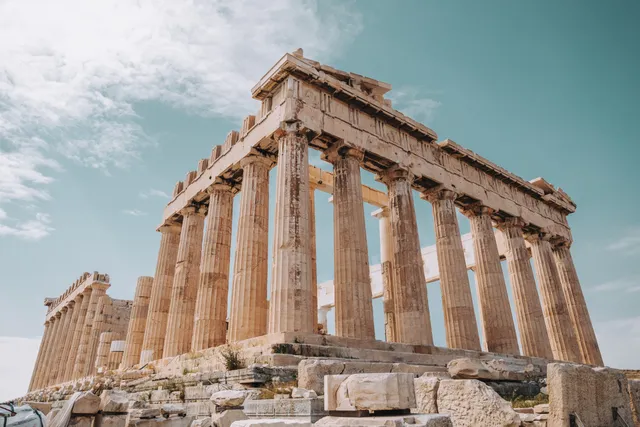
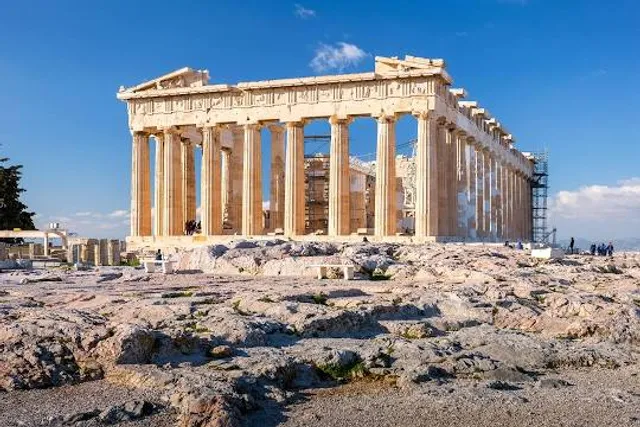
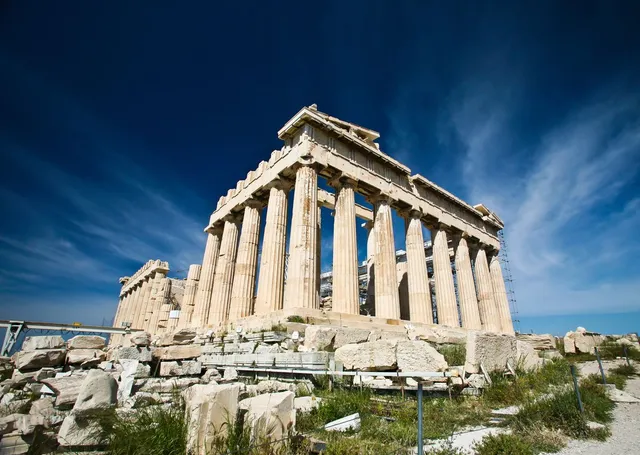
The Acropolis of Athens is a strong fort or citadel dedicated to Goddess Athena constructed around 5thCentury BC. Acropolises were defensive forts built in Greek cities and generally situated on elevated ground and served to protect the municipal and religious buildings. The Parthenon is considered as the most important temple dedicated to Athena located in the Acropolis of Athens
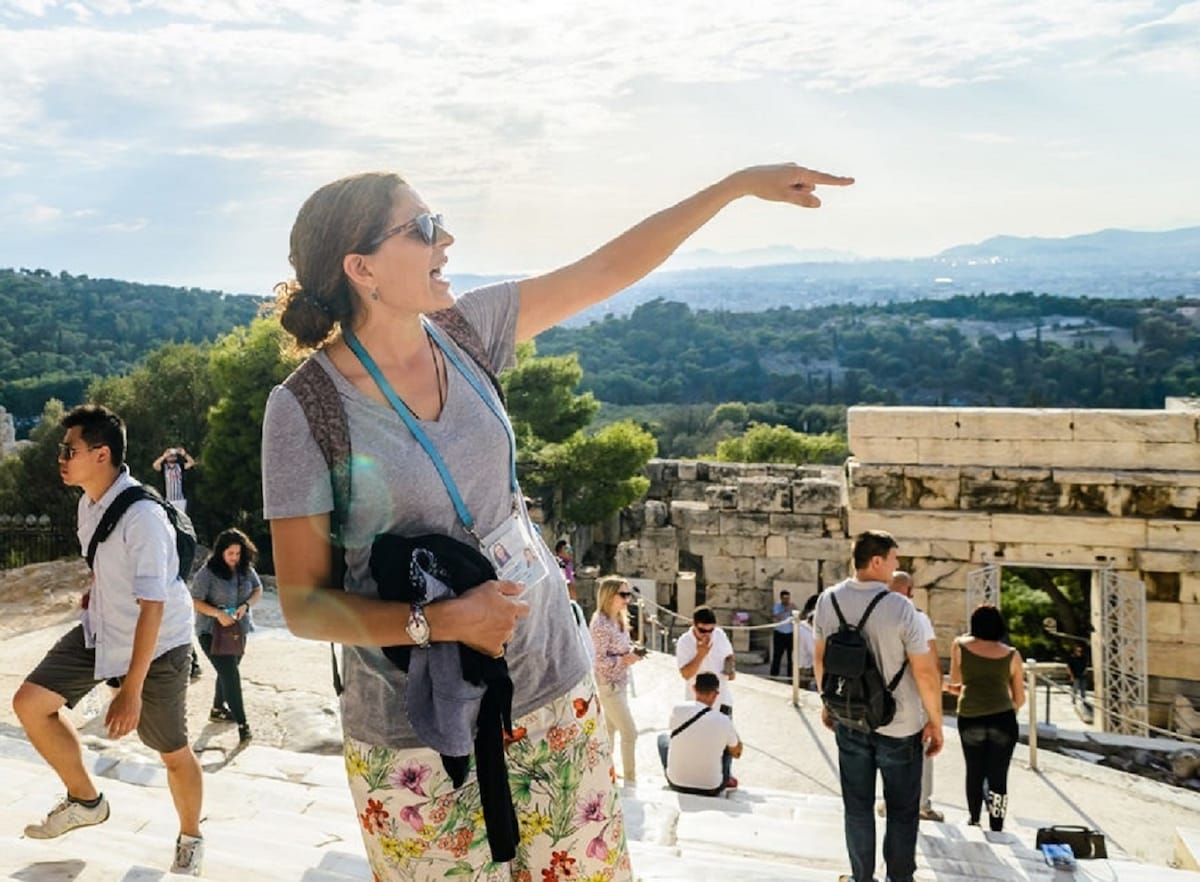
The route followed was the least crowded and we entered the Acropolis Side Entrance, and we passed
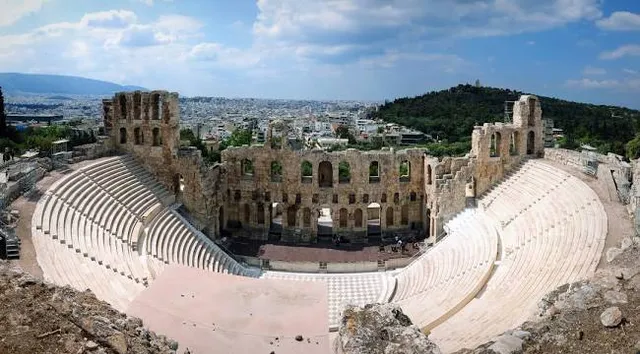
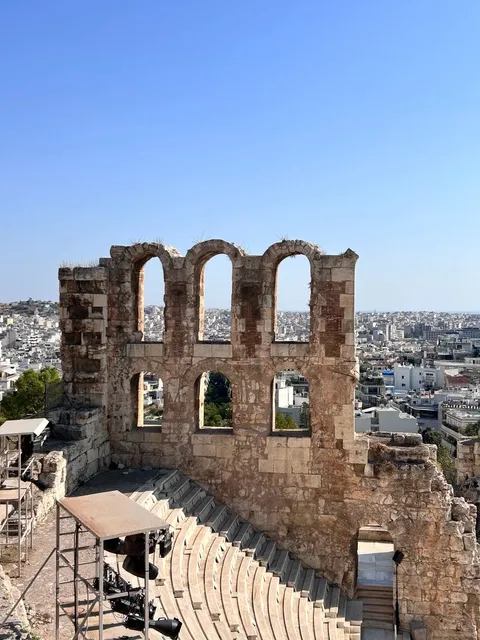
Firstly, Theatre of Dionysos located on the south of the Acropolis. Constructed in 5Th Century BC adjacent to fertility God Dionysos. The theatre has a capacity of 15000 to 17000 and plays were performed. The Theatre of Dionysos fell into disuse in 4AD, and restoration was undertaken in around 1800 by Greek archaeologist Wilhelm Dorpfeld
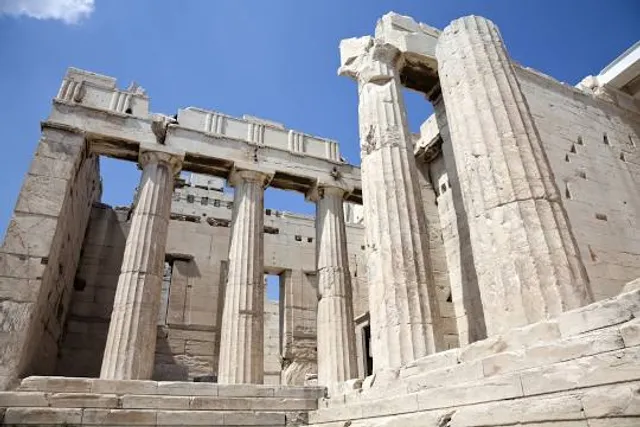
Next, we entered the Acropolis through the ceremonial gates of the Propylaea built in around 430BC and as we were given to understand this was one of the last gatehouses built at the Acropolis of Athens This was constructed after the Parthenon was built and this structure is unique in the construction of the roof which were supported by marble girders and supported by metal iron bars. There is only one other known structure with metal bars is the Temple of Zeus at Sicily, but it was never completed. At the entrance of the gate The Pedestal of Agrippa is seen which is on a large plinth and very little information on this pedestal is available It has 4.5 metres high base of porous limestone and gets its name from the statue which stood on top of the pedestal of Roman politician Vipsanius Agrippa 63-13BC.picture of this is in the photo gallery
Entering through the Propylaea gate which at one time were wide enough to Drive chariots through we come to the Parthenon the temple that dominates the Acropolis at Athens and considered as a symbol of Democracy and western civilization. Built during the 5th Century BC as a monument for the victory over Persian Empire invaders by the Greeks. The Parthenon served as the city treasury and also was the treasury of the Delian League, a confederacy of ancient Greek States numbering 150 to 330 with headquarters in Delos founded in 478BC under leadership of Athens which was later known as Athenian Empire. The Parthenon was a temple to honour the Goddess Athena for 900 years and was in 6AD converted into a Christian Church dedicated to Virgin Mary and after the Ottoman conquest in mid-15th century became a Mosque
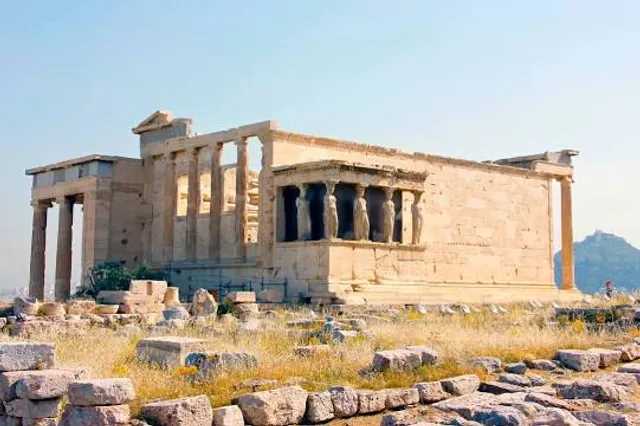
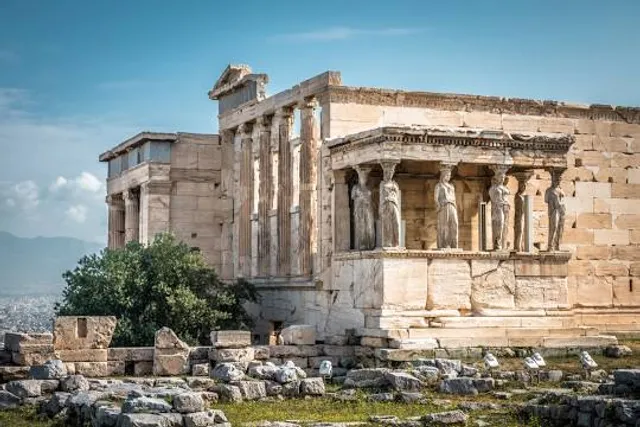
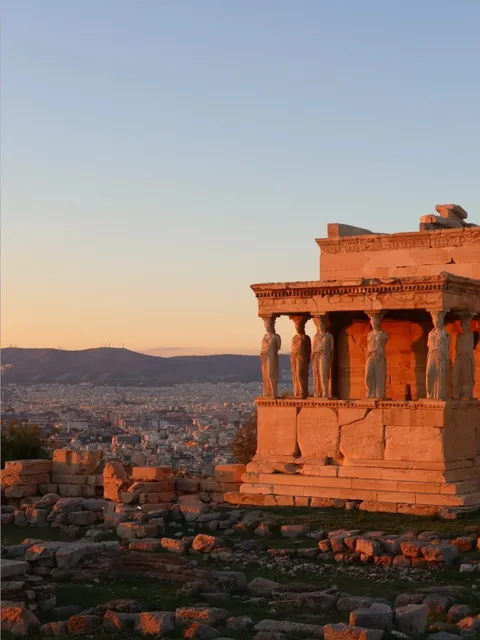
On the West of the Parthenon is the Erechtheion an ancient Greek temple north of Acropolis which housed the Statue of Athena and the construction was from 421 to 406 BC There are 6 Caryatids female statues of which 5 are at the Acropolis museum and the 6th one is in the British Museum. The Erechtheion has a complex design and the design was an elegant solution to as space constraints allocated and the requirements of accommodating mythical tomb of King Erechtheus the sacred Olive tree of Athena on the north side ant though not the original is estimated to be 2500years old
The Acropolis of Athens is undergoing a under a major restoration project and one has to ignore the scaffoldings and imagine the structure in its original form to get the essence of the magnificent architecture. However it is essential o preserve the heritage for its artistic heritage and priceless value. The restoration will contribute significantly for understanding of art culture and traditions that have come to the world over the last 2500...
Read moreThe United States Capitol, the Supreme Court Building, the Lincoln Memorial even the Virginia State Capitol are few of the many buildings that are typical examples of Greek architecture located in the States. In Germany, the Brandenburg Gate and Neue Wache in Berlin, Leo von Klenze's Propylaea in Munich, Leo von Klenze's Walhalla in Regensburg. In Great Britain a number of British architects in the second half of the century took up the expressive challenge of the Doric from their aristocratic patrons, including Benjamin Henry Latrobe (notably at Hammerwood Park and Ashdown House) and Sir John Soane, but it remained the private enthusiasm of connoisseurs up to the first decade of the 19th century. An early example of Greek Doric architecture married with a more Palladian interior, is the façade of the Revett-designed rural church of Ayot St Lawrence in Hertfordshire, commissioned in 1775 by Sir Lyonel Lyde, 1st Baronet of the eponymous manor. The Doric columns of this church, with their "pie-crust crimped" details, are taken from drawings that Revett made of the Temple of Apollo on the Cycladic island of Delos, in the collection of books that he (and Stuart in some cases) produced, largely funded by special subscription by the Society of Dilettanti.
Seen in its wider social context, Greek Revival architecture sounded a new note of sobriety and restraint in public buildings in Britain around 1800 as an assertion of nationalism attendant on the Act of Union, the Napoleonic Wars, and the clamour for political reform. William Wilkins's winning design for the public competition for Downing College, Cambridge announced the Greek style was to become a dominant idiom in architecture, especially for public buildings of this sort. Wilkins and Robert Smirke went on to build some of the most important buildings of the era, including the Theatre Royal, Covent Garden (1808–1809), the General Post Office (1824–1829) and the British Museum (1823–1848), the Wilkins Building of University College London (1826–1830), and the National Gallery (1832–1838).
The style was attractive in Russia because they shared the Eastern Orthodox faith with the Greeks. The historic centre of Saint Petersburg was rebuilt by Alexander I of Russia, with many buildings giving the Greek Revival a Russian debut. The Saint Petersburg Bourse on Vasilievsky Island has a temple front with 44 Doric columns. Giacomo Quarenghi's design for the Saint Petersburg Manege "mimics a 5th-century BC Athenian temple with a portico of eight Doric columns bearing a pediment and bas reliefs".[6] Leo von Klenze's expansion of the palace that is now the Hermitage Museum is another example of the style.
In Turkey, during the late period of the Ottoman Empire, Greek Revival architecture had its examples in the empire. The prominent examples are Istanbul Archaeology Museums (1891).
The style was generally popular in northern Europe, and not in the south (except for Greece itself), at least during the main period. Examples can be found in Poland, Lithuania, and Finland, where the assembly of Greek buildings in Helsinki city centre is particularly notable. At the cultural edges of Europe, in the Swedish region of western Finland, Greek Revival motifs might be grafted on a purely Baroque design, as in the design for Oravais Church by Jacob Rijf, 1792. A Greek Doric order, rendered in the anomalous form of pilasters, contrasts with the hipped roof and boldly scaled cupola and lantern, of wholly traditional Baroque inspiration. In Austria, one of the best examples of this style is the Parliament Building designed by Theophil Hansen.
All of the above began...
Read morethe acropolis is the acropolis. if you love history, whatever obstacles you face, if you persist, the journey is completely worth it.
and like anything in this world that is worth anything, the acropolis will not just fall into your lap.
if you visit in summer, it will be hot. water at the top costs €6 a litre. there are few - if any - signposts to guide your way.
like odysseus, you will be embarking on a quest, and it will not be straightforward for you to reach your destination.
we paid €60 for tickets the night before we wanted to go for entry at midday, however were only mailed the tickets an hour before our allotted time, but our esim card would not work in greece, and so that money was lost.
unperturbed, we determine to visit the ticket office in person and make offerings to the oracles of the ticket booth and get tickets to enter first thing in the morning when the the sun god apollo was just beginning his chariot ride across the sky and the day would still be cool.
and so we wound our way through laneways and up ancient wonky stairways, and along alleys to finally reach to the oracles of the ticket booths. there were gained wisdom. we learned that we - as mere mortals - cannot secure tickets for entry between 8am and 11am (these slots are all taken by tour operators!!)
and there we drank deeply of the €6 waters, and sought shade, and we deliberated. it was 3pm, and it was as hot as hades. 35C in early june. and yet the wind was picking up.
we did not dismay - and we were determined to not be disheartened and lose faith .. that we had come so far.
we conferred, and we concurred that we should buy new tickets for 6pm later that day, when the heat of the day should have lessened, and to make our return when the gods might look more favourably on us.
we retreated down the acropolis as short way and rested a taverna. we drank espresso freddy, eat a mis-named “small appetiser mezze plate” (if that was the small plate, then a large one would have fed a phalanx!) and waited for our time to come.
we left the taverna rehydrated, ensuring we had enough time to ascend and return to the gates with the requested 15 minutes prior to our appointed entry time.
the acropolis did not disappoint. one cannot but experience a sense of wonder standing on the hill where pericles began the works that have stood for two and half thousand years.
yes, there will be crowds. yes, some of our fellow pilgrims were driven up to the from gates in air conditioned comfort, with tickets arranged well in advance. in the end, we were thankful that that was not our path. and yes, you may be waylaid with false promises of tickets that may help you skip the queue, and yes, the official website may not work on the night before you intent to journey to peak of the mount.
and - apparently one is “not allowed to take photos with objects in front of then monuments”. i am sorry, but dinosaur is not an “object” any more than you or i are, nasty monument volunteer killjoy lady. but dinosaur was determined, and dinosaur has crossed the oceans, and dinosaur was deemed worthy.
we were tested. the way is not easy, but the reward are greatest for those who face the greatest challenges.
we prevailed, and we were rewarded.
long may the acropolis stand. long may it give its wonder to all. long...
Read more