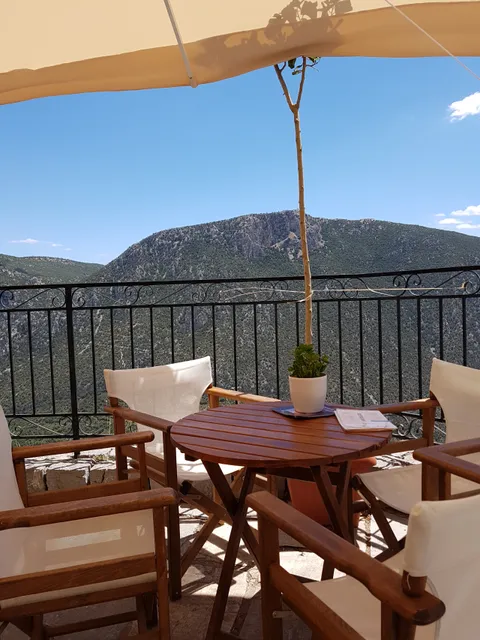
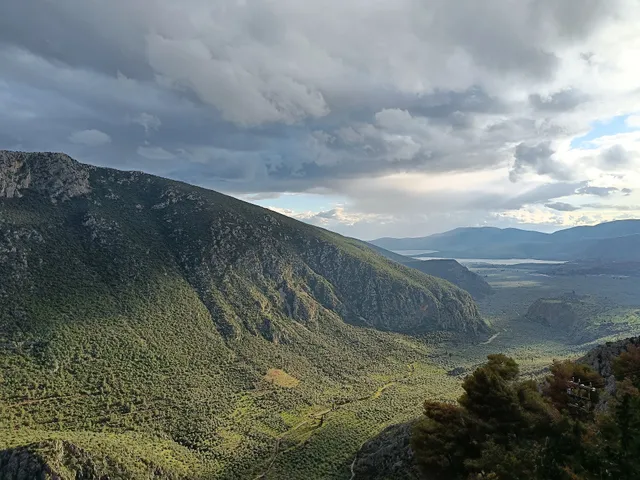
Our visit to the Delphi Archaeological Site was an unforgettable journey into the heart of ancient Greece, where history, culture, and awe-inspiring landscapes converge. We arrived in Delphi town around dawn, greeted by the serene stillness of early morning. The town itself has a timeless charm, and we took the chance to capture some aerial views of St Nicholas Church and the surrounding rooftops, showcasing Delphi’s striking beauty against the mountainous backdrop.
Once we’d enjoyed a leisurely breakfast at Il Mondo Cafe Bar, a cosy spot just at the intersection of Friderikis and Apollo's Streets, we set off towards the famous Delphi Archaeological Site. The fresh morning air, mingling with the scent of pine trees, added to the anticipation as we approached the site.
To purchase our tickets, we stopped at the ticket office located inside the museum, where we obtained tickets for €12 each. These tickets include access to both the Archaeological Site and the Museum. A reduced price of €6 is available for eligible visitors, specifically European Union senior citizens aged 65 and older, university students, and children.
With our tickets in hand, we walked along the pathway that connects the museum to the archaeological site. It’s worth noting that there is a small parking area at the museum, and additional spots are available along the road where you can park your vehicle without concerns.
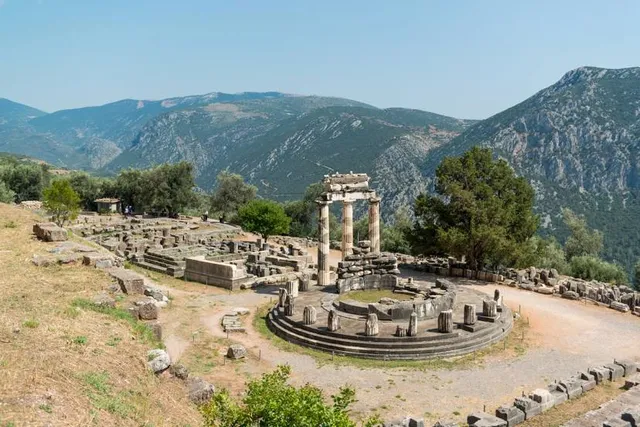
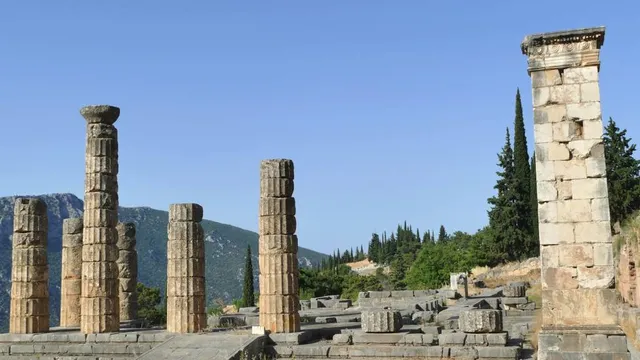
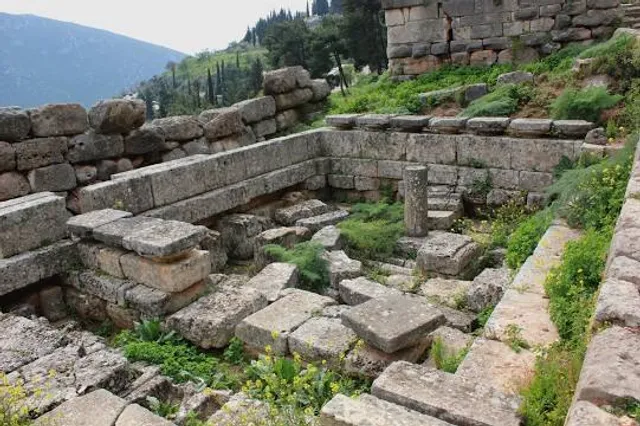
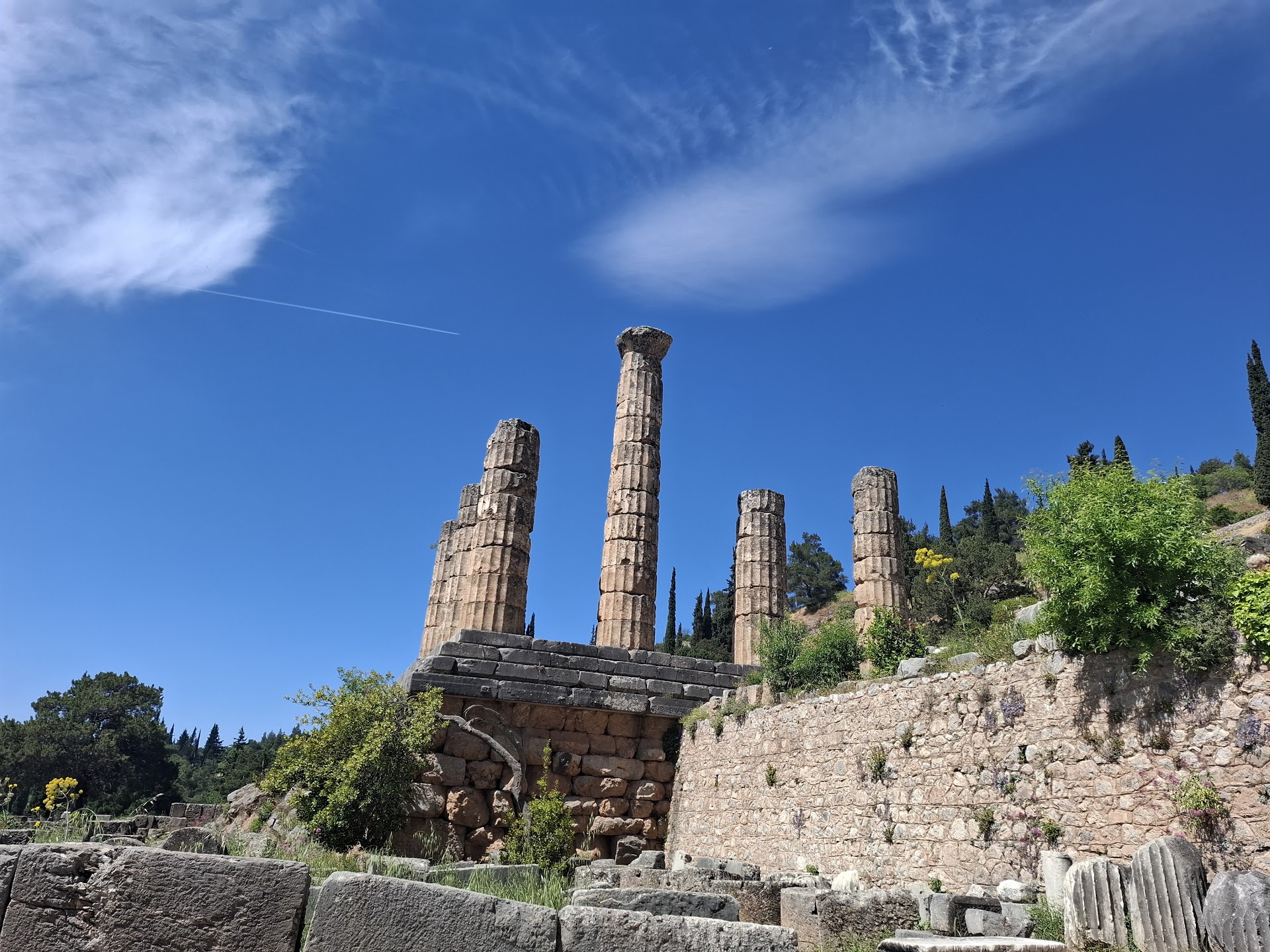
Our exploration began with the renowned Temple of Apollo, one of Greece’s most significant historical sites. Standing amidst these ancient columns, it was easy to imagine the devotion and grandeur that must have filled this place centuries ago. The early sunlight casting soft shadows across the ruins enhanced the mystical allure of this iconic temple.
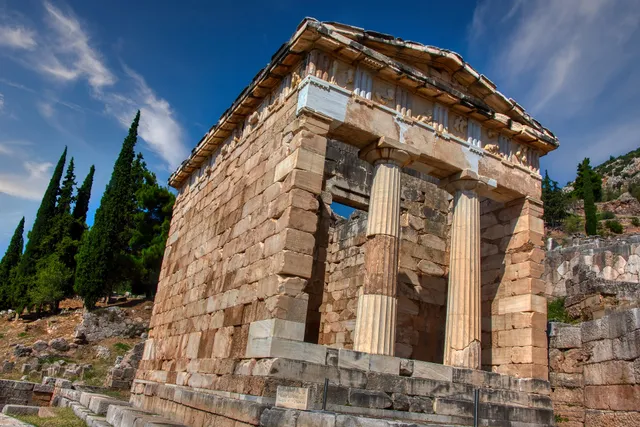
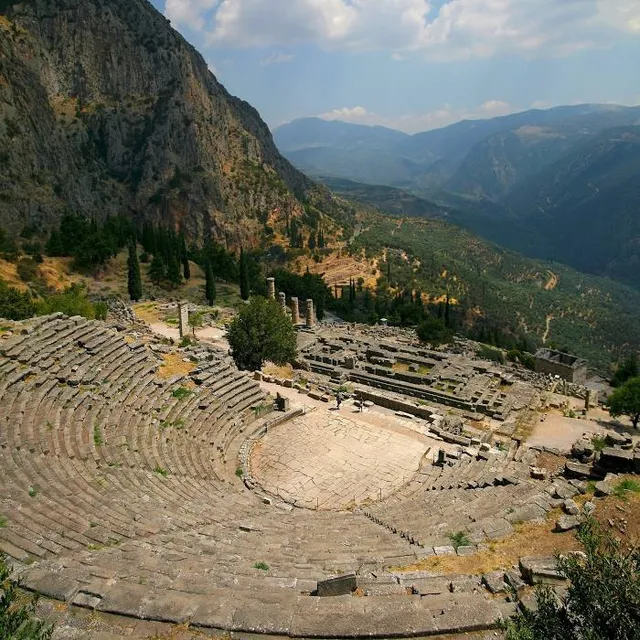
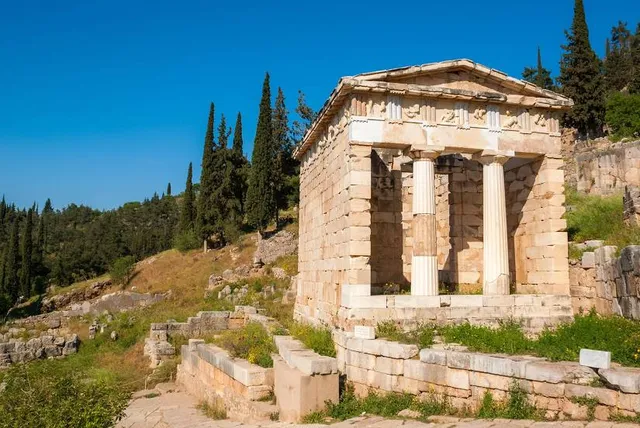
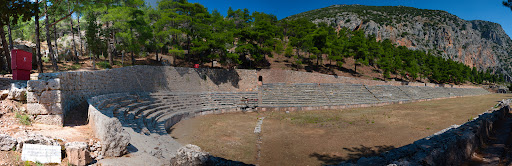
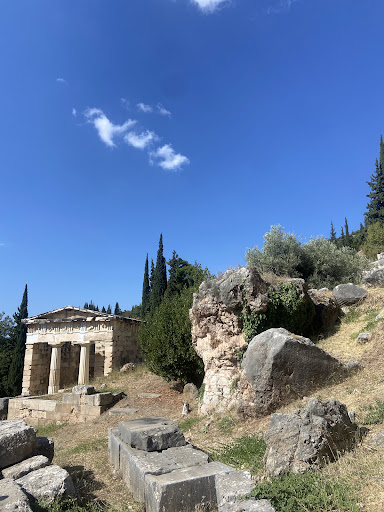
From there, we continued to the Treasury and Theatre of Delphi, each site revealing more layers of Greek history. The theatre, perched on a slope, offered breathtaking views of the valley, while the Treasury’s remnants hinted at the wealth and artistry of Delphi's past. A short but rewarding hike led us to the Ancient Stadium, where the Pythian Games once drew crowds and athletes, making us feel as though we were standing on the very grounds of Greek sporting legacy.
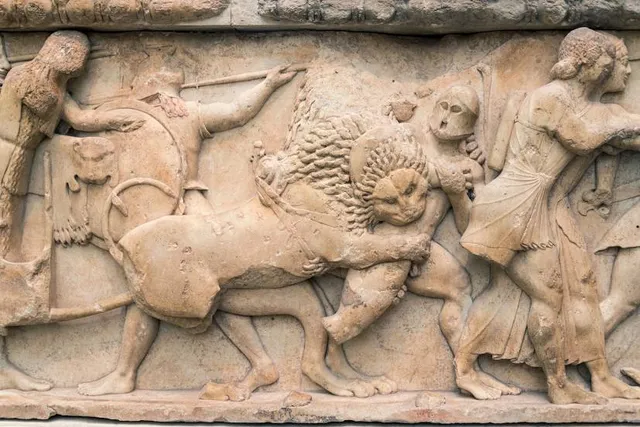
After a few hours immersed in history and surrounded by the natural splendour of the mountains, we took a moment to rest at the museum store. This was a welcome pause to refresh ourselves before heading into the Delphi Archaeological Museum, where the artefacts and statues, such as the Charioteer of Delphi, breathed life into the stories of this ancient site. Each exhibit painted a vivid picture of Delphi’s cultural significance and the artistry of ancient Greece.
A few practical tips for those visiting: bring plenty of drinking water, especially during the warmer months, as the intense sun and high-altitude paths can lead to quick dehydration. Additionally, wearing comfortable and sturdy shoes is essential. The terrain around the ruins is quite uneven, and proper footwear will help you navigate safely and avoid any unfortunate slips or accidents. A hat and sunscreen are also recommended, as there’s limited shade available.
Visiting Delphi is a deeply enriching experience, blending historical depth with magnificent scenery. Arriving early to beat the crowds is advisable, and following these simple tips will ensure a more comfortable and enjoyable visit. For anyone with an interest in ancient history or simply seeking an inspiring place in Greece, the Delphi Archaeological Site is truly a journey...
Read moreWow! What a fantastic place. The setting in the hillside is magnificent. We booked our tickets, €20 each, a timed ticket to the museum that also gives you entry into the archaeological site. We stayed the night in nearby Delphi, which meant we only had a 15 minute scenic walk to the museum. We were able to bypass the considerable queue that had already formed before 9.00am and go straight into the museum. The museum collection has interesting finds from the site and a model of what the place looked like in ancient times. I think we spent less than an hour here before taking the short path to the site itself. A word of warning. The site is on a hillside and seeing it all involves a climb of 300 or so steps and uphill slopes. The track has some uneven sections. People were climbing it with the help of sticks. It was quite a workout for me even in the cooler morning. I would not want to face it in the heat of a summer afternoon. Even today, in May, it got to 26C or so. Bringing water, using Sunscreen, maybe wearing a hat might be sensible. The site has some wonderful, very photogenic, remains of what was one of the most important places in the Ancient world. The Greeks thought it was the centre, or belly button, of the world, where guidance from the Appollo could be obtained. There is a theatre here and a stadium where male athletes would run, jump, wrestle and throw javelins and the discus. In one race they would run only wearing a helmet, greaves and carrying a shield. Happy days! We spent about 3 hours here by which time more parties of coach tours had arrived. There is pretty basic signage in Greek, English and French. I cannot understand why so much of the site is forbidden to visitors. The stadium, the Temple of Appollo, the theatre, are all roped off. Why? In Pompeii, for example, there are no such restrictions in equivalent areas. I think it's a shame and something that could do with a rethink. I'm sure lots of visitors would like the chance to run the length of the stadium, modestly...
Read more667 г до н э - жители древнегреческого города Мегара решили основать новую колонию на берегах Босфора. Их предводитель Виз спросил оракул Аполлона в Дельфах, где ему заложить первый камень, и получил ответ: “Поселись напротив слепых!” Теперь мы знаем заложенный Визом город как Стамбул. И таких запросов к оракулам Аполлона в Дельфах за тысячу лет существования этого религиозного центра было миллионы…
Сочетание искусства, религии и денег сделало его аналогом богатства швейцарских банков, религиозной власти Ватикана, рекламного потенциала Чемпионата мира по футболу и исторического значения всех музеев мира вместе взятых.
Путешествие из крупнейших городов Древней Греции занимало сюда несколько дней, и всё же много веков не только простые люди, но и цари добирались сюда в поисках ответов на свои вопросы. Как правило, они приходили спросить у оракула Бога Аполлона о своем будущем. В период расцвета Святилище в Дельфах занимало около 40 га. Храм Аполлона окружали сотни сокровищниц с портиками и статуями. Всё это возводилось на пожертвования благодарных посетителей.
Каждый посетитель приносил дары Богу Аполлону, а затем мог обратиться к Оракулу со своим вопросом. При этом, Оракул вещал только девять дней в году. Учёные уверены, что Оракулом была женщина-жрица; она находилась под действием каких-то галюцинногенных газов, исходящих из-под земли (в этом месте проходит геологический разлом, в результате которого выделяется газ этилен, известный своим влиянием на работу мозга). Итак, Храм Аполлона окружали сокровищницы и статуи… и одна из известнейших статуй - это Змеиная колонна, установленная перед Храмом Аполлона в 479 г до н э… дело было так, 479 г до н э. В битве при Платеях во время греко-персидской войны победу одерживает объединённое греческие войско во главе со спартанским полководцем Павсанием. В результате Эллада была спасена, а Павсаний превратился в настоящего национального героя. В честь этой победы в Дельфах в дар богу Аполлону была отлита бронзовая Змеиная колонна.
Из описания Геродота мы можем представить, как она выглядела. Это была 8-метровая бронзовая колонна в виде трёх сплетённых между собой змей с открытыми пастями, смотревшими в разные стороны. На головах змей располагался треножник с золотой чашей. Это был не только религиозный жертвенник в дар богу Аполлону, но ещё и памятник героям, павшим в войне.
По всей видимости, у Павсания случился приступ «звёздной болезни». На постаменте колонны он повелел высечь только своё имя, как единственного победителя над персами. Конечно, это страшно обидело греков. А Павсаний отправляется на освобождение Византия, где с головой окунается в не свойственные для спартанцев роскошь и распутство, что закончилось для него плохо. Его обвинили в связях с персами, отправили домой в Спарту, где он и умер в 467 г до н э. После позора Павсания спартанцы соскоблили первоначальную надпись на Змеиной колонне, а вместо неё поместили двустишие знаменитого греческого поэта Симонида:
«Это подарок спасителей обширной Эллады, воздвигнутый здесь, Избавивших её государства от цепей позорного рабства».
На нижних змеиных кольцах были нанесены названия 31 греческого города-государства, объединившихся для противостояния персам.
Прошло 800 лет. На дворе - 324 г уже нашей эры. Император Константин принимает решение перенести столицу Римской империи в Византий. Городской Ипподром украшают памятниками, привезёнными с разных концов Империи, среди которых и Змеиная колонна. И вот уже 1700 лет она стоит в центре современного Стамбула.
Правда, оригинальную золотую чашу, которая первоначально лежала на головах змей, расплавили в 350-х гг н э. А колонну использовали как фонтан (археологи нашли остатки труб). Головы же змей пропали уже во времена Османской империи. Теперь часть одной из голов, найденная при раскопках, хранится в Археологическом музее Стамбула.
И вот точную копию сохранившейся части Змеиной колонны в 2015 г установили в Дельфах при входе в храм Аполлона, там, где 2500 лет назад она была воздвигнута в память о победе при Платеях, как о Дне...
Read more