Sabarmati river has been an integral part in the life of Ahmedabad since the time the city was founded in 1411 along the river banks. Besides being an important source of water, it provided a backdrop to cultural and recreational activities. During the dry seasons, the river bed became a place for farming. With time it also offered place for various informal economic activities, and the river banks were used by informal squatter settlements.
Gradually, however, the intensive uses took their toll on the river. Untreated sewage flowed into the river through storm water outfalls and dumping of industrial waste posed a major health and environmental hazard. The river bank settlements were disastrously prone to floods and lacked basic infrastructure facilities. Lacklustre development took shape along the riverfront. Such conditions made the river inaccessible and it became a virtual divide between the two parts of the city. Slowly, the city turned its back towards the river.
There had been a long-standing acknowledgement that the riverfront could be turned into a major urban asset from its undesirable state. Proposals to achieve the same have been made since the 1960s and it was finally in 1998 that this multi-dimensional project was envisioned and undertaken by the city.
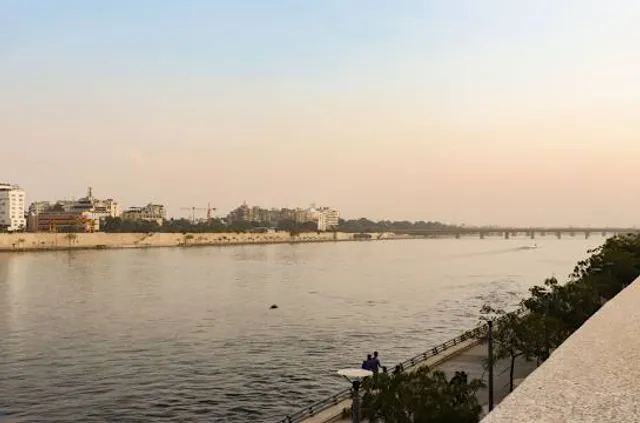
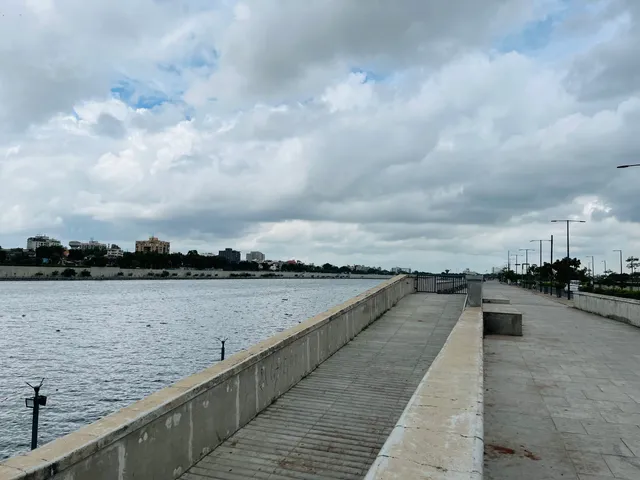
Sabarmati The Sabarmati River is a monsoon-fed river that flows north-south through Ahmedabad, bisecting the city into its western and eastern halves. It has been an integral aspect of Ahmedabad city since its foundation. Initially, the river was the city’s prime source of water. Today, water is supplied from many distant sources. Nonetheless, the river continues to be important. It has provided space for cultural and recreational activities along the banks. Mahatma Gandhi set-up his ashram along the banks of the river and during the freedom movement, the Salt March began from here. The wide, oft-dry riverbed and riverbanks were used more extensively to launder clothes and to dye textiles. During the dry seasons, the river bed was used for farming. It also became a venue for other informal economic activities such as the ‘Ravivari’- Sunday flea market. Gradually, many of the city’s migrant and poor population began to live in informal settlements on the river banks.
Enlarge View All these uses and abuses along with rampant urban growth led to the Sabarmati River becoming polluted, abused and neglected. The riverfront became characterized by unimaginative and unplanned development. Property owners along the banks, who could afford it, built their own retaining walls to protect their properties from flood erosion. The poor citizens living along the riverbanks in slums were disastrously flood prone and lacked basic infrastructure facilities. Sewage-contaminated storm water outfalls and the dumping of industrial waste in the river posed a major health and environmental hazard. In addition to the declining ecological health, the river itself became inaccessible to the majority of the city’s residents. Owing to private ownership of most riverside land and the informal settlements, there were very few public access points to the river. By the 1970s, the bridges were the only places from where citizens could enjoy the expanse of the river running through the heart...
Read moreThe first proposal for developing the riverfront was given in 1961 by prominent citizens of the city. French architect Bernard Kohn proposed an ecological valley in Sabarmati basin stretched from Dharoi Dam to Gulf of Cambay in the 1960s. In 1964, he proposed Integrated Planning & Development of Sabarmati Riverfront by reclaiming 30 hectares of land. The project was considered feasible in 1966 by the Government of Gujarat. Later he distanced himself from the project citing difference between his proposal and the project being implemented. In 1976, the Riverfront Development Group proposed an incremental approach for the construction. In 1992, National River Conservation Plan proposed the construction of sewers and pumping stations to reduce water pollution.
The Ahmedabad Municipal Corporation (AMC) set up the Sabarmati Riverfront Development Corporation Ltd (SRFDCL) in May 1997 funded by Government of India with a seed capital of ₹10 million (US$140,000) for riverfront development. Environmental Planning Collaborative (EPC) led by Bimal Patel prepared the feasibility report in 1998. Initially the proposal was to construct the riverfront to cover a stretch of 10.4 km stretch from Subhash bridge to Vasna barrage and to reclaim 162 hectares (400 acres) of the riverbed. In 2003, the project extended to cover an 11.25 km stretch and reclamation of 202.79 hectares (501.1 acres) and was put on fast track. The project estimated to cost ₹12 billion (US$170 million) which will be recovered by selling of part of reclaimed land for commercial and residential purpose. Ahmedabad based HCP Design, Planning and Management Pvt. Ltd is roped in as the main architect of the project. The project has encountered several delays due to concerns regarding water level, flooding, rehabilitation of displaced slum dwellers and the opposition from activists involved with slum rehabilitation.
The construction began in 2005. Its heavy engineering and land reclamation is completed and the sewage system is also finished at the cost of ₹ 900 crore. The 11.5 km long lower promenades on both banks are completed and some of its section were opened to public on 15 August 2012. It was inaugurated by then state Chief Minister Narendra Modi. Following this, the waterfront is gradually opened to public as and when facilities are finished. Various facilities are actively under construction since then. Total ₹ 1152 crore is spent on the...
Read moreSabarmati Riverfront: Ahmedabad's Under-Appreciated Oasis (with a Few Caveats) The Sabarmati Riverfront in Ahmedabad often gets overshadowed by its reputation for bustling crowds. However, for me, it's a hidden gem offering a surprising sense of solace and peace amidst the urban landscape. Here's a closer look at the riverfront's unique charm:
Tranquility amidst the Buzz:
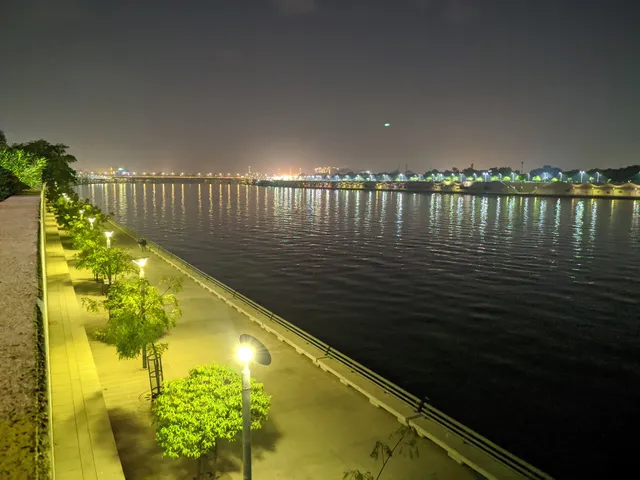
Despite the crowds, particularly during peak hours, the riverfront offers a sense of serenity. Perhaps it's the calming sight of the flowing water or the vast open space, but I always manage to find a pocket of peace here. For those seeking a quiet escape in Ahmedabad's limited nightlife scene, the riverfront can be a surprisingly good option.
Limited Amenities:
There are a few eateries scattered around the riverfront, so grabbing a bite to eat is possible. However, restroom facilities are currently unavailable, which is a significant drawback. Additionally, water is only available for purchase, so be sure to come prepared.
Nightlife with a Twist:
While not your typical nightlife destination, the riverfront can be a unique spot for late-night conversations or impromptu jam sessions. If you're lucky, you might even encounter small musical groups practicing under the night sky.
Curfew Considerations:
Keep in mind that there's a 2 am curfew enforced by the police. So, enjoy your late-night conversations or walks, but be prepared to wrap things up before then.
Recommendation:
The Sabarmati Riverfront is ideal for those seeking an alternative to the usual nightlife scene. It offers a peaceful ambiance, a chance for conversation under the stars, and a unique glimpse into the city's pulse. However, be prepared for limited amenities and the curfew.
Bonus Tip:
For an even more peaceful experience, try visiting the riverfront early in the morning before the crowds arrive. You might just be surprised by the tranquility you find.
To know more detailed reviews about food, follow me on Instagram - foodwith_rumbumm and for travel...
Read more