I went on a Friday afternoon around 2 PM. There was no line and it was pretty quiet. I could register right away with help from the receptionist. It was free. They just asked for my name, phone number, and where I was from. I had a fairly heavy backpack with me, but I didn’t see any lockers around. I also didn’t ask the receptionist if it was okay to leave my stuff somewhere.
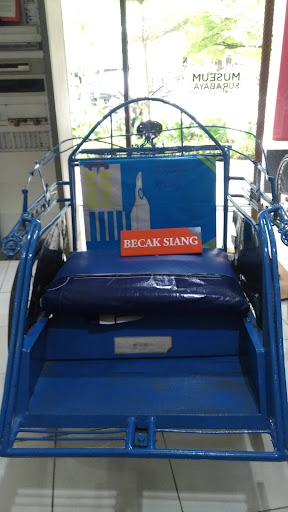
Inside, the museum is mostly filled with narratives, photos, maps, historical artifacts, and a few videos, animations, and illustrations. It was informative and helped me learn more about the history of Surabaya. There were English explanations too. You’re allowed to take photos as there didn’t seem to be any restrictions. In some areas, there were chairs if you needed to rest, though the museum itself isn’t that big. Less than an hour is enough to explore the whole place, and it’s not tiring.
To make the experience better and more comfortable, the lighting could be improved as a few corners felt a bit dark (though the displays were still readable). Some of the texts were peeling off or didn’t follow standard Indonesian spelling. The narrative style was also very textbook-like, with monotone colors and fonts. Compared to museums abroad, they could vary the text design more, e.g. use different colors, bold or italic styles, and present the stories in a more engaging, storytelling way. A timeline on the wall would also help make the sequence of events clearer. Floor stickers or arrows showing where to start and where to go next would be helpful too. It would be great if they provided a multilingual pamphlet at the entrance, or added QR codes in each section for translation or audio versions, especially useful for deaf or non-Indonesian/English-speaking visitors.
Overall, it’s a nice museum with solid content and good intentions. It’s definitely worth a visit if you’re interested in history or want to learn more about Surabaya. With a few improvements in presentation and accessibility, the experience could be...
Read moreLocated inside the Mal Pelayanan Publik (Public Service Mall) area, hides a museum area displaying items of historical significance to Surabaya city. The museum is wonderful, second best only to the Museum of Sampoerna in terms of how the museum is organized and managed. You're privy to maps and historical records detailing how Surabaya come about. They also showcases food, traditional dresses, musical instruments, famous Surabaya people, antique chairs and desks, and many more - including the explanation of how they came to be. These written displays are also provided in English, and most of them are correctly translated - which, if you're a museum enthusiast who doesn't speak Indonesian, is a pleasant surprise.
However, since the museum area is inside a public service mall, most people who go here are public officials who work in the building or civilians who are perusing their services. This means that your typical touristy get up might not be looked upon well during your visit - try to scrounge up a buttoned up shirt or blouse in combination with a pair of pants (jeans are fine) or...
Read moreGedung SIOLA berawal dari tahun 1877 ketika gedung itu untuk pertama kalinya dibangun oleh investor berkebangsaan Inggris bernama Robert Laidlaw (1856-1935), pemilik Whiteaway Laidlaw & Co., salah satu perusahaan ritel terbesar di dunia ketika itu (sekarang, kira-kira seperti Carreefour sekarang). Di gedung yang baru dibangun itu ia membuka pusat perkulakan dengan nama: “Het Engelsche Warenhuis,” Toko Serba Ada Inggris.
Masa jaya keluarga Whiteaway Laidlaw di bidang perdagangan berakhir pada 1935, saat pendirinya meninggal dunia. Bisnis ritelnya mengalami kebangkrutan, tetapi bisnis perbankannya tetap berjalan, dan masih ada sampai sekarang.
Saat Jepang masuk, Gedung tersebut diambil-alih oleh pengusaha dari Jepang, dan mengganti namanya menjadi Toko Chiyoda. Toko Chiyoda adalah toko kopor dan tas terbesar di Surabaya. Tas dan kopor Chiyoda sangat populer, sehingga banyak orang ikut-ikutan membuka toko tas dan kopor di sekitar toko itu.
Pengaruh Chiyoda masih ada sampai sekarang, yaitu di Jalan Gemblongan yang bersambungan lurus dengan Jalan Tunjungan, dan Jalan Praban yang simpangan dengan Jalan Tunjungan, masih ada toko-toko yang menjual tas dan kopor.
Masa jaya Chiyoda tak lama, setelah Jepang menyerah kalah kepada sekutu, Toko Chiyoda ditutup. Pemiliknya kembali ke Jepang. Gedung itu menjadi kosong.
Saat pecah perang 10 November 1945 antara rakyat Surabaya dengan pasukan sekutu, Gedung Chiyoda digunakan sebagai salah satu basis pertahanan rakyat Surabaya dari gempuran pasukan sekutu. Akibatnya gedung itu dijadikan sasaran tembakan tank-tank pasukan sekutu, sehingga membuatnya rusak berat dan terbakar.
Setelah perang melawan sekutu berakhir, gedung eks-Toko Chiyoda itu dibiarkan menjadi gedung rusak yang tak terurus sampai dengan 1950. Saat Presiden Soekarno melakukan nasionalisasi terhadap aset-aset pemerintahan kolonial, Pemerintah Kota Surabaya mengambil-alih gedung tersebut menjadi aset Pemkot Surabaya.
Pada 1960, lima orang pengusaha, yaitu Soemitro, Ing Wibisono, Ong, Liem dan Ong mengontrak ged1877ung tersebut dari Pemkot Surabaya. Mereka memperbaiki dan merenovasi gedung tersebut dengan tetap mempertahankan bentuk aslinya, lalu membuka pusat toko grosir di situ, yang diberi nama dari singkatan nama-nama mereka sendiri, yaitu SIOLA. Sejak itulah gedung itu dikenal masyarakat Surabaya dengan nama Gedung SIOLA, sampai sekarang.
SIOLA segera menjadi kebanggan warga Surabaya di masa itu, menjadi semacam “mall” pertama di Surabaya, menjadi ikon kota Surabaya. Bahkan sampai sekarang pun ketika tulisan nama “SIOLA” sudah tidak ada lagi di gedung tersebut, ia masih tetap disebut sebagai Gedung SIOLA.
SIOLA segera menjadi kebanggan warga Surabaya di masa itu, menjadi semacam “mall” pertama di Surabaya, menjadi ikon kota Surabaya. Bahkan sampai sekarang pun ketika tulisan nama “SIOLA” sudah tidak ada lagi di gedung tersebut, ia masih tetap disebut sebagai...
Read more