The Grand Bazaar (Persian: بازار بزرگ Bāzār e Bozorg) is an old historical bazaar in Tehran, Iran. It is split into several corridors over 10 kilometres (6.2 mi) in length, each specializing in different types of goods, and has several entrances, with Sabze-Meydan being the main entrance.
In addition to shops, the Grand Bazaar contains mosques, guest houses, and banks. It has access to the rapid transit system of Tehran Metro through the stations of Khayam and Khordad 15th.
The area around Tehran has been settled since at least the 6th millennium BC, and while bazaar-like constructions in Iran as a whole have been dated as far back as the 4th millennium BC, Tehran's bazaar is not that old. It is hard to say exactly when the bazaar first appeared, but in the centuries after the Muslim conquest of Iran, travelers reported the growth of commerce in the area now occupied by the current bazaar. The Grand Bazaar is thus a continuation of this legacy.
Research indicates that a portion of today's bazaar predated the growth of the village of Tehran by the time of the Safavid Empire, although it was during and after this period that the bazaar began to grow gradually. Western travelers reported that, by 1660 CE and beyond, the bazaar area had still been largely open and only partially covered. Despite relying heavily on this historical legacy, much of the bazaar itself was constructed much later. The oldest surviving buildings, that is to say, the walls and passages in the bazaar, rarely exceed 400 years, with many being constructed or rebuilt within the last 200 years. The bazaar grew as a "city within a city" for much of the 19th century, and was able to expand largely and without much outside interference. However, under the reign of Reza Shah, as Tehran began to grow and reform exponentially in the early 20th century, the changes brought by this rapid development saw much of the bazaar disappear.
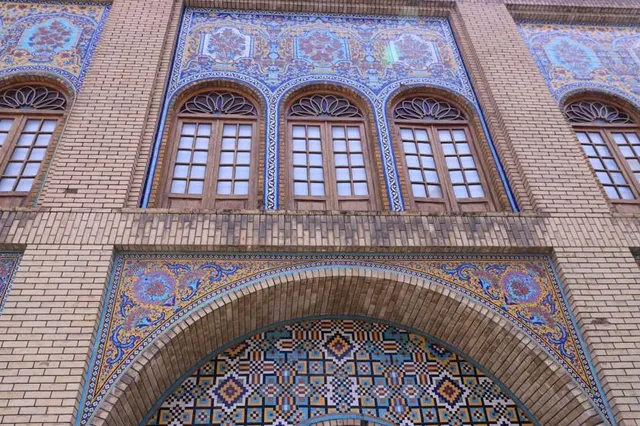
The old sections of the bazaar are generally similar in architectural style, while the parts added in the 20th century often look remarkably different. Critics say that little consideration had been given for the construction of these new sections. However, in the late 20th century, some projects were undertaken in order to beautify the bazaar through the use of plaster moulding and decorative brickwork The bazaar is viewed as a force of conservatism in the Iranian society, providing strong links between the clergy and the middle class traders. The 1979 Revolution received strong backing from these forces, and as one of the most important bazaars in the country, the Grand Bazaar of Tehran was a center for pro-revolutionary feeling and finance.
There were several reasons why the bazaar class worked hard to help advance the revolution. The government of Mohammed Reza Pahlavi was anathema to the bazaaris, who seemed set to lose out as the country was being industrialized, and they feared that they would be left behind and their status in society would be reduced. Similarly, another concern for the bazaar class, not just in Tehran but throughout Iran, was that these traditional economic forces did not benefit from the 1974–1978 oil boom, and were thus even more inclined to aid the revolution.[5] As such, the Grand Bazaar of Tehran was a hotbed of support for the revolution, which positioned itself opposite the monarchy. The Grand Bazaar continues largely to support the establishment, particularly as conservative political forces often adopt a low tax, laissez-faire approach to the bazaaris.[6]
Today, the Grand Bazaar is still an important place of commerce. However, much of the city's trade and finance has been moved to new gentrified and upscale parts of northern Tehran. In addition to traditional goods, the market for watches and local jewelry is apparently growing, most likely as a result of the growth of tourism. The bazaar is busiest around midday, and between...
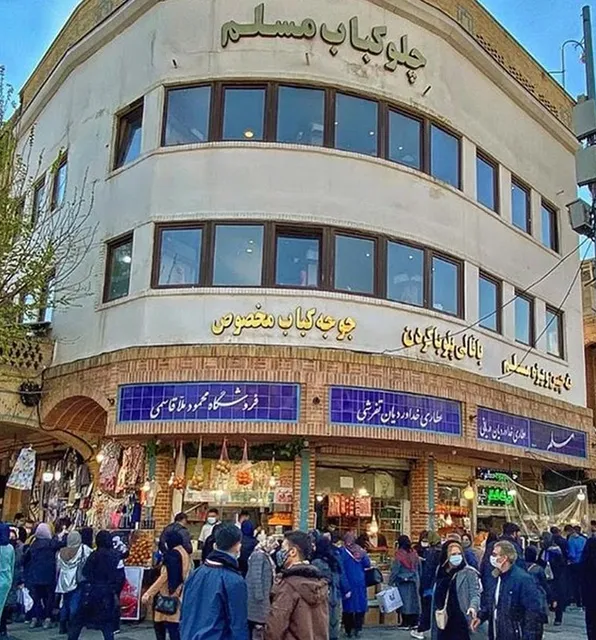
Read moreThis isn’t just a place to shop — it’s a deep dive into the culture, history, and daily life of the city. I spent nearly four hours wandering through the endless corridors, and honestly, I could’ve stayed longer. The bazaar is massive — like, overwhelmingly massive. It’s a maze of narrow alleys, vaulted brick ceilings, domed intersections, and small courtyards packed with everything you can imagine: Persian carpets, spices that hit your nose from meters away, handmade copper pots, gold jewelry, cheap clothes, leather goods, traditional sweets, tea sets, and tons more. It’s a mix of organized chaos and timeless beauty. What really blew me away was the architecture — ancient arches, tiled walls, and intricate ceilings that reflect Iran’s rich cultural heritage. Some parts of the bazaar date back to the Safavid and Qajar eras. You don’t just walk through the bazaar — you travel through centuries of Iranian history. Of course, it’s busy. Like, really busy. Especially after noon. If you want a quieter experience and fewer crowds, go early — 9 or 10 AM is perfect. Thursdays are the worst in terms of crowd density, and many shops are closed on Fridays. If you’re claustrophobic or not a fan of crowds, just be mentally prepared. But honestly, the energy is part of what makes this place so magical. One of the highlights for me? The food! You can find some of the best local dishes hidden deep in the market. I stumbled into a tiny kabab shop run by an older man with a big smile — best koobideh I’ve ever had. Super juicy, perfectly spiced, and dirt cheap. There are also places selling fresh bread, ash reshteh (traditional Persian noodle soup), and saffron ice cream. You have to try the food here. • Bring cash. Some places don’t accept cards. • Wear comfortable shoes — you’ll walk a LOT. • It gets hot inside, especially in summer, so dress lightly. • Bargain. It’s expected, and honestly, it’s part of the fun. • Navigation is tricky. Google Maps won’t help much inside, so just embrace getting lost. • Watch your belongings — like any crowded market, there are pickpockets. Yes, it can be loud, dusty, and even chaotic — but that’s exactly why it’s worth visiting. The Grand Bazaar isn’t polished or sanitized for tourists. It’s raw, authentic, and alive. You see real people living their real lives — buying, selling, yelling, laughing, cooking, and sharing stories. I walked out with a handful of goodies, a full stomach, and a head full of memories. If you want to feel the heartbeat of Tehran, come here. Get lost, talk to people, eat something you’ve never tried before. You’ll...
Read moreThere is very big and beautiful. You can buy every thing there. Architecture and structure of Tehran market:
Before we get into the discussion of Tehran's bazaar architecture, it's a good idea to take a brief look at the structure of the bazaar. In general, the main structural elements of the market are:
The main or secondary side of the bazaar, which is a long way, and on both sides of which there are shops. Sara, which is a middle courtyard with interconnected rooms around it. The houses are different in terms of the shape of the land, the number of floors, the type of porch, the portico and the corridors. Chaharsooq, which is the intersection of two main lines, has a different architecture and detailed interior decorations.
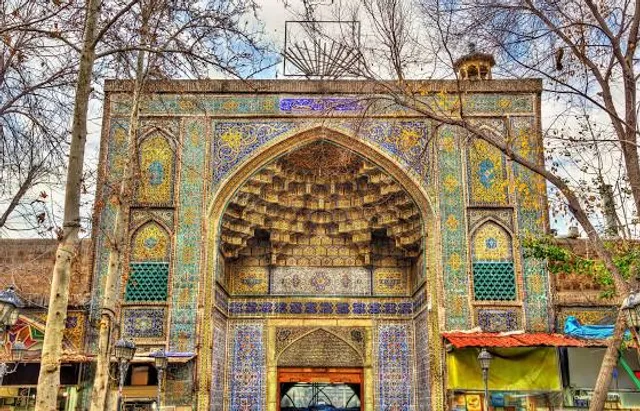
Tehran Bazaar, like any other Iranian bazaar, is a collection of winding corridors, multiplicative arches, domes, etc., each of which has been built with great care. It's true that over time, the market has changed a lot, but the old parts are still there and have a lot of beauty. The old parts of the bazaar are made of arches and domes, and the holes and openings between the domes provide light to the interior. These openings also act as vents for the market and cause air circulation.
Details on the structure of the market show that the architect and designer of this space was not born and the hands of foreign architects or skilled interior masters were involved. Since market architecture does not belong to one period and has been formed during different periods, it is not possible to consider an exact style for it; But most of it has signs of Tehran's architectural style.
Over time, this space has expanded and changed a lot, and the new and renovated sections do not have significant architecture. At one time, parts of the bazaar were roofed due to the summer heat, and at another time service spaces such as a coffee house, a zurkhaneh, a bath, a mosque, a saqqah, and many husseiniyahs were formed. The orders were added one by one to the market, each dedicated to the sale of private goods. Each of these sections had its own support, mosque, bath, and special programs, and competed in celebrations and mourning ceremonies to draw people's attention to other...
Read more