Here is a 500-word review of the Basilica of Santa Chiara in Assisi, Italy:
Basilica of Santa Chiara – A Sacred Gem in the Heart of Assisi
Nestled on the slopes of Assisi with sweeping views over the Umbrian valley, the Basilica of Santa Chiara (Saint Clare) is a peaceful, radiant tribute to one of the most beloved figures in Christian history. Though often overshadowed by the grand Basilica of Saint Francis just a short walk away, Santa Chiara offers its own powerful spiritual presence and architectural beauty that moves visitors in quieter, more intimate ways.
Built in the mid-13th century and dedicated to Saint Clare of Assisi, a close follower and spiritual companion of Saint Francis, the basilica serves as both a place of worship and a physical testament to her legacy. Clare was the founder of the Order of Poor Ladies, later known as the Poor Clares, and she lived a life of radical poverty, humility, and service. This same simplicity is echoed in the church’s design.
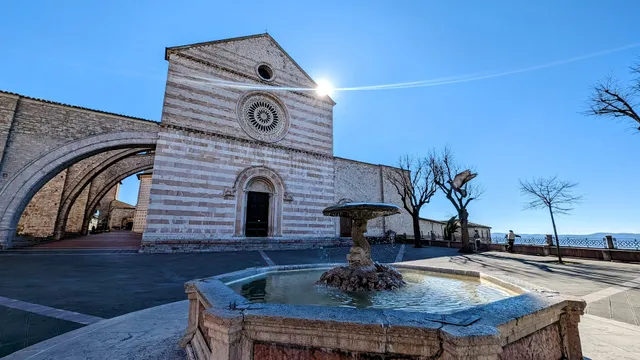
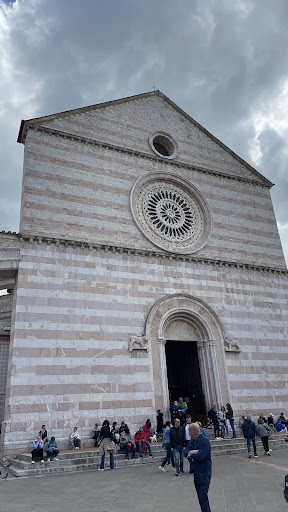
The façade of the basilica is striking in its understated elegance. Composed of alternating bands of pale pink and white stone from Mount Subasio, it reflects the light in soft, ethereal tones—particularly at sunrise or sunset. A large rose window adorns the front, typical of Umbrian-Gothic architecture, and the entrance is humble, yet inviting. The bell tower, added later, completes the silhouette of the church against the sky.
Upon entering the basilica, the atmosphere shifts dramatically. It’s quiet, dimly lit, and deeply contemplative. The simplicity of the interior draws the eye and the heart toward what matters most: prayer and reflection. Frescoes adorn the walls, including some attributed to early followers of Giotto. These delicate images tell the story of Saint Clare’s life and her profound faith, adding color and warmth without overwhelming the space.
The true heart of the basilica lies beneath, in the crypt where Saint Clare’s body rests, displayed in a glass coffin. Pilgrims and visitors alike approach with reverence. Her incorrupt body, long preserved, serves as a reminder of the depth of her devotion. Surrounding her tomb are relics of both Saint Clare and Saint Francis, including tunics, haircloths, and personal effects that humanize these legendary figures and connect the visitor to their daily lives.
Outside the basilica, the piazza offers a panoramic view of the Umbrian countryside, making it one of the most beautiful and tranquil spots in Assisi. Whether you're a pilgrim, a history enthusiast, or a casual traveler, sitting on the stone steps as the bells chime can be a moment of deep peace.
The Basilica of Santa Chiara is not grand in a worldly sense, but its spiritual weight is undeniable. It embodies the Franciscan values of humility, beauty, and inner strength. In a town steeped in faith and history, this sacred space is both a monument to a powerful woman and a place where the soul can breathe. Visiting Santa Chiara is not just about seeing a church; it’s about feeling a presence—a gentle call to simplicity, compassion, and...
Read moreInteresting landmark even if you are not catholic. Recommended! Saint Clare of Assisi and Saint Francis of Assisi had a profound and intimate relationship, both spiritually and personally. Clare was inspired by Francis's dedication to a life of poverty and service to God, and she sought his guidance in her desire to live a similar life of devotion. When she was 18, Clare heard Francis preach during Lent in the church of San Giorgio in Assisi, which deeply influenced her decision to dedicate her life to God.
Clare sought Francis's mentorship, and he became her spiritual guide and mentor. He supported her decision to reject a marriage arranged by her family and helped her escape to join him and his followers at the Porziuncola, where he cut her hair and she donned a simple habit.
Francis established the Order of Poor Ladies (later known as the Poor Clares) for Clare and her companions, which embraced a life of poverty, prayer, and service. Clare became the abbess of the first monastery of the order, San Damiano, near Assisi.
Their relationship was characterized by mutual respect, spiritual kinship, and shared commitment to poverty and service. They corresponded frequently, offering each other guidance and encouragement in their respective religious endeavors.
Their bond continued even after Francis's death, with Clare continuing to draw inspiration from his teachings and example. Clare's devotion to Francis was profound, and her life and work were deeply influenced by his spiritual legacy. The Basilica of Saint Clare (Basilica di Santa Chiara) in Assisi is a significant religious site dedicated to Saint Clare of Assisi, one of the first followers of Saint Francis of Assisi. Constructed in the 13th century in the Gothic style, it houses the remains of Saint Clare. The basilica is known for its simple yet elegant architecture, with notable features such as the rose window and the crucifix attributed to Saint Francis. It holds a special place in the hearts of pilgrims and visitors seeking spiritual...
Read moreIf you are looking for an incredible prayer opportunity, get up early and attend morning prayer (6:45) and mass (7:15) in the chapel of the San Damiano crucifix. Even if you don’t speak Italian, listening to the singing of the cloistered Poor Clare sisters while praying before the same cross that Sts. Francis and Clare were so shaped by is an incredible experience. You will see reproductions of the San Damiano cross everywhere - and if you have any Franciscan institutions in your hometown, you’ll have seen them there too. This is the original. We make it a daily practice to get here for morning mass. If you do go, please respect that this is an opportunity for prayer and not a tourist attraction.
All that said, the main church is a beautiful place of prayer in its own right. It isn’t open for prayer until later in the morning but it’s worth returning. The crucifix over the main altar is not famous, but it’s a powerful image of the...
Read more