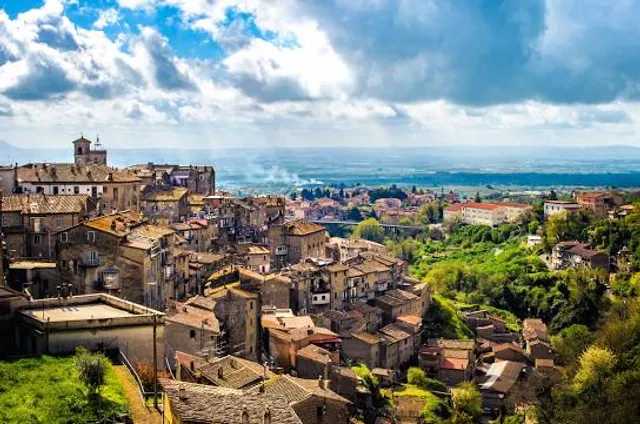
Villa Farnese, also known as Villa Caprarola, stands as a striking Renaissance masterpiece in the town of Caprarola, about 50 kilometers northwest of Rome. Perched above the town and surrounded by the wooded hills of Monte Cimini, the villa dominates its landscape with a bold pentagonal design that blends the strength of a fortress with the elegance of a palace.
Originally conceived in the early 16th century by Cardinal Alessandro Farnese, the future Pope Paul III, the site began as a fortified castle. Its pentagonal foundations, designed by renowned architects Antonio da Sangallo the Younger and Baldassare Peruzzi, were intended for military defense, evident in the angled bastions and central courtyard that allowed for strategic protection.
The transformation from fortress to villa was realized decades later by the cardinal's grandson, also named Alessandro Farnese. In 1556, he commissioned Giacomo Barozzi da Vignola, a leading Renaissance architect, to convert the unfinished stronghold into a magnificent country residence.
Construction began in 1559, and the result is a harmonious blend of military architecture and refined Renaissance artistry. The villa’s imposing exterior features a grand double staircase ascending to the main entrance, robust stone columns, and five massive arched windows that flood the main floor with natural light.
The combination of symmetry and strength reflects the power and prestige of the Farnese family, who used the villa as both a symbol of their influence and a retreat from the politics of Rome.
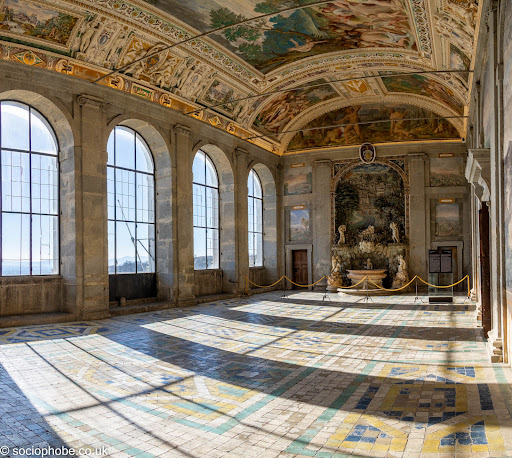
Inside, Villa Farnese is a showcase of Renaissance art and design. The five floors are meticulously organized, with the piano nobile (main floor) housing the grand Room of Hercules, lavishly decorated with frescoes that celebrate the Farnese legacy. The interiors are adorned with intricate ceiling frescoes, luxurious apartments, and a celebrated spiral staircase known as the Scala Regia. Every room tells a story, from mythological scenes to historical events, making the villa a living testament to the family's ambition and cultural sophistication.
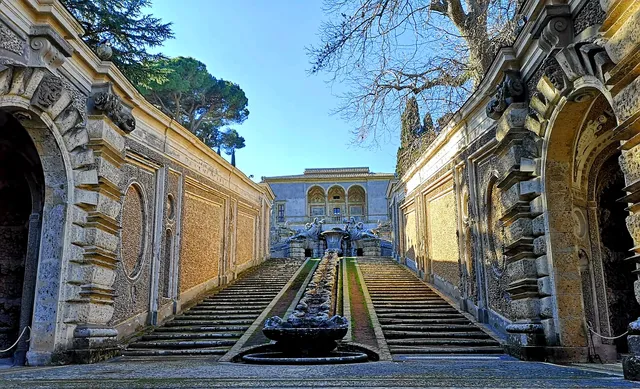
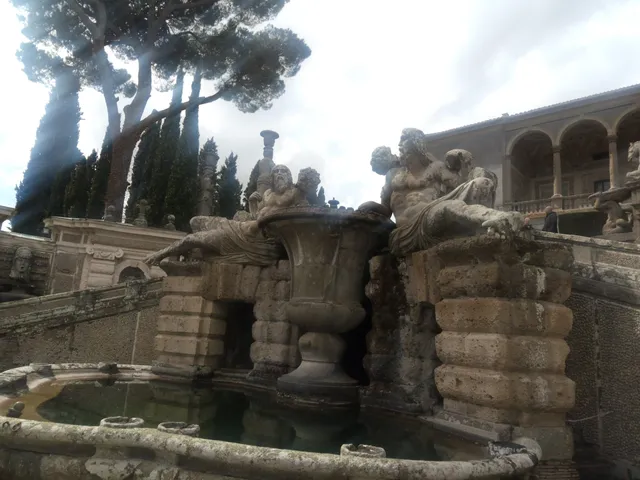
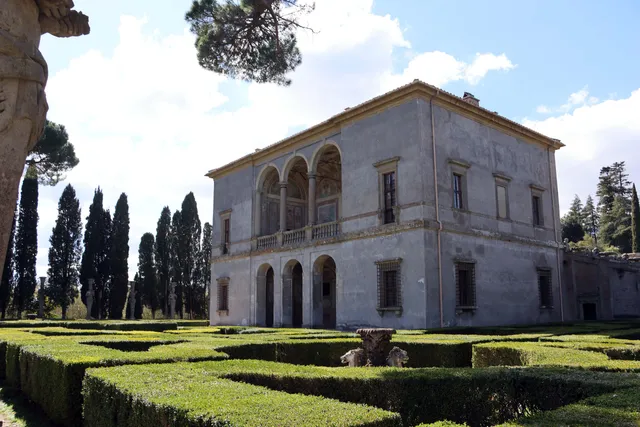
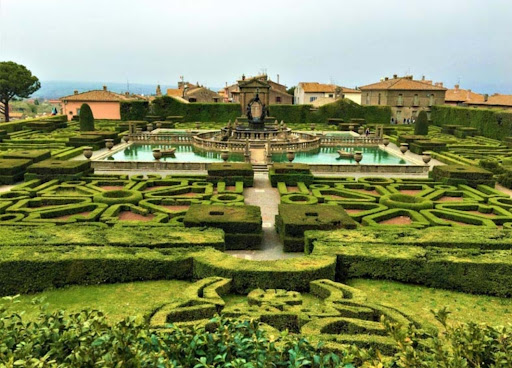
The villa is equally renowned for its gardens, which extend the architectural grandeur into the landscape. The Renaissance gardens feature geometric parterres, elegant fountains, and a secluded summerhouse known as the Casino, offering tranquil spaces that complement the villa’s opulent interiors. These gardens were designed for both pleasure and display, providing sweeping views of the countryside and further underscoring the estate’s status.
Today, Villa Farnese is managed by the Italian Republic and is open to the public as a historical and cultural monument. Its unique blend of fortress and palace, combined with its artistic treasures and scenic setting, make it one of the finest examples of Renaissance architecture in Italy and a compelling destination for anyone interested in history, art, or architecture.
The villa’s story, from its origins as a defensive stronghold to its transformation into a symbol of aristocratic power, is deeply woven into the fabric of Caprarola, giving the town a majestic identity that endures...
Read moreWe were able to park right next to the palace but were already in the overflow car park although I have no idea where everyone else was as we only saw one other couple in the almost three hours that we were there. The palace is in a superb location with quite incredible views and well outside the hustle of Rome for a busy cardinal!
I had heard of Farnese but didn't know any detail - Alessandro Farnese, who had most of the work done on the palace - was made a cardinal at 14 and ended his long career as Vice Chancellor. He used his position to amass wealth on a staggering scale and his income was 1% of the entire GDP of Catholic Europe in the sixteenth century. On the plus side though he was a notable patron of the arts and sciences and an antiquarian as well as being a doting father.
The palace stayed in the Farnese family from 1521 until 1731 when the Bourbons of Naples inherited it. in 1941 it was appropriated by the state and has been publicly owned since then.
Entrance was €5 each, cash only of course, and we were then given free reign to explore. I'm not usually into these kinds of buildings but the art work and design of this place was stunning. Probably not surprising considering the resources but wealth and taste don't always go together. The map room was certainly my favourite, a world map and then continental maps, based on the latest scientific knowledge at the time.
The design of the palace was based on a planned fortress so it was hexagonal in shape with a circular courtyard. The route through was excellent with detailed explanations in every room and we just took our time wandering through. The staircase was particularly amazing but very difficult to photograph without a tripod. After a couple of hours we exited the building into the gardens.
The first part of the garden was a formal box hedge design and we didn't spend long there but the High Garden consisted of a 5-10 minute walk through beech forest before reaching another ornate building. Anywhere else this building would have been impressive on its own but here it was just a summerhouse. There was long water feature and more hedges along with lots of classical statues. As we were walking back we saw other visitors for...
Read moreVilla Farnese (Palazzo Farnese), Caprarola
If the Sistine Chapel leaves you awestruck and exhausted by the crowds, come to Villa Farnese. This place delivers the same jaw-dropping “how did humans paint all this?” feeling—without the shoulder-to-shoulder shuffle. Room after room is wrapped in frescoes, stucco, and symbolism; you feel the years of craft in every ceiling and cornice.
The highlight for me is the Map Room: a wraparound atlas of the known world that reads like a Renaissance data wall. Stand in the center and you can imagine cardinals and captains reading coastlines, trade winds, and borders—more than decoration, it feels like a political and strategic dashboard of its day. I loved spotting details like “Scandia,” “Nova Spagna,” and a portrait labeled Marcus Polus watching over the cartography—tiny windows into how they saw the world.
Other moments that stay with you: the elegant helical staircase (perfectly proportioned, endlessly photogenic), the grand salons with mythological ceilings that pull your eyes upward, and the serene courtyards that reset your senses between fresco marathons. Even the approach is cinematic—the palace rising above the town like a stage set.
Practical bits: it’s far less crowded than Rome’s headline sights, so you can linger and actually look. Give yourself time; every wall rewards patience. Comfortable shoes help, and a weekday morning is ideal.
Bottom line: wildly underrated and absolutely bucket-list worthy. Villa Farnese is history, art, and power—painted across stone—and one of the most satisfying cultural visits I’ve...
Read more