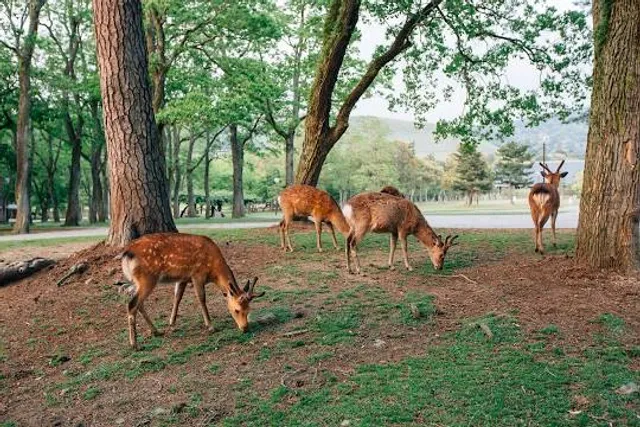
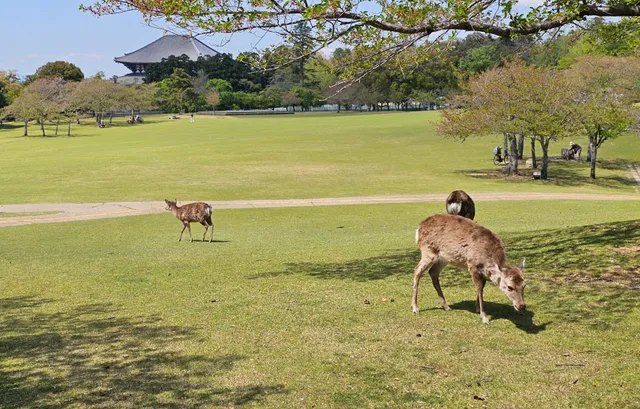
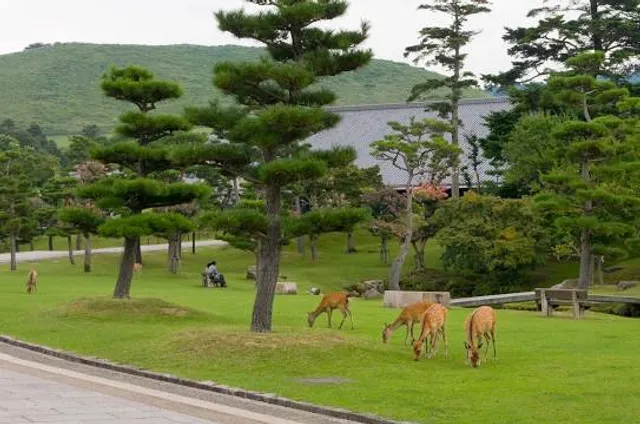
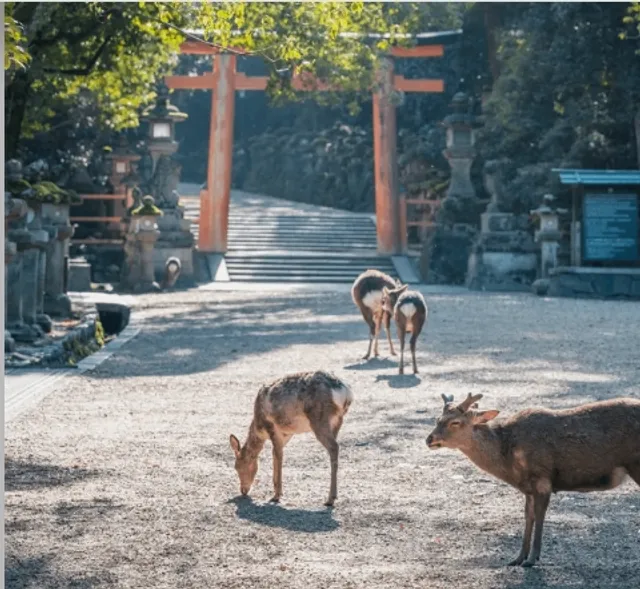
As the morning mist lingered, I made my way to Nara Park, feeling the cool air brush against my cheeks. On this early spring morning, with few tourists around, there was a sense of tranquility that promised a special experience ahead. As I entered the park, the scent of fresh buds mingled with the soft sounds of deer grazing. A few deer were enjoying their breakfast on the dew-covered grass, creating a peaceful scene.
At a nearby stall, I purchased some deer crackers, and the sound immediately caught the attention of several deer who slowly approached. A shy young deer kept its distance at first, while a larger, more experienced one confidently strode up behind it. When I held out a cracker in my palm, I was surprised by the gentle, moist touch of their noses – much softer than I had anticipated.
Walking towards Todaiji Temple, the morning sun illuminated the stone-paved path beautifully. Each ancient stone seemed to hold centuries of history, and walking upon them gave me an extraordinary feeling of following in the footsteps of countless generations. In an amusing moment, while consulting my map, a deer suddenly tugged at it from behind, causing me to let go in surprise. A local resident chuckled and explained, "They love paper, you know," teaching me an unexpected lesson about deer behavior that first-time visitors might not expect.
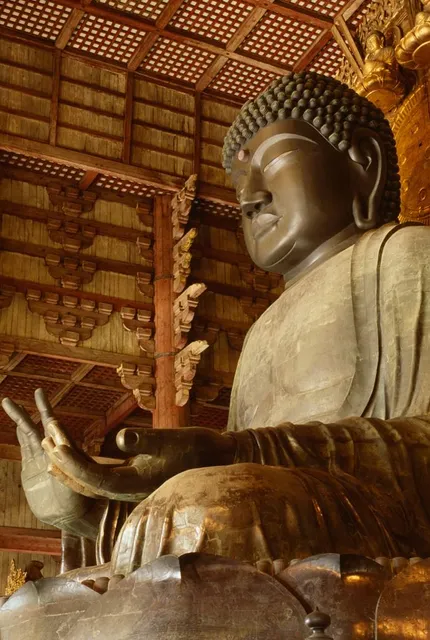
By the time I reached the Great Buddha Hall, the number of visitors had gradually increased, bringing life to the previously quiet space. After paying the entrance fee, I was immediately struck by the Buddha statue's imposing presence – far larger than I had imagined. As I tilted my head back to take in the view, the gentle fragrance of incense wafting through the air, the Buddha's serene expression seemed to cleanse my soul.
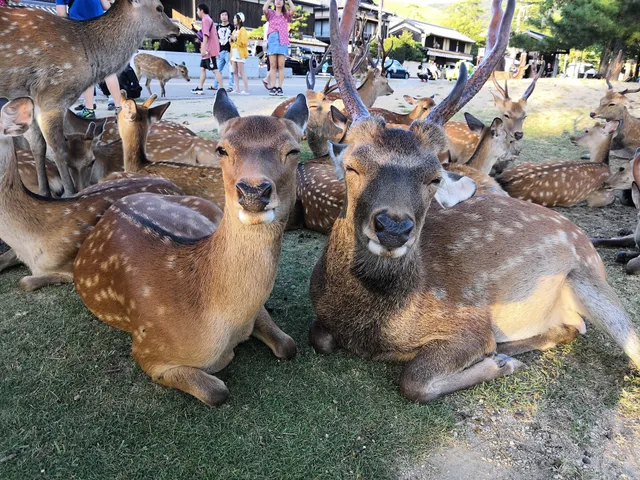
Around noon, the sky had cleared completely, and the sun grew stronger. Feeling the fatigue in my legs, I sat down on a shaded bench, already occupied by several deer seeking refuge from the heat. They seemed completely unfazed by my presence, maintaining a natural, comfortable distance as if we were old acquaintances.
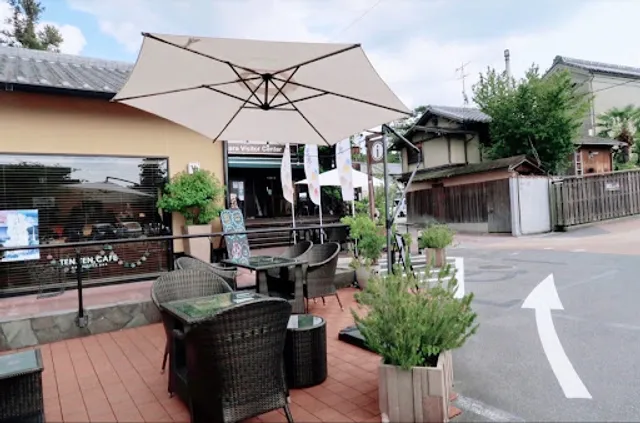
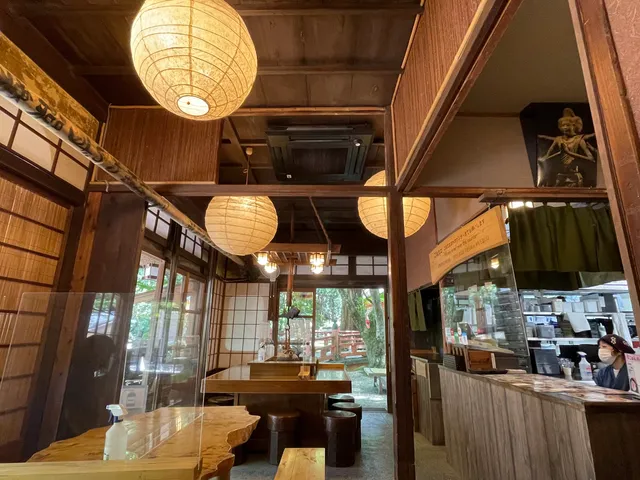
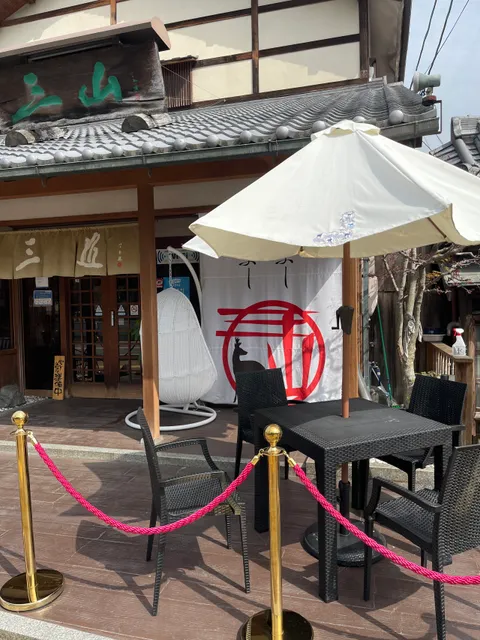
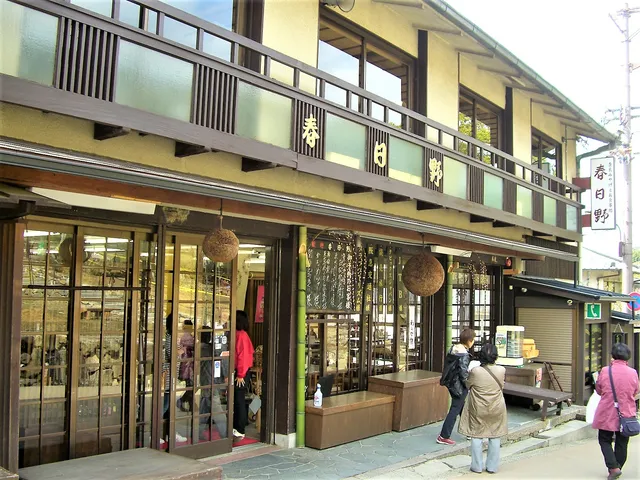
Growing hungry, I purchased some awamochi (millet rice cakes) from a nearby tea house – a treat for humans rather than deer. As I savored the gentle sweetness, it occurred to me that here, both humans and deer coexisted naturally in this environment. At that moment, a deer beside me seemed to catch my eye and give a small nod, as if in agreement, making me smile.
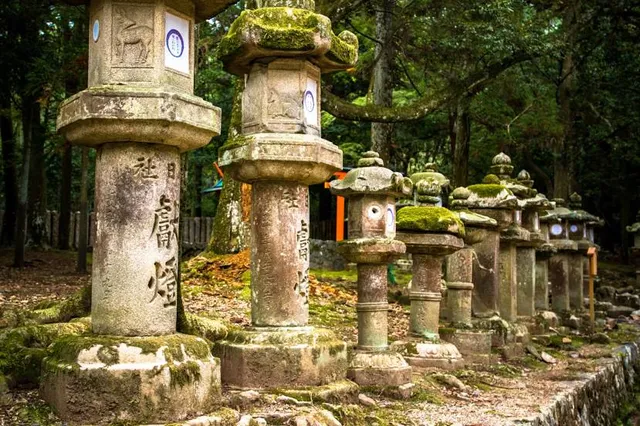
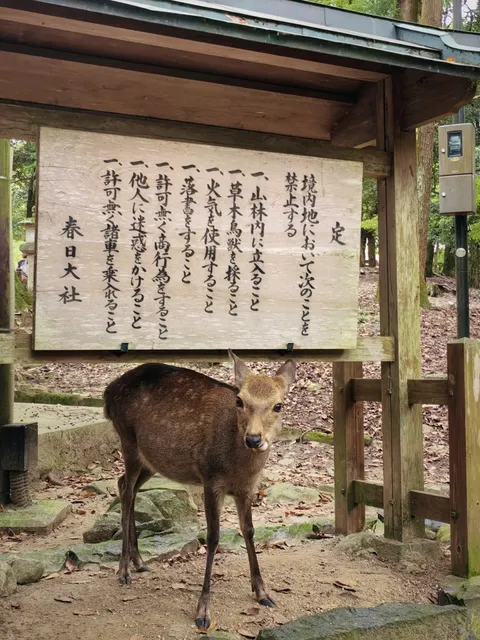
On the path to Kasuga Shrine, stone lanterns lined the way, while light filtering through the trees created a mystical atmosphere. I encountered a young male deer with growing antlers, which made me slightly nervous, but a local advised me, "It's better to keep your distance during antler season," so I carefully took a detour.
By afternoon, the park had filled with visitors, particularly school groups on field trips, their excited voices mixing with the calls of deer seeking crackers. Though quite different from the morning's peace, this too was part of Nara Park's daily rhythm.
As evening approached and visitor numbers dwindled, tranquility returned to the park. Despite my tired legs, I turned back for one last look at the Great Buddha Hall, capturing a photo of its impressive silhouette against the setting sun. Though exhausted from a day of walking, the time spent in this perfect blend of history and nature, sharing space with the deer, created unforgettable memories.
For my next visit, I'd like to come closer to autumn to see the fall colors. Rather than starting early, I might arrive in the late afternoon to avoid the peak tourist hours. I'll also be more mindful about keeping valuables secure and avoiding loose papers around the deer. The area around Kasuga Shrine, in particular, deserves unhurried appreciation for its solemn atmosphere, so I'd recommend setting aside ample time for...
Read moreStepping off the train in Nara, I immediately felt a shift in atmosphere. The air was crisp, carrying a hint of tranquility that contrasted with the bustling cities we’d visited earlier. My wife and I, along with two close friends, had decided to explore Nara Park after hearing about its free-roaming deer and historic sites. While we expected a pleasant day, the experience surpassed all our expectations.
As we made our way toward the park, the sight of deer casually wandering the streets caught us off guard. They moved gracefully among pedestrians, occasionally pausing near shop entrances or street corners. It was fascinating to see these animals so integrated into the daily life of the city.
Entering Nara Park felt like stepping into a harmonious blend of nature and history. The expansive green spaces were dotted with ancient temples, and the gentle rustling of leaves provided a serene soundtrack to our exploration. The sika deer, regarded as national treasures, were everywhere—resting under trees, strolling along pathways, and approaching visitors with a mix of curiosity and familiarity.
We couldn’t resist purchasing “shika senbei” (deer crackers) from a nearby vendor. Priced at around 200 yen per pack, these treats were clearly a favorite among the deer. The moment we held the crackers, several deer approached us, their eyes fixed intently on the snacks. One particularly eager deer stepped forward and, to our amazement, gave a slight bow. We had heard about this behavior but witnessing it firsthand was delightful. Encouraged by this display, we bowed back and offered the cracker, which was gently taken from our hands.
Feeding the deer was both entertaining and heartwarming. Their polite bows and gentle demeanor made each interaction special. However, it’s worth noting that some deer can be quite assertive, especially when they know you have food. One deer nudged my friend’s bag, attempting to access the crackers inside. While this behavior was amusing, it served as a reminder to keep personal belongings secure and be mindful of the deer’s enthusiasm.
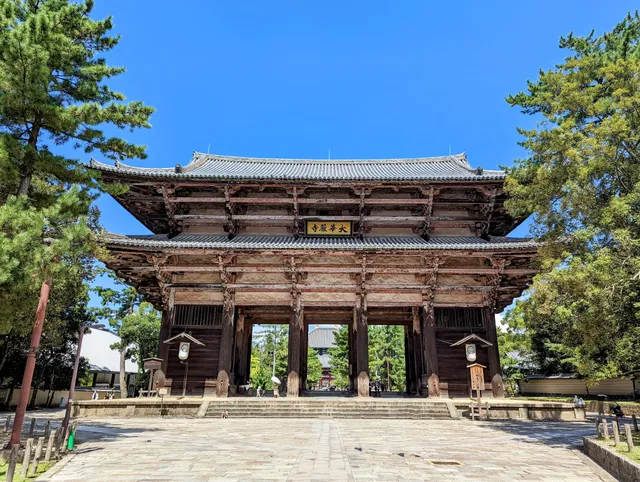
Beyond the deer, Nara Park boasts impressive historical sites. We took a leisurely walk to Todai-ji Temple, home to the Great Buddha. The sheer size of the statue was awe-inspiring, and the temple’s architecture reflected Japan’s rich cultural heritage. Walking through the massive wooden gates and standing before the colossal Buddha instilled a sense of reverence and wonder.
While the experience was overwhelmingly positive, there were a few minor inconveniences. With so many deer around, it’s essential to watch your step to avoid unexpected surprises. Additionally, some areas of the park can become crowded, especially near popular attractions and cracker vendors. However, these were small trade-offs for the unique and enriching experience Nara Park offers.
As the day drew to a close, we found a quiet spot overlooking a pond, where we sat and reflected on our visit. The setting sun cast a golden hue over the park, and the silhouettes of deer against the backdrop of ancient temples created a picturesque scene. It was a moment of pure contentment, reminding us of the simple joys of connecting with nature and history.
Leaving Nara Park, we felt a deep appreciation for the harmonious coexistence of humans and animals in this space. The experience left an indelible mark on us, and we knew that if we ever found ourselves in Japan again, a return visit to Nara Park would be on...
Read moreVisited Nara Park in January 2025 during my Japan trip, and honestly, it was one of the most memorable experiences outside of the usual Tokyo–Osaka itinerary.
If you’re a Singaporean planning a trip to the Kansai region, Nara Park is a must-go, especially if you enjoy nature, heritage, and... deer.
Yes, the deer are the stars here. They're everywhere—roaming freely through the park grounds like they own the place. And in a way, they kind of do.
They’re regarded as sacred messengers of the gods in Shinto belief and are protected as national treasures.
You can buy deer crackers (shika senbei) for 200 yen to feed them—just be warned, once they know you’ve got snacks, you’ll be swarmed!
What surprised me was how well they’ve learned to interact with people—some even bow before asking for food, which is adorable and a bit surreal.
Just don’t tease them or wave food around without feeding them—they might get a little impatient (and nudgey).
The park itself is massive and peaceful, with wide open green spaces, trees, and scenic walking paths.
Even in winter, it had this serene, quiet charm with crisp air and fewer crowds. I loved just strolling around and soaking in the calm.
Apart from the deer, there are also a number of beautiful temples and shrines in the area.
The most famous one is Todai-ji, which houses the Great Buddha (Daibutsu)—absolutely stunning and massive.
The temple architecture, paired with the natural surroundings, gives off a very calming and spiritual vibe.
What I liked:
Interacting with the friendly (and cheeky) deer
The peaceful vibe of the park, especially in winter
Visiting Todai-ji and seeing the Great Buddha up close
Clean, well-maintained grounds and toilets
Plenty of photo spots with traditional Japanese architecture and nature in the background
Tips if you're going:
Go early in the day for fewer crowds and more active deer
Bring wet wipes—feeding deer gets a little messy
Hold on to any paper bags or maps tightly (the deer will try to eat them!)
Wear comfy shoes—the park is big, and you’ll be walking a lot
If going in winter, bundle up! It was cold but refreshing
As a Singaporean who grew up in a city full of concrete, Nara Park was a refreshing change. It’s not just a touristy spot—it’s a place where nature, culture, and history blend together so seamlessly.
Watching deer bow to you, feeding them, and then walking up to a 1,300-year-old temple in the same afternoon? That’s something you don’t forget.
Would totally recommend including Nara in your Japan itinerary—it's just a short train ride from Kyoto or Osaka, and it offers a completely different vibe. Peaceful, wholesome, and...
Read more