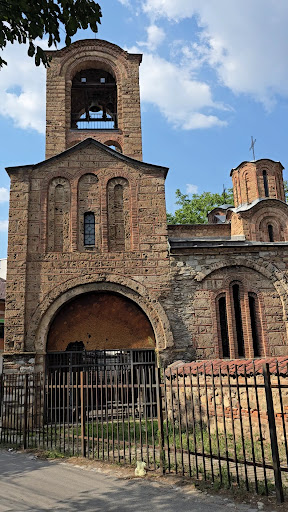
CHURCH OF VIRGIN LJEVISKA
SERBIAN ORTHODOX AND HISTORICAL HERITAGE
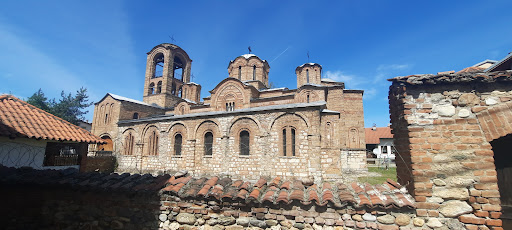
Endowment of serbian king Milutin, was built in 1307. y as a five-base church with inscribed cross on the foundations of a Byzantine church from the IX–XI century. It is dedicated to the Assumption of the Blessed Virgin Mary. Before the Prizren river Bistrica changed its course, the church was in the left part of the town Levisa, hence the name of Ljeviska. Vivid frescoes are among the most beautiful murals in endowments of Nemanjic dynasty, painted by painter Astrapa, and masonry directed by the chief architect Nikola.
King Stefan Uros II Milutin Nemanjic (1253–1321) was one of the most powerful Serbian ruler and builder of Serbian churches in the Middle Ages. His relics are, before the Ottoman invasion in 1460., transferred to Sophia, to the Church of the Holy Sunday, where they still are, which is why it is called the Church of the Holy King.
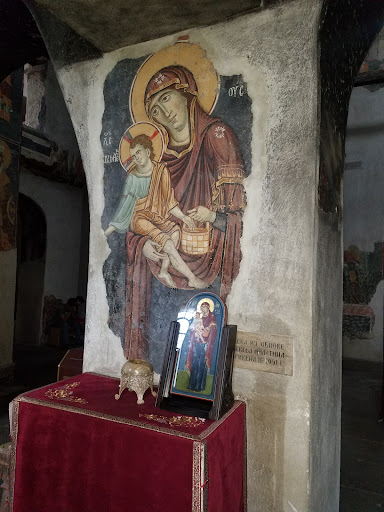
The most famous frescoes of the church of Virgin Ljeviska: Virgin Mary with Christ; Chirst The savior of Prizren; King Milutin; Sava I, Simeon Stefan Nemanja, Stefan the First Crowned and Stefan, son of Milutin; Virgin with Christ the Provider...
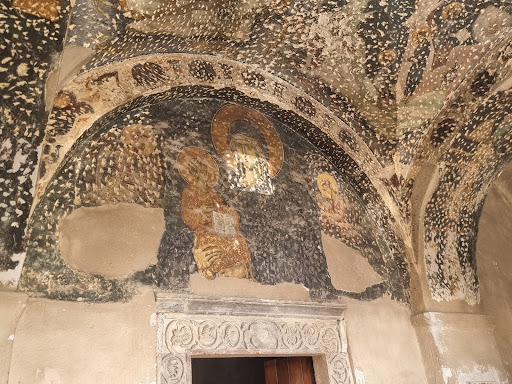
From the eighteenth century was used as the Juma (Friday) mosque. Before the frescoes were damaged by hammer and covered with plaster, unidentified Arab conqueror, on one wall of the narthex, impressed with the figure of the Virgin, enrolled Hafizs verse: ”You belong in my sight”. It becomes a church again in 1912, after the liberation of Prizren, and in 1953 it was returned to its former appearance. Because of its importance and the value of architecture and frescoes, it is included in UNESCO World Cultural Heritage Site. On March 17, 2004 pogrom, the church was set on fire and badly damaged. Its restoration is in progress.
DIE KIRCHE DER LIEBEN FRAU LJEVISKA
SERBIAN ORTHODOXES UND HISTORISCHES ERBE
Die Stiftung des Heiligen serbischen Königs Milutin wurde 1307 als fünfteilige Kirche, in Form eines Kreuzes, auf den Fundamenten der östlichen Kirche aus dem IX. Bis XI. Jahrhunderts erbaut gebaut. Gewidmet ist sie dem Aufstieg der Jungfrau Maria. Bevor der Fluss Bistrica den Kurs geändert hat, war die Kirche auf der linken Seite der Stadt Levis, daher der Name Ljeviška. Die Fresken, die zu den schönsten Wandmalereien des Erbes der Nemanjic Dynastie gehören, erarbeitete der Maler Astrapa und Mauerwerk wurde vom Architekten Nicholas geleitet.
Der serbische König Stefan Uroš II Milutin Nemanjić (1253-1321) war einer der mächtigsten serbischen Herrscher und Erbauer serbischer Kirchen im Mittelalter. Seine Reliquien wurden vor der osmanischen Invasion, 1460, nach Sofia überführt, in die Kirche (In der Kirche
St.Sonntag). Dort verweilen sie immernoch, weshalb sie die Kirche des Heiligen Königs genannt wird. Die berühmten Fresken der Kirche Unsere Lieben Frau mit Jesus Christus; Jesus Christus Wache Prizren; König Milutin; St.Sava I, Stefan Simeon Nemanja, Stefan Gekrönt und Stefan, Sohn von Milutin; Unsere Lieben Frau mit Jesus Christus Ernährer.
Aus dem achtzehnten Jahrhundert wurde als Duma Moschee verwendet.
Bevor die Fresken mit einem Hammer zerschlagen und mit Gips bedeckt
wurden, beschrieb ein unbekannter arabische Invasor die Wand mit arabischen Worten. Durch das Abbild der Jungfrau, schrieb er die Hafiz Verse: “Frau meines Auges ist dir ein Nest”. Die Kirche wurde im Jahre 1912, mit der Befreiung von Prizren, wiedererbaut und im Jahre 1953. wurde sie zu ihrem früheren Aussehen renoviert. Aufgrund der Bedeutung und dem Wert der Architektur und Fresken, hat die UNESCO die Kirche in das Weltkulturerbe aufgenommen.
Am 17. März 2004 wurde die Kirche in Brand gesteckt und schwer beschädigt. Die Restaurierung...
Read more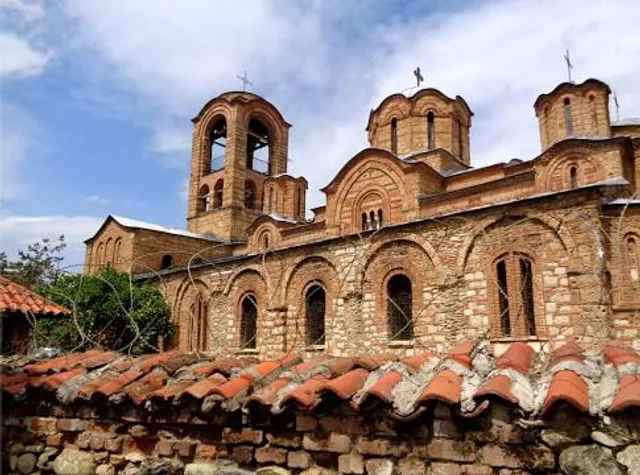
 Learn more insights from Wanderboat AI.