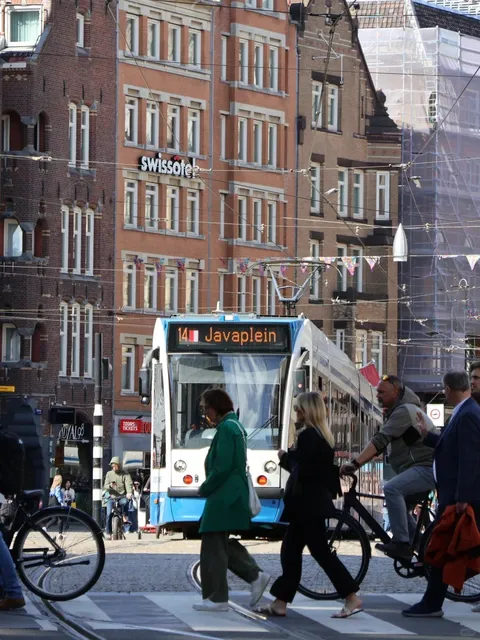
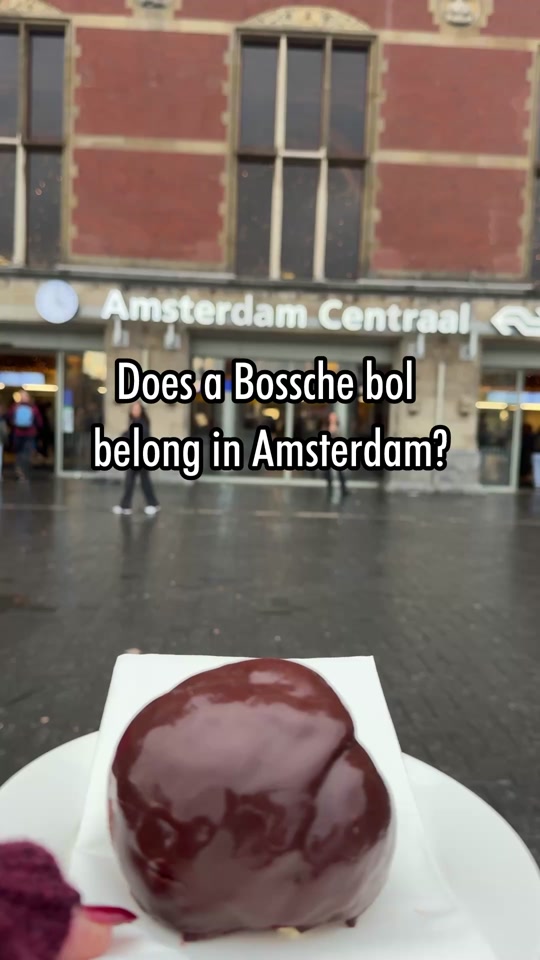
Amsterdam Centraal station (Dutch: Station Amsterdam Centraal staːˈɕɔn ˌɑmstərˈdɑm sɛnˈtraːl]; abbreviation: Asd) is the largest railway station in Amsterdam, North Holland, the Netherlands. A major international railway hub, it is used by 192,000 passengers a day, making it the second busiest railway station in the country after Utrecht Centraal and the most visited Rijksmonument of the Netherlands.[1 National and international railway services at Amsterdam Centraal are provided by NS (Nederlandse Spoorwegen), the principal rail operator in the Netherlands. Amsterdam Centraal is the northern terminus of Amsterdam Metro routes 51, 53, 54, and stop for 52 operated by municipal public transport operator GVB. It is also served by a number of GVB tram and ferry routes as well as local and regional bus routes operated by GVB, Connexxion and EBS.
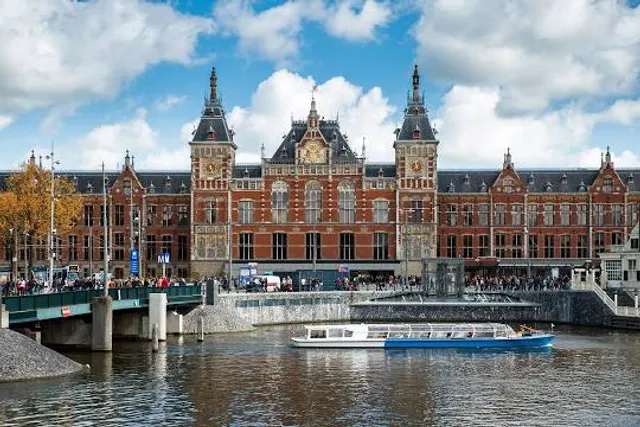
Amsterdam Centraal was designed by Dutch architect Pierre Cuypers and opened in 1889. It features a Gothic, Renaissance Revival station building3] and a cast iron platform roof spanning approximately 40 metres.
Since 1997, the station building, underground passages, metro station, and the surrounding area have been undergoing major reconstruction and renovation works to accommodate the North-South Line metro route, which was opened on 22 July 2018. Amsterdam Centraal has the second longest railway platform in the Netherlands with a length of 695 metres. Due to the length, each platform may serve two trains, while one embarks from side "a" of a platform and the other, from side "b". Amsterdam Centraal was designed by Pierre Cuypers, who is also known for his design of the Rijksmuseum in Amsterdam. While Cuypers was the principal architect, it is believed that he focused mostly on the decoration of the station building and left the structural design to railway engineers.[4] The station was built by contractor Philipp Holzmann. The new central station replaced Amsterdam Willemspoort Station, which had closed in 1878, as well as the temporary Westerdok Station used from 1878 to 1889. The idea for a central station came from Johan Rudolph Thorbecke, then the Netherlands Minister of the Interior and responsible for the national railways, who, in 1884, laid two proposals before the Amsterdam municipal council. In the first proposal, the station would be situated between the Leidseplein and the Amstel river. In the other, it would be built in the open harbour front allowing for the station to be connected to the existing main lines in the area to the west and the south, but also to a projected new northern line.[5]
Cuypers' design of the station building in many ways strongly resembled his other architectural masterpiece, the Rijksmuseum, of which the construction had begun in 1876. It features a palace-like, Gothic/Renaissance Revival facade,[3] with two turrets and many ornamental details and stone reliefs referring to the capital city's industrial and commercial importance. A royal waiting room for the Dutch monarchy (one of three in active use in the country today) was also included in the design.[6] Cuypers' station reflects the romantic nationalistic mood in the late nineteenth-century Netherlands, with its many decorative elements glorifying the nation's economic and colonial power at the time.[7
As with the Rijksmuseum, the station's overall architecture reminded many contemporaries of medieval cathedrals.[4] For that reason, as well as for the fact that it became increasingly clear that the national government wanted the station to be built at the city's waterfront effectively separating the city from the IJ lake, the plan was highly controversial. In his book on the history of city, Amsterdam historian Geert Mak writes that:
Almost all of Amsterdam's own experts and others involved thought this to be a catastrophic plan, 'the most disgusting possible attack on the beauty and glory of the capital'. Nevertheless, the building of the Central Station in front of the open harbour was forced through by the railway department of the Ministry of Transport...
Read moreAmsterdam Centraal Station is the largest railway station in Amsterdam, North Holland, the Netherlands. A major international railway hub, it is used by 192,000 passengers a day, making it the second busiest railway station in the country after Utrecht Centraal and the most visited Rijksmonument of the Netherlands. National and international railway services at Amsterdam Centraal are provided by NS, the principal rail operator in the Netherlands. Amsterdam Centraal is the northern terminus of Amsterdam Metro routes 51, 53, 54, and stop for 52 operated by municipal public transport operator GVB. It is also served by a number of GVB tram and ferry routes as well as local and regional bus routes operated by GVB, Connexxion and EBS. Amsterdam Centraal was designed by Dutch architect Pierre Cuypers and opened in 1889. It features a Gothic, Renaissance Revival station building and a cast iron platform roof spanning approximately 40 metres. Since 1997, the station building, underground passages, metro station, and the surrounding area have been undergoing major reconstruction and renovation works to accommodate the North-South Line metro route, which was opened on 22 July 2018. Amsterdam Centraal has the second longest railway platform in the Netherlands with a length of 695 metres. From 2017 there will be further reconstruction works at the station. A number of platforms will be widened making use of the tracks which do not currently have platforms. This means that alterations will be made in the tunnels under the platforms again. Furthermore, the eastern tunnel will be made wider, based on the example of the middle tunnel. The old railway bridges to the east of the station will also be replaced. Amsterdam Centraal has 15 tracks, 11 of which are alongside a platform: four island platforms with tracks along the full length on both sides (tracks 4/5, 7/8, 10/11, 13/14); one side platform with one track along the full length (track 15); and one bay platform with two tracks (tracks 1/2). Platforms 2-15 have an A-side (to the west) and a B-side (to the east). This means that there are 21 places where a train can be positioned for passenger access, with scissors crossings in the middle enabling trains to pass each other. Track 1 terminates short of the western end of the station building, which fronts track 2. Tracks 3, 6, 9, and 12 have no platform. Amsterdam Centraal metro station (called Centraal Station on the Amsterdam Metro system) opened in 1980. It is the terminus station of three routes: Route 51 (Amsterdam Centraal - Isolatorweg), Route 53 (Amsterdam Centraal - Gaasperplas), and Route 54 (Amsterdam Centraal - Gein). In July 2018, the new Route 52 (Noord Station - Zuid Station) opened. Tram services at Amsterdam Centraal are provided from two tram stations on Stationsplein (Station Square), situated in front of the station's main entrance. Tram routes 2, 12, 13 and 17 call on the west side (Westzijde, Platform B) of the square, the other routes call on the east side (Oostzijde, Platform-A). As of July 2018, GVB city bus routes 18, 21 and 22 and 48 depart from the new bus platform G on the lake side of the station (IJzijde or 'IJ side'). Free of charge ferry services from Amsterdam Centraal to the borough of Amsterdam North across the IJ lake depart from the quay on the northern side of the station at the De Ruijterkade. In my experience it is a pleasant and efficient railway station with good connecting facilities to metro / tram / bus / ferry with shops and restaurant / fast...
Read moreAmsterdam Centraal Station is the primary railway hub of Amsterdam, Netherlands, and one of the busiest transportation hubs in Europe. Opened in 1889, the station was designed by architect Pierre Cuypers and civil engineer Adolf Leonard van Gendt, who also designed the Rijksmuseum. Its design reflects the neo-Renaissance style, featuring ornate facades and an impressive roof structure.
Located on the IJ waterfront, the station serves as a gateway to the city for millions of travelers annually. It connects Amsterdam with major domestic destinations and international cities, including Paris, Brussels, and Berlin. The station's central location makes it a crucial link for commuters, tourists, and long-distance travelers alike.
Amsterdam Centraal has undergone several renovations to accommodate growing passenger numbers and modernize its facilities. The station includes multiple platforms and tracks, ensuring efficient handling of the high volume of trains. Amenities such as shops, restaurants, and waiting areas provide convenience and comfort for passengers.
One of the notable features of Amsterdam Centraal is its integration with various modes of transportation. It houses a major tram hub and is a key point for bus services, taxis, and ferries, facilitating seamless connections across the city and beyond. The recent addition of the North-South metro line further enhances its accessibility, linking northern and southern parts of Amsterdam.
The station's historical significance and architectural beauty make it not only a functional transit point but also a landmark in Amsterdam. Its iconic clock towers and detailed facades are emblematic of the city's rich cultural heritage. As both a transportation hub and a historical site, Amsterdam Centraal Station continues to play a vital role in the life of the city and...
Read more