Free entrance. Amazing display of genius. Large collection. Face masks, ID and vaccination card required. The historical, old senate building is home to artworks of significance like the Spolarium, several of Amorsolo's paintings, & avant garde and contemporary art within the last three decades. Self-tour in 2-4 hours (I stayed from 10am-2pm). Be warned that there's a fair number of art in the nude from statues to paintings, not sensored at all. May not be to the conservative's taste; it isn't wise to come with kids in certain areas because there's no warning that there's nude in certain places or hallways
There's seasonal art, temporarily on loan from local and overseas alike, and several donations. Sadly, selfie sticks & tripod use are not allowed; solo travelers can only stick to the usual selfie for their photos as guards aren't allowed to take them for security reasons. Video taking not allowed. Disrespectful poses, especially trying to pose as one of the depictions of National hero Rizal when he was shot (I saw 2 students reprimanded for it when they tried to copy it next to the statue), not allowed.
The national cultural treasures are also here. Visitors who come informed (for locals, be tested with your knowledge of Philippine history and science) would find that the heritage passed down to Filipinos are brilliantly summarized. For the policy of democracy, there's Sergio Osmeña's statue at the entrance, reminding you of the Senate & justice. The floor at the registration also has an old symbol at the center. After registration and once inside, besides Juan Luna's art, the collection is plenty and enjoyable - a summary from Spanish era up to 1986 EDSA Revolution, Manila's history, Presidents and politicians' bust statues to cite a few, political statements and symbols, Philippine agriculture and historical botany (flora and fauna), Roman Catholic religious art, unknown Bohol artist art, peculiar columns along the side staircases, dental sutures (pretty interesting portrayal), several abstracts, Special hall for Women's Art,
Galleries have different themes per room, and some rooms are special with names. Interestingly, there's a hall dedicated to IRRI Hall for agriculture, Philippine General Hospital (PGH) Hall for the medical science trivia, and an entire hall on Philippine modernism. There are at least two national artists besides F. Amorsolo. Vicente Manansala. Federico Alcuaz. Jose Joya. Arturo Luz. Jeremias Elizalde Navarro. They even collected the paintbrushes, palettes, and shot glasses used for painting, of the artists.
I heard that Rizal's art has a gallery here, but I got lost and took the right turn after seeing the Spolarium & ended up touring the place in reverse order from the top floor along the southeast area instead of following the arrows from Gallery 2 and so on.
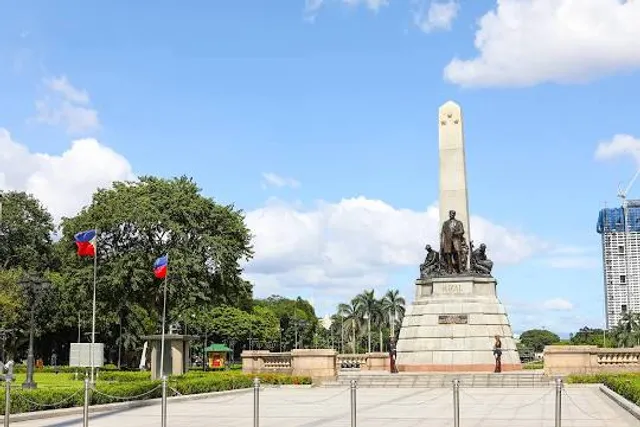
Cloth canvas art and art drawn on capiz shells were novel in their statements. Art purely made out of ballpen ink nice. The legendary sarimanok bird appears in glorious golden metal and also in wood. There's also Rizal's statue when he was shot in Bagumbayan. And a place with depictions of the Stations of the Cross.
I also noticed several depictions of "Mother and Child" kind of art from literal to abstract, I failed to count how many, and find them moving in their own right There's a Moro woman created in wood, but you wouldn't know unless you read the title. There are several Greek and Roman inspired art as well, most entertaining as though you're actually seeing a glimpse of Europe. There's a few American-themed art. There's also some relics from the Spanish era, similar to what's in Ayala Museum like the swords, drums, and the Astrolabe. Also saw Paoay church painted nicely here, in Amorsolo's gallery, a historical church in Ilocos.
All in all, perhaps it would be good to allot half a day when looking at the artworks at least especially if studying them. The gallery collection can be overwhelming by the number unless you're used to...
Read moreThe National Museum of Fine Arts is open Tuesdays to Sundays, from 9:00 AM to 6:00 PM. It is closed on Mondays and during national and City of Manila holidays.
The museum is least crowded on Tuesdays and is most crowded on weekends.
Admission is free, and the entrance to the museum is on the facade along Padre Burgos Avenue facing Intramuros. No reservation is needed.
Parking is limited along the facade.
Visitors' registration is on the left upon entry to the grand lobby, where an Identification Card is required to be presented for identity verification. Non students may require a government issued ID. The ID is returned after registration.
Baggage counters, on the right upon entry, are available. Prohibited items must be deposited at the counters.
PROHIBITED ITEMS:
• Big bags, luggage and other bulky items larger than 33 x 43 cm (13 x 17 in) • Backpacks bigger than 22 x 27.94 cm (9 x 11 in) except for infant care backpacks carried in front of the body • Food and beverage • Tumblers and water bottles • Hats and caps • Umbrellas • Video cameras, selfie sticks, and tripods • Wired headphones and wired headsets • Art materials and toys • Shades and dark sunglasses • Plants, flowers, and organic materials • Wrapped packages and gifts • Pets
DRESS CODE
Guests are encouraged to dress appropriately and keep in mind the sensitivities other visitors may have. Extremely revealing clothes are prohibited.
I regretfully failed to ask what kind of clothing is prohibited, so it might be safer not to come in slippers, tank top/sando, and/or short pants. The National Museum of Fine Arts is the repository of the nation's artistic treasures, so it is perhaps incumbent upon the visitors to express their respect by dressing appropriately.
HOW TO GO ABOUT THE EXHIBIT
Regretfully, a brochure or any printed visitor guide may not be available.
It is suggested that the tour start on the right hallway from the grand lobby, then around until you return to the lobby, then on the main exhibit hall of each floor.
The floor where one entered and registered is the 2nd Floor.
There are elevators and stairs to go up and down the museum. Two grand staircases on each side of the floor lobby may be used between the 3rd and 4th floors. There are also stairs which service the 1st to 4th floor at the far end of each hallway.
Several restrooms are conveniently located and are well-maintained.
From my experience and observation, all the Museum staff - the ones at the Registration, the one at the Baggage counters, especially all the security guards, the support personnel, the office personnel, and even the engineering staff - whom I encountered were very nice, friendly, accommodating, polite, and very helpful.
I'm so proud that my nation's artistic treasures are in the hands of such amazing and...
Read morePlace is free, so don’t trust google asking you to buy tickets in advance.
I recently had the privilege to visit the National Museum of Fine Arts in Manila, and it was an experience that left us both - me and my son, completely awe-struck. This museum is an absolute must-visit for anyone with even a fleeting interest in art, culture, or history.
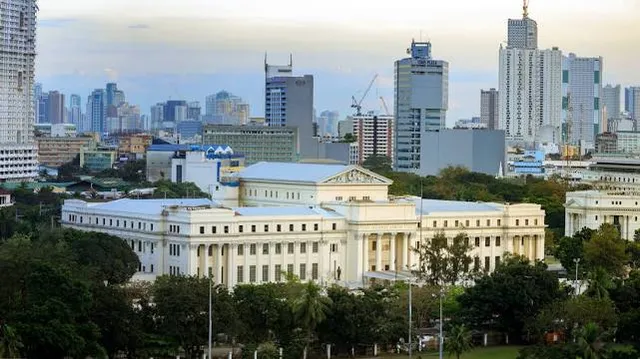
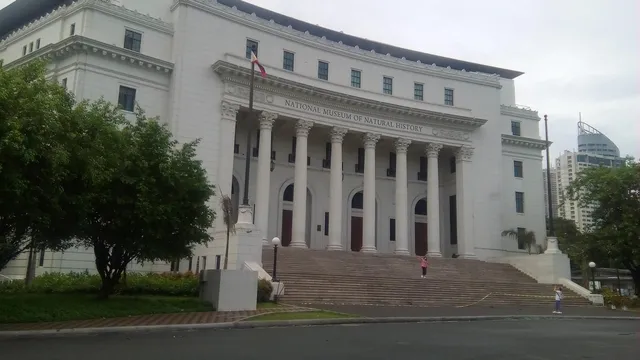
The museum is housed in a stunning neo-classical building that is a piece of art in itself. From the moment you step in, you're greeted with a sense of tranquillity and a promise of the artistic journey that awaits. The museum offers an extensive array of artworks that encapsulates the rich tapestry of Filipino history and culture, with pieces dating from the 17th century to the present.
The exhibits are meticulously categorized and arranged over four levels, each floor providing a unique experience. The museum's extensive collection ranges from classical to contemporary art, showcasing the evolution of Filipino artistry. The well-lit halls and high ceilings give each piece the grandeur and attention it deserves.
One of the highlights of our visit was the grand, awe-inspiring masterpiece, "The Spoliarium" by Juan Luna, which left us breathless with its sheer size and poignant depiction. This painting alone is worth the trip, but it's just the beginning of what this museum has to offer.
What I appreciated most about the museum is how kid-friendly it is. My son was engaged and intrigued throughout our visit. The museum staff were welcoming, and it's evident that they're very passionate about their work. They were more than willing to answer questions, provide insights, and even recommend specific pieces based on our interests.
The cleanliness and well-maintained condition of the museum also deserve a special mention. The facilities, including restrooms and seating areas, were clean and comfortable.
Overall, our visit to the National Museum of Fine Arts was a delightful blend of education and entertainment. It provided an insightful peek into the rich cultural heritage of the Philippines and left us with a deep appreciation for Filipino artistry. It's a must-visit institution when in Manila, not just for art enthusiasts but for everyone.
The National Museum of Fine Arts is not just a museum; it's a celebration of art, culture, and history that's bound to leave every visitor enriched...
Read more