As far as museum/cultural visits go, this was the very epitome of what it shouldn’t be: the whole interaction reached levels of absurdity. * Total disappointment. *
Ah, the MNAC in Bucharest, where contemporary art supposedly thrives—unless you happen to cross paths with their security czar, a man wielding a scanner like it’s a relic of Soviet oppression. Upon arrival, I was greeted not by art, but by a guard whose fingernail-sized authority had clearly gone to his head. When I politely inquired about my camera, which has an ISO of 800 (film that would be ruined by the x-ray), I was simply asking for a locker—one he had the nerve to suggest and then instantly retract. But instead of helping, he puffed up his chest and told me to "then leave." All because I had the audacity to ask a question about saving my film. Here I was, a graduate with a Master’s degree in Cultural Heritage from UCL, someone who’s worked with institutions like the V&A and English Heritage, and I’ve never, EVER, encountered such a pathetic display of power-tripping nonsense.
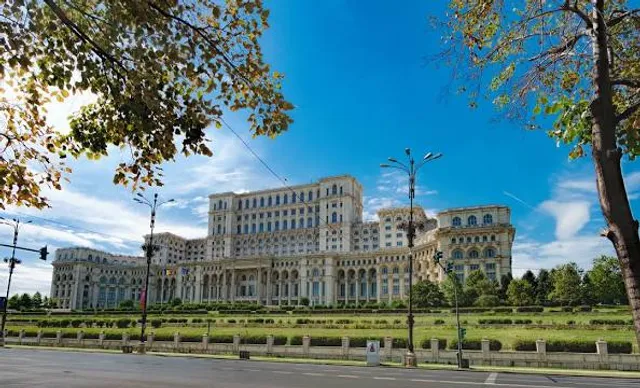
The officer initially invoked a set of internal rules that prohibit leaving the camera in the locker, but after our request to let us see that alleged document he told us that those were, in fact, classified information. It is very much surprising that a person who works as a security officer affirmed with such a nonchalant tone that there could be a set of norms that apply to external visitors, whilst being at the same time secret and, thus, impossible to be know. It is common knowledge that in order to make a rule applicable, one must have access to that rule, that being the corollary principle of the predictability of law, so it is really surprising that a “secret law” was invoked as an explanation for such an infantile and absurd interdiction. From the aggressive tone to the criptic legal provisions allegedly applicable, the security guard truly managed to recreate the atmosphere of a totalitarian system, that continues to live discretely inside the walls of the Palace of Parliament.
But the best part? He was ON THE PHONE while he was talking to us, like we were some background noise in his all-important life. Absolutely Soviet-era behavior, where the rules don’t exist but you’re still breaking them, and the guy in charge can’t even be bothered to care. The rest of the staff stood around like mute statues, offering no help, as if this man was the almighty gatekeeper to the art world, and they were his obedient little minions. This is a contemporary art museum in an ex-communist country, a place where you’d think freedom of expression and open access to culture would actually mean something! Instead, we’re being shouted down by a man who doesn’t even understand the rulebook he’s so valiantly protecting—because, spoiler alert: THERE ISN’T ONE.
MNAC, get your act together. Art should be about accessibility, openness, and inspiration—not gatekeeping by some relic of a bygone era.
Edited as response to MNAC: the problem sits within the attitude and level of crassness of the man in question – not the enhanced security of the museum. (As said, he himself has contradicted himself suggesting we leave the cameras with them and moreover he presented us with the argument that the internal rule book is classified when asked to see it: how can a law/rule book be both classified and opposable? Say we walk into the museum space without knowing we aren’t to enter room space X with shoes on or we risk arrest but no one told us as it was classified? I hope you can understand what the problem is)
Perhaps find a different company to represent you or you may find it more appropriate to relocate in the future. Best of luck, will not bother visiting you...
Read moreAs far as museum/cultural visits go, this was the very epitome of what it shouldn’t be: the whole interaction reached levels of absurdity. * Total disappointment. *
Ah, the MNAC in Bucharest, where contemporary art supposedly thrives—unless you happen to cross paths with their security czar, a man wielding a scanner like it’s a relic of Soviet oppression. Upon arrival, I was greeted not by art, but by a guard whose fingernail-sized authority had clearly gone to his head. When I politely inquired about my camera, which has an ISO of 800 (film that would be ruined by the x-ray), I was simply asking for a locker—one he had the nerve to suggest and then instantly retract. But instead of helping, he puffed up his chest and told me to "then leave." All because I had the audacity to ask a question about saving my film. Here I was, a graduate with a Master’s degree in Cultural Heritage from UCL, someone who’s worked with institutions like the V&A and English Heritage, and I’ve never, EVER, encountered such a pathetic display of power-tripping nonsense.
The officer initially invoked a set of internal rules that prohibit leaving the camera in the locker, but after our request to let us see that alleged document he told us that those were, in fact, classified information. It is very much surprising that a person who works as a security officer affirmed with such a nonchalant tone that there could be a set of norms that apply to external visitors, whilst being at the same time secret and, thus, impossible to be know. It is common knowledge that in order to make a rule applicable, one must have access to that rule, that being the corollary principle of the predictability of law, so it is really surprising that a “secret law” was invoked as an explanation for such an infantile and absurd interdiction. From the aggressive tone to the criptic legal provisions allegedly applicable, the security guard truly managed to recreate the atmosphere of a totalitarian system, that continues to live discretely inside the walls of the Palace of Parliament.
But the best part? He was ON THE PHONE while he was talking to us, like we were some background noise in his all-important life. Absolutely Soviet-era behavior, where the rules don’t exist but you’re still breaking them, and the guy in charge can’t even be bothered to care. The rest of the staff stood around like mute statues, offering no help, as if this man was the almighty gatekeeper to the art world, and they were his obedient little minions. This is a contemporary art museum in an ex-communist country, a place where you’d think freedom of expression and open access to culture would actually mean something! Instead, we’re being shouted down by a man who doesn’t even understand the rulebook he’s so valiantly protecting—because, spoiler alert: THERE ISN’T ONE.
MNAC, get your act together. Art should be about accessibility, openness, and inspiration—not gatekeeping by some relic of...
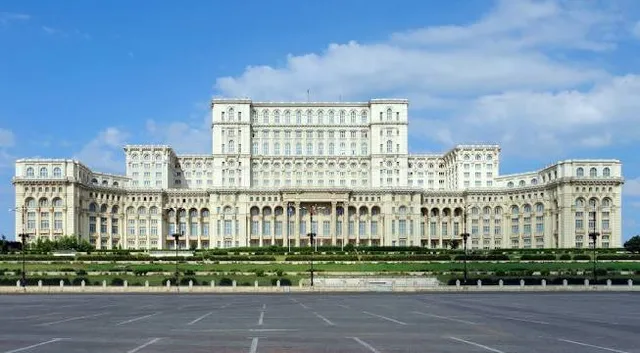
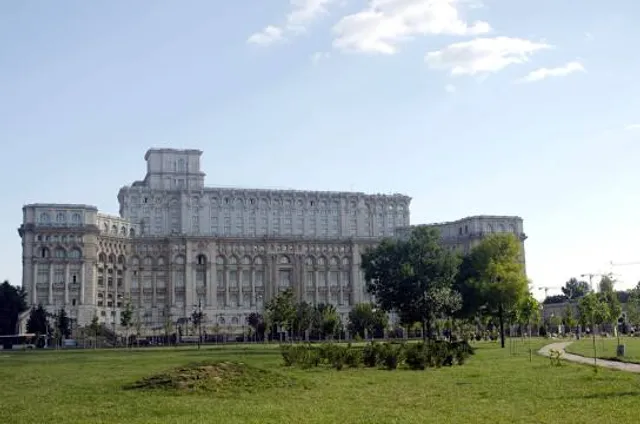
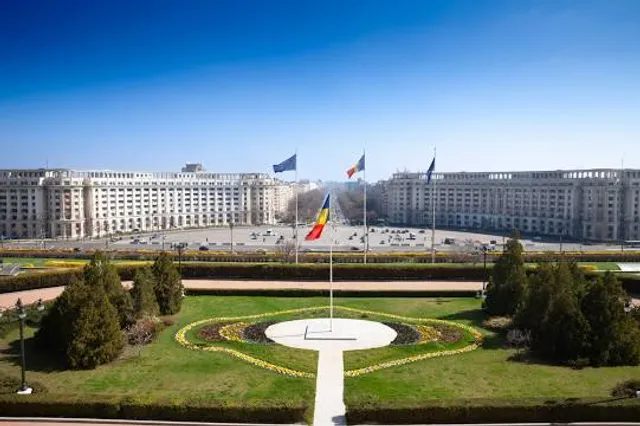
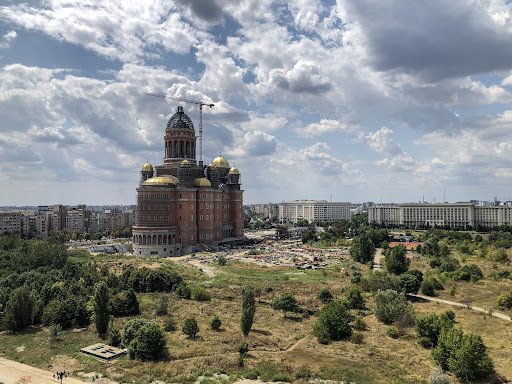
Read moreWhat an extraordinary place in the most extraordinarily extravagant building. Let me explain: this wonderful museum is located within the Romanian Palace of the Parliament, a monstrous, gigantic, gobsmackingly huge and unfinished national administrative building that is bigger by volume than the biggest pyramid, and is also the heaviest building on Earth. In a sense we ought to be grateful for this act of pharaonic madness by dictator Nicolae Ceaușescu, as it created the opportunity to establish a national museum for art with enough display space to rival leading institutions in other countries.
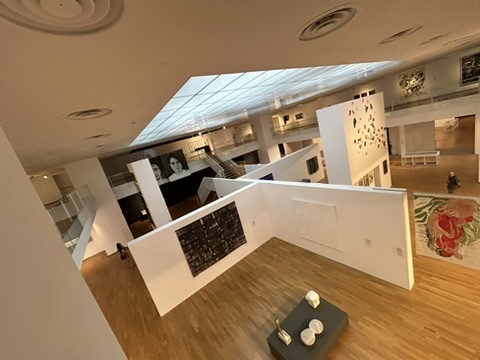
When I visited, I was lucky to see a show that curated the museum's latest acquisitions; MNAC supports Romanian art, and scours the nation for brilliant works from established and up and coming artists. The show was huge, dazzling and very well curated, taking advantage of the generous height and extent available.
Another show, a whole other floor, was dedicated to the idea of the archive, which is one of my specific interests. It too was brilliant.
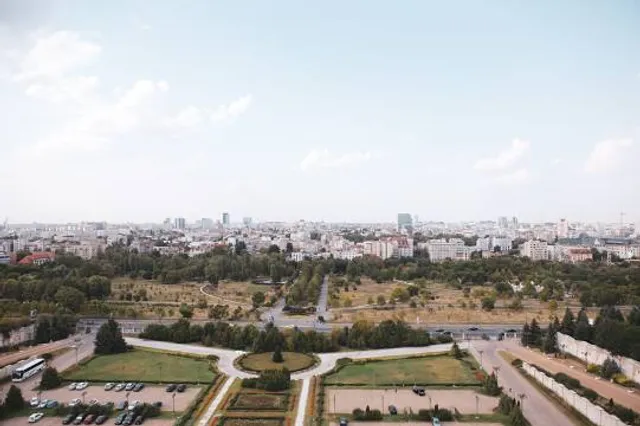
The community cafe on the top floor is pay-what-you-can, which I did. It's a lovely calm space, plenty of tables and chairs, great tunes too, and there's a sunny terrace with brilliant views.
Locating MNAC is hard. GoogleMaps will misdirect you to walk through the grounds of the parliament building. This is no longer possible so ignore it! Access is only via gate B3, on the Calea 13 Septembrie. The gate is not marked, and there is no big sign for MNAC. Trust your phone at this point and do not be deterred by the machine pistol toting guards. Just say "MNAC!!" smile and walk through. You need to walk another 300m along the road, past a small wood and a flight of steps on the right big enough for most Roman Emperors, and then you will reach MNAC, which is part of the main parliament building, and has a glass lift shaft and various banners flapping around. There is no big sign saying MNAC, but hey there it is.
The loos are at the back of each floor.
The little shop sells some nifty art books. No mugs or other tat though. Shame. I love museum mugs.
Take your time, and take breaks in the nice cafe on the top floor. This place is huge.
The cafe doesn't serve meals, just coffee, biscuits, and some machines for snacks. I took sandwiches.
Don't forget: Gate B3, not marked, blokes with machine guns standing on the left in a wee guard post. You can see down the road along the side of the parliament building from that vantage point: MNAC is almost at the end on the right, a long-feeling walk of about 300m.
Check the map in the photos with this review.
Highly and unreservedly...
Read more