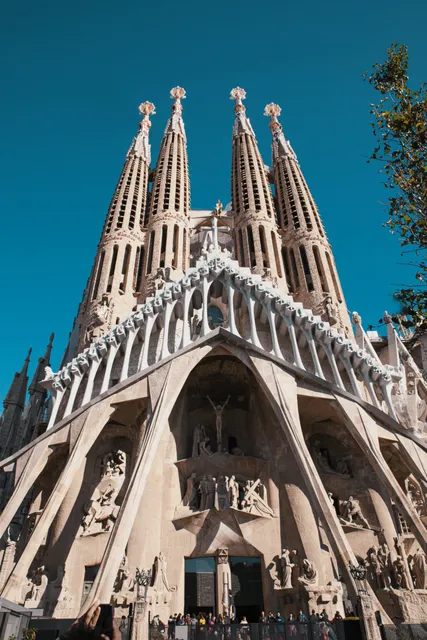
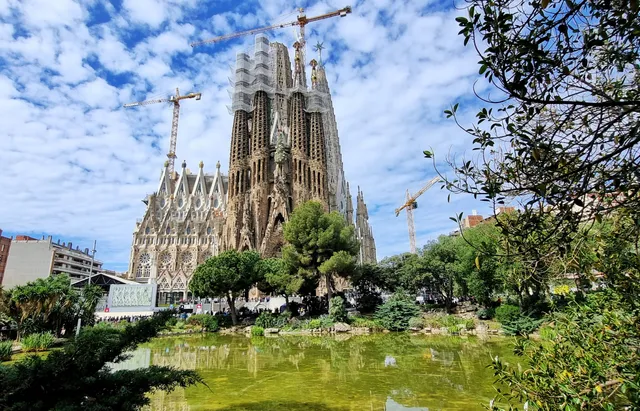
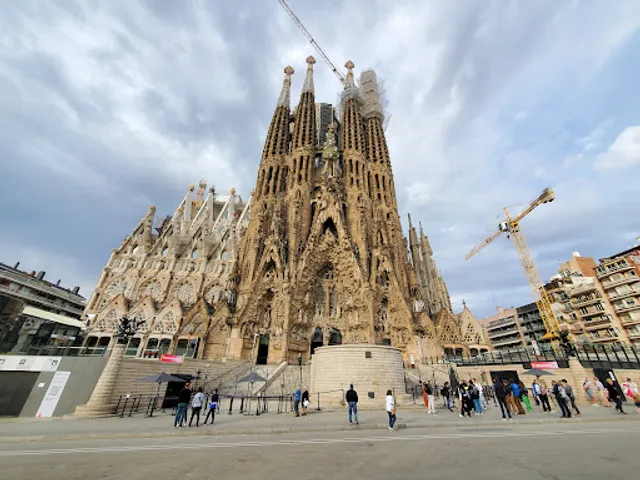
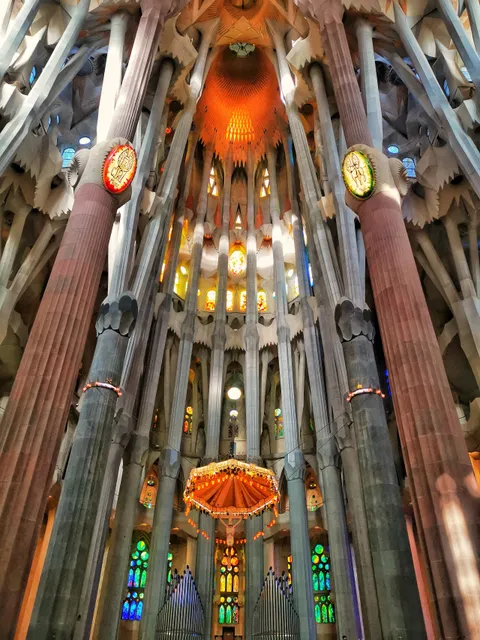
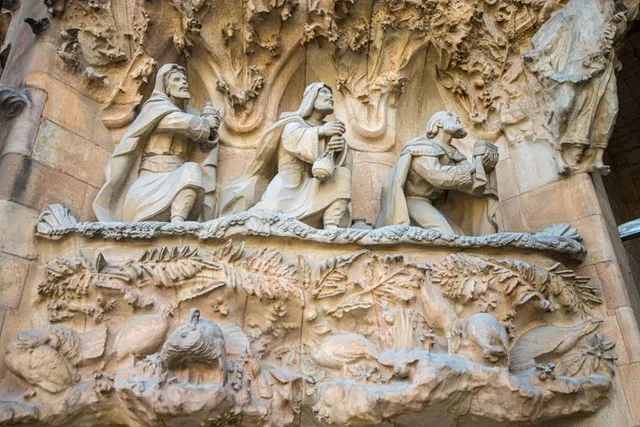
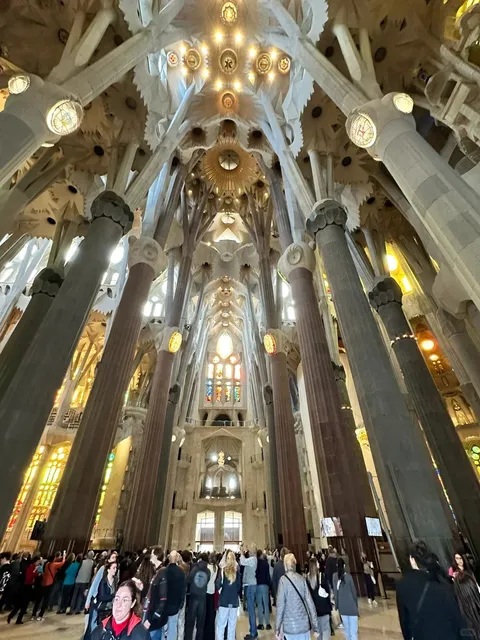
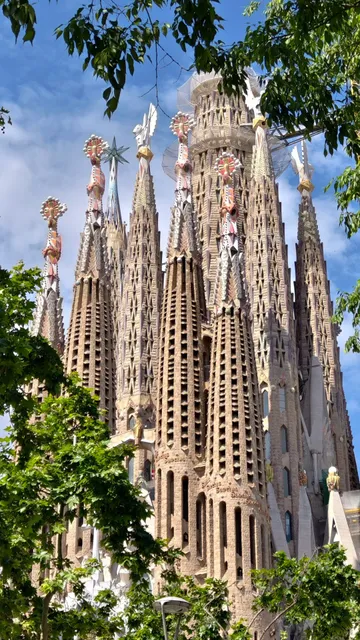
🏰 An Epic Review of the Sagrada Família If you’re planning a trip to Barcelona and you don’t include the Sagrada Família on your itinerary, are you even really visiting? This masterpiece by Antoni Gaudí is not just a church; it's an experience that leaves you awestruck and questioning the very nature of art and architecture. Here’s my deep dive into why this basilica is one of the most iconic landmarks in the world. A Glimpse into Architectural Genius The Visionary Architect Antoni Gaudí took the helm of this project in 1883, and let me tell you, he wasn’t just building a church; he was crafting a monument that melds nature and spirituality into a breathtaking design. His unique approach combines Gothic and Art Nouveau styles, resulting in a structure that feels both ancient and futuristic. Endless Details Every inch of the Sagrada Família is packed with intricate details. From the towering spires that reach for the sky to the vibrant stained glass that bathes the interior in colorful light, it’s hard to take it all in. The Nativity facade, celebrating the birth of Jesus, is overflowing with carvings that tell a story in every nook and cranny. You could spend hours just gazing at the individual sculptures and still find something new every time. Symbolism Galore Gaudí was a master of symbolism. For instance, the 18 towers represent various biblical figures; the tallest one symbolizes Jesus Christ, while the others represent the Apostles and the Virgin Mary. It’s like a visual representation of faith that makes you feel connected to something larger than yourself. The Experience Inside Awe-Inspiring Interior Walking into the Sagrada Família is like stepping into a forest made of stone. The columns look like tree trunks, branching out to support the ceiling, which resembles a canopy of leaves. Trust me, you’ll feel like you’ve entered a mystical realm. The play of light through the stained glass windows creates a magical atmosphere that shifts throughout the day, making each visit unique. A Quiet Space for Reflection Despite being a tourist hotspot, there are moments of peace to be found. You can sit in quiet contemplation, absorbing the tranquility amidst the hustle and bustle. It’s a perfect spot to reflect, pray, or just soak in the beauty around you. Tips for Your Visit Timing is Everything If you want to avoid the crowds, aim for a weekday visit early in the morning or late in the afternoon. Trust me, it’s worth waking up early to experience the basilica with fewer people around. The light is also stunning during these times! Get Your Tickets in Advance Seriously, don’t wing it. Book your tickets online ahead of time to skip the long lines. You’ll thank yourself when you walk right in while others are waiting in the sun. Plus, consider a guided tour to get all the juicy details about Gaudí’s vision and the symbolism behind the design. Take Your Time Plan to spend at least 1.5 to 2 hours there. You’ll want to explore the interior, the facades, and the museum that showcases Gaudí’s original models and sketches. It’s an educational experience as much as it is a visual feast. Final Thoughts The Sagrada Família isn't just a building; it’s a journey through time, art, and spirituality. Gaudí poured his heart and soul into this project, and you can feel that energy radiating from every stone. Whether you’re religious or not, there’s something profoundly moving about being in this space. If you find yourself in Barcelona, make this your top priority. You'll leave with not just photos, but memories that will linger long after you’ve returned home. So, grab your camera, your sense of wonder, and get ready for an...
Read moreAn Unfinished Symphony in Stone: Reviewing Barcelona's Sagrada Família The Basilica de la Sagrada Família is not just a church; it is a spiritual, mathematical, and artistic experience unlike any other building on earth. To step inside Antoni Gaudí's unfinished masterpiece is to walk into a geological dreamscape, a forest of light and stone that challenges every preconceived notion of what sacred architecture should be. A Synthesis of Nature and Engineering From the moment you approach, the basilica's sheer scale and fantastical detail are overwhelming. The exterior is a riot of symbolism, a living Bible told in stone. The contrast between the two main completed façades is striking: the Nativity Facade explodes with joyful, organic, and intricate carvings—a direct homage to nature's abundance and Gaudí's deep faith. In sharp contrast, the Passion Facade presents a stark, angular, almost skeletal vision of Christ's suffering, conveying its somber gravity with haunting, modern sculptures. The true genius, however, is revealed once you step through the doors. The interior transcends traditional Gothic architecture. Here, Gaudí has replaced the heavy, light-obstructing buttresses with a revolutionary system of columns designed to mimic trees. These tree-like columns—which morph from square to octagonal to circular as they ascend—branch out to support the ceiling, creating an awe-inspiring, impossible stone canopy. This is not just artistic whimsy; it’s brilliant engineering. Gaudí used sophisticated mathematical and geometric models, like the inverted catenary arch, to ensure the structure's integrity, allowing it to soar without conventional external supports. The Magic of Light The light show inside the Sagrada Família is often cited as the basilica's most moving element, and it lives up to the hype. Gaudí meticulously planned the placement and coloration of the stained-glass windows to mimic the natural cycle of the sun. The eastern side, catching the morning light, is dominated by cool, vibrant greens and blues, representing birth and water. The western side blazes with warm oranges, reds, and yellows in the afternoon, symbolizing the Passion and the setting sun. On a sunny day, the entire nave is drenched in a constantly changing, ethereal, kaleidoscope-like glow—an effect that can make even the most secular visitor feel a sense of the divine. The Enduring Contradiction What makes the Sagrada Família truly fascinating is the glorious contradiction it embodies. It is a work of profound, centuries-old Christian faith being built with cutting-edge 21st-century technology. It's simultaneously ancient and futuristic, both deeply spiritual and playfully whimsical. Some critics find the disparate styles of the new construction jarring, calling the more recent sculptures "amateurish" next to Gaudí's own work. Yet, the ongoing construction—the towering cranes that frame the sky—is a visible testament to a continuous artistic vision, a living, breathing project that has spanned generations and has become a powerful symbol of Barcelona's enduring creative spirit. Verdict The Sagrada Família is not a perfect, finished masterpiece; it is a spectacular, unfinished symphony that continues to rearrange our idea of what a building can be. It's a testament to the fact that when engineering, nature, and profound human vision converge, the result is nothing short of an architectural miracle. Go, and be prepared to be inspired, moved, and utterly awestruck. It is unequivocally...
Read moreI wouldn’t want to have an unpleasant visit with the money I paid and the fame here. Not a hater, this is really my heartfelt feeling after the visit. I don’t have a religious or art background so I commented only on a touristic attraction perspective. First, organisation: We visited on a Monday evening 6pm. No waiting time for entry but overcrowded inside. We tried to see all the details of the spectacular architecture. At 7:15pm, the staff forbid us from going back to Façana del Naixement and force us to go towards the exit. At 7:30pm, everyone must leave the basilica already. Note that the official closing time is 8:00pm. This is ridiculously unfair to people with evening ticket. They sold time slot of 7:00pm, those people only have 15 minutes to visit with the high price they paid. Second, price: €26 is completely overpriced. You must book one month ahead otherwise you can only end up paying more from a third party. We can only visit the ground level of the architecture. Apart from the main hall, the side wing of the building has nothing to visit at all, only some simple furnitures, no antiques. You can finish visiting both exterior and interior in 40 minutes if you don’t look into small details. The exterior can be observed very clearly from the gate. No need to pay if you’re not impressed by the interior and you can’t visit anything than the ground floor. Third, expectation: It’s definitely not a conventional cathedral you can expect. No beautiful organ which I always appreciate the insane organs like in other cathedral, no ornaments, no history, not a place to pray at all (purely an art attraction). Other than the colourful glasses from the sides which literally reflect rainbow liked lights to the hall delicately and the tall pillars which creates a sense a space, the centre has very bad lighting and looks dim. The entire architecture is huge but everywhere is under construction, can’t even go on second floor to take a closer look of the details. Very limited space is opened to public. The Façana looks so inharmonious. For some visitors, it seems to be representative of Gaudi’s creativity and innovation. Yet from my taste of art’s perspective, I don’t enjoy much. This architecture apparently is not something would be appreciated by all people as we have so many different expectations of what a good attraction should be. Not to dissuade people from going, I still agree it’s a must see attraction given the fame and the massive scale. Just take my review as reference, plan well, don’t over expect, you would have a...
Read more