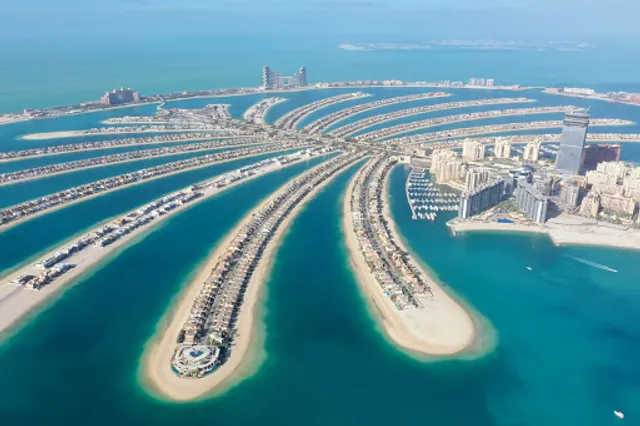
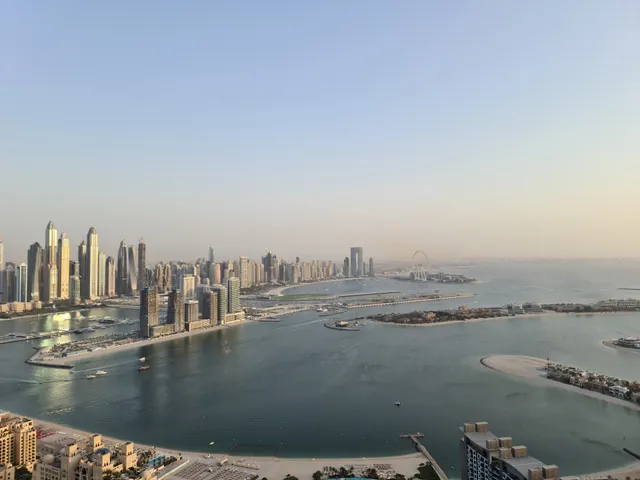
Palm Jumeirah, artificial offshore islands in Dubai, United Arab Emirates, the site of private residences and hotels. From the air, the archipelago resembles a stylized palm tree within a circle. Palm Jumeirah was built in the early 21st century and was largely financed from Dubai’s substantial income from petroleum.
Trunk, spine, fronds, and crescent are the names by which the principal sectors of Palm Jumeirah are known. The broad trunk, connected to the mainland by a bridge, serves as the entrance to the development. Another bridge connects the trunk to the spine, a narrow central axis from which 17 fronds protrude. The crescent is a breakwater that nearly surrounds the other sectors. It is divided into three sections so as to facilitate the circulation of seawater. A vehicular tunnel connects the spine to the crescent, and a transit monorail runs about 3 miles (4.8 km) from the mainland to the crescent through the spine and trunk. The crescent is 650 feet (200 metres) wide and about 10.5 miles (17 km) long altogether. At least 1,380 acres (560 hectares) of new land were created in all, within an area about 3.1 miles (5 km) in diameter.
The developer of Palm Jumeirah was Nakheel, a real estate company now owned by the government of Dubai. The master plan was drawn up by Helman Hurley Charvat Peacock, an American architectural firm. The islets were made mostly from sand dredged from the floor of the Persian Gulf, but the side of the crescent that is exposed to the open sea was shored up with stones and boulders from the mainland. Work started in 2001, and land and basic infrastructure were in place by 2004. Construction of the buildings began in 2006, and the first residents arrived in 2007.
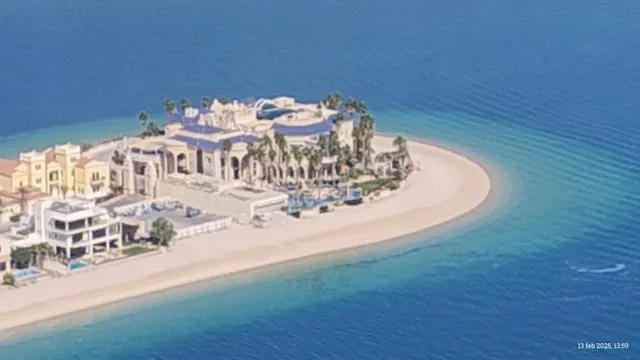
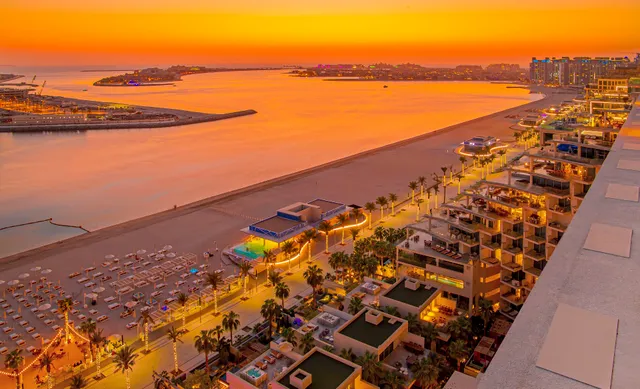
Apartments, retail facilities, and a few hotels are situated on the trunk. Closely spaced villas line the long fronds, while most of the hotels and resorts are located on the crescent. In the second decade of the 21st century, at least 10,000 people lived in Palm Jumeirah; some estimates were much higher.
Palm Jumeirah was intended to be the first of three similarly shaped offshore developments in Dubai. The others, Palm Jebel Ali and Palm Deira, are both much larger than Palm Jumeirah but remain uncompleted because of economic uncertainty. Also incomplete is the World, a grouping of artificial islands that is intended, upon completion, to resemble a map of the world. Landscape
The western area of Dubai benefits from small stretches of sandy beaches, which have helped to catalyze the city’s tourism industry. Dubai’s rulers have sought to increase the city’s limited seafronts, and, in the absence of natural offshore islands, developers were encouraged to construct giant man-made islands off the coast of the city. The most famous of these is Palm Jumeirah, which has the shape of a palm tree. Others include the “World” islands, a cluster of small islands positioned to resemble a world map when viewed from above. People Dubai’s population has grown steadily over the past two centuries, from just a few thousand local inhabitants to well over two million. Most of the early population increases were due to merchants from neighbouring countries choosing to relocate to Dubai’s business-friendly environment. In the later 20th century the city’s construction boom led to a huge increase in the number of South Asian labourers and an influx of skilled expatriates from all over the world who play an important role in Dubai’s multi-sector economy. Expatriates in the city vastly outnumber native Emiratis. With the exception of the labourers, who are housed in work camps beyond the city limits, expatriates of various nationalities are spread across Dubai. Although Arabic is the official language, English is, in practice, the...
Read moreThe Palm Jumeirah is a manmade archipelago in Dubai, in the United Arab Emirates, created using land reclamation which extends into the Persian Gulf. It is part of a larger series of developments called the Palm Islands, including Palm Jebel Ali and Palm Deira, which, when completed, will together increase Dubai's shoreline by a total of 520 kilometres (320 mi).[1] It has an estimated population of 10,500 as of 2016.[citation needed] It is located on the Jumeirah coastal area of the emirate of Dubai, in the United Arab Emirates. The construction was done as a joint venture by two Dutch specialist companies, Van Oord and Boskalis. The same companies also created The World. The recently opened destinations The Pointe, Club Vista Mare and Nakheel Mall are the latest additions to Palm Jumeirah.
Location :-Persian Gulf Coordinates :-25°07′05″N 55°08′00″E
One of the world’s most daring developments, the Palm Jumeirah in Dubai is a haven for vacationers. Jutting out into the Arabian Gulf, this man-made archipelago was built in the shape of a palm tree, with a 3-mile-long trunk and a fan of fronds lined with luxury villas and five-star hotels. From water parks and wildlife encounters to beach clubs and boozy brunches, discover 10 cool things to do at the Palm Jumeirah in Dubai.
One of the first things that strike you when visiting the Palm Jumeirah is its size. This giant archipelago is visible from space and the outer crescent is more than 10 miles long. There’s also a sizable distance between each hotel, so walking isn’t advisable. Taxis are cheap and plentiful, and a monorail runs from the base of the trunk to the Atlantis, making it the ideal base for exploring the must-visit sights of the Palm Jumeirah.
Palm Jumeirah, artificial offshore islands in Dubai, United Arab Emirates, the site of private residences and hotels. From the air, the archipelago resembles a stylized palm tree within a circle. Palm Jumeirah was built in the early 21st century and was largely financed from Dubai’s substantial income from petroleum.
The majestic man-made archipelago of Dubai, Palm Jumeirah is known all over the world as the synonym of beauty and elegance. The aerial view of this stunning island appears like a huge palm tree, which extends into the vast Persian Gulf. Considered to be the UAE’s first important tourism project, Palm Jumeirah is presently home to many of the major tourist destinations of Dubai including Atlantis, Lost Chambers Aquarium, and Aquaventure Waterpark.
The prime parts of Palm Jumeirah are referred to as Crescent, Spine, Trunk, and Fronds. The entrance part of this place happens to be the huge trunk that forms a bridge between the island and the mainland. Another bridge forms a connection between the Spine and the Trunk. The Crescent part happens to be the breakwater, which is linked with the Spine through a tunnel. The long and beautiful Fronds form the most amazing part of this island destination and its actual beauty can be witnessed by taking an aerial tour over the island in an aeroplane or helicopter.
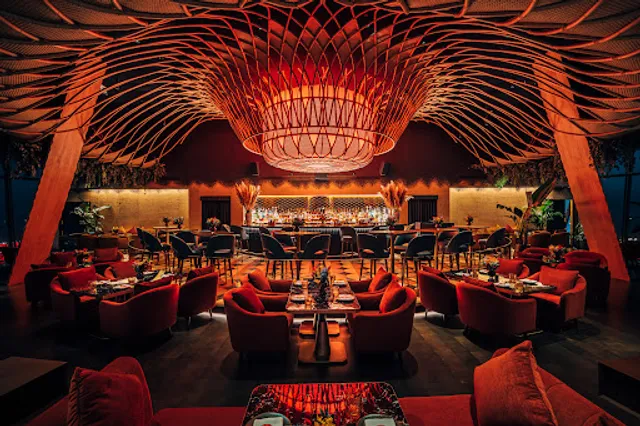
In addition to tourist destinations, Palm Jumeirah is also packed with a plethora of upmarket apartments, luxurious villas, lavish resorts, ritzy retails, and royal hotels, which are mainly positioned on the Crescent and Trunk. The place is also dotted with a number of elegant beach clubs and bars, which form the backbone of the bustling nightlife of the entire city. At the present day, this world-class artificial island shelters a vast population of more...
Read moreThe Palm Jumeirah is an artificial archipelago in Dubai, in the United Arab Emirates, created using land reclamation by Nakheel which extends into the Persian Gulf. It is part of a larger series of developments called the Palm Islands, including Palm Jebel Ali and Palm Deira, which, when completed, will together increase Dubai's shoreline by a total of 520 kilometres (320 mi).[1] It has an estimated population of 10,500 as of 2016.[citation needed] It is located on the Jumeirah coastal area of the emirate of Dubai, in the United Arab Emirates. The construction was done by two Dutch (joint venture) specialist companies, Van Oord and Boskalis. The same companies also created The World. The recently opened destinations The Pointe, Club Vista Mare and Nakheel Mall have provided another dimension to The Palm Jumeirah Palm Jumeirah Monorail is a 5.4-kilometre-long (3.4 mi) monorail connecting the Atlantis Hotel to the Gateway Towers at the foot of the island.[3] The monorail connects the Palm Jumeirah to the mainland, with a planned further extension to the Red Line of the Dubai Metro.[4] The line began operating on 30 April 2009.[5] It is the first monorail in the Middle East. In early 2020, due to the reduction of human activity during the ( covid-19 pandemic ) an increase in wildlife, such as dolphins, around Palm Jumeirah was observed [7]. Construction of the Palm Jumeirah island began in June 2001 and the developers announced handover of the first residential units in 2006.[8]
At this time, 75% of the properties were ready to hand over, with 500 families already residing on the island.[9] By the end of 2009, 28 hotels were opened on the Crescent.[9]
The complexities of the construction were blamed, in part, for the extended delays to the completion of the project, the date of which was pushed back multiple times and was nearly two years late.
In 2009 The New York Times reported that NASA's laser altimeter satellites had measured the Palm as sinking at the rate of 5 mm (0.20 in) per year.[10] In response Nakheel said they had received no reports of structural problems of a type that would be expected if there were any subsidence, and pointed out that the laser satellites had a measurement resolution of only 50 mm (2.0 in).[1 Housing density Edit After launching the project, it was revealed that Nakheel increased the number of residential units on the island (with a concomitant reduction in the amount of physical space between individual properties) from the originally announced 4,500 (comprising 2,000 villas purchased early in the expectation of greater separation between properties[12]). This increase was attributed to Nakheel miscalculating the actual cost of construction and requiring the raising of additional capital, although Nakheel has never commented publicly on the matter.[citation needed] The New York Times reported in 2009 that many people had bought houses before they were built and are furious about the space available now and the way they seem to be living on top of each other.[10] The outer breakwater was designed as a continuous barrier, but by preventing natural tidal movement, the seawater within the Palm became stagnant. The breakwater was subsequently modified to create gaps on either side, allowing tidal movement to oxygenate the water within and prevent it from stagnating, albeit less efficiently than would be the case if the breakwater...
Read more