I was highly conflicted in my interpretation of this place. I was impressed by their dedication to showing off their animals. Truly, the staff seemed very dedicated. Unfortunately, the zookeeper in me couldn’t help but pick out every single thing that was wrong about this place. And there was plenty wrong about this place.
Many of the animals, namely the reptiles, seemed confined to small enclosures with a serious lack of complexity. The monitor lizards especially, which are known to be highly active species, were confined to especially small enclosures. One of their largest, an Asian water monitor approximately 6-7 feet long, was confined to an enclosure that was, at the largest, a mere 10 x 10 feet. Another notable issue was the care in which certain animals were kept. Certain animals had access solely to water and nothing else. Animals like their capybara and a number of their mid-sized to large tortoises lacked not only enrichment, but basic needs like substrate and even the specialized heating and lighting that these animals require. Most notable of these was an African spurred tortoise which had an entire room to themself but lacked substrate, lighting, heat, a soaking dish, and was housed on a concrete floor. All animals lacked hide opportunities, meaning they could not get out of the view of the public when they needed a break from public view, including all mammals present in the building. Several of the animals present also were able to be touched and even picked up by the public without staff present, leading to safety and welfare concerns for the animals. Of the aquarium, many of the tanks appeared underkept and sparse, with some sporting serious algal growth and especially foggy water in tanks that we were assured were already balanced.
Issues did not stop at animal husbandry and welfare either. Throughout the experience, there were numerous concerns for staff and public safety. Most common was the issue of security regarding animal containment. Several doors, including those on reticulated python and monitor lizard enclosures, provided enough access for guests to stick fingers and other extremities into the enclosures. Another notable issue with safety was a certain tank labeled as a touch tank which contained a Fly River, or pig-snout turtle, which is a turtle known for being aggressive towards people. There seemed to be several tanks like this, including one with a large alligator snapping turtle with a barrier height of only 3 feet, allowing children to easily reach into the tank alongside an animal that can crack bone with its jaws.
Regarding keeper safety, there was serious issue when dealing with large snakes and lizards as well as the alligators. These enclosures left little room for keepers to work around these dangerous animals, with only 3-4 feet of clearance space between the floor and the ceiling of the enclosure. This was especially hazardous when viewing the way keepers fed their large albino alligator, which keeper hand-fed without tongs or any protective equipment.
In summary, many of the animals are kept in less than ideal conditions than the standards described for the species and there is a lack of serious safety concern for both guests and staff. While all of what was stated above was observed, it is the opinion of this visitor that they revisit care standards and are held responsible for the serious potential harm they pose to their animals, their guests, and their...
Read moreAs a reptile hobbyist, my visit to LegaSea Aquarium & The Reptarium left a bad impression on me, and I ethically cannot recommend visiting this establishment.
I want to start by saying that every staff member I interacted with was kind, helpful, and clearly passionate about the animals. Nothing about my experience reflects poorly on them.
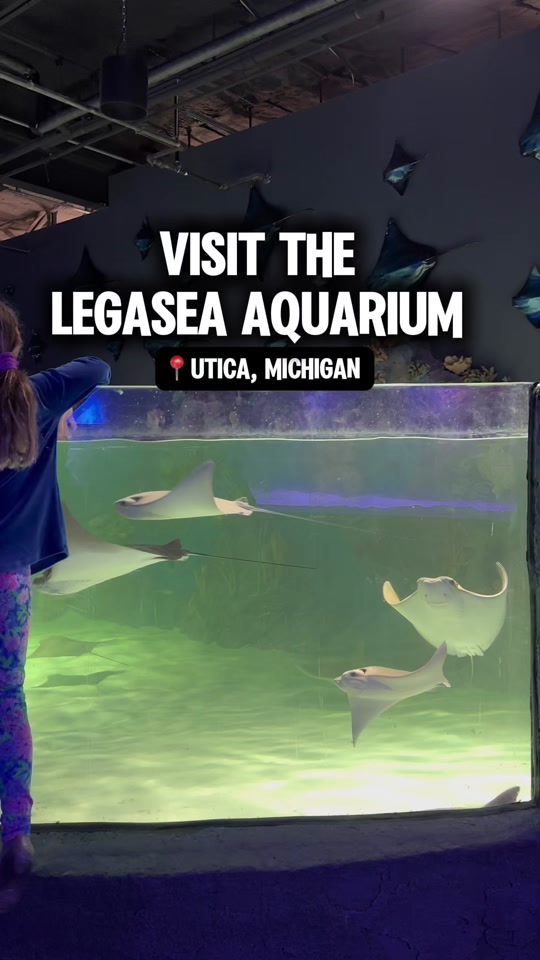
The aquarium side of the exhibit was quite nice, with many different species housed in aquariums that provided adequate space for their inhabitants.
However, it was evident that animal welfare on the reptile side of the exhibit was heavily lacking. By far the biggest issue was the minimal size of the enclosures. Here are just a few examples that stood out to me:
• Large koi crammed into a small pond at the entrance to the building.
• A green anaconda in an enclosure too small for it to fully stretch out (many snakes had the same issue).
• Large monitor lizards confined to small hardscapes with little room to move.
• Five alligators, each around 1.5 feet long, kept in what appeared to be a 90-gallon tank.
• A very large tortoise and a capybara confined to a small space with concrete walls and floors at the back of the building.
• A sloth, armadillo, binturong, and Maine coons housed in similarly small, hardscaped cells with very little room to explore or hide when stressed.
Many of these enclosures also lacked enrichment for their inhabitants, a crucial aspect of keeping healthy, happy animals in captivity. Walking through, it felt less like a professional exhibit and more like a pet store. Too often reptiles are neglected in their welfare, and unfortunately, this establishment confirmed...
Read moreWe chose to visit this place while in town as am I known as an avid reptile lover and my local friends wanted to visit. IMMEDIATELY upon stepping inside, we were surrounded by an overwhelming smell of feces and filth. I know how challenging reptile care can be, so I figured it was a result of being a large facility with lots of reptiles combined with us visiting later in the day (6 pm).
However, we were APPALLED at the condition the reptiles were in. The enclosure that stood out the most were Salt and Pepper (two alligators) who were in an enclosure much two small for one alligator, let alone two. They couldn't move and were frozen the entire time we were there. These alligators are also showing signs of bad care - most noticeable was the upward turning snout.
Among other enclosures, they had a bearded dragon in an enclosure 1/4 of the size it should have been, terrestrial animals in arboreal enclosures, and burrowers without nearly enough substrate to burrow. They also had multiple enclosures with way too many reptiles, including (but not limited to) the alligators, large-scale pythons, the tortoises, armadillo, ball pythons, rat snake, and various monitors.
Allowing almost every animal to be handled also has some ethical concerns. I understand having a select few available, but the practice can be stressful for animals whose personalities are not suitable for it.
Lastly, this place is a MASSIVE safety hazard. Almost EVERY enclosure did NOT have a lock, and those that did almost all had the keys in them. Anybody - including children - could easily open most of these enclosures and get themselves...
Read more