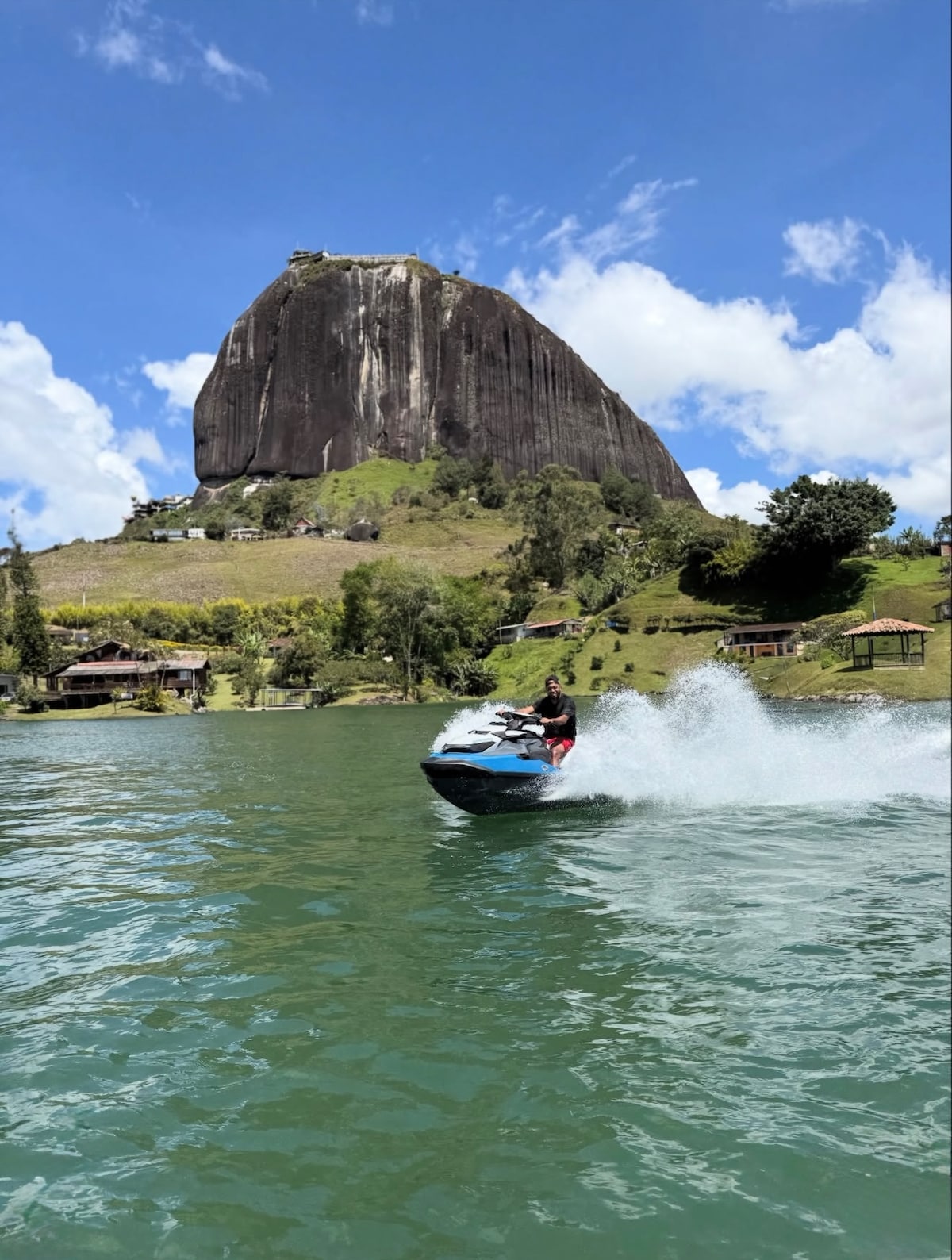
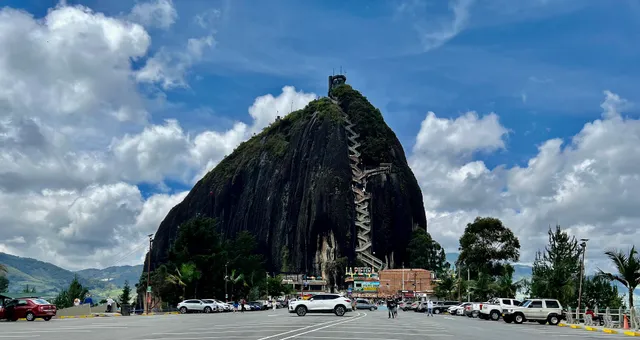
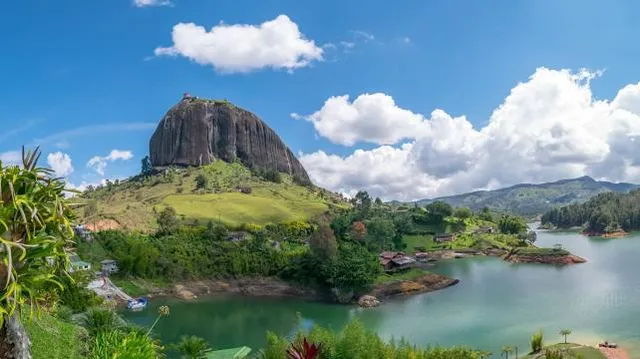
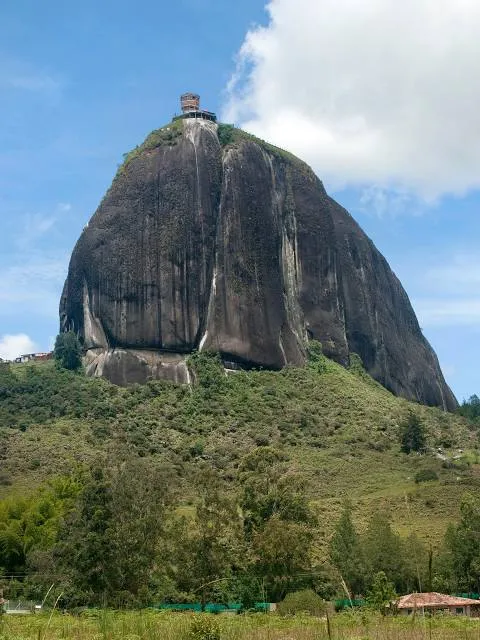
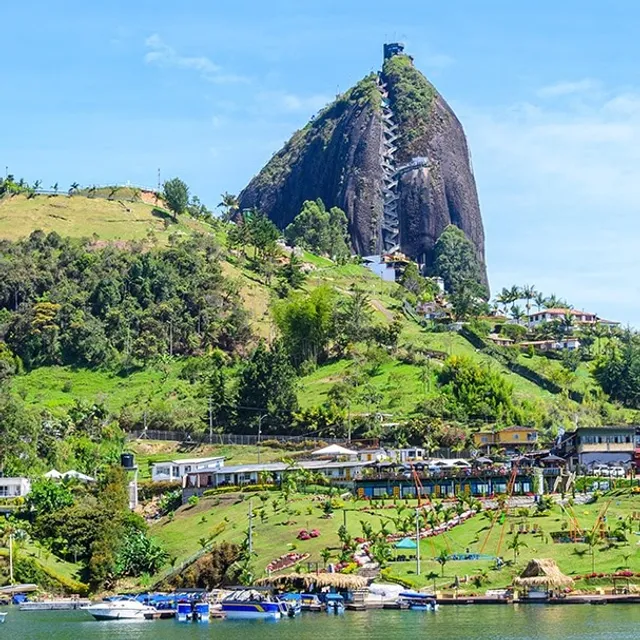
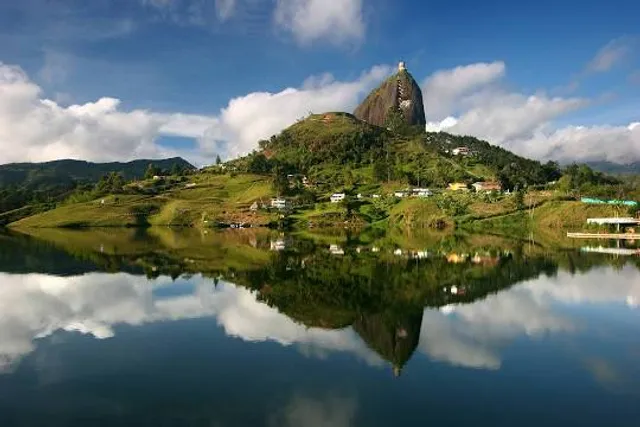
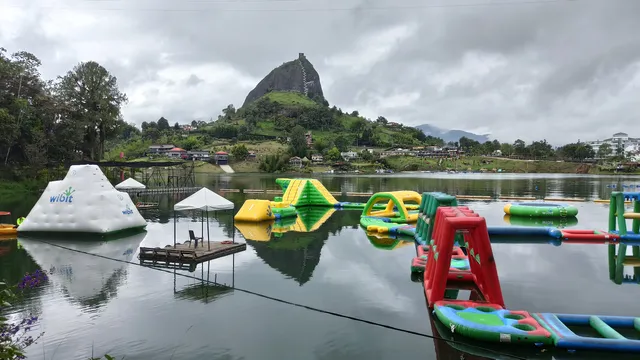
According to the story, the Piedra del Peñol - Guatapé, was an element of adoration for the Indians who inhabited the region in pre-Hispanic times, and during the colonial period, legends as famous as the devil who tried to take it several times, were born he is credited with the great crack he presents at the foot of his western side.
In the year 1954, what would be called the Peña de Guatapé was seen as a hindrance by the inhabitants of that time since they only dedicated themselves to agriculture and were far from believing that it would be the future of the East. At present, the fame of its beauty has spread to all corners of the world.
Its history dates back to 1954 when, thanks to a challenge from Father Alfonsoo Montoya, parish priest of Guatapé, knowing that climbers from different parts of the world would come to take the challenge of climbing it, in mass he launched the expression "the toads do not climb to the stones" and as challenge Luis Eduardo Villegas assumes it and in the company of Ramón Díaz and Pedro Nel Ramírez they are ahead of everyone and they manage to climb this marvelous mass and after 5 days of adventure they manage on July 16, 1954 to hoist a shirt on top.
•Theories of its appearance:
1- The first told that it could have been a meteorite, until a group of geologists made the studies about its components and discarded this theory, since it is composed of granite, quartz and feldspar, very common elements on earth.
2-The second one says that it was a volcanic eruption and when making contact with the air it became rock.
3-The third is perhaps the most accepted, since the Antique Antique is on a tectonic plate called "Antiochian batholith", which covers an approximate area of 10,000km2. A clash of tectonic plates caused an outcrop of stones, the most representative of the Peñol de Guatapé, as one of the largest in the world and the only one...
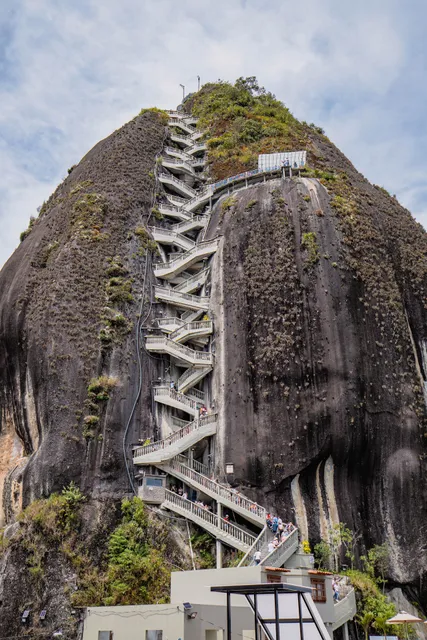
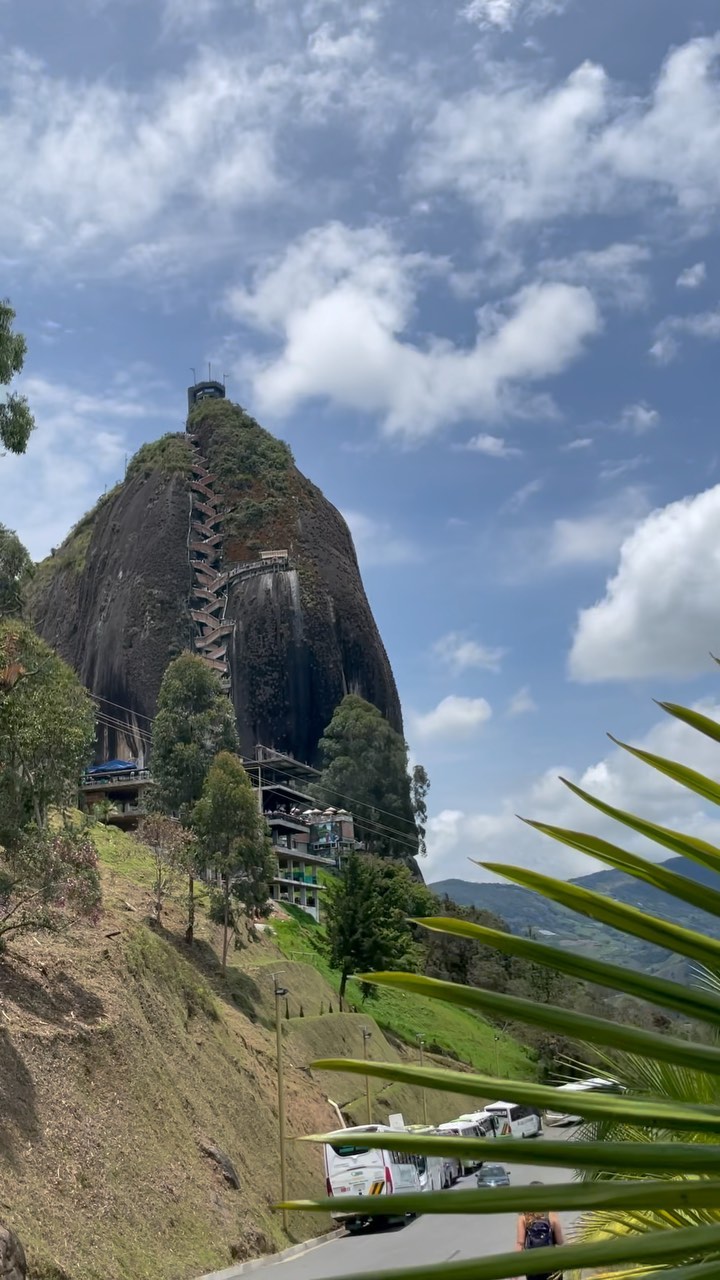
Read moreEl Peñón de Guatapé, an awe-inspiring destination, offers a truly remarkable experience for those willing to embark on its challenging ascent. The journey to the summit involves navigating 740 steps, a feat requiring both physical stamina and determination. This path not only tests your endurance but also rewards you with breathtaking views, making every step worthwhile.
The history of El Peñón de Guatapé is a testament to the vision and hard work of individuals committed to making this natural wonder accessible to all. As you climb, the elevation increases to 7,000 feet above sea level, presenting a challenge even for those in excellent physical condition. The thinning air makes breathing more difficult, underscoring the importance of taking regular breaks and staying hydrated.
Preparation is key for this adventure. Wearing a t-shirt and bringing an extra one for changing at the top is advisable, as the rigorous climb guarantees a good sweat. Carrying a water bottle is essential for staying hydrated throughout the journey.
Upon reaching the summit, the reward is twofold: a stunning panoramic view that captivates and soothes the soul, and a sense of personal achievement. The top of El Peñón de Guatapé isn’t just a physical destination; it's a place of relaxation and reflection. For convenience, there are restrooms available.
The descent offers a different perspective of the landscape and leads to a shopping center where visitors can purchase souvenirs, fruits, and water – a perfect way to commemorate the accomplishment.
El Peñón de Guatapé is more than just a tourist spot; it's a journey that tests your limits and rewards you with unparalleled views and a profound sense of achievement. It's an experience that stays with you long after the descent, making it a top choice for anyone seeking adventure and natural...
Read moreIf you’re in Medellin, you HAVE to take a day trip here. We took a local bus from terminal Norte for 14,000 pesos (1,000 cheaper than going all the way to Guatapé). At the bottom of the hill, you can take a donkey, a tuc tuc or walk up the steps to the base. We opted to walk, and you immediately start seeing the gorgeous views of the area. At the base of the rock, there are plenty of restaurants, food stands and souvenir stands. The entrance to the rock is 18,000 pesos - it is 100% worth it to go up although be ready for a tough climb. There are roughly 700 steps from the base to the mirador all the way at the top. They have a first aid stand about halfway up which gives you a sense of security in case anything happens. We took our time getting to the top, stopping to admire the views and catch our breath. Halfway up there is a mirador with a virgin, a good spot to take a small rest before finishing the climb up. Once at the top, there is a small restaurant where you can get ice cream pops, beer and other drinks. The mango michelada was super good, and the perfect treat after climbing up. We went on a Saturday, and there were less people than I expected. The views are breathtaking and absolutely like nothing I’ve ever seen before. I wish there was a bit more of an explanation about how the lakes were formed, although the ticket for the rock has a small explanation about the rock itself. Unfortunately there is no way to go up other than climbing the stairs so if you’re not in good health, then this may not be the spot for you. The bottom of the rock has plenty to do so if someone in your group can’t climb up, they can definitely be...
Read more