History
After the Pandavas won the Kurukshetra war against the Kauravas and re-established themselves in Indraprastha, the Pandava clan is stated to have built five temples of Hanuman and other deities.
It is believed that Tulsidas (1532–1623) penned the famous Hanuman Chalisa hymns in praise of Hanuman, visited this temple in Delhi. During his visit to Delhi, Tulsidas was summoned by the Mughal Emperor and asked to perform a miracle, which he did with the blessings of Lord Hanuman. The Emperor was pleased with Tulsidas and presented the Hanuman temple with an Islamic crescent Moon finial which adorns the temple spire. It is also claimed that because of the crescent moon symbol on the spire, the temple was not destroyed by the Muslim rulers who invaded India at various times
Sri Hanuman temple is located at Connaught Place, one of the largest financial, commercial and business centres in New Delhi, India, dedicated to Lord Hanuman. This ‘Sri Hanuman Temple’ is widely known as ‘Pracheen Hanuman Mandir’ and also revered as one of the five temples of Mahabharata (one of the major Sanskrit epics of ancient India) days in Delhi. The other four temples are:
Kalkaji, a Kali temple in South Delhi Yogmaya Temple near Qutub Minar Bhairav temple near the Pura Qila Nili Chatri Mahadev (Shiva temple) at Nigambodh Ghat outside the walls of Old Delhi
Sri Hanuman Temple was believed to be built during 1542-1605 by Maharaja Man Singh I of Amber, was the Rajput Raja of Amber, which is presently called as Jaipur in Rajputana and he was a trusted general of the Mughal emperor Akbar, who was said to include Maharaja Man Singh I among the Navaratnas (nine gems) of the royal court. And the temple was said to be reconstructed in 1724 by Maharaja Jai Singh, the Rajput ruler of the kingdom of Amber during the period of 1688-1743.
Specialty
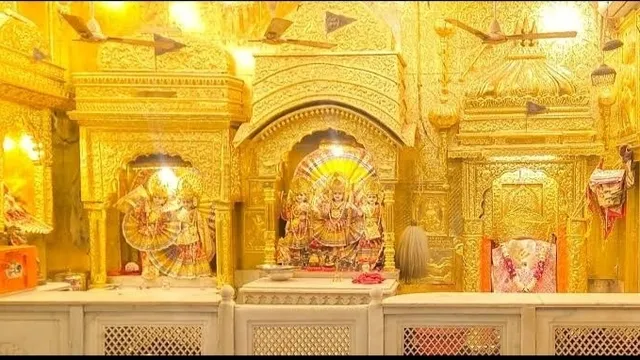
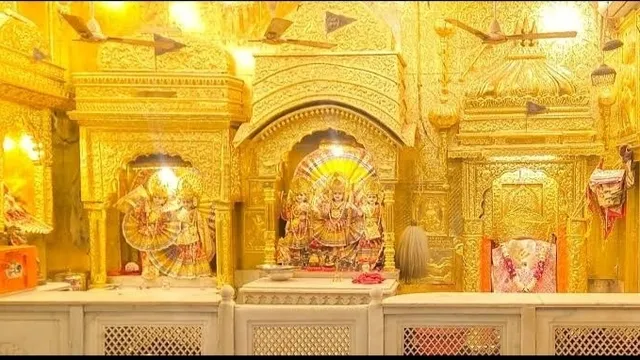
The presiding deity of Sri Hanuman Temple is Lord Bala Hanuman, in the form of a child and the idol is believed to be self-manifested. The presiding deity of this temple is popularly called as Sri Hanuman Ji Maharaj, the Great Lord Hanuman. The images of Lord Krishna, Goddess Radha, Lord Rama, Goddess Sita, and Lord Lakshmana are also installed on the walls of the temple. The other deities of this temple are Lord Shiva, Goddess Parvati, Lord Ganesha, Lord Murugan, Goddess Durga, Lord Lakshmi Narayan, Goddess Santoshi Mata, the wish fulfilling goddess.
The unique feature of this temple is that the idol of Bala Hanuman is placed in the Viman (temple tower) in the form of a crescent moon (Hilal), which is an Islamic symbol. And this peculiarity became a very particular importance during the Mughal period, which endorse the remarkable depiction. The temple has clerestory windows, the windows above eye level, to admit light and fresh air. The windows are embellished with paintings of Lord Hanuman in the cardinal directions, which indicate the four aspects of Lord Hanuman. The hall of the temple portrays the epic story of Ramayana in...
Read morePracheen Hanuman Mandir, CP: A Spiritual Oasis in Delhi's Bustling Heart Nestled amidst the bustling chaos of Connaught Place, Pracheen Hanuman Mandir offers a haven of peace and devotion. This ancient temple, believed to be one of the five Pandava-era temples in Delhi, has witnessed centuries of history and continues to be a vibrant center of faith for locals and tourists alike.
A Step Back in Time:
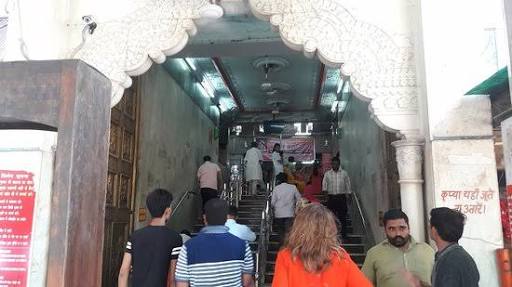
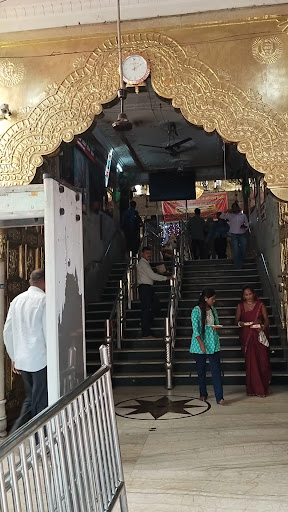
As you approach the temple, the vibrant facade adorned with intricate carvings transports you back in time. The air hums with the chanting of hymns and the gentle clanging of bells, creating a sense of serenity amidst the city's clamor. Stepping inside, you're greeted by the serene idol of Lord Hanuman, radiating calmness and strength. The sanctum sanctorum is adorned with gold leaf, colorful garlands, and offerings, adding to the temple's spiritual aura.
More Than Just a Temple:
While the main attraction is undoubtedly the captivating idol of Lord Hanuman, Pracheen Hanuman Mandir offers more than just worship. The courtyard houses a shrine dedicated to Lord Shiva, adding another layer of spiritual significance to the temple. The complex also boasts a langar serving free vegetarian meals to devotees, embodying the temple's dedication to community and service.
A Feast for the Senses:
The vibrant colors, the rhythmic chanting, the scent of incense, and the gentle clanging of bells – Pracheen Hanuman Mandir is a feast for the senses. Witnessing the devout offering prayers, lighting lamps, and adorning the idol with flowers creates a mesmerizing spectacle that's as much cultural as it is spiritual.
Things to Keep in Mind:
Dress modestly: As with any religious site, respectful attire is recommended. Avoid revealing clothing and opt for covered knees and shoulders. Footwear: Leave your shoes outside the main temple hall. Respect the rituals: Be mindful of ongoing prayers and rituals, and maintain a quiet and respectful demeanor. Photography: While allowed in some areas, avoid taking pictures inside the sanctum sanctorum. Overall:
Pracheen Hanuman Mandir is more than just a temple; it's a cultural and spiritual landmark in the heart of Delhi. Whether you're seeking a moment of peace amidst the city's chaos, a glimpse into India's rich religious heritage, or simply a beautiful and photogenic spot, this ancient temple is definitely worth a visit. Just remember to come with an open mind and a respectful heart.
Rating: 4.5 out of 5 stars (minus 0.5 for potential crowds and long lines)
Tips:
Visit early in the morning or late in the evening to avoid peak crowds. Combine your visit with exploring Connaught Place, a bustling shopping and dining district just steps away. Sample the delicious free langar meal offered by the temple. Take some time to appreciate the intricate carvings and architectural details of the temple. I hope this review helps you plan your visit to Pracheen Hanuman Mandir. May your experience be filled with peace, devotion, and...
Read moreHanuman Temple in Connaught Place, New Delhi, India, is an ancient Hindu temple and is claimed to be one of the five temples of Mahabharata days in Delhi.
History- Historically, Delhi, located on the banks of the Yamuna River, is mentioned as the city of Indraprastha built by the Pandavas of the Mahabharata era. According to the arbitral division of the Kuru empire, the Pandavas ruled from Indraprastha and the Kauravas from Hastinapur (two collateral families). But, in a game of dice, the Pandavas lose their kingdom and are exiled for 12 years and must remain in hiding for the 13th year (with a rider that if they are detected during this period they will be exiled). During the exile of the Pandavas (imposed by their cousin Duryodhana of the Kaurava clan), to quell the arrogance of Bhima (the second of the five Pandava brothers), Hanuman was treated as Bhima's brother (both sons of Vayu, appearing in the forest disguised as a weak and aged monkey. While Bhima was searching for a fragrant flower that Draupadi wanted, Hanuman found his He found it lying with the tail blocked and, not knowing Hanuman's identity, mockingly asked him to remove his tail. But Hanuman could not do it on his own because of Bhima's old age. Bhima tried several times but failed to lift it, despite being a man of great strength. Bhima replied that the monkey was none other than his own brother. Realizing, he apologizes for his arrogant behavior and requests Hanuman to show him his true form. During the epic Ramayana, Hanuman is said to have shown Bhima the magnitude of crossing the ocean to go to Lanka in search of Maa Sitaji. After the Pandavas won Kurukshetra, the Pandava clan re-established themselves in Indraprastha after the Pandavas fought against the Kauravas. Five temples are said to have been built. Tulsidas (1532–1623), the author of the Ramacharitamanas (1532–1623), who wrote the famous Hanuman Chalisa hymns in praise of Lord Hanuman (known as Tulsi Ramayanam), is believed to have visited this temple in Delhi. With the blessings of Emperor and Hanuman he asked to perform a miracle. The emperor was pleased with Tulsidas and presented the Hanuman temple with the Islamic crescent that adorns the temple's pinnacle It is also argued that the temple was not destroyed by the Muslim rulers who invaded India at various times because of the crescent symbol on the pinnacle.
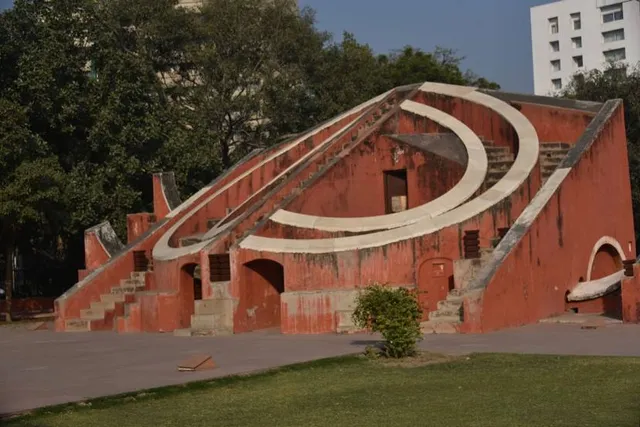
Reportedly, it was originally built by Maharaja Man Singh I of Amber (1540-1614) during the reign of Emperor Akbar (1542-1605). It was rebuilt as Jantar Mantar in 1724 by Maharaja Jai Singh (1688-1743). After that the temple became a prominent religious center in the heart of...
Read more