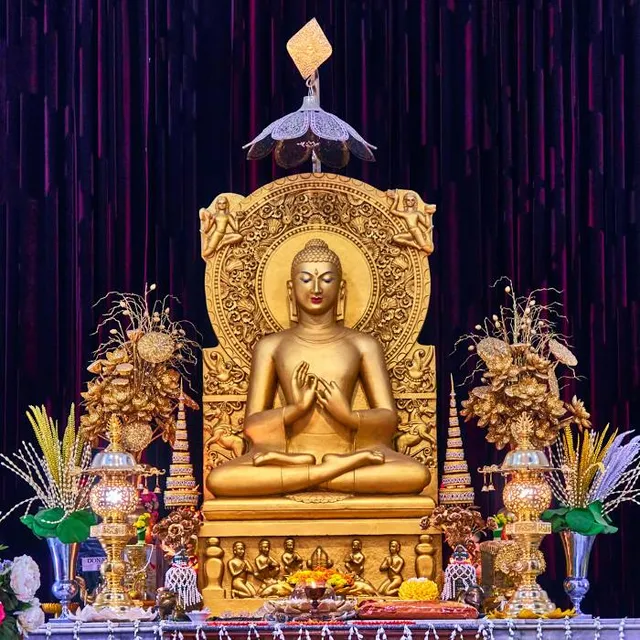
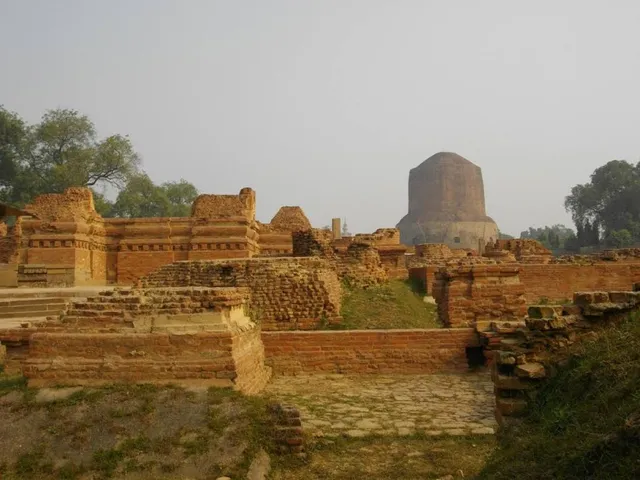
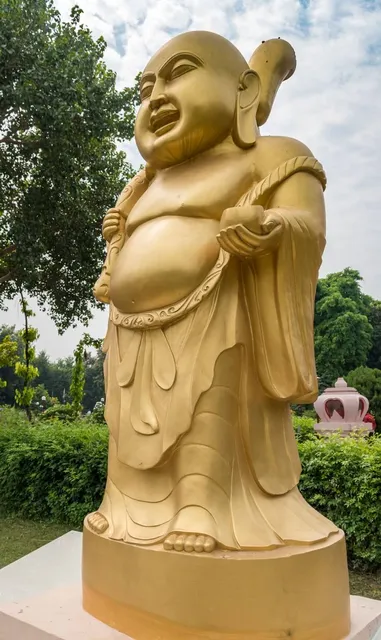
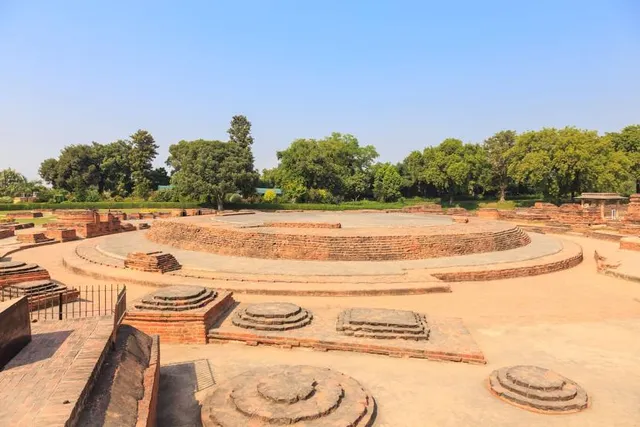
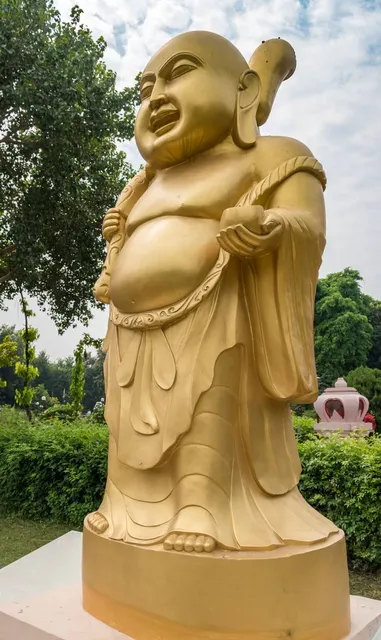
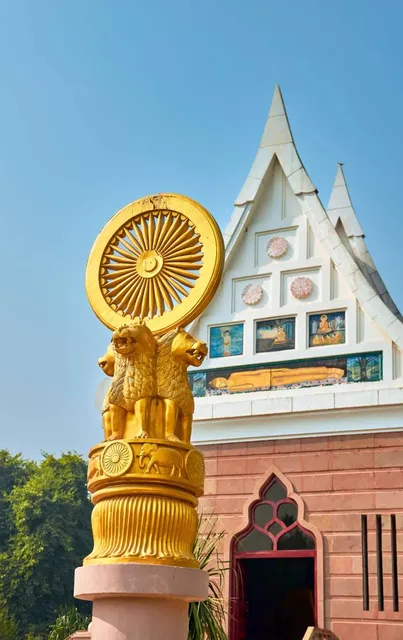
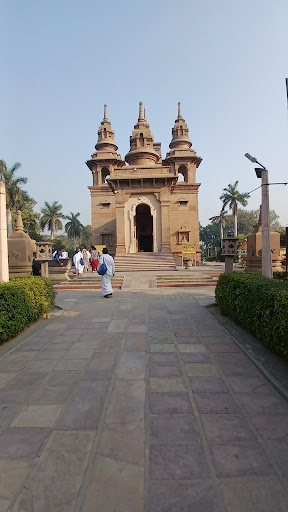
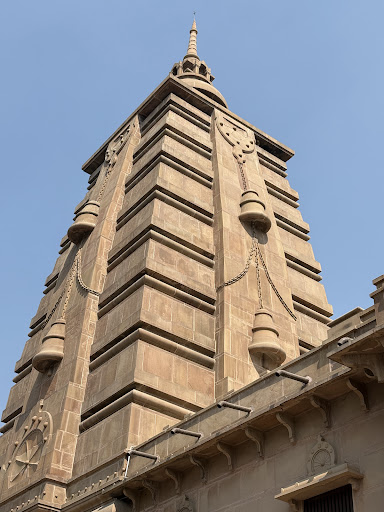
Must see.. Made by Anagari Dhammapala.. Mulagandha Kuti Vihar Mulagandha Kuti Vihar Sarnath is situated amidst brick ruins of ancient Sarnath, and is well known for its magnificent murals and frescos. This Buddhist Temple is relatively new and therefore offers a sharp contrast to the ruins of Sarnath; this temple also stands out with its distinct architecture which is nowhere near the style followed by Buddhist architecture. The Mulagandha Kuti Vihar Sarnath in Uttar Pradesh is particularly famous for its frescos and murals. Sarnath (also known as Mrigadava, Migadaya, Rishipattana, Isipatana) is the deer park where Gautama Buddha first taught the Dharma. This is also the place where the Buddhist Sangha came into existence through the enlightenment of Kondanna. Sarnath is located 13 kilometers north-east of Varanasi, in Uttar Pradesh, India. Isipatana or Sarnath was mentioned by the Buddha as one of the four places of pilgrimage which his devout followers should visit. History : The Mulagandha Kuti Vihar Sarnath in India been erected by the Maha Bodhi society in the year 1931. The frescos on the walls of this monastery were done by the famous Kosetsu Nosu who happens to be Japan's foremost painter. Description : Built around a large compound of lush well manicured lawns and gardens, the Mulagandha Kuti Vihar Sarnath resembles a Hindu temple as far as its structure is concerned. The Mulagandha Kuti Vihar In Sarnath In Uttar Pradesh boasts of some of the most magnificent and colorful Frescoes that have been made by the magical hands of. Kosetsu Nosu a famous Japanese painter. The frescos at the Mulagandha Kuti Vihar Sarnath are rich repositories of Buddhist literature. The frescos depict scenes from the life of Buddha and stories from Jatakas; accounts of Buddha’s disciples, miracles shown by the Lord Buddha, etc. While Frescoes dominate the interiors of Mulagandha, Murals are mainly to be seen on the exteriors. They can be seen on walls and pillars along with the outer columns. A huge bell dominates the entrance of the Mulagandha Kuti Vihar. The royal scions of Japan have gifted this mammoth bronze bell to the temple. However, the most striking aspect of this temple is the beautiful life-size golden idol of the Lord Buddha that is installed at the sanctum. In the campus of the Vihar you can also see the Bodhi tree whose sapling was brought from a tree in Sri Lanka, which was in turn grown from a sapling of the original Maha Bodhi tree under which Buddha gained enlightenment at Bodh Gaya, 2500 years ago. Mahendra and Sanghmitra, son and daughter of Ashoka the Great respectively, took the sapling from this original tree during their voyage...
Read moreListen to monks chanting Buddhist sermons and spot interesting artwork at this modern temple, set among picturesque gardens, ruined temples and sacred shrines.
Mulagandha Kuti Vihara Monastery is a modern monastery and temple set among scenic gardens. Marvel at the striking Buddhist architecture, admire fascinating frescoes and listen to the infectious sounds of Buddhist chants. Mulagandha Kuti Vihara Monastery is in Sarnath, an ancient pilgrimage site that attracts Buddhist’s devotees from around the world. While here, visit the remains of revered temples, shrines and an interesting museum.
Approach the monastery via a paved walkway lined with multicolored Buddhist flags, which flap gently in the breeze. Gaze up at the attractive architecture, dominated by towers and intricately carved spires. Look for the Bodhi tree, which is supposedly a descendant of the tree beneath which Lord Buddha achieved enlightenment. Take a moment to watch the groups of monks that sit and meditate on the surrounding green lawns.
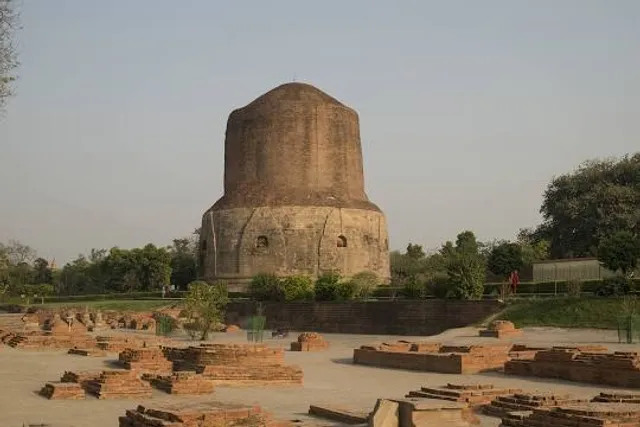
Step inside the monastery to discover a superb collection of colorful frescoes depicting the life and teachings of Lord Buddha. They are the work of famed Japanese artist Kosetsu Nosu. Come to the monastery in the evening to hear monks reciting Buddha’s first sermon, which legend states he gave at the nearby Damekh Stupa.
Located in the town of Sarnath, Mulagandha Kuti Vihara Monastery is about a 30-minute drive from Varanasi. Public buses travel between Sarnath and Varanasi. Alternatively, get here via tuk-tuk or taxi.
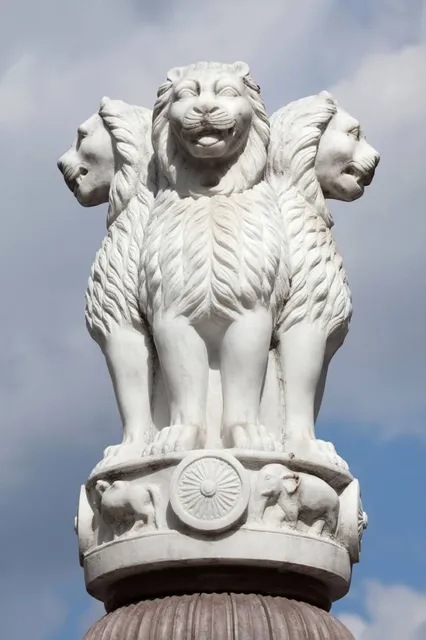
After visiting the monastery, check out the other attractions of Sarnath. Among these are the remains of the Dharmarajika Stupa from the 3rd century B.C., which once enshrined relics of Lord Buddha. Check out the ruined Chaukhandi Stupa, the meeting place of Buddha and his first disciples. Go to the Sarnath Museum to see Buddha icons, Hindu images and the Lion Capital of Ashoka, a sculpture of four lions.
The monastery and other attractions of Sarnath are open daily and have admission fees. The museum is open from Saturday to Thursday and charges a separate admission fee. Remember to remove shoes when entering the monastery and walk in a clockwise direction around the stupas. Signs in English provide useful information about the various...
Read moreThe Mulagandha Kuti Vihar was built in 1931 as a temple to commemorate the spot where Buddha delivered his first sermon and spent his first rainy season retreat.
Anagarika Dharmapala was born in Sri Lanka in 1864 and took a pilgrimage to Sarnath and Bodh Gaya in 1891, where he saw the deplorable condition of the monuments who built this temple.
The temple features frescoes painted in the Ajanta style by the Japanese artist Kosetu Nosu.
The temple is considered a major attraction for tourists and a place of pilgrimage for Buddhists.
The temple is located 400 meters east of the main entrance to the ancient Buddhist complex at Sarnath.
The temple is still maintained and run by the Mahabodhi Society.
Anagarika Dharmapala, a prominent figure in the Buddhist revival movement in India, founded the Mahabodhi Society with the goal of restoring ancient Buddhist sites like Bodh Gaya, Sarnath, and Kushinara.
The Mulagandha Kuti Vihar in Sarnath, which marks the spot where Buddha sat in meditation, was built in 1931 by Anagarika Dharmapala, the founder of the Mahabodhi Society.
Mulagandha Kuti Vihar is one of the major Buddhist sites in Sarnath. Built in the year 1931, Mulagandha Kuti Vihar is basically a monastery and temple which commemorate the original Mulagandha Kuti Vihar. Known for its striking frescoes and murals, the Buddhist temple in Sarnath stands out because of its unique architectural design, which is the most recent of its kinds in Sarnath.
The architecture of Mulagandha Kuti Vihar boasts some intricate designs and patterns that are altogether a delight for every art and history lover. Inside the temple, there is a Bodhi tree that has been brought from a sapling from Anuradhapura, Sri Lanka. It is said that the tree in Sri...
Read more