Mahakal Mandir (Nepali: महाकाल मन्दिर. Translation: The master of Kaal [time]) is a sacred Hindu temple located in Darjeeling in the state of West Bengal, India dedicated to the Hindu god Lord Shiva, the third god in the Hindu triumvirate. The Temple was built in 1782 by Lama Dorjey Rinzing and is perched atop the Observatory Hill in Darjeeling and is an amalgamation of Hindu and Buddhist religions. It is a unique religious site where both religions coexist harmoniously.
Mahakal Temple stands as a historical edifice on the spot where a Buddhist Monastery named 'Dorje-Ling' once stood which was built by Lama Dorjey Rinzing in 1765. Legend has it that three Shiva-Lingas representing Brahma, Vishnu and Maheshwar (Lord Shiva) manifested themselves at the site in 1782. The monastery itself was plundered and destroyed in 1815 during the Gorkha invasion after which it was shifted to Bhutia Busty about a mile away and was called the Bhutia Busty Monastery. The Temple is a much revered and visited religious shrine of the area.
Legend has it that the name Darjeeling was derived from the name of the monastery 'Dorje-Ling' itself.
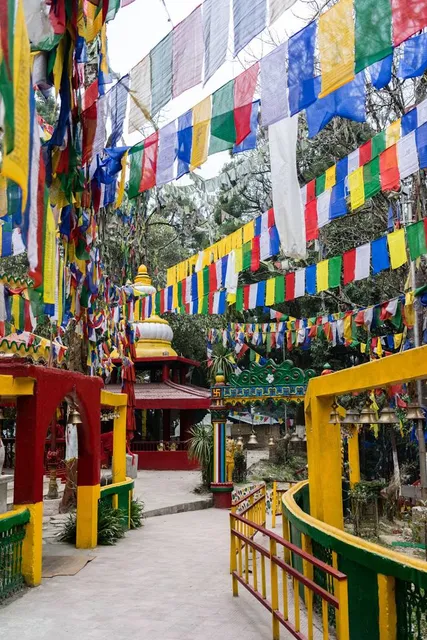
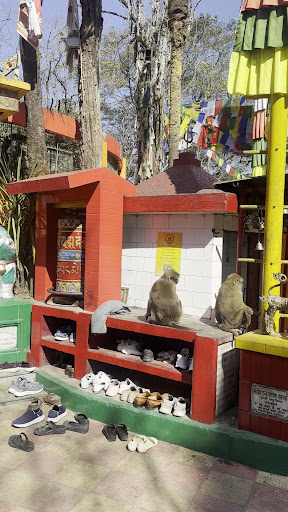
The main Mahakal temple is devoted to Lord Shiva and it witness devotees from all sections of society and religions most visiting the temple for both leisure or pilgrimage. Bells and hundreds of colorful prayer flags line the up-hill walk and the shrine.
The three gold plated Lingams inside the main temple represent Hindu Gods Brahma, Bishnu and Maheswar. There are idols of Lord Buddha alongside the Lingams where both a Hindu priest and a Buddhist monk perform religious rituals and offer prayers simultaneously.
Within the temple complex is a white 'chorten' (Tibetan memorial shrine) where lies the relics of Dorjey Rinzing Lama the original builder of the site. Dotted around are many other smaller shrines and temples dedicated to Goddess Kali, Goddess Durga, Saat Kanya Bhagavati Devi, Lord Ganesha, Lord Krishna, Lord Rama, Shirdi Sai Baba, Hanuman, Goddess Parvati, Radha and other Gods and Goddesses.
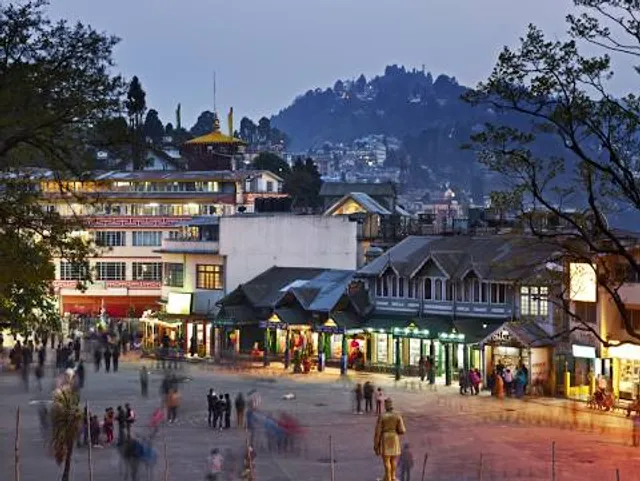
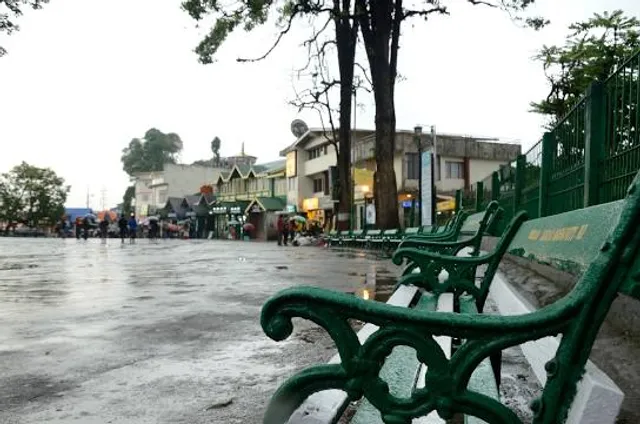
Mahakal Temple is located behind the Chowrasta and encircled by the Mall Road on the ridge of Darjeeling town. The approach is a uphill narrow road about 100 yards from the Mall and is accessible by foot only.
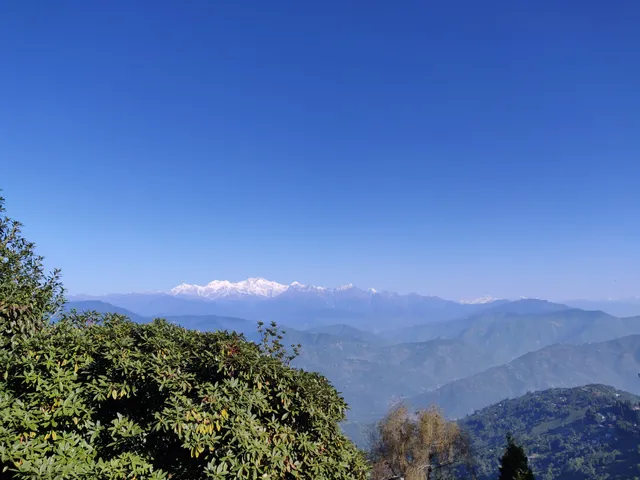
The Observatory Hill itself is rich in flora and fauna unique to the Himalayan range of mountains and the full range of third highest peak in the world mount Kanchenjunga can be witnessed from atop the...
Read moreThe Mahakal Temple is one of the popular tourist attractions located at the top of Observatory Hill in Darjeeling. The temple is one of the most venerable places in Darjeeling, which is revered both by the Hindus and the Buddhists. The meaning of Mahakal is “Kalo ko Kal”, the Master of Kal or Time.
Located almost 2 km from Darjeeling Himalayan Railway Station, Observatory Hill is a hilltop located closer to Chowrasta Square in Darjeeling. It is one of the most preferred places to visit in Darjeeling and among the popular sightseeing places in Darjeeling. The Mahakal temple Darjeeling is an excellent place for relaxation and for enjoying the stunning views of the Kanchenjunga.
Location: Chauk Bazaar, Darjeeling, West Bengal, India Entry Fee: No entry fee Timing: The timings to visit the temple are from 6 AM to 6 PM Significance of the Mahakal Temple Darjeeling 1782, three Shiva Lingas self-manifested themselves on this hilltop and the problem occurred when Gorkha from Nepal invaded the place in 1815. They ransacked and destroyed the monastery and monasteries were rebuilt later in 1861. However, for some unknown reason, it was relocated to the Bhutia Busti and was referred to as Bhutia Busti Monastery.
The Mahakal Temple in Darjeeling is located on the observatory hill from where one can enjoy the scenic view of the entire city. The deity of Lord Shiva is the main deity that is worshipped here, and the history of the place, the Buddhist Monastery, made this place popular among both Hindus and Buddhists.
While visiting the temple, one can hear the Hindu Priests chanting prayers, as well as Buddhist monks, reading out their holy scripts. There is beautiful coordination between both religions which can clearly be seen with so many bells on the walls. There are numerous small temples located around this main temple dedicated to Lord Hanuman, Ganesh, and Durga.
The devotees coming here walk barefoot around the temple three times and ring the bells while walking. As per the Buddhist belief, the flags flying around the temple connect the prayers directly to heaven. Though the colors of the flags changes due to weather effects, Buddhists believe that it signifies that the sins of devotees are being...
Read more!! Har Har Mahadev !! Mahakal Temple stands as a historical edifice on the spot where a Buddhist Monastery Mahakal Temple stands as a historical edifice on the spot where a Buddhist Monastery named 'Dorje-Ling' once stood, which was built by Lama Dorjey Rinzing in 1765. Prior to that it is believed that the spot was a sacred spot of the aboriginal Lepcha folks. Later a monastery was constructed on the spot and worshipped by both Lepchas and Bhutias.
It was after the invasion of the Gurkha Army around 1788 that the monastery was desecrated and destroyed by the invading troops and in course of time the sacred place overwhelmingly began to represent the Hindu symbolisms of the majority Nepali community. Legend has it that three Shiva - Lingas representing Brahma, Vishnu and Maheshwar (Shiva) manifested themselves at the site in 1782. The monastery itself was plundered and destroyed in 1815 during the Gorkha invasion after which it was shifted to Bhutia Busty about a mile away and was called the Bhutia Busty Monastery. The Temple is a much revered and visited religious shrine of the area.
Legend has it that the name Darjeeling was derived from the name of the monastery 'Dorje - Ling' itself. named 'Dorje - Ling' once stood, which was built by Lama Dorjey Rinzing in 1765. Prior to that it is believed that the spot was a sacred spot of the aboriginal Lepcha folks. Later a monastery was constructed on the spot and worshipped by both Lepchas and Bhutias.
It was after the invasion of the Gurkha Army around 1788 that the monastery was desecrated and destroyed by the invading troops and in course of time the sacred place overwhelmingly began to represent the Hindu symbolisms of the majority Nepali community. Legend has it that three Shiva-Lingas representing Bramha, Vishnu & Mahesh (Shiva) manifested themselves at the site in 1782. The monastery itself was plundered and destroyed in 1815 during the Gorkha invasion after which it was shifted to Bhutia Busty about a mile away and was called the Bhutia Busty Monestry. The Temple is a much revered and visited religious shrine of the area.
Legend has it that the name Darjeeling was derived from the name of the monastery...
Read more