During my visit to Italy in 2006, I had the distinct pleasure of exploring Casa Buonarroti, a hidden gem nestled in the heart of Florence. This intimate museum, dedicated to the life and works of the legendary artist Michelangelo Buonarroti, offered a captivating journey through the artistic genius and personal history of one of the world's greatest masters. From its impressive collection of artworks to its insightful exhibits, Casa Buonarroti left an indelible mark on my exploration of Florence's rich cultural heritage.
Stepping into Casa Buonarroti, I was immediately enveloped in an atmosphere of reverence and admiration for Michelangelo's artistic prowess. The museum's curated displays showcased an impressive range of the artist's creations, including sculptures, drawings, and architectural designs. Each artwork served as a testament to Michelangelo's unmatched skill, his keen eye for detail, and his unparalleled ability to breathe life into stone.
The highlight of my visit was undoubtedly the collection of Michelangelo's sculptures. From the iconic "Madonna della Scala" to the exquisite "Bacchus," each piece evoked a sense of awe and wonder. The mastery with which Michelangelo captured the human form, with its flowing lines and intricate expressions, was simply awe-inspiring. It was a privilege to witness firsthand the genius that revolutionized the art world and continues to inspire generations of artists to this day.
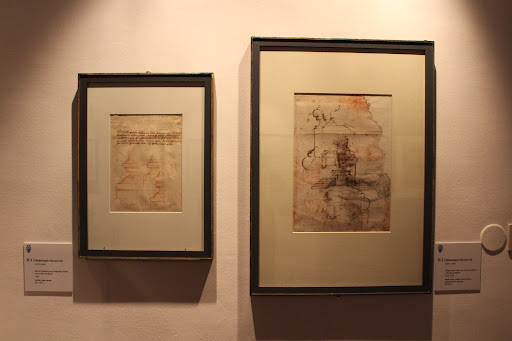
The museum's exhibits provided a glimpse into the personal life and creative process of Michelangelo. Letters, personal artifacts, and sketches shed light on the artist's thoughts, struggles, and inspirations. Understanding the context in which these masterpieces were created added depth and significance to my appreciation of Michelangelo's artistic achievements.
Casa Buonarroti's ambiance was both serene and immersive. The museum's layout allowed for a contemplative exploration of the artworks, providing ample space for reflection and study. The informative descriptions and insightful audio guides enhanced my understanding of each piece, enriching the overall experience.
The museum's dedication to preserving and showcasing Michelangelo's legacy was evident in the meticulous care taken to exhibit the artworks. The lighting, display cases, and overall presentation ensured that each sculpture and drawing was showcased to its fullest potential, allowing visitors to fully appreciate the intricacies and nuances of Michelangelo's craftsmanship.
While Casa Buonarroti may not attract the same level of crowds as some of Florence's larger museums, its intimate setting and hidden charm added to the allure of the visit. The tranquility of the museum allowed for a more personal and immersive encounter with Michelangelo's art, fostering a deeper connection with his genius and leaving a lasting impression.
My visit to Casa Buonarroti was an unforgettable homage to the creative spirit of Michelangelo. It provided a window into the world of this Renaissance genius, offering a deeper understanding of his artistic process, his impact on the art world, and his enduring legacy. The museum stands as a tribute to Michelangelo's artistic brilliance, preserving his masterpieces for future generations to appreciate and admire.
For art enthusiasts, history lovers, and anyone seeking to delve into the mind of a true artistic genius, a visit to Casa Buonarroti is an absolute must. It is an opportunity to walk in the footsteps of Michelangelo, to witness his artistic evolution, and to gain a profound appreciation for his contributions to the world of art. Casa Buonarroti is a hidden treasure in the heart of Florence—an experience that deserves the...
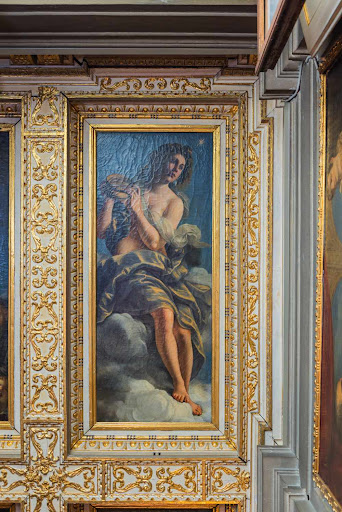
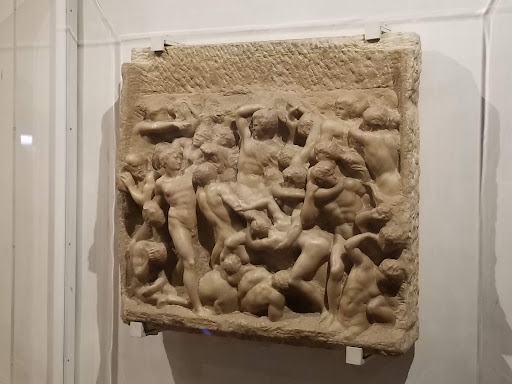
Read moreCasa Buonarroti is a museum in Florence, Italy. The building was a property owned by the sculptor Michelangelo, which he left to his nephew, Leonardo Buonarroti. The house was converted into a museum dedicated to the artist by his great nephew, Michelangelo Buonarroti the Younger. Its collections include two of Michelangelo's earliest sculptures, the Madonna of the Stairs and the Battle of the Centaurs. A ten-thousand book library includes the family's archive and some of Michaelangelo's letters and drawings. The Galleria is decorated with paintings commissioned by Buonarroti the Younger and created by Artemisia Gentileschi and other early seventeenth-century Italian artists.
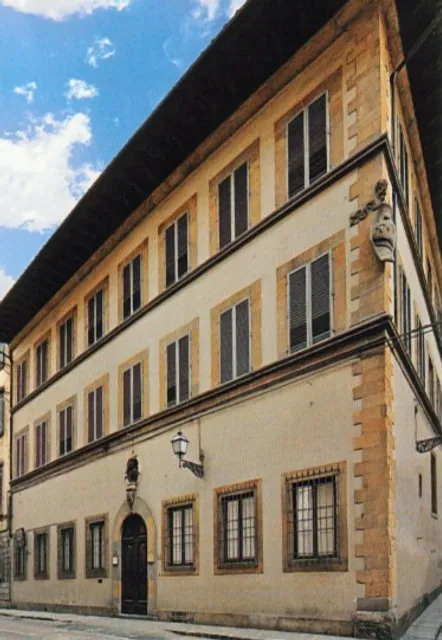
On March 3, 1508 Michelangelo, who had moved to Rome three years earlier to work on the Tomb of Pope Julius II, bought four adjoining buildings at the corner of via Ghibellina and via Santa Maria (now via Buonarroti), just north of the Basilica di Santa Croce. He acquired another adjacent structure in April 1514. These five buildings were the nucleus of what would later become the Casa Buonarroti. From 1516 to 1525 Michelangelo occupied the two most spacious buildings, renting out the other three; in that period he was working on the façade of the Basilica of San Lorenzo in Florence. In 1525 he moved to another residence, and all five buildings were rented out.
After moving to Rome in 1534, Michelangelo became increasingly obsessed with the idea of having a "honorable home" in Florence, a palace that would represent his own family with dignity. He repeatedly asked his nephew Leonardo (1519-1599) to transform the five buildings at the corner of via Ghibellina and via Santa Maria into a family palace; however Leonardo always showed little interest in the project, committing only to a partial restoration of the complex which was carried out in 1590, 26 years after Michelangelo's death.
The palace was given its present look by one of Leonardo's sons, Michelangelo Buonarroti the Younger (1568-1647), who further expanded the complex by purchasing an adjacent lot. He had the various buildings rearranged into a unified structure; on the piano nobile, he arranged four monumental rooms dedicated to the celebration of his great-uncle and of his family, as well as a Gallery for displaying the works of art in his collection, including Michelangelo's Battle of the Centaurs and Madonna of the Stairs. Michelangelo the Younger commissioned a number of contemporary Italian artists to decorate the interior rooms, including Artemisia Gentileschi, Cecco Bravo, Pietro da Cortona, Jacopo da Empoli, Francesco Furini, Giovanni da San Giovanni, Domenico Passignano, Ottavio Vannini and...
Read more"Casa Buonarroti" unica e eccezionale realtà museale : al visitatore viene data opportunità di contemplare due celebri rilievi marmorei, capolavori della prima giovinezza di Michelangelo : "La Madonna della scala" e "La Battaglia dei centauri", segno della genialità dell'artista. Via Ghibellina 70, a Firenze : è qui che si ammirano opere michelangiolesche e si ricordano vicende secolari della famiglia Buonarroti (che si era impegnata, aveva fatto ampliare la dimora e l'aveva resa più bella per tenervi preziose testimonianze culturali come l’ Archivio e la Biblioteca) per raccogliere collezioni d’arte.. Dipinti, sculture, maioliche, reperti archeologici sono a disposizione dei turisti nei due piani del Museo. . Casa Buonarroti espone opere, documentazioni (e doni che si sono aggiunti al patrimonio familiare) e pezzi unici come due famose opere michelangiolesche ( il Modello ligneo per la facciata di San Lorenzo e il Dio fluviale, preparatorio per una statua mai realizzata per la Sagrestia Nuova), i due "Noli me tangere" cinquecenteschi, derivati da un cartone perduto dell’artista. L’idea della creazione di Casa Buonarroti fu di 'Michelangelo Buonarroti il Giovane', letterato e organizzatore di cultura che, a partire dal 1612, commissionò (all’interno del palazzo e in special modo nella “Galleria” e nelle tre sale successive) opere a celebri artisti, Empoli, Passignano, Artemisia Gentileschi, Pietro da Cortona, Giovanni da San Giovanni, Francesco Furini e Jacopo Vignali. In queste sale Michelangelo il Giovane decise di collocare pezzi che sono fruibili dal visitatore nel percorso museale (anche la predella lignea con Storie di San Nicola, capolavoro di Giovanni di Francesco, seguace di Domenico Veneziano). {Per quanto riguarda Artemisia Gentileschi : ricordiamo il suo capolavoro "l’Inclinazione" perché, grazie al progetto “Artemisia UpClose” col sostegno dell’ente no-profit inglese Calliope Arts e del collezionista e filantropo Christian Levett, sono in corso sul dipinto indagini diagnostiche con avanzate tecniche di imaging per il restauro esame a luce diffusa e radente, indagine a raggi UV e infrarossi, imaging multispettrale ipercolorimetrico e riflettografia ai raggi X e ad alta risoluzione che permetteranno di avere informazioni tecniche e di dare aspetto originario al dipinto di Artemisia. Le operazioni di restauro da ottobre 2022 ad aprile 2023}. Si organizzano inoltre all’interno del Museo mostre su patrimonio culturale e memorie della Casa Buonarroti e su Michelangelo : esposizioni riconosciute nel panorama culturale globale per la...
Read more