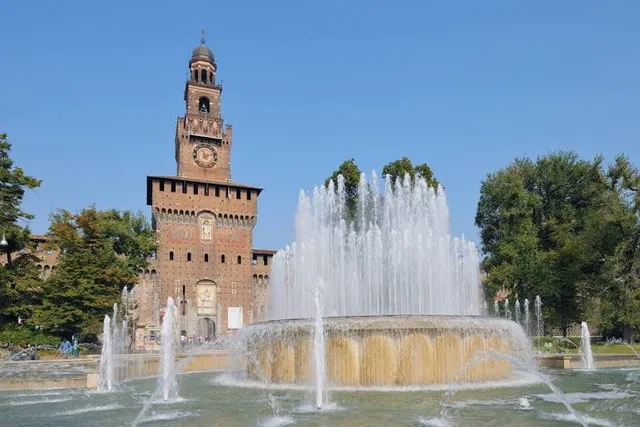
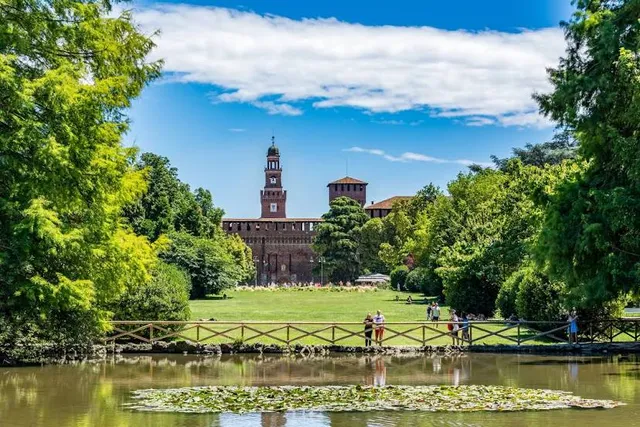
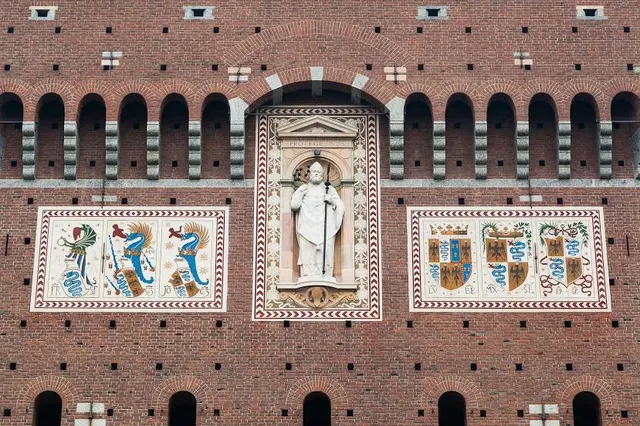
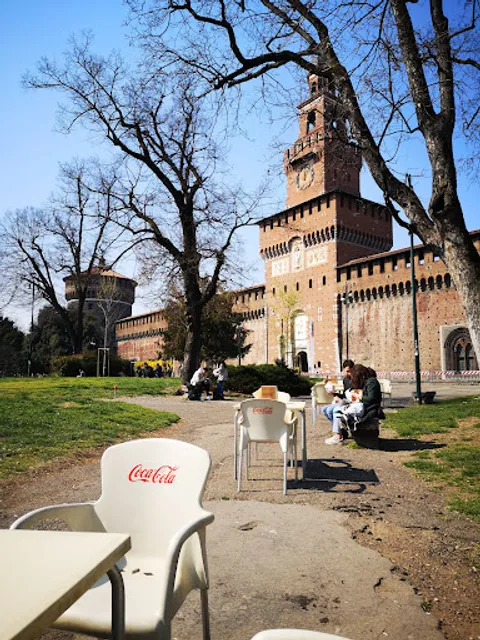
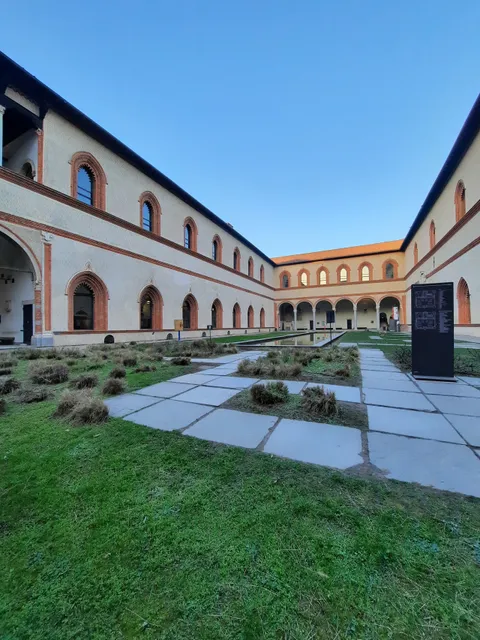
Our family recently visited Sforza Castle (Castello Sforzesco) in Milan, and it turned out to be one of the highlights of our trip. The castle is an impressive landmark that gives you a real sense of Milan’s history and culture. Built in the 15th century by the Sforza family, it still stands tall and well-preserved, surrounded by large courtyards, towers, and beautiful red-brick walls.
We entered through the main gate and were immediately struck by how vast the place is. The atmosphere feels calm despite being in the middle of a busy city. You can walk around freely, and many areas are open to the public without any entry fee, which makes it great for families. The inner courtyards are perfect for children to explore safely, with plenty of open space to run around.
Inside, the castle houses several museums and art collections. We started with the Museo d'Arte Antica, which displays sculptures, weapons, and furnishings from the Renaissance period. The Michelangelo’s unfinished Pietà Rondanini, located in a quiet section of the museum, is breathtaking and worth spending time to appreciate. Even if you are not an art expert, it’s a powerful piece to see up close.
We also enjoyed the Pinacoteca, which holds paintings from Italian masters such as Mantegna, Bellini, and Canaletto. The rooms are well laid out, and the descriptions are clear in both Italian and English. Our son found the Archaeological Museum interesting, especially the Egyptian section with mummies and ancient artefacts. The staff at the ticket counter were helpful and provided a map that made it easy to plan which areas to visit first.
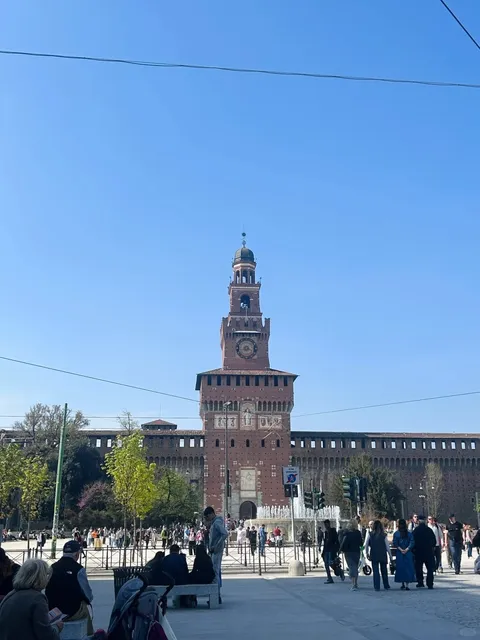
The castle grounds are just as impressive as the exhibits. The large open spaces and brick courtyards make for great photo spots. Walking along the walls and through the arched passages gives you a real sense of the castle’s scale and history. The Torre del Filarete, the main tower, stands out beautifully against the skyline, and you can see it from various parts of the city.
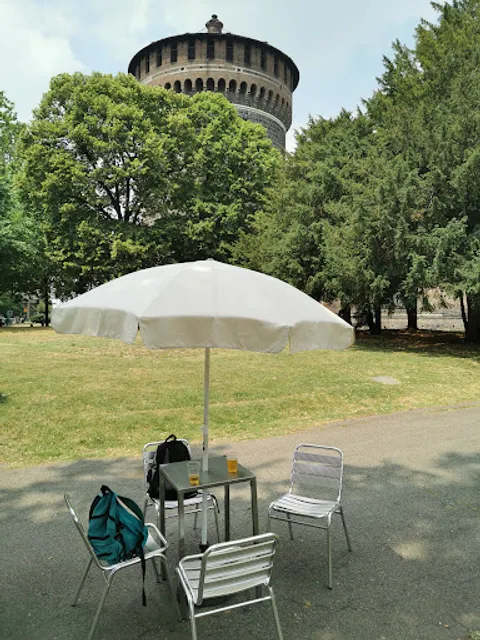
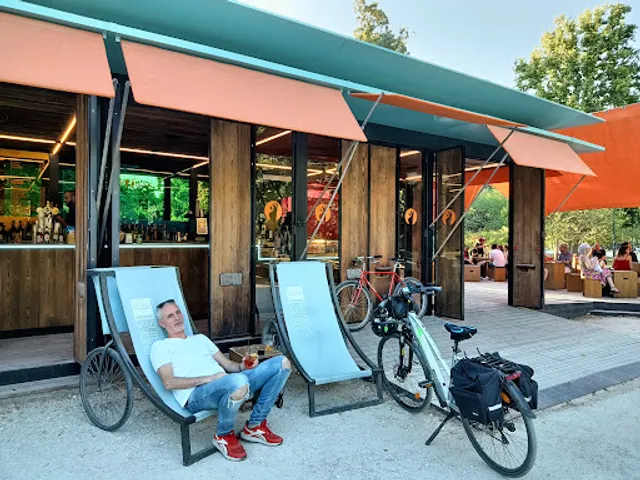
After exploring the museums, we took a leisurely walk through Parco Sempione, which sits directly behind the castle. It’s a peaceful green space with fountains, sculptures, and shaded paths. You can see the Arco della Pace (Arch of Peace) in the distance, adding to the scenic view. We stopped for gelato at a small kiosk and sat by the pond watching ducks, which was a lovely way to relax after walking through the castle.
There are plenty of cafes and restaurants nearby, so it’s easy to combine your visit with lunch or coffee. The location is very convenient, within walking distance from the Cairoli metro station, and also close to Via Dante, a lively street filled with shops and eateries.
We spent about three hours in total, though you could easily spend longer if you want to visit every museum in detail. For families, it offers a good mix of culture, history, and open-air space, so it never feels tiring or overwhelming. The castle grounds are stroller-friendly, and there are benches throughout for short breaks.
One small tip: buy your tickets online in advance if you plan to visit on a weekend, as it can get busy. Entry to the courtyards is free, but the museums require a ticket. Prices are reasonable, and there are discounts for children and families.
Our overall experience at Sforza Castle was excellent. It’s a perfect place for families who want to learn about Milan’s history in an engaging way. The combination of grand architecture, well-curated museums, and peaceful surroundings makes it one of the must-visit attractions in the city. Whether you are interested in art, history, or simply want a relaxing day outdoors, Sforza Castle offers all of that in one visit.
Highly recommended for anyone travelling to Milan...
Read moreThe castle in itself is beautiful, and the museum very rich in content. The reason for the low rating is the terrible treatment we got from one of thr castle's staff yesterday, more precisely in the tapestry hall (see attached picture for the reference in location,). We were visiting with our toddler, who 1) is a very seasoned traveller, 2) absolutely loves museums, and 3) again, is a toddler.
She was so far very curious about the content of the museum - but as she excitedly asked us "what's this?" pointing at one of the tapestries, we got shushed very aggressively by the staff (although we were not sure at that point where this was coming from).
Eventually our toddler got tired and literally the second she started complaining (not crying/having a meltdown), the staff yelled at us telling us from the other side of the hall, that this is a museum and we need to get out? At this point all visitors turned around to see what was going on - note that until that point no one batted an eye/was minding their own business.
The staff continued to scream at us - so my priority being to extract our toddler from the scene, I carried her and brought her outside while my husband calmly asked the staff to not yell and talk to him if there was an issue. The staff continued yelling and proceeded to follow us - at this point, my husband asked him politely and calmly, again, to not raise his voice as it will only make the situation worse - there is no point in yelling at a toddler, and he better talk to us/her parents instead. The staff shouted at my husband saying he doesn't want to talk to us and went on a rant. My husband just left him as there was no point in talking to him - a fellow visitor also pointed out to the staff that if anything, he was the one making the whole scene unpleasant for all by screaming and shouting angrily. He then started accusing us of littering, apparently, while the rubbish was not even ours (at that point my husband, toddler and I were outside already).
Now, toddlers are not the quietest. And as we travel often we understand very well when places are off-limits for toddlers, we always do our research in advance and try as much as possible to understand the local cultural context and what is acceptable/less so. When we came across the castle we never saw anything on the website mentioning the museum was off limits to toddlers. If anything it was full of families - some even touched the artefacts with their kids but we knew this was for example something that would be off-limits. The hall in which the incident happened was far from being quiet with fellow visitors talking to each other as well - in fact it was busy considering it was Easter day.
Again, that particular staff was the one who, in the end, reacted in a very irrational, unpleasant and unnecessarily aggressive way - when if anything one should be happy that a toddler is happy and curious in museums. Had he told us calmly from the beginning that we were being louder than what is acceptable/that this particular area was not appropriate for children, we'd be absolutely fine with it and we'd move on.
This has unfortunately left a terribly sour taste and we decided to leave the castle altogether, as our experience had been spoiled by this particular staff. A shame really - as the other staff were absolutely lovely...
Read moreSforza Castle ( Italian : Castello Sforzesco ) is a castle in Milan , Italy . The castle was built in the 15th century by Francesco I. Sforza, Duke of Milan, on the remains of a 14th-century fortification. It was later renovated and expanded, becoming one of the largest fortresses in Europe in the 16th and 17th centuries. Extensively rebuilt by Luca Beltrami between 1891 and 1905 , the castle is now a museum housing several art collections.

YesMilan
Your guide to the city
Open the navigation menu
Sforza Castle
Fortress, palace and now museum: the thousand faces of Milan Castle
TopFreeMy first visit to MilanAttractionsMuseums and galleriesChildren and familiesLeonardoSimplon
#monuments
#museums

Castle Square
Once upon a time, in a land far, far away, there was a young prince who lived in a castle... How many fairy tales begin like this? Milan has its own too. Or rather, it has its own castle: one of the largest in Europe , the Sforza Castle .
Throughout history it has been many things: a defensive fortress, a ducal residence, a military barracks. Today it is home to museums and cultural institutions, but also a fascinating place to spend some time admiring the large courtyards, walls, moats, towers (entrance is free except for the museums) and then take a walk around the battlements and its huge park, Parco Sempione .
The first construction of the castle dates back to 1358 - 1368 , when it was called "di Porta Giovia" at the time of Galeazzo II Visconti, lord of Milan, who used it as a residence, but also and above all as a military defense . The building was then expanded over the centuries until it became one of the main military citadels of Europe in the seventeenth century .
Leonardo da Vinci also worked here in the service of Ludovico il Moro at the end of the fifteenth century: the Sala delle Asse , now under restoration, is another place not to be missed to learn about Leonardo's works in Milan . Visit the official website with all the information to find out when the Hall will be reopened to visitors.
Leonardo is not the only genius present in the Castle: in the part called Antico Ospedale Spagnolo is the Museo della Pietà Rondanini , entirely dedicated to Michelangelo 's last masterpiece .
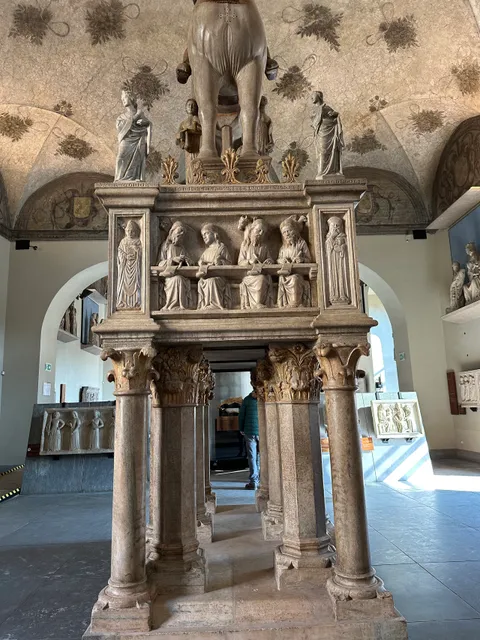
Today, in fact, the Sforza Castle is home to the Civic Museums and since 1896 has housed one of the largest art collections in the city . Here you can find the Museum of Ancient Art , which houses works of great value such as the Equestrian Monument to Bernabò Visconti and ancient remains of the city. And also the Art Gallery , which boasts works by Andrea Mantegna, Giovanni Bellini, Lorenzo Lotto, Correggio, Tintoretto and Canaletto .
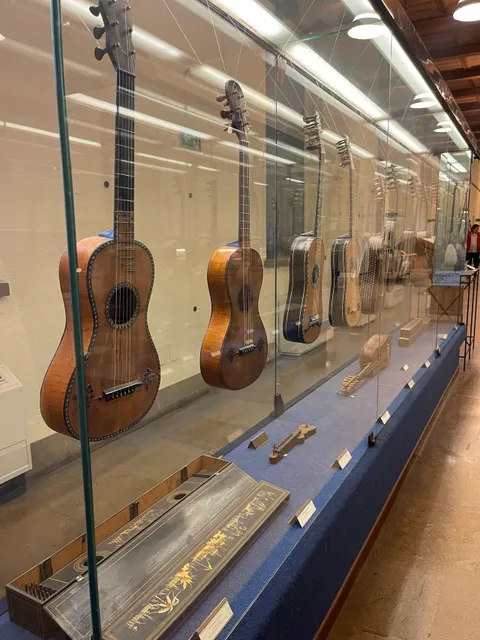
The Furniture Collection , with furnishings from the 15th to the 20th century; the Museum of Decorative Arts with its vast collection of ceramics, precious late antique ivories and contemporary glass; the collection of musical instruments among the largest in Europe; the Trivulzio Tapestries ; the Armoury ; the Museum of Prehistory and Protohistory . The Egyptian section of the Civic Archaeological Museum is temporarily closed for the renovation of the exhibition route and for work to overcome architectural barriers. The collections are exhibited on rotation at the Civic Archaeological Museum in...
Read more