HTML SitemapExplore
logo
Find Things to DoFind The Best Restaurants

Arch of Janus — Attraction in Rome

Name
Arch of Janus
Description
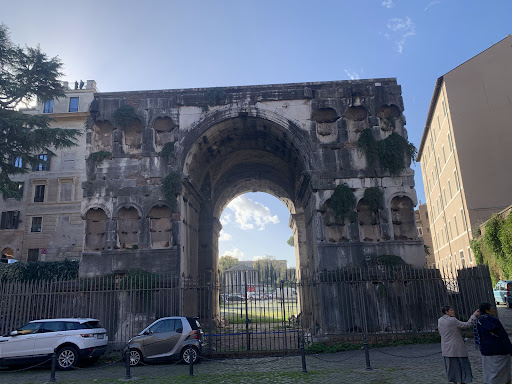
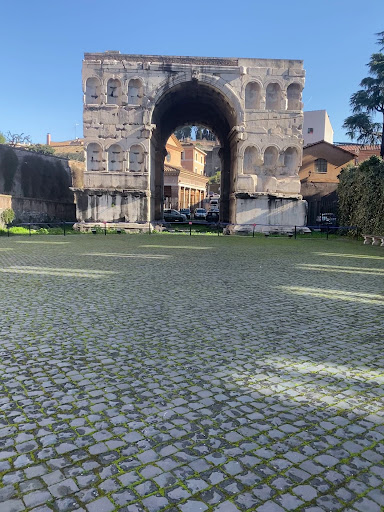
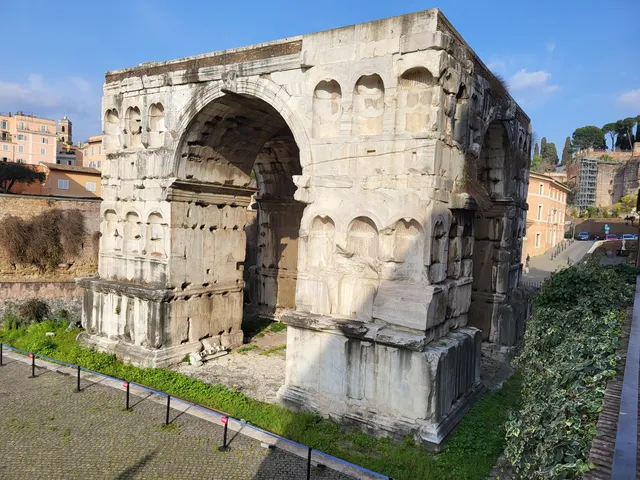
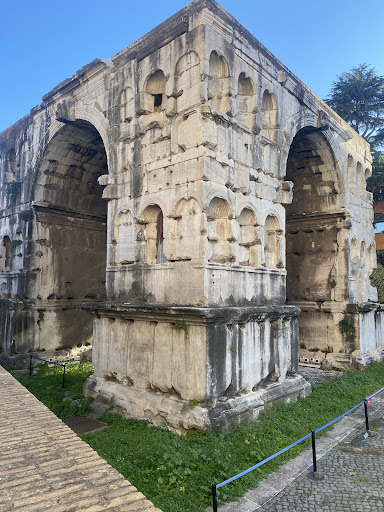
The Arch of Janus is the only quadrifrons triumphal arch preserved in Rome. It was set up in the early 4th century AD at a crossroads at the northeastern limit of the Forum Boarium, close to the Velabrum, over the Cloaca Maxima drain that went from the Forum to the River Tiber.
Nearby attractions
Mouth of Truth
Piazza della Bocca della Verità, 00186 Roma RM, Italy
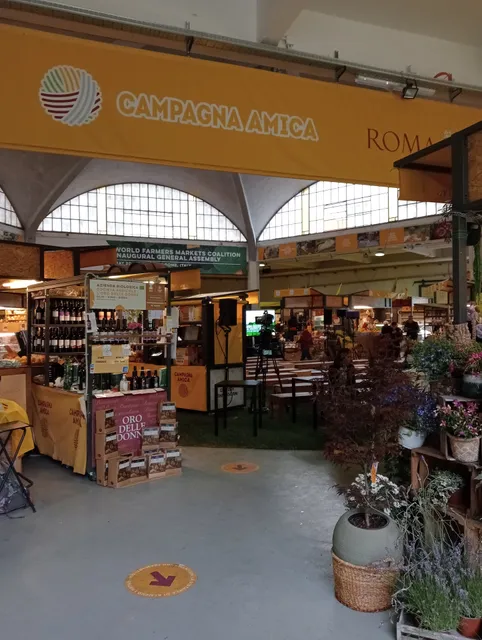
Campagna Amica Market
Via di S. Teodoro, 74, 00186 Roma RM, Italy
Basilica di Santa Maria in Cosmedin
Piazza della Bocca della Verità, 18, 00186 Roma RM, Italy
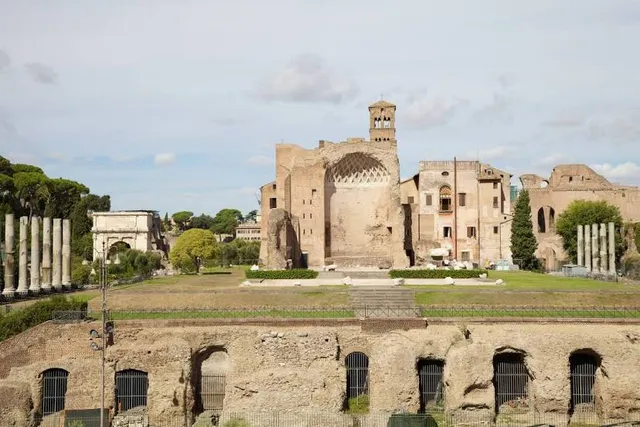
Roman Forum
00186 Rome, Metropolitan City of Rome Capital, Italy
Temple of Hercules Victor
Piazza della Bocca della Verità, 00186 Roma RM, Italy
Forum Boarium
Via Luigi Petroselli, 00186 Roma RM, Italy
Circus Maximus
00186 Rome, Metropolitan City of Rome Capital, Italy
Temple of Portunus
Piazza della Bocca della Verità, 00186 Roma RM, Italy
Capitoline Museums
Piazza del Campidoglio, 1, 00186 Roma RM, Italy
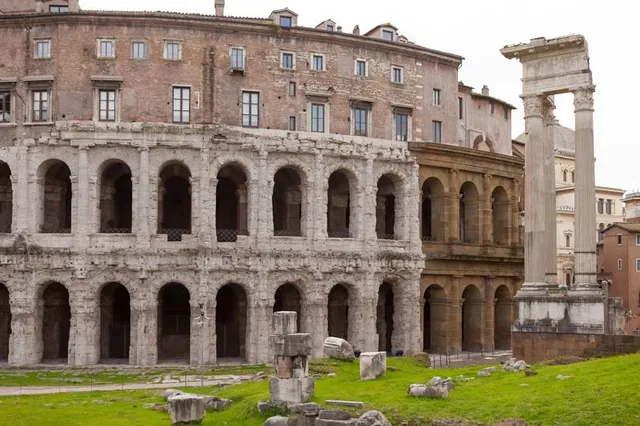
Teatro di Marcello
Via del Teatro di Marcello, 00186 Roma RM, Italy
Nearby restaurants
Rhinoceros Le Restau & RoofBar
Via dei Cerchi, 19,/23, 00186 Roma RM, Italy
47 Circus Roof Garden
Via Luigi Petroselli, 47, 00186 Roma RM, Italy
075 zerosettantacinque
Via dei Cerchi, 65, 00186 Roma RM, Italy
In Roma - since 1917
Via dei Fienili, 56, 00186 Roma RM, Italy
Apicio16 Restaurant & Bar
Via del Velabro, 16, 00186 Roma RM, Italy
Osteria Circo
Via dei Cerchi, 77/79, 00186 Roma RM, Italy
Ristorante Dulcis in Fundo
Via dei Fienili, 51, 00186 Roma RM, Italy
Unique Al Palatino Garden Restaurant
Via di S. Teodoro, 48, 00186 Roma RM, Italy
Ristorante Alvaro Al Circo Massimo
Via dei Cerchi, 53, 00186 Roma RM, Italy
Guenda
Via dei Cerchi, 73, 00186 Roma RM, Italy
Nearby hotels
Kolbe Hotel Rome
Via di S. Teodoro, 48, 00186 Roma RM, Italy
Rhinoceros Roma
Via del Velabro, 9, 00186 Roma RM, Italy
Fortyseven Hotel
Via Luigi Petroselli, 47, 00186 Roma RM, Italy
Palazzo Velabro
Palazzo Velabro, Via del Velabro, 16, 00186 Roma RM, Italy
Domus al Palatino
Via di S. Teodoro, 68, 00186 Roma RM, Italy
Foro Romano Luxury Suites
P.zza della Consolazione, 89, 00186 Roma RM, Italy
Il Monastero Collection
Via dei Cerchi, 87, 00186 Roma RM, Italy
Fori Romani
Via di S. Teodoro, 12, 00186 Roma RM, Italy
Elegant Apartment Behind The Colosseum
Via dei Fienili, 95, 00186 Roma RM, Italy
Palazzo Baj in Trastevere
Lungotevere Ripa, 6, 00153 Roma RM, Italy
Related posts
Keywords
Arch of Janus tourism.Arch of Janus hotels.Arch of Janus bed and breakfast. flights to Arch of Janus.Arch of Janus attractions.Arch of Janus restaurants.Arch of Janus travel.Arch of Janus travel guide.Arch of Janus travel blog.Arch of Janus pictures.Arch of Janus photos.Arch of Janus travel tips.Arch of Janus maps.Arch of Janus things to do.
Arch of Janus things to do, attractions, restaurants, events info and trip planning
Arch of Janus
ItalyLazioRomeArch of Janus

Basic Info

Arch of Janus

Via del Velabro, 5, 00186 Roma RM, Italy
4.6(269)
Open 24 hours
Save
spot

Ratings & Description

Info

The Arch of Janus is the only quadrifrons triumphal arch preserved in Rome. It was set up in the early 4th century AD at a crossroads at the northeastern limit of the Forum Boarium, close to the Velabrum, over the Cloaca Maxima drain that went from the Forum to the River Tiber.

Cultural
Scenic
Family friendly
attractions: Mouth of Truth, Campagna Amica Market, Basilica di Santa Maria in Cosmedin, Roman Forum, Temple of Hercules Victor, Forum Boarium, Circus Maximus, Temple of Portunus, Capitoline Museums, Teatro di Marcello, restaurants: Rhinoceros Le Restau & RoofBar, 47 Circus Roof Garden, 075 zerosettantacinque, In Roma - since 1917, Apicio16 Restaurant & Bar, Osteria Circo, Ristorante Dulcis in Fundo, Unique Al Palatino Garden Restaurant, Ristorante Alvaro Al Circo Massimo, Guenda
logoLearn more insights from Wanderboat AI.
Phone
+39 06 0608
Website
060608.it

Plan your stay

hotel
Pet-friendly Hotels in Rome
Find a cozy hotel nearby and make it a full experience.

hotel
Affordable Hotels in Rome
Find a cozy hotel nearby and make it a full experience.

hotel
The Coolest Hotels You Haven't Heard Of (Yet)
Find a cozy hotel nearby and make it a full experience.

hotel
Trending Stays Worth the Hype in Rome
Find a cozy hotel nearby and make it a full experience.

Reviews

Nearby attractions of Arch of Janus

Mouth of Truth

Campagna Amica Market

Basilica di Santa Maria in Cosmedin

Roman Forum

Temple of Hercules Victor

Forum Boarium

Circus Maximus

Temple of Portunus

Capitoline Museums

Teatro di Marcello
Mouth of Truth

Mouth of Truth

4.3

(8.7K)

Closed
Click for details
Campagna Amica Market

Campagna Amica Market

4.6

(1.7K)

Open 24 hours
Click for details
Basilica di Santa Maria in Cosmedin

Basilica di Santa Maria in Cosmedin

4.5

(3.4K)

Open until 6:00 PM
Click for details
Roman Forum

Roman Forum

4.8

(44.8K)

Open 24 hours
Click for details

Things to do nearby

Catacombs: The Coolest Underground Tour in Rome
Sat, Dec 6 • 10:00 AM
00147, Rome, Lazio, Italy
View details
Pasta-making class, wine tasting and dinner
Fri, Dec 5 • 3:30 PM
00044, Frascati, Lazio, Italy
View details
Pasta and Pizza cooking class with wine and more
Sun, Dec 7 • 10:30 AM
00142, Rome, Lazio, Italy
View details

Nearby restaurants of Arch of Janus

Rhinoceros Le Restau & RoofBar

47 Circus Roof Garden

075 zerosettantacinque

In Roma - since 1917

Apicio16 Restaurant & Bar

Osteria Circo

Ristorante Dulcis in Fundo

Unique Al Palatino Garden Restaurant

Ristorante Alvaro Al Circo Massimo

Guenda

Rhinoceros Le Restau & RoofBar

Rhinoceros Le Restau & RoofBar

4.0

(220)

$$$

Click for details
47 Circus Roof Garden

47 Circus Roof Garden

4.3

(524)

$$$

Click for details
075 zerosettantacinque

075 zerosettantacinque

4.5

(1.2K)

$

Click for details
In Roma - since 1917

In Roma - since 1917

4.4

(616)

Click for details
Get the Appoverlay
Get the AppOne tap to find yournext favorite spots!

The hit list

restaurant
Best 10 Restaurants to Visit in Rome
February 12 · 5 min read
attraction
Best 10 Attractions to Visit in Rome
February 12 · 5 min read
Rome

Plan your trip with Wanderboat

Welcome to Wanderboat AI, your AI search for local Eats and Fun, designed to help you explore your city and the world with ease.

Powered by Wanderboat AI trip planner.
Wanderboat LogoWanderboat

Your everyday Al companion for getaway ideas

CompanyAbout Us
InformationAI Trip PlannerSitemap
SocialXInstagramTiktokLinkedin
LegalTerms of ServicePrivacy Policy

Get the app

© 2025 Wanderboat. All rights reserved.
logo

Posts

Camilo A. PosadaCamilo A. Posada
This morning, I had the thrill of standing beneath the Arch of Janus, and what made the experience even more special was that the gate was open, allowing me to pass through this ancient structure. There’s something exhilarating about walking beneath a monument that has stood here since the 4th century CE, witnessing the countless transitions of Rome itself. The Arch of Janus, located in the Velabrum, near the Church of San Giorgio al Velabro, is unique in Rome for its quadrifrons design—an archway with four sides supported by massive piers, creating vaulted passageways. It was likely built during the late Roman Empire, possibly under Emperor Constantine or his successors. Its name, while tied to the Roman god Janus, the deity of transitions and doorways, likely doesn’t indicate a religious function. Instead, this structure probably served a commercial or civic purpose, standing at the crossroads of the ancient Forum Boarium, Rome’s cattle market and an important trade hub. What’s striking about the arch is its use of spolia, repurposed materials from earlier structures, evident in the decorative niches that once held statues. It’s a testament to the resourcefulness of Roman architects during a time of transition and reflects the layered history embedded in every corner of the Eternal City. Standing beneath this monumental gateway, I couldn’t help but feel a profound connection to the history that unfolded here. The open gate allowed me to fully immerse myself in the moment, imagining the merchants, travelers, and citizens who once passed beneath these same arches. It was a humbling reminder of Rome’s enduring ability to bridge the past and present, offering moments of pure wonder like this one.
daniele pedronidaniele pedroni
Il monumento sorge ai margini del Foro Boario, presso la chiesa di San Giorgio in Velabro, poco distante dal Tempio di Ercole e dal Tempio di Portuno. È uno di rari esempi di tetrastilo conservatosi fino ad oggi. Risulta edificato in gran parte con marmi e materiali di spoglio di altri monumenti precedenti, verso la metà del IV secolo, quindi con una genesi simile a quella dell'Arco di Costantino. Probabilmente deve essere identificato con l'Arcus Divi Constantini citato dai Cataloghi regionari presso il Velabro. Il nome moderno non si riferisce al dio bifronte Giano, ma piuttosto deriva dal termine latino ianus, che indica un passaggio coperto, o una porta. Come gli iani testimoniati dalle fonti nel Foro Romano, non si trattava di un arco trionfale, ma probabilmente di una struttura destinata ai banchieri che operavano nel Foro Boario. L'edificio, che ha pianta quadrata ed è alto 12 m con 16 m di lato, presenta quattro massicci pilastri che sostengono una volta a crociera. Essi sono costruiti in cementizio e rivestiti da blocchi di marmo di reimpiego. Al di sopra doveva presentare un piano attico ed un tetto forse di forma piramidale, la cui struttura in opera laterizia, che in origine doveva ugualmente essere rivestita di marmo, fu demolita nel 1827 perché a torto ritenuta parte della fortificazione medioevale impiantata sopra l'edificio romano ad opera dei Frangipane (che ne avevano anche chiuso i fornici). Nei piloni vi sono molte nicchie che forse ospitavano statue in grandezza quasi naturale, esse sono 12 su ogni faccia Est ed Ovest e 2 su ogni faccia Nord e Sud e altre 10 sono finte. In totale quindi 28. Le nicchie in origine dovevano ospitare statue ed erano inquadrate da edicole con piccole colonne, oggi perdute, poggianti sui cornicioni, ed erano coperte da una semicupola a conchiglia scolpita nei blocchi di marmo del rivestimento. Gli unici resti conservati della decorazione scultorea sono rappresentati dalle quattro figure femminili sulle chiavi di volta: si riconoscono con sicurezza la dea Roma sul lato orientale e Minerva sul lato settentrionale, mentre l'identificazione delle altre due figure come Giunone e Cerere presenta maggiori incertezze. L'Arco, oltre ad avere funzioni monumentali, serviva da riparo dall'inclemenza del tempo ai mercanti romani di bovini e ai prestatori di denaro che affollavano il Foro. Durante il medioevo, la famiglia romana dei Frangipane lo utilizzò come fortezza, chiudendone i fornici; quando queste opere furono eliminate, nel 1830, andarono perduti anche l'attico e il coronamento originari, perché non furono riconosciute come opere appartenenti alla struttura originaria.
BradBrad
The Arch of Janus (Arco di Giano) can be seen behind the carpark to the direct west of the Portuno Temple at Piazza della Bocca della Verita. This is a 4th-century ancient arch structure and the only surving quadrifron style arch remaining from Ancient Rome. There are niches around the outside of the Janus Arch, which would have likely held statues at some point in time. It seems there may have been added structures atop the Arch as well but these were removed in the early 19th-century under the belief at that time that they were Medieval period additions and not part of the original ancient Arch. It is convenient to have a brief look-see of the Arch of Janus before or after your visit to Santa Maria in Cosmedin church. Definitely worth a few minutes to view if you plan to see the ancient temples at Piazza della Bocca della Verita.
See more posts
See more posts
hotel
Find your stay

Pet-friendly Hotels in Rome

Find a cozy hotel nearby and make it a full experience.

This morning, I had the thrill of standing beneath the Arch of Janus, and what made the experience even more special was that the gate was open, allowing me to pass through this ancient structure. There’s something exhilarating about walking beneath a monument that has stood here since the 4th century CE, witnessing the countless transitions of Rome itself. The Arch of Janus, located in the Velabrum, near the Church of San Giorgio al Velabro, is unique in Rome for its quadrifrons design—an archway with four sides supported by massive piers, creating vaulted passageways. It was likely built during the late Roman Empire, possibly under Emperor Constantine or his successors. Its name, while tied to the Roman god Janus, the deity of transitions and doorways, likely doesn’t indicate a religious function. Instead, this structure probably served a commercial or civic purpose, standing at the crossroads of the ancient Forum Boarium, Rome’s cattle market and an important trade hub. What’s striking about the arch is its use of spolia, repurposed materials from earlier structures, evident in the decorative niches that once held statues. It’s a testament to the resourcefulness of Roman architects during a time of transition and reflects the layered history embedded in every corner of the Eternal City. Standing beneath this monumental gateway, I couldn’t help but feel a profound connection to the history that unfolded here. The open gate allowed me to fully immerse myself in the moment, imagining the merchants, travelers, and citizens who once passed beneath these same arches. It was a humbling reminder of Rome’s enduring ability to bridge the past and present, offering moments of pure wonder like this one.
Camilo A. Posada

Camilo A. Posada

hotel
Find your stay

Affordable Hotels in Rome

Find a cozy hotel nearby and make it a full experience.

Get the Appoverlay
Get the AppOne tap to find yournext favorite spots!
Il monumento sorge ai margini del Foro Boario, presso la chiesa di San Giorgio in Velabro, poco distante dal Tempio di Ercole e dal Tempio di Portuno. È uno di rari esempi di tetrastilo conservatosi fino ad oggi. Risulta edificato in gran parte con marmi e materiali di spoglio di altri monumenti precedenti, verso la metà del IV secolo, quindi con una genesi simile a quella dell'Arco di Costantino. Probabilmente deve essere identificato con l'Arcus Divi Constantini citato dai Cataloghi regionari presso il Velabro. Il nome moderno non si riferisce al dio bifronte Giano, ma piuttosto deriva dal termine latino ianus, che indica un passaggio coperto, o una porta. Come gli iani testimoniati dalle fonti nel Foro Romano, non si trattava di un arco trionfale, ma probabilmente di una struttura destinata ai banchieri che operavano nel Foro Boario. L'edificio, che ha pianta quadrata ed è alto 12 m con 16 m di lato, presenta quattro massicci pilastri che sostengono una volta a crociera. Essi sono costruiti in cementizio e rivestiti da blocchi di marmo di reimpiego. Al di sopra doveva presentare un piano attico ed un tetto forse di forma piramidale, la cui struttura in opera laterizia, che in origine doveva ugualmente essere rivestita di marmo, fu demolita nel 1827 perché a torto ritenuta parte della fortificazione medioevale impiantata sopra l'edificio romano ad opera dei Frangipane (che ne avevano anche chiuso i fornici). Nei piloni vi sono molte nicchie che forse ospitavano statue in grandezza quasi naturale, esse sono 12 su ogni faccia Est ed Ovest e 2 su ogni faccia Nord e Sud e altre 10 sono finte. In totale quindi 28. Le nicchie in origine dovevano ospitare statue ed erano inquadrate da edicole con piccole colonne, oggi perdute, poggianti sui cornicioni, ed erano coperte da una semicupola a conchiglia scolpita nei blocchi di marmo del rivestimento. Gli unici resti conservati della decorazione scultorea sono rappresentati dalle quattro figure femminili sulle chiavi di volta: si riconoscono con sicurezza la dea Roma sul lato orientale e Minerva sul lato settentrionale, mentre l'identificazione delle altre due figure come Giunone e Cerere presenta maggiori incertezze. L'Arco, oltre ad avere funzioni monumentali, serviva da riparo dall'inclemenza del tempo ai mercanti romani di bovini e ai prestatori di denaro che affollavano il Foro. Durante il medioevo, la famiglia romana dei Frangipane lo utilizzò come fortezza, chiudendone i fornici; quando queste opere furono eliminate, nel 1830, andarono perduti anche l'attico e il coronamento originari, perché non furono riconosciute come opere appartenenti alla struttura originaria.
daniele pedroni

daniele pedroni

hotel
Find your stay

The Coolest Hotels You Haven't Heard Of (Yet)

Find a cozy hotel nearby and make it a full experience.

hotel
Find your stay

Trending Stays Worth the Hype in Rome

Find a cozy hotel nearby and make it a full experience.

The Arch of Janus (Arco di Giano) can be seen behind the carpark to the direct west of the Portuno Temple at Piazza della Bocca della Verita. This is a 4th-century ancient arch structure and the only surving quadrifron style arch remaining from Ancient Rome. There are niches around the outside of the Janus Arch, which would have likely held statues at some point in time. It seems there may have been added structures atop the Arch as well but these were removed in the early 19th-century under the belief at that time that they were Medieval period additions and not part of the original ancient Arch. It is convenient to have a brief look-see of the Arch of Janus before or after your visit to Santa Maria in Cosmedin church. Definitely worth a few minutes to view if you plan to see the ancient temples at Piazza della Bocca della Verita.
Brad

Brad

See more posts
See more posts

Reviews of Arch of Janus

4.6
(269)
avatar
5.0
51w

This morning, I had the thrill of standing beneath the Arch of Janus, and what made the experience even more special was that the gate was open, allowing me to pass through this ancient structure. There’s something exhilarating about walking beneath a monument that has stood here since the 4th century CE, witnessing the countless transitions of Rome itself.

The Arch of Janus, located in the Velabrum, near the Church of San Giorgio al Velabro, is unique in Rome for its quadrifrons design—an archway with four sides supported by massive piers, creating vaulted passageways. It was likely built during the late Roman Empire, possibly under Emperor Constantine or his successors. Its name, while tied to the Roman god Janus, the deity of transitions and doorways, likely doesn’t indicate a religious function. Instead, this structure probably served a commercial or civic purpose, standing at the crossroads of the ancient Forum Boarium, Rome’s cattle market and an important trade hub.

What’s striking about the arch is its use of spolia, repurposed materials from earlier structures, evident in the decorative niches that once held statues. It’s a testament to the resourcefulness of Roman architects during a time of transition and reflects the layered history embedded in every corner of the Eternal City.

Standing beneath this monumental gateway, I couldn’t help but feel a profound connection to the history that unfolded here. The open gate allowed me to fully immerse myself in the moment, imagining the merchants, travelers, and citizens who once passed beneath these same arches. It was a humbling reminder of Rome’s enduring ability to bridge the past and present, offering moments of pure wonder...

   Read more
avatar
5.0
1y

Ich stehe vor dem imposanten Janusbogen, einem der faszinierendsten, aber oft übersehenen Monumente Roms. Mit seinen massiven, viereckigen Steinbögen erhebt sich dieser antike Bau mitten im ehemaligen Forum Boarium, dem ältesten Marktplatz Roms, der einst ein geschäftiges Zentrum für Händler und Reisende war. Die Struktur ist beeindruckend – vier große Bögen, die in jede Himmelsrichtung führen, und eine solide Steinmasse, die dem Gewicht der Jahrhunderte trotzt. Er ist wie ein Tor durch die Zeit, das die Vergangenheit mit der Gegenwart verbindet.

Der Janusbogen, benannt nach dem doppelgesichtigen Gott Janus, soll im 4. Jahrhundert n. Chr. unter Kaiser Konstantin oder einem seiner Nachfolger errichtet worden sein. Janus, der Gott der Übergänge, der Türen und Tore, wird oft mit zwei Gesichtern dargestellt: eines, das nach vorne und eines, das nach hinten schaut. Es ist passend, dass dieses Denkmal aus vier gleich großen Durchgängen besteht, die jeweils in eine andere Richtung blicken – der ganze Bogen scheint die Idee von Übergängen und Neuanfängen zu verkörpern.

Ich gehe näher heran und spüre, wie die Zeit selbst an diesen Steinen haftet. Die Struktur ist zwar schlicht, fast ein wenig ungeschmückt, aber ihre Wucht und Schlichtheit beeindrucken mich. Im alten Rom diente der Bogen als eine Art überdachte Passage für Kaufleute, die hier vor Regen und Sonne Schutz suchten. Die Stille um mich herum lässt mich die Bedeutung dieses Ortes noch tiefer wahrnehmen – hier kamen die Römer zusammen, um Geschäfte abzuwickeln, Neuigkeiten zu tauschen und, so stelle ich mir vor, manchmal auch von den Schutzgeistern der Tore um Glück und gute Geschäfte zu bitten.

Der Bogen selbst war Teil eines umfassenderen Systems von Monumenten und Gebäuden im Forum Boarium, das damals eine lebhafte Kreuzung am Rande des Tiber war. Ich kann fast das geschäftige Treiben hören: Stimmengewirr, das Klappern von Hufen, der Duft von frischen Waren, die auf den Marktständen angeboten wurden. Heute aber ist der Janusbogen ein stiller Beobachter der Stadt, umgeben von modernen Gebäuden und dem stetigen Strom der römischen Straßen.

Die Oberfläche des Janusbogens trägt die Zeichen der Zeit, verwittert und von Pflanzen überwuchert, die in den Spalten der Steine wachsen. Die einstigen Nischen, in denen Statuen und vielleicht sogar Götterbilder standen, sind leer – ein mysteriöser Verfall, der mich an die Vergänglichkeit und den ewigen Kreislauf von Leben und Tod erinnert. Ich frage mich, wie viele Generationen von Römern hier entlanggegangen sind, ohne zu ahnen, dass ihr täglicher Weg eines Tages Geschichte sein würde.

Ich lasse meinen Blick ein letztes Mal über die vier Durchgänge gleiten, die in alle Richtungen weisen. Der Janusbogen ist mehr als ein Durchgangsort, er ist ein Monument für die Bewegung, für Übergänge, für das Kommen und Gehen – ein Symbol dafür, wie Rom seit Jahrhunderten das Alte bewahrt und das Neue begrüßt. Mit diesem Gedanken gehe ich weiter, fühle mich aber durch diesen kurzen Moment der Vergangenheit verbundener als zuvor.

16.05.2018

*Bevor du so richtig aus dir herausgehst, schlendere erst einmal...

   Read more
avatar
5.0
4y

There are a number of Roman antiquities in Rome that you can visit and see for free, and this is one. It's a quiet peaceful place with a beautiful structure and recently partially cleaned. There's no posted signage (as of 6/2021) but this beautiful arch has been cleaned now on the side that faces the Portunus and the Round Temple. There's a gate around it, which seems to be kept closed all the time, but the bars are spaced wide enough that you can sneak a 77mm lens through for some nice photos or simply a nice view. You can walk all around it also. There's parking at the back, though I'm not sure about restrictions. From the back, it's a nice walk up to the Capitoline Museum and a side of the forum that also affords a nice free place to take photos of the Curia and the temple of Saturn. From the cleaned side it's just across the street from Portunus. Ramage's guide speculates that it may really have been an arch of the deified Constantine, but as a fan of Janus, I prefer to...

   Read more
Page 1 of 7
Previous
Next