Quote
The Salerno Cathedral
Home
Blog
The Salerno Cathedral

The Salerno Cathedral
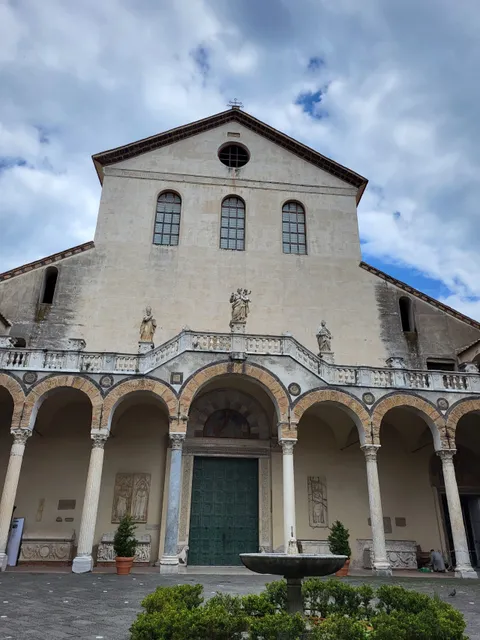
The Metropolitan Primatial Cathedral of St. Mary of the Angels, St. Matthew and St. Gregory VII, more commonly known as the Cathedral of Salerno, is undoubtedly the most representative place of worship in the city of Campania, standing imposingly in the heart of its historical centre.
Its current structure is the result of Romanesque, Arab-Norman, Byzantine and Baroque contaminations that make it decidedly interesting from an architectural as well as a religious point of view.
Salerno Cathedral between history and legends
The current appearance of Salerno Cathedral corresponds for the most part to the post-earthquake Baroque renovation of 1688, but to go back to the beginnings of its construction, we have to go back more than six centuries. The basilica was commissioned by Robert Guiscard after the Norman conquest in 1076 and was built in just five years between 1080 and 1085. In fact, it was already consecrated in June 1084 by Pope Gregory VII, who had come to the city in exile to escape Emperor Henry IV, with whom he came into conflict over his opposition to episcopal investiture.
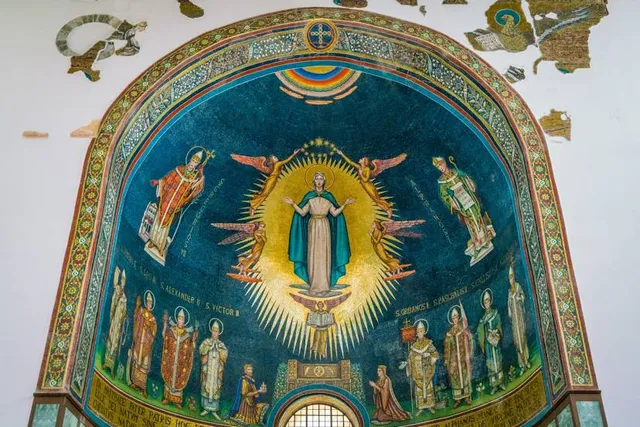
The pope’s relics are still preserved in the right aisle of the cathedral under the mosaic of St. Matthew inside the Crusaders’ Chapel. On the casket can be read an inscription in Latin that translated reads: ‘I have loved justice and hated iniquity: for this I die in exile’.
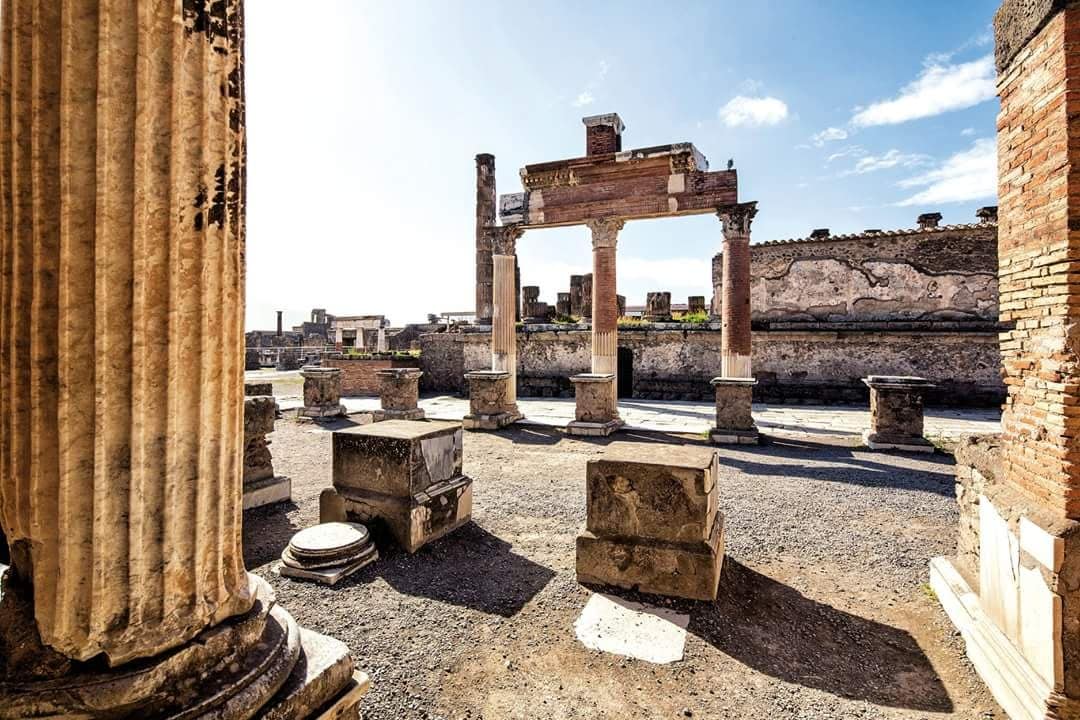
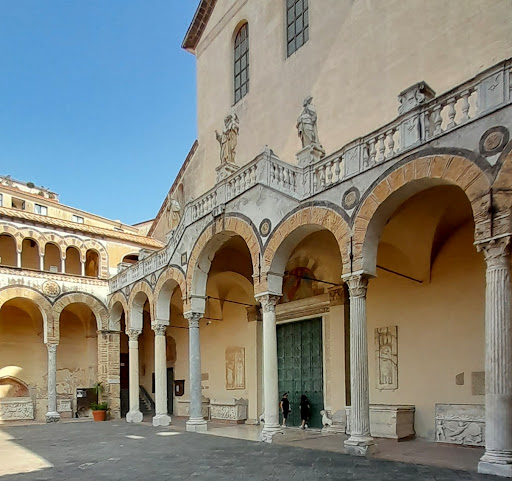
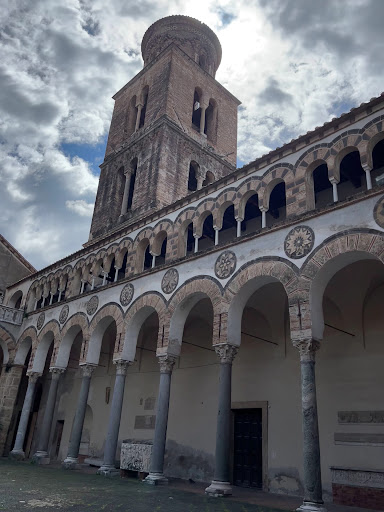
Today, the cathedral has a ground plan divided into a longitudinal body with three naves and a transept. It has an apse for each nave and a magnificent quadriporticus decorated with arches characterised by the presence of a portico supported by 28 columns with raised round arches. In the inner perimeter of the Romanesque quadriporticus (one of the very few Italian examples), several well-preserved Roman sarcophagi alternate under the vaults of the arches, while at its centre is an ancient baptismal font that replaced the monolithic fountain in Egyptian granite brought to Naples in the Villa Reale (now the municipal villa) in 1820 and recognised by all as the Paparelle fountain.
An ancient legend surrounds one of these sarcophagi, namely that of William II, nephew of Robert Guiscard. When William II died prematurely, his wife Gaitelgrima, in desperation, cut off his long hair and placed it on her late husband’s sarcophagus. Legend has it that every year on 4 August a golden butterfly flies into the quadriporticus and lands on the sarcophagus. The butterfly then suddenly disappears when the ghost of the sad Gaitelgrima arrives and repeats the ritual of cutting her hair.
The large four-sided portico is accessed via a double flight of steps, at the top of which stands the Porta dei Leoni (Lions’ Gate), rebuilt after the 1688 earthquake and also the protagonist of an ancient legend. It is said that during a Saracen invasion the two statues placed at its base (a lion symbol of strength and a lioness.
On the south side of the four-sided portico, the Norman bell tower rises very high: four large cubes ending in a tiburium are superimposed, reaching a height of fifty-two metres with a base of about 10 metres on each side. At sunset it is illuminated, acquiring a decidedly evocative charm. The cathedral bells are the symbol of the different architectural contaminations of the tower and the cathedral. There are eight in total, differing in size and belonging to different eras ranging from the 16th to the 19th century.
The bell tower is not the only treasure of Salerno Cathedral. Once past the quadriporticus and through the imposing bronze double doors, you enter the cathedral, which has undergone several restorations over the years, the last of which was in 1931. The floor is largely decorated with mosaics, especially in the transept area, and the two amboes of the nave are also extensively decorated, where sculptures representing elements of the animal world with symbolic significance are once again to be found amidst exquisite...
Read moreThe Cathedral of Salerno, a sacred sentinel nestled within the heart of the city, stands as a timeless testament to the spiritual heritage of this ancient Italian enclave. Its soaring spires and weathered stones bear witness to centuries of devotion, each stone imbued with the whispers of countless prayers, the echoes of celestial harmonies. This venerable cathedral, a masterpiece of architectural splendor, is a symphony of styles, a tapestry woven by the hands of time. Its roots stretch back to the 11th century, a majestic blend of Norman and Romanesque influences, with its mighty columns and rounded arches that evoke a sense of solemnity and grace. As one crosses the threshold of this sacred sanctum, they are greeted by a luminous nave, bathed in the ethereal glow of stained glass windows that dance with the hues of a thousand sunsets. The flickering candlelight casts flickering shadows upon the ancient frescoes that adorn the walls, each brushstroke a testament to the devotion of artists who sought to capture the divine in pigment and canvas. Above, a soaring vaulted ceiling seems to touch the heavens, its intricate ribbed patterns resembling the very fingers of angels reaching down to caress the faithful below. A sense of awe envelops those who stand beneath this celestial canopy, a reminder of the divine majesty that has inspired countless souls through the ages. Within the hallowed depths of the cathedral lies a treasury of relics and sacred artifacts, each a fragment of the city's storied past, each a link to the eternal. Pilgrims and seekers of solace alike come to kneel before these sacred relics, their whispered prayers ascending like incense to the heavens. And so, the Cathedral of Salerno endures, a living testament to faith and artistry, a beacon of hope in a world ever-changing. It is a place where time itself seems to stand still, where the mortal and the divine converge in a timeless dance of...
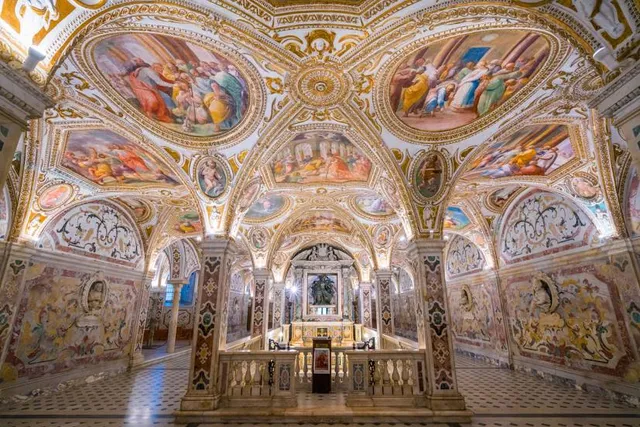
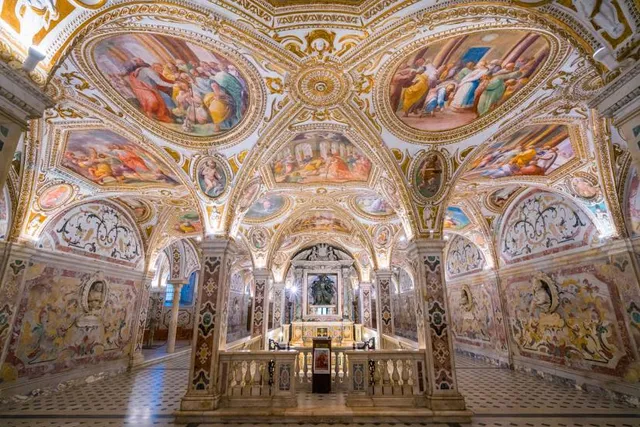
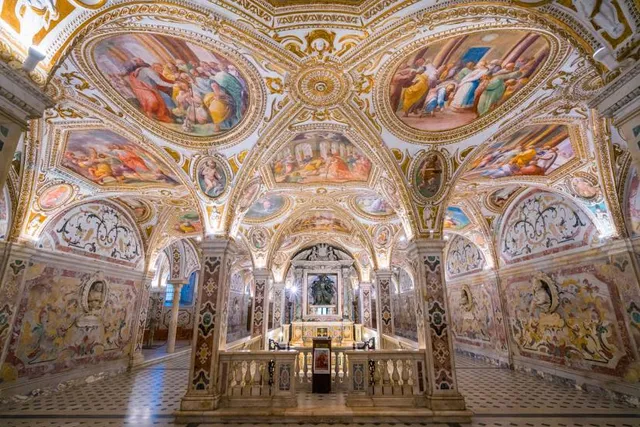
Read moreIl Duomo di Salerno rappresenta la storia culturale ed artistica della città; al suo interno custodisce le spoglie di uomini illustri e di San Matteo, l’apostolo a cui la costruzione fu dedicata dopo il ritrovamento. La data di fondazione si colloca dopo la conquista di Salerno da parte dei normanni nel 1076. Committente dell’opera fu Roberto il Guiscardo che impose il suo potere su quei territori infondendoli di nuova linfa culturale e artistica. Il vescovo Alfano I, monaco cassinese, aveva rinvenuto le spoglie mortali del santo martire e spinse per la creazione di un luogo dove questi sacri resti potessero essere onorati. La cripta venne costruita in soli sei mesi, poi si procedette a erigere la chiesa, iniziando dal transetto e continuando verso il portale. La forma a cui si ispirarono per costruire la chiesa fu quella dell’Abbazia di Montecassino fatta edificare alcuni anni prima dall’abate Desiderio che aggiunse, ispirandosi all’arte paleocristiana, il transetto triabsidato, inesistente nelle chiese coeve. Il campanile, di grande valore storico ed artistico, è un'importante testimonianza della fusione bizantino-normanna del periodo. Su di esso trovano posto otto campane. Il duomo è preceduto da una facciata barocca e dalla scalinata annessa. Dell'antico prospetto resta il portale, detto Porta dei Leoni a causa di due statue ai lati degli stipiti raffiguranti un leone (simbolo della forza) e una leonessa con un leoncino (simbolo della carità). Il portale della facciata immette ad un ampio atrio, unico esempio italiano, insieme a quello della basilica di Sant'Ambrogio, di quadriportico romanico. L'atrio è circondato da un colonnato le cui colonne provengono dal vicino Foro Romano di piazza Conforti, sormontate da archi a tutto sesto decorati con intarsi di pietra vulcanica. Al centro dell'atrio esisteva una fontana monolitica in granito egiziano che piacque a Re Ferdinando IV di Borbone e che nel 1820 fu portata a Napoli nella Villa Reale, attualmente villa comunale, dov'è tuttora, soprannominata popolarmente "la fontana delle Paparelle". La fontana attuale è un vecchio fonte battesimale. Anche la cripta, dove sono conservati i resti mortali del santo, è un elemento di novità rispetto al periodo. La leggenda della traslazione vuole che le reliquie siano state portate a Salerno da Gisulfo I nel X secolo ed in seguito nel 1081, quando fu costruita la nuova cattedrale dedicata all'evangelista, deposte nella cripta destinata a custodirle. Agli inizi del XVII secolo la cripta fu restaurata in stile barocco su progetto dell'architetto Domenico Fontana e del figlio Giulio. Sulla tomba di san Matteo, seminterrata, troneggia una statua bronzea e bifronte del medesimo, opera dello scultore Michelangelo Naccherino. Tutti gli affreschi del soffitto sono opera del pittore tardo-manierista Belisario Corenzio e raffigurano scene del Vangelo di Matteo, oltre ad alcuni episodi di storia...
Read more