HTML SitemapExplore
logo
Find Things to DoFind The Best Restaurants

Church of the Crucifix — Attraction in Salerno

Name
Church of the Crucifix
Description
Nearby attractions
Cathedral of Santa Maria degli Angeli, San Matteo and San Gregorio VII
Piazza Alfano I, 84125 Salerno SA, Italy
Provincial Archaeological Museum of Salerno
Via S. Benedetto, 28, 84122 Salerno SA, Italy
Provincial Art Gallery of Salerno
Via Mercanti, 63, 84121 Salerno SA, Italy
Church of St. George
Via Duomo, 19, 84121 Salerno SA, Italy
Virtual Museum of Salerno's Medical School
Chiesa di San Gregorio, Via Mercanti, 74, 84121 Salerno SA, Italy
Diocesan Museum of San Matteo
Largo Plebiscito, 12, 84121 Salerno SA, Italy
Monumental Complex of San Pedro next to Court - Hypogeum and Palatine Chapel
Larghetto S. Pietro a Corte, 8, 84121 Salerno SA, Italy
Giardino della Minerva
Vicolo Ferrante Sanseverino, n° 1, 84121 Salerno SA, Italy
Spiaggia di Santa Teresa
Italy
Villa Comunale di Salerno
Via Roma, 84100 Salerno SA, Italy
Nearby restaurants
La Traversa
Via Giovanni Ruggi D'Aragona, 19, 84121 Salerno SA, Italy
Osteria Angolo Masuccio
Via Masuccio Salernitano, 45, 84121 Salerno SA, Italy
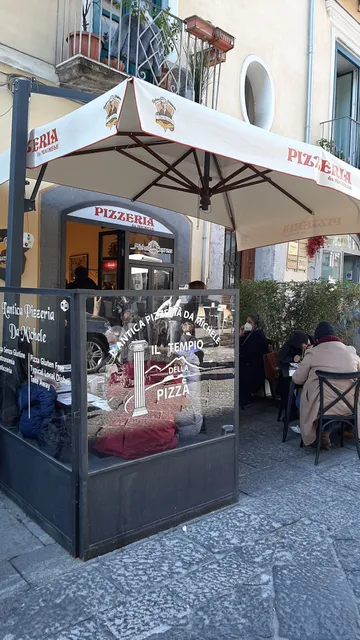
L'Antica Pizzeria da Michele Salerno
P.za Sedile di Portanova, 21, 84122 Salerno SA, Italy
Pizzaportafoglio & Fessarie
Via Porta Elina, 7, 84122 Salerno SA, Italy
La Botte Pazza
Via Giovanni Ruggi D'Aragona, 1, 84121 Salerno SA, Italy
Osteria Nonna Maria Salerno
Via Roma, 82, 84100 Salerno SA, Italy
Osteria dei Sapori
Vicolo S Maria de Domno, 4, 84121 Salerno SA, Italy
Mariterraneo Ristorante di Mare
Via Giovanni Ruggi D'Aragona, 17, 84121 Salerno SA, Italy
Saporito
Via Mercanti, 62/64, 84121 Salerno SA, Italy
Ristorante Hydra
Via Antonio Mazza, 30, 84121 Salerno SA, Italy
Nearby hotels
B&B il Duca d'Amalfi
Via Porta Elina, 4, 84121 Salerno SA, Italy
B&B Salerno Centro
Piazza Sedile di Porta Nova, 10 primo piano - interno 4 - 00393299636288, 84121 Salerno SA, Italy
B&B PETER PAN
Via Mercanti, 46, 84121 Salerno SA, Italy
B&B Luxury Salerno Central
P.za Sedile di Portanova, 10, 84122 Salerno SA, Italy
Art in B&B
Via Mercanti, 46/int 2 scala A, 84121 Salerno SA, Italy
La dimora del barone
Via Mercanti, 20, 84121 Salerno SA, Italy
Glam House
Vicolo Piantanova, Piazza Giacomo Matteotti, 84121 Salerno SA, Italy
Bianca Suite B&B
P.za Sedile di Portanova, 10, 84121 Salerno SA, Italy
Bed & Books il Campanile
Via Masuccio Salernitano, 71, 84121 Salerno SA, Italy
EdaHouse
Via Mercanti, 36, 84121 Salerno SA, Italy
Related posts
Keywords
Church of the Crucifix tourism.Church of the Crucifix hotels.Church of the Crucifix bed and breakfast. flights to Church of the Crucifix.Church of the Crucifix attractions.Church of the Crucifix restaurants.Church of the Crucifix travel.Church of the Crucifix travel guide.Church of the Crucifix travel blog.Church of the Crucifix pictures.Church of the Crucifix photos.Church of the Crucifix travel tips.Church of the Crucifix maps.Church of the Crucifix things to do.
Church of the Crucifix things to do, attractions, restaurants, events info and trip planning
Church of the Crucifix
ItalyCampaniaSalernoChurch of the Crucifix

Basic Info

Church of the Crucifix

Piazza Giacomo Matteotti, 1, 84121 Salerno SA, Italy
4.5(111)
Open until 12:00 PM
Save
spot

Ratings & Description

Info

Cultural
attractions: Cathedral of Santa Maria degli Angeli, San Matteo and San Gregorio VII, Provincial Archaeological Museum of Salerno, Provincial Art Gallery of Salerno, Church of St. George, Virtual Museum of Salerno's Medical School, Diocesan Museum of San Matteo, Monumental Complex of San Pedro next to Court - Hypogeum and Palatine Chapel, Giardino della Minerva, Spiaggia di Santa Teresa, Villa Comunale di Salerno, restaurants: La Traversa, Osteria Angolo Masuccio, L'Antica Pizzeria da Michele Salerno, Pizzaportafoglio & Fessarie, La Botte Pazza, Osteria Nonna Maria Salerno, Osteria dei Sapori, Mariterraneo Ristorante di Mare, Saporito, Ristorante Hydra
logoLearn more insights from Wanderboat AI.
Phone
+39 089 233716
Website
diocesisalerno.it
Open hoursSee all hours
Tue9 AM - 12 PMOpen

Plan your stay

hotel
Pet-friendly Hotels in Salerno
Find a cozy hotel nearby and make it a full experience.

hotel
Affordable Hotels in Salerno
Find a cozy hotel nearby and make it a full experience.

hotel
The Coolest Hotels You Haven't Heard Of (Yet)
Find a cozy hotel nearby and make it a full experience.

hotel
Trending Stays Worth the Hype in Salerno
Find a cozy hotel nearby and make it a full experience.

Reviews

Nearby attractions of Church of the Crucifix

Cathedral of Santa Maria degli Angeli, San Matteo and San Gregorio VII

Provincial Archaeological Museum of Salerno

Provincial Art Gallery of Salerno

Church of St. George

Virtual Museum of Salerno's Medical School

Diocesan Museum of San Matteo

Monumental Complex of San Pedro next to Court - Hypogeum and Palatine Chapel

Giardino della Minerva

Spiaggia di Santa Teresa

Villa Comunale di Salerno

Cathedral of Santa Maria degli Angeli, San Matteo and San Gregorio VII

Cathedral of Santa Maria degli Angeli, San Matteo and San Gregorio VII

4.6

(2.6K)

Open 24 hours
Click for details
Provincial Archaeological Museum of Salerno

Provincial Archaeological Museum of Salerno

4.3

(244)

Open 24 hours
Click for details
Provincial Art Gallery of Salerno

Provincial Art Gallery of Salerno

4.4

(167)

Open until 7:45 PM
Click for details
Church of St. George

Church of St. George

4.7

(255)

Open until 6:30 PM
Click for details

Things to do nearby

Explore Pompeii with an archaeologist Tkt included
Tue, Dec 9 • 9:30 AM
80045, Pompei, Campania, Italy
View details
Nearby restaurants of Church of the Crucifix

La Traversa

Osteria Angolo Masuccio

L'Antica Pizzeria da Michele Salerno

Pizzaportafoglio & Fessarie

La Botte Pazza

Osteria Nonna Maria Salerno

Osteria dei Sapori

Mariterraneo Ristorante di Mare

Saporito

Ristorante Hydra

La Traversa

La Traversa

4.7

(642)

Click for details
Osteria Angolo Masuccio

Osteria Angolo Masuccio

4.5

(929)

Click for details
L'Antica Pizzeria da Michele Salerno

L'Antica Pizzeria da Michele Salerno

4.2

(986)

Click for details
Pizzaportafoglio & Fessarie

Pizzaportafoglio & Fessarie

4.5

(497)

$

Click for details
Get the Appoverlay
Get the AppOne tap to find yournext favorite spots!
Wanderboat LogoWanderboat

Your everyday Al companion for getaway ideas

CompanyAbout Us
InformationAI Trip PlannerSitemap
SocialXInstagramTiktokLinkedin
LegalTerms of ServicePrivacy Policy

Get the app

© 2025 Wanderboat. All rights reserved.
logo

Reviews of Church of the Crucifix

4.5
(111)
avatar
5.0
3y

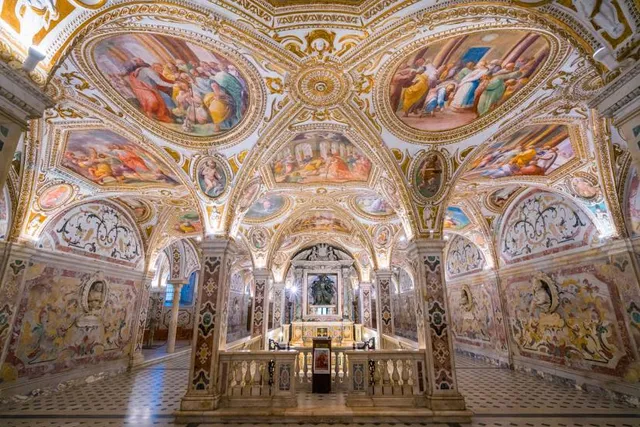
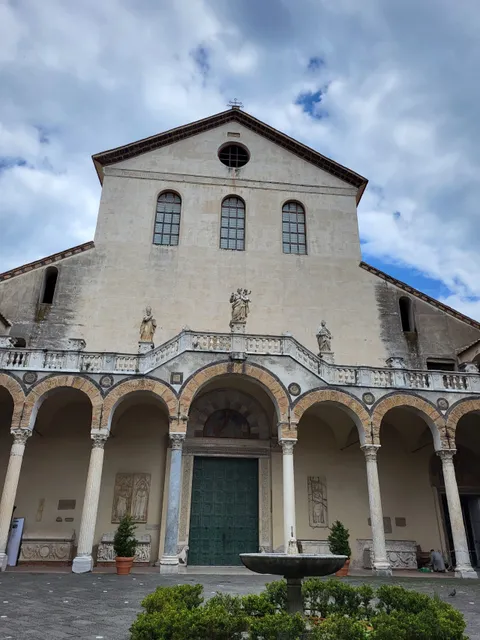
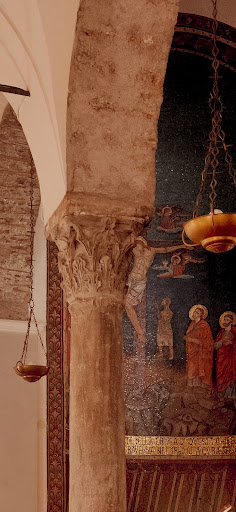
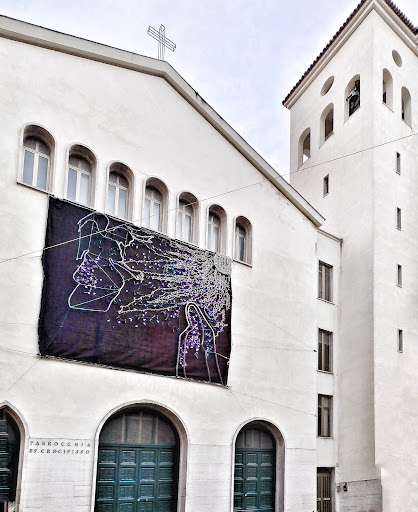
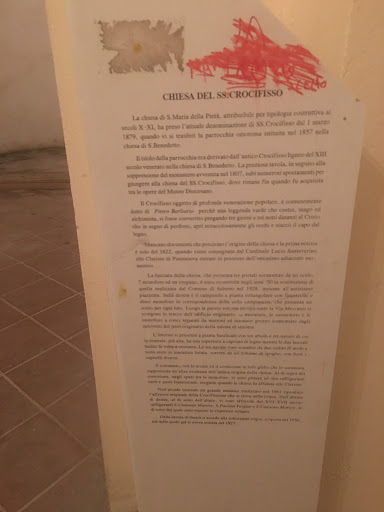
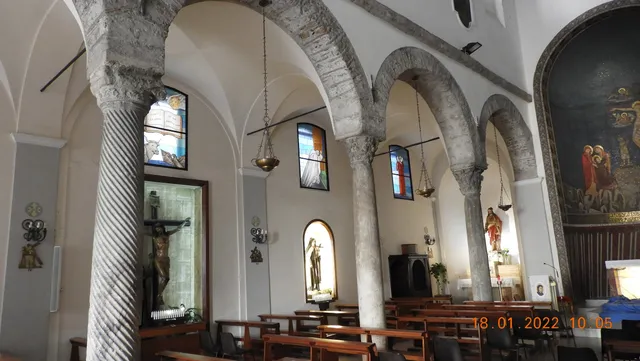
The Church of S. Maria della Pietà, its architectural lineage tracing back to the enigmatic epochs of the 10th and 11th centuries, once bore a different name. Until the year 1857, it was known by its former appellation, before it embraced the title of SS. Crocifisso. During that pivotal year, it played host to the parish of San Benedetto, albeit temporarily, as military forces shuttered its sacred doors. The church stands as a testament to time, an embodiment of the basilican archetype with its three apses facing the eastern horizon. Its interior, a symphony of three naves, is punctuated by columns, ancient remnants repurposed, bearing the weight of rounded masonry arches adorned with the eloquent embrace of a yellow tufo cornice. A subtle inclination graces the northern flank of the edifice, bestowing upon it a gentle, almost imperceptible tilt. Within a recess on the left, a rectangular niche harbors an 18th-century wooden Crucifix, attributed to the hand of Pietro Barliario, whose presence emerges like a spectral whisper during certain seasons. Beneath the right altar, frescoes from the 16th and 17th centuries weave their narratives into the tapestry of time. Beyond the church's hallowed confines, along the lateral wall that gazes upon Via Mercanti, the observer is graced by the original Romanesque masonry, its facade adorned with monofore, like ancient eyes that once beheld the passage of centuries. The passage of time has etched its signature upon this sacred enclave throughout the 20th century. In 1928, a new facade emerged, an academic interpretation, crowned by an overhanging portico that mirrored the church's interior, with its three apses. Following the tumultuous floodwaters of 1954, the church was painstakingly restored and fortified, reviving its original visage in a false neoromanesque garb. The second facade, a more recent addition, embraced the interior of the 20th-century portico, while to its right, a bell tower was raised to pierce the heavens. Beneath the feet of worshippers lies a hidden realm, the crypt, officially unveiled in the year 1950. It is believed to precede the upper church, its origins harkening back to the 8th century. A celebrated fresco of the Crucifixion, dating back to the 13th or 14th century, stands as a testament to the Angevin influences that once graced Salerno, within a fully functioning subterranean sanctuary. The crypt, much like its celestial counterpart, boasts a basilican floorplan, its heart adorned with three naves, their division marked by vaulted cross arches, their ascent culminating in three apses facing the east. These arches cradle themselves upon pilasters, enshrining the ancient columns of yore. Along the northern wall, monofore bestow their timeless grace, a silent chorus to the crypt's...

   Read more
avatar
5.0
5y

XIII (menzione intero bene)

La chiesa risale a prima del Duecento ed in origine si chiamava "chiesa Santa Maria della Pietà di Portanova". Essa era annessa al contiguo ed omonimo monastero, non molto lontano dal Duomo; fu poi associata al più potente monastero di San Benedetto. Deve il suo nome al fatto che vi era custodita una venerata croce su tavola, dipinta nel Duecento, ora conservata nel Museo diocesano. Descrizione La chiesa è a pianta basilicale, a tre navate, con abside semi-circolare. Presenta struttura principale in muratura portante con copertura a due falde in capriate lignee a vista sulla navata principale; le navate laterali sono voltate. Le pareti interne si presentano intonacate e tinteggiate in bianco; le arcate tra la navata principale e le laterali si presentano con la muratura originaria a vista. La pavimentazione dell'aula è in mattonelle di granigliato di marmo. La facciata principale è moderna e costituita, centralmente, da tre portali d'ingresso ad arco con infissi in legno. Presenta nella parte basamentale una zoccolatura alta in travertino, poi, nella parte superiore si presenta intonacata e tinteggiata in ocra chiaro. Sempre nella parte alta è presente una fila di 7 monofore al di sopra del rosone vetrato circolare. Sul lato sud della facciata si erge lo slanciato campanile a...

   Read more
avatar
5.0
22w

Crkva Svetog Krsta, srednjovekovno blago u istočnom predgrađu Salerna. Divite se arhitekturi sa rimskim stubovima i istražite njenu unutrašnju lepotu oslikano freskama u lombardijskom stilu. Uprkos modernim izazovima, ova crkva ostaje simbol otpornosti i bogatog kulturnog nasleđa Salerna. Poreklo crkve datira još iz perioda pre 13. veka. Prvobitno poznata kao crkva Santa Marija dela Pijeta di Portanova, bila je usko povezana sa obližnjim manastirom. Istorijski zapisi ukazuju da ju je nadbiskupu poklonio sinu grofa Landonea 1140. godine. Vremenom se povezala sa manastirom San Benedeto i na kraju usvojila svoje sadašnje ime. Arhitektonski stil crkve je izrazito baziličan. Unutrašnjost je ukrašena sa dva reda lukova koje nosi šest stubova iz rimskog doba. Ova mešavina antičkih i srednjovekovnih elemenata stvara atmosferu bezvremenskog poštovanja. Prikaz Hrista sa zatvorenim očima označava odstupanje od vizantijske tradicije prikazivanja sa otvorenim očima, što simbolizuje božanstvo. Ljubitelji umetnosti će pronaći upečatljiv prikaz Raspeća, za koji se procenjuje da potiče iz prve...

   Read more
Page 1 of 7
Previous
Next

Posts

Ugo Terzi (Golfo di Salerno)Ugo Terzi (Golfo di Salerno)
The Church of S. Maria della Pietà, its architectural lineage tracing back to the enigmatic epochs of the 10th and 11th centuries, once bore a different name. Until the year 1857, it was known by its former appellation, before it embraced the title of SS. Crocifisso. During that pivotal year, it played host to the parish of San Benedetto, albeit temporarily, as military forces shuttered its sacred doors. The church stands as a testament to time, an embodiment of the basilican archetype with its three apses facing the eastern horizon. Its interior, a symphony of three naves, is punctuated by columns, ancient remnants repurposed, bearing the weight of rounded masonry arches adorned with the eloquent embrace of a yellow tufo cornice. A subtle inclination graces the northern flank of the edifice, bestowing upon it a gentle, almost imperceptible tilt. Within a recess on the left, a rectangular niche harbors an 18th-century wooden Crucifix, attributed to the hand of Pietro Barliario, whose presence emerges like a spectral whisper during certain seasons. Beneath the right altar, frescoes from the 16th and 17th centuries weave their narratives into the tapestry of time. Beyond the church's hallowed confines, along the lateral wall that gazes upon Via Mercanti, the observer is graced by the original Romanesque masonry, its facade adorned with monofore, like ancient eyes that once beheld the passage of centuries. The passage of time has etched its signature upon this sacred enclave throughout the 20th century. In 1928, a new facade emerged, an academic interpretation, crowned by an overhanging portico that mirrored the church's interior, with its three apses. Following the tumultuous floodwaters of 1954, the church was painstakingly restored and fortified, reviving its original visage in a false neoromanesque garb. The second facade, a more recent addition, embraced the interior of the 20th-century portico, while to its right, a bell tower was raised to pierce the heavens. Beneath the feet of worshippers lies a hidden realm, the crypt, officially unveiled in the year 1950. It is believed to precede the upper church, its origins harkening back to the 8th century. A celebrated fresco of the Crucifixion, dating back to the 13th or 14th century, stands as a testament to the Angevin influences that once graced Salerno, within a fully functioning subterranean sanctuary. The crypt, much like its celestial counterpart, boasts a basilican floorplan, its heart adorned with three naves, their division marked by vaulted cross arches, their ascent culminating in three apses facing the east. These arches cradle themselves upon pilasters, enshrining the ancient columns of yore. Along the northern wall, monofore bestow their timeless grace, a silent chorus to the crypt's enigmatic sanctity.
Vladimir CvetkovicVladimir Cvetkovic
Crkva Svetog Krsta, srednjovekovno blago u istočnom predgrađu Salerna. Divite se arhitekturi sa rimskim stubovima i istražite njenu unutrašnju lepotu oslikano freskama u lombardijskom stilu. Uprkos modernim izazovima, ova crkva ostaje simbol otpornosti i bogatog kulturnog nasleđa Salerna. Poreklo crkve datira još iz perioda pre 13. veka. Prvobitno poznata kao crkva Santa Marija dela Pijeta di Portanova, bila je usko povezana sa obližnjim manastirom. Istorijski zapisi ukazuju da ju je nadbiskupu poklonio sinu grofa Landonea 1140. godine. Vremenom se povezala sa manastirom San Benedeto i na kraju usvojila svoje sadašnje ime. Arhitektonski stil crkve je izrazito baziličan. Unutrašnjost je ukrašena sa dva reda lukova koje nosi šest stubova iz rimskog doba. Ova mešavina antičkih i srednjovekovnih elemenata stvara atmosferu bezvremenskog poštovanja. Prikaz Hrista sa zatvorenim očima označava odstupanje od vizantijske tradicije prikazivanja sa otvorenim očima, što simbolizuje božanstvo. Ljubitelji umetnosti će pronaći upečatljiv prikaz Raspeća, za koji se procenjuje da potiče iz prve polovine 13. veka.
Raffaella D'AmelioRaffaella D'Amelio
La chiesa del Santissimo Crocifisso si trova in Via Mercanti, nel punto in cui si incrociano il centro storico e il corso principale. Si affaccia su una piazzetta ricavata nel 1928 dalla demolizione di case fatiscenti, anno in cui fu anche realizzata la facciata in stile barocco. In seguito all’alluvione del 1956 fu edificata la facciata attuale. Di questa chiesa non si conosce molto, ma la tradizione vuole che sia stata fondata in epoca longobarda da un nipote dell’imperatore Costantino, ma non si hanno sue notizie certe fino al 1200 circa, quando divenne sede del convento delle clarisse. La struttura della chiesa è di tipo basilicale, con tre absidi e tre navate. All’interno vi sono due ordini di archi. Questi si sorreggono grazie a sei colonne di epoca romana con capitelli diversi. La prima colonna a sinistra è l’unica ad avere una decorazione in rilievo a spirale. Nell’abside centrale, il mosaico moderno riproduce l’affresco della Crocifissione che si trova nella cripta.
See more posts
See more posts
hotel
Find your stay

Pet-friendly Hotels in Salerno

Find a cozy hotel nearby and make it a full experience.

The Church of S. Maria della Pietà, its architectural lineage tracing back to the enigmatic epochs of the 10th and 11th centuries, once bore a different name. Until the year 1857, it was known by its former appellation, before it embraced the title of SS. Crocifisso. During that pivotal year, it played host to the parish of San Benedetto, albeit temporarily, as military forces shuttered its sacred doors. The church stands as a testament to time, an embodiment of the basilican archetype with its three apses facing the eastern horizon. Its interior, a symphony of three naves, is punctuated by columns, ancient remnants repurposed, bearing the weight of rounded masonry arches adorned with the eloquent embrace of a yellow tufo cornice. A subtle inclination graces the northern flank of the edifice, bestowing upon it a gentle, almost imperceptible tilt. Within a recess on the left, a rectangular niche harbors an 18th-century wooden Crucifix, attributed to the hand of Pietro Barliario, whose presence emerges like a spectral whisper during certain seasons. Beneath the right altar, frescoes from the 16th and 17th centuries weave their narratives into the tapestry of time. Beyond the church's hallowed confines, along the lateral wall that gazes upon Via Mercanti, the observer is graced by the original Romanesque masonry, its facade adorned with monofore, like ancient eyes that once beheld the passage of centuries. The passage of time has etched its signature upon this sacred enclave throughout the 20th century. In 1928, a new facade emerged, an academic interpretation, crowned by an overhanging portico that mirrored the church's interior, with its three apses. Following the tumultuous floodwaters of 1954, the church was painstakingly restored and fortified, reviving its original visage in a false neoromanesque garb. The second facade, a more recent addition, embraced the interior of the 20th-century portico, while to its right, a bell tower was raised to pierce the heavens. Beneath the feet of worshippers lies a hidden realm, the crypt, officially unveiled in the year 1950. It is believed to precede the upper church, its origins harkening back to the 8th century. A celebrated fresco of the Crucifixion, dating back to the 13th or 14th century, stands as a testament to the Angevin influences that once graced Salerno, within a fully functioning subterranean sanctuary. The crypt, much like its celestial counterpart, boasts a basilican floorplan, its heart adorned with three naves, their division marked by vaulted cross arches, their ascent culminating in three apses facing the east. These arches cradle themselves upon pilasters, enshrining the ancient columns of yore. Along the northern wall, monofore bestow their timeless grace, a silent chorus to the crypt's enigmatic sanctity.
Ugo Terzi (Golfo di Salerno)

Ugo Terzi (Golfo di Salerno)

hotel
Find your stay

Affordable Hotels in Salerno

Find a cozy hotel nearby and make it a full experience.

Get the Appoverlay
Get the AppOne tap to find yournext favorite spots!
Crkva Svetog Krsta, srednjovekovno blago u istočnom predgrađu Salerna. Divite se arhitekturi sa rimskim stubovima i istražite njenu unutrašnju lepotu oslikano freskama u lombardijskom stilu. Uprkos modernim izazovima, ova crkva ostaje simbol otpornosti i bogatog kulturnog nasleđa Salerna. Poreklo crkve datira još iz perioda pre 13. veka. Prvobitno poznata kao crkva Santa Marija dela Pijeta di Portanova, bila je usko povezana sa obližnjim manastirom. Istorijski zapisi ukazuju da ju je nadbiskupu poklonio sinu grofa Landonea 1140. godine. Vremenom se povezala sa manastirom San Benedeto i na kraju usvojila svoje sadašnje ime. Arhitektonski stil crkve je izrazito baziličan. Unutrašnjost je ukrašena sa dva reda lukova koje nosi šest stubova iz rimskog doba. Ova mešavina antičkih i srednjovekovnih elemenata stvara atmosferu bezvremenskog poštovanja. Prikaz Hrista sa zatvorenim očima označava odstupanje od vizantijske tradicije prikazivanja sa otvorenim očima, što simbolizuje božanstvo. Ljubitelji umetnosti će pronaći upečatljiv prikaz Raspeća, za koji se procenjuje da potiče iz prve polovine 13. veka.
Vladimir Cvetkovic

Vladimir Cvetkovic

hotel
Find your stay

The Coolest Hotels You Haven't Heard Of (Yet)

Find a cozy hotel nearby and make it a full experience.

hotel
Find your stay

Trending Stays Worth the Hype in Salerno

Find a cozy hotel nearby and make it a full experience.

La chiesa del Santissimo Crocifisso si trova in Via Mercanti, nel punto in cui si incrociano il centro storico e il corso principale. Si affaccia su una piazzetta ricavata nel 1928 dalla demolizione di case fatiscenti, anno in cui fu anche realizzata la facciata in stile barocco. In seguito all’alluvione del 1956 fu edificata la facciata attuale. Di questa chiesa non si conosce molto, ma la tradizione vuole che sia stata fondata in epoca longobarda da un nipote dell’imperatore Costantino, ma non si hanno sue notizie certe fino al 1200 circa, quando divenne sede del convento delle clarisse. La struttura della chiesa è di tipo basilicale, con tre absidi e tre navate. All’interno vi sono due ordini di archi. Questi si sorreggono grazie a sei colonne di epoca romana con capitelli diversi. La prima colonna a sinistra è l’unica ad avere una decorazione in rilievo a spirale. Nell’abside centrale, il mosaico moderno riproduce l’affresco della Crocifissione che si trova nella cripta.
Raffaella D'Amelio

Raffaella D'Amelio

See more posts
See more posts