HTML SitemapExplore
logo
Find Things to DoFind The Best Restaurants

Mimizuka — Attraction in Kyoto

Name
Mimizuka
Description
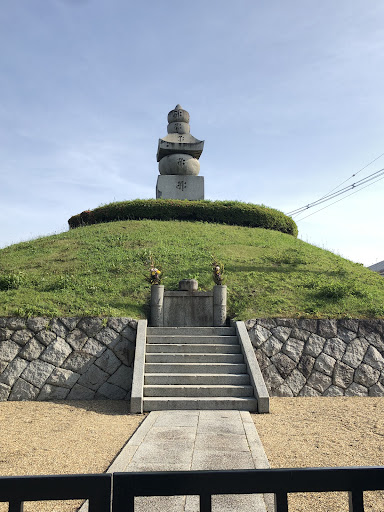
The Mimizuka, which was renamed from Hanazuka, is a monument in Kyoto, Japan. It is dedicated to the sliced noses of killed Korean soldiers and civilians, as well as those of Ming Chinese troops, taken as war trophies during the Japanese invasions of Korea from 1592 to 1598.
Nearby attractions
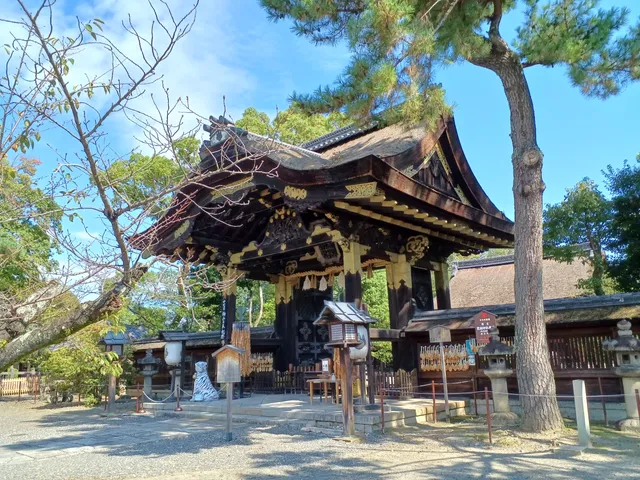
Toyokuni Shrine
530 Chayacho, Higashiyama Ward, Kyoto, 605-0931, Japan
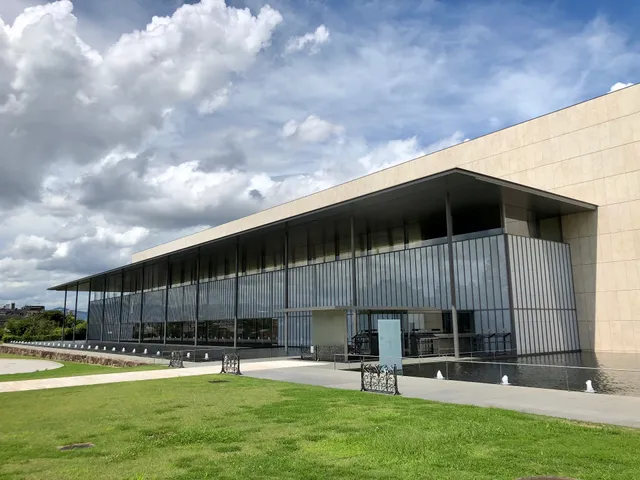
Kyoto National Museum
527 Chayacho, Higashiyama Ward, Kyoto, 605-0931, Japan
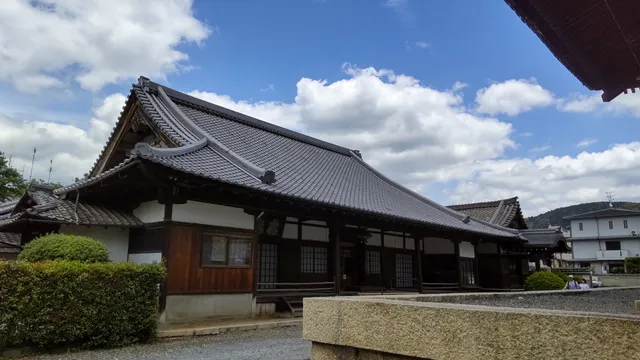
Hōkō-ji Temple
527-2 Chayacho, Higashiyama Ward, Kyoto, 605-0931, Japan
Rengeō-in (Sanjūsangen-dō) Temple
657 Sanjusangendomawari, Higashiyama Ward, Kyoto, 605-0941, Japan
Treasure Museum
530 Chayacho, Higashiyama Ward, Kyoto, 605-0931, Japan
Kawai Kanjiro's House
Japan, 〒605-0875 Kyoto, Higashiyama Ward, 五条坂 鐘鋳町569
Galerie Tamenaga Kyoto
Japan, 〒605-0991 Kyoto, Higashiyama Ward, Kamihoritsumecho, 265-7
Fountains
Chayacho, Higashiyama Ward, Kyoto, 605-0931, Japan
元和キリシタン殉教の地
Higashiyama Ward, Kyoto, 605-0909, Japan
Yōgen-in Temple
656 Sanjusangendomawari, Higashiyama Ward, Kyoto, 605-0941, Japan
Nearby restaurants
Söt Coffee Kyoto Shichijo
5 Chome-148-2 Honmachishin, Higashiyama Ward, Kyoto, 605-0989, Japan
Matsuyama
4 Chome-142 Honmachi, Higashiyama Ward, Kyoto, 605-0981, Japan
Niku Kappo Futago - THE JUNEI HOTEL KYOTO
Japan, 〒605-0908 Kyoto, Higashiyama Ward, Honmachi, 4 Chome−139 1F THE JUNEI HOTEL Kyoto
Azuma Sushi
Japan, 〒605-0908 Kyoto, Higashiyama Ward, Shomencho, 299
CoCo Ichibanya Keihan Shichijo
566 Nishinomoncho, Higashiyama Ward, Kyoto, 605-0947, Japan
【the kind】 Breakfast
2 Chome-84-2 Honmachi, Higashiyama Ward, Kyoto, 605-0981, Japan
Ramen no Bombo - Shichijo Main Shop
Japan, 〒605-0992 Kyoto, Higashiyama Ward, Shimohorizumecho, 232 | 京都駅 / ラーメン / ランチ / 京都ラーメン / 美味しい / 深夜 / おすすめ |
Warajiya
555 Nishinomoncho, Higashiyama Ward, Kyoto, 605-0947, Japan
Noodle House EDITION Kyoto Main Branch
234 Shimohorizumecho, Higashiyama Ward, Kyoto, 605-0992, Japan
Kissa Kishin Kyoto
Japan, 〒605-0932 Kyoto, Higashiyama Ward, Myohoin Maekawacho, 427-18 MAANA KIYOMIZU
Nearby hotels
THE JUNEI HOTEL Kyoto
4 Chome-139 Honmachi, Higashiyama Ward, Kyoto, 605-0981, Japan
京蘭 はやし邸(KYORAN-HAYASITEI)
599 Nushiyacho, Higashiyama Ward, Kyoto, 605-0934, Japan
Hotel The Point Kiyomizu Gojo
5 Chome-153 Honmachishin, Higashiyama Ward, Kyoto, 605-0989, Japan
Kiraku Kyoto Honmachi
187-1 Honmachi, Higashiyama Ward, Kyoto, 605-0981, Japan
谷町君HOTEL京都駅東29
266 Kamihoritsumecho, Higashiyama Ward, Kyoto, 605-0991, Japan
Sakura Cross Hotel Kyoto Kiyomizudera
396-1 Sayamachi 1chome, Higashiyama Ward, Kyoto, 605-0902, Japan
HIYORI Stay Kyoto Kamogawa
485 Kagiyacho, Higashiyama Ward, Kyoto, 605-0909, Japan
Hyatt Regency Kyoto
644-2 Sanjusangendomawari, Higashiyama Ward, Kyoto, 605-0941, Japan
Tsumugi Sanjusangendo
211-9 Shimotoryocho, Higashiyama Ward, Kyoto, 605-0937, Japan
Abita Hotel KYOTO KAMOGAWA
497-1 Kagiyacho, Higashiyama Ward, Kyoto, 605-0909, Japan
Related posts
Keywords
Mimizuka tourism.Mimizuka hotels.Mimizuka bed and breakfast. flights to Mimizuka.Mimizuka attractions.Mimizuka restaurants.Mimizuka travel.Mimizuka travel guide.Mimizuka travel blog.Mimizuka pictures.Mimizuka photos.Mimizuka travel tips.Mimizuka maps.Mimizuka things to do.
Mimizuka things to do, attractions, restaurants, events info and trip planning
Mimizuka
JapanKyoto PrefectureKyotoMimizuka

Basic Info

Mimizuka

533-1 Chayacho, Higashiyama Ward, Kyoto, 605-0931, Japan
4.3(210)
Open 24 hours
Save
spot

Ratings & Description

Info

The Mimizuka, which was renamed from Hanazuka, is a monument in Kyoto, Japan. It is dedicated to the sliced noses of killed Korean soldiers and civilians, as well as those of Ming Chinese troops, taken as war trophies during the Japanese invasions of Korea from 1592 to 1598.

Cultural
attractions: Toyokuni Shrine, Kyoto National Museum, Hōkō-ji Temple, Rengeō-in (Sanjūsangen-dō) Temple, Treasure Museum, Kawai Kanjiro's House, Galerie Tamenaga Kyoto, Fountains, 元和キリシタン殉教の地, Yōgen-in Temple, restaurants: Söt Coffee Kyoto Shichijo, Matsuyama, Niku Kappo Futago - THE JUNEI HOTEL KYOTO, Azuma Sushi, CoCo Ichibanya Keihan Shichijo, 【the kind】 Breakfast, Ramen no Bombo - Shichijo Main Shop, Warajiya, Noodle House EDITION Kyoto Main Branch, Kissa Kishin Kyoto
logoLearn more insights from Wanderboat AI.
Website
city.kyoto.lg.jp

Plan your stay

hotel
Pet-friendly Hotels in Kyoto
Find a cozy hotel nearby and make it a full experience.

hotel
Affordable Hotels in Kyoto
Find a cozy hotel nearby and make it a full experience.

hotel
The Coolest Hotels You Haven't Heard Of (Yet)
Find a cozy hotel nearby and make it a full experience.

hotel
Trending Stays Worth the Hype in Kyoto
Find a cozy hotel nearby and make it a full experience.

Reviews

Nearby attractions of Mimizuka

Toyokuni Shrine

Kyoto National Museum

Hōkō-ji Temple

Rengeō-in (Sanjūsangen-dō) Temple

Treasure Museum

Kawai Kanjiro's House

Galerie Tamenaga Kyoto

Fountains

元和キリシタン殉教の地

Yōgen-in Temple

Toyokuni Shrine

Toyokuni Shrine

4.1

(1.2K)

Open 24 hours
Click for details
Kyoto National Museum

Kyoto National Museum

4.3

(3.4K)

Open 24 hours
Click for details
Hōkō-ji Temple

Hōkō-ji Temple

4.0

(204)

Open 24 hours
Click for details
Rengeō-in (Sanjūsangen-dō) Temple

Rengeō-in (Sanjūsangen-dō) Temple

4.6

(6.4K)

Open 24 hours
Click for details

Things to do nearby

Hike to Fushimi Inari along hidden scenic trails
Sat, Dec 6 • 9:00 AM
605-0981, Kyoto, Kyoto, Japan
View details
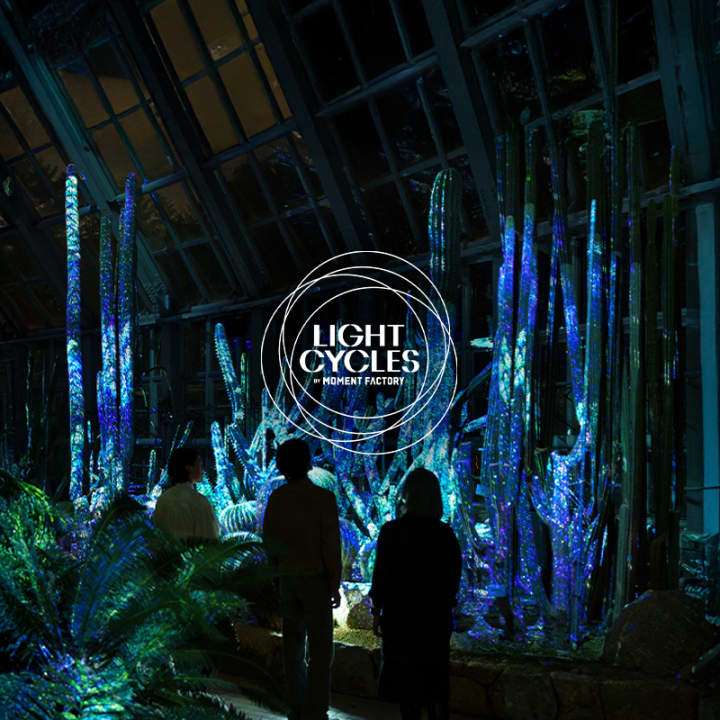
京都府立植物園:LIGHT CYCLES KYOTO (ライトサイクル京都)
Sat, Dec 6 • 6:00 PM
京都市左京区下鴨半木町, 606-0823
View details
Kyoto Photo Tour with a Professional Photographer
Sat, Dec 6 • 10:30 AM
605-0073, Kyoto, Kyoto, Japan
View details

Nearby restaurants of Mimizuka

Söt Coffee Kyoto Shichijo

Matsuyama

Niku Kappo Futago - THE JUNEI HOTEL KYOTO

Azuma Sushi

CoCo Ichibanya Keihan Shichijo

【the kind】 Breakfast

Ramen no Bombo - Shichijo Main Shop

Warajiya

Noodle House EDITION Kyoto Main Branch

Kissa Kishin Kyoto

Söt Coffee Kyoto Shichijo

Söt Coffee Kyoto Shichijo

4.8

(345)

$

Click for details
Matsuyama

Matsuyama

4.2

(79)

Closed
Click for details
Niku Kappo Futago - THE JUNEI HOTEL KYOTO

Niku Kappo Futago - THE JUNEI HOTEL KYOTO

4.9

(70)

Closed
Click for details
Azuma Sushi

Azuma Sushi

4.5

(206)

$$

Click for details
Get the Appoverlay
Get the AppOne tap to find yournext favorite spots!
Wanderboat LogoWanderboat

Your everyday Al companion for getaway ideas

CompanyAbout Us
InformationAI Trip PlannerSitemap
SocialXInstagramTiktokLinkedin
LegalTerms of ServicePrivacy Policy

Get the app

© 2025 Wanderboat. All rights reserved.
logo

Posts

HedgeHodge “HodgePodge”HedgeHodge “HodgePodge”
May 20, 2023 visit (Updated because “Food Fanatic” wanted to throw shade at me personally) Oblivious? You’re the one using political buzzwords like genocide to describe a conflict 400 years ago. I’m Catholic and thousands of Catholics were martyred by Hideyoshi and the Tokugawa and later by feudal Korea. You don’t see me whining about it and calling the current people of Korea and Japan genocide supporters now and forever. I gave a review of the temple up the street that deifies Hideyoshi 2 stars because of what he did to Christians and the Koreans. But holding hatred in your heart for an event 4 centuries ago benefits no one and only drags on. Seriously this is not a hard concept to grasp. I lived along side Japanese and Korean people for over a year and they’re some of nicest and friendliest people I know. You’re accusations against them is baseless. Grow up…) During the Imjin War, Japanese soldier took the noses of 38,000 Korean and 30,000 Chinese that were killed. The remains are enshrined here. I am neither Korean or Japanese, so I approach this controversial place with neutrality. It’s a historical monument with the remains of people who are long dead. Joseon and Feudal Japan no longer exist. Try to look at this place as a reminder of history and not as a 400 year old grudge.
Hiroshi KyotoHiroshi Kyoto
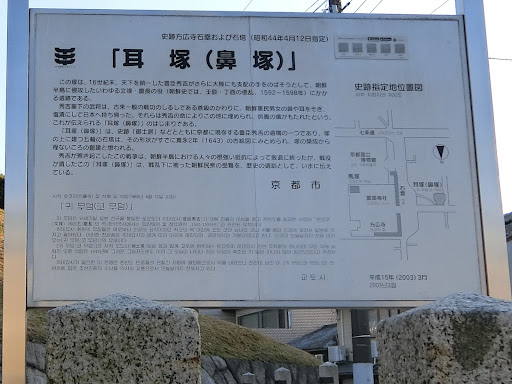
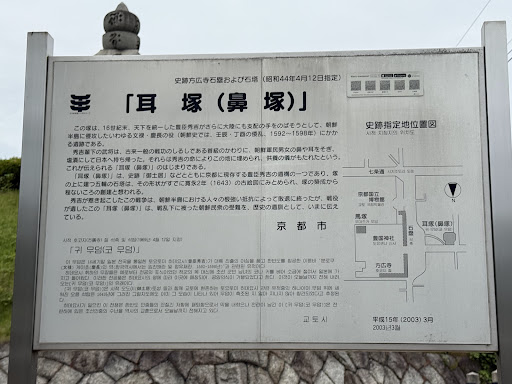
「耳塚(鼻塚)」 この塚は、16世紀末、天下を統一した豊臣秀吉がさらに大陸にも支配の手を伸ばそうとして、朝鮮半島に侵攻したいわゆる文禄・慶長の役(朝鮮史では、壬辰・丁酉の倭乱、1592~1598)にかかる遺跡である。 秀吉配下の武将は、古来一般の戦功のしるしである首級のかわりに、朝鮮軍民男女の鼻や耳をそぎ、塩漬けにして日本へ持ち帰った。それらは秀吉の命によりこの地に埋められ、供養の儀がもたれたという。これが伝えられる「耳塚(鼻塚)」のはじまりである。 「耳塚(鼻塚)」は、史跡「御土居」などとともに京都に現存する豊臣秀吉の遺構の一つであり、塚の上に建つ五輪の石塔は、その形状がすでに寛永2年(1643)の古絵図にみとめられ、塚の築成から程ないころの創建と思われる。 秀吉が惹き起こしたこの戦争は、朝鮮半島における人々の根強い抵抗によって敗退に終わったが、戦役が遺したこの「耳塚(鼻塚)」は、戦乱下に被った朝鮮民衆の受難を、歴史の遺訓として。いまに伝えている。 京都市 "Ear Mound (Nose Mound)" This mound is a ruin related to the Bunroku-Keicho War (known in Korean history as the Imjin-Jeongyou War, 1592-1598), when Toyotomi Hideyoshi, who had unified Japan at the end of the 16th century, invaded the Korean Peninsula in an attempt to extend his rule to the continent. Instead of the traditional heads that have been a common sign of military achievement since ancient times, Hideyoshi's military commanders cut off the noses and ears of Korean military and civilian men and women, pickled them, and brought them back to Japan. By order of Hideyoshi, they were buried here and a memorial service was held. This is the origin of the so-called "Ear Mound (Nose Mound)". The "Mimizuka (Hosezuka)" is one of Toyotomi Hideyoshi's remains that still remain in Kyoto, along with the historic site "Odoi," and the shape of the five-ringed stone tower that stands on top of the mound was already recognized in an old drawing from 1643, and it is thought to have been built shortly after the construction of the mound. The war that Hideyoshi instigated ended in defeat due to the persistent resistance of the people of the Korean Peninsula, but the "Mimizuka (Hosezuka)" left behind by the campaign continues to convey to us today as a historical lesson the suffering that the Korean people suffered during the war.
Alan LyeAlan Lye
A quiet monument located in a creepy sleepy town. It is not a monument of great achievement but a monument of how someone cannot sleep well at night and needed the Buddhist monks help to pacify the Korean and Chinese victims. That’s why the monument was built in the first place. A unifier of Japan yes but at the sacrifice of many others.
See more posts
See more posts
hotel
Find your stay

Pet-friendly Hotels in Kyoto

Find a cozy hotel nearby and make it a full experience.

May 20, 2023 visit (Updated because “Food Fanatic” wanted to throw shade at me personally) Oblivious? You’re the one using political buzzwords like genocide to describe a conflict 400 years ago. I’m Catholic and thousands of Catholics were martyred by Hideyoshi and the Tokugawa and later by feudal Korea. You don’t see me whining about it and calling the current people of Korea and Japan genocide supporters now and forever. I gave a review of the temple up the street that deifies Hideyoshi 2 stars because of what he did to Christians and the Koreans. But holding hatred in your heart for an event 4 centuries ago benefits no one and only drags on. Seriously this is not a hard concept to grasp. I lived along side Japanese and Korean people for over a year and they’re some of nicest and friendliest people I know. You’re accusations against them is baseless. Grow up…) During the Imjin War, Japanese soldier took the noses of 38,000 Korean and 30,000 Chinese that were killed. The remains are enshrined here. I am neither Korean or Japanese, so I approach this controversial place with neutrality. It’s a historical monument with the remains of people who are long dead. Joseon and Feudal Japan no longer exist. Try to look at this place as a reminder of history and not as a 400 year old grudge.
HedgeHodge “HodgePodge”

HedgeHodge “HodgePodge”

hotel
Find your stay

Affordable Hotels in Kyoto

Find a cozy hotel nearby and make it a full experience.

Get the Appoverlay
Get the AppOne tap to find yournext favorite spots!
「耳塚(鼻塚)」 この塚は、16世紀末、天下を統一した豊臣秀吉がさらに大陸にも支配の手を伸ばそうとして、朝鮮半島に侵攻したいわゆる文禄・慶長の役(朝鮮史では、壬辰・丁酉の倭乱、1592~1598)にかかる遺跡である。 秀吉配下の武将は、古来一般の戦功のしるしである首級のかわりに、朝鮮軍民男女の鼻や耳をそぎ、塩漬けにして日本へ持ち帰った。それらは秀吉の命によりこの地に埋められ、供養の儀がもたれたという。これが伝えられる「耳塚(鼻塚)」のはじまりである。 「耳塚(鼻塚)」は、史跡「御土居」などとともに京都に現存する豊臣秀吉の遺構の一つであり、塚の上に建つ五輪の石塔は、その形状がすでに寛永2年(1643)の古絵図にみとめられ、塚の築成から程ないころの創建と思われる。 秀吉が惹き起こしたこの戦争は、朝鮮半島における人々の根強い抵抗によって敗退に終わったが、戦役が遺したこの「耳塚(鼻塚)」は、戦乱下に被った朝鮮民衆の受難を、歴史の遺訓として。いまに伝えている。 京都市 "Ear Mound (Nose Mound)" This mound is a ruin related to the Bunroku-Keicho War (known in Korean history as the Imjin-Jeongyou War, 1592-1598), when Toyotomi Hideyoshi, who had unified Japan at the end of the 16th century, invaded the Korean Peninsula in an attempt to extend his rule to the continent. Instead of the traditional heads that have been a common sign of military achievement since ancient times, Hideyoshi's military commanders cut off the noses and ears of Korean military and civilian men and women, pickled them, and brought them back to Japan. By order of Hideyoshi, they were buried here and a memorial service was held. This is the origin of the so-called "Ear Mound (Nose Mound)". The "Mimizuka (Hosezuka)" is one of Toyotomi Hideyoshi's remains that still remain in Kyoto, along with the historic site "Odoi," and the shape of the five-ringed stone tower that stands on top of the mound was already recognized in an old drawing from 1643, and it is thought to have been built shortly after the construction of the mound. The war that Hideyoshi instigated ended in defeat due to the persistent resistance of the people of the Korean Peninsula, but the "Mimizuka (Hosezuka)" left behind by the campaign continues to convey to us today as a historical lesson the suffering that the Korean people suffered during the war.
Hiroshi Kyoto

Hiroshi Kyoto

hotel
Find your stay

The Coolest Hotels You Haven't Heard Of (Yet)

Find a cozy hotel nearby and make it a full experience.

hotel
Find your stay

Trending Stays Worth the Hype in Kyoto

Find a cozy hotel nearby and make it a full experience.

A quiet monument located in a creepy sleepy town. It is not a monument of great achievement but a monument of how someone cannot sleep well at night and needed the Buddhist monks help to pacify the Korean and Chinese victims. That’s why the monument was built in the first place. A unifier of Japan yes but at the sacrifice of many others.
Alan Lye

Alan Lye

See more posts
See more posts

Reviews of Mimizuka

4.3
(210)
avatar
5.0
2y

May 20, 2023 visit (Updated because “Food Fanatic” wanted to throw shade at me personally) Oblivious? You’re the one using political buzzwords like genocide to describe a conflict 400 years ago. I’m Catholic and thousands of Catholics were martyred by Hideyoshi and the Tokugawa and later by feudal Korea. You don’t see me whining about it and calling the current people of Korea and Japan genocide supporters now and forever. I gave a review of the temple up the street that deifies Hideyoshi 2 stars because of what he did to Christians and the Koreans. But holding hatred in your heart for an event 4 centuries ago benefits no one and only drags on. Seriously this is not a hard concept to grasp. I lived along side Japanese and Korean people for over a year and they’re some of nicest and friendliest people I know. You’re accusations against them is baseless. Grow up…) During the Imjin War, Japanese soldier took the noses of 38,000 Korean and 30,000 Chinese that were killed. The remains are enshrined here. I am neither Korean or Japanese, so I approach this controversial place with neutrality. It’s a historical monument with the remains of people who are long dead. Joseon and Feudal Japan no longer exist. Try to look at this place as a reminder of history and not as a 400...

   Read more
avatar
5.0
34w

「耳塚(鼻塚)」 この塚は、16世紀末、天下を統一した豊臣秀吉がさらに大陸にも支配の手を伸ばそうとして、朝鮮半島に侵攻したいわゆる文禄・慶長の役(朝鮮史では、壬辰・丁酉の倭乱、1592~1598)にかかる遺跡である。 秀吉配下の武将は、古来一般の戦功のしるしである首級のかわりに、朝鮮軍民男女の鼻や耳をそぎ、塩漬けにして日本へ持ち帰った。それらは秀吉の命によりこの地に埋められ、供養の儀がもたれたという。これが伝えられる「耳塚(鼻塚)」のはじまりである。 「耳塚(鼻塚)」は、史跡「御土居」などとともに京都に現存する豊臣秀吉の遺構の一つであり、塚の上に建つ五輪の石塔は、その形状がすでに寛永2年(1643)の古絵図にみとめられ、塚の築成から程ないころの創建と思われる。 秀吉が惹き起こしたこの戦争は、朝鮮半島における人々の根強い抵抗によって敗退に終わったが、戦役が遺したこの「耳塚(鼻塚)」は、戦乱下に被った朝鮮民衆の受難を、歴史の遺訓として。いまに伝えている。 京都市 "Ear Mound (Nose Mound)" This mound is a ruin related to the Bunroku-Keicho War (known in Korean history as the Imjin-Jeongyou War, 1592-1598), when Toyotomi Hideyoshi, who had unified Japan at the end of the 16th century, invaded the Korean Peninsula in an attempt to extend his rule to the continent. Instead of the traditional heads that have been a common sign of military achievement since ancient times, Hideyoshi's military commanders cut off the noses and ears of Korean military and civilian men and women, pickled them, and brought them back to Japan. By order of Hideyoshi, they were buried here and a memorial service was held. This is the origin of the so-called "Ear Mound (Nose Mound)". The "Mimizuka (Hosezuka)" is one of Toyotomi Hideyoshi's remains that still remain in Kyoto, along with the historic site "Odoi," and the shape of the five-ringed stone tower that stands on top of the mound was already recognized in an old drawing from 1643, and it is thought to have been built shortly after the construction of the mound. The war that Hideyoshi instigated ended in defeat due to the persistent resistance of the people of the Korean Peninsula, but the "Mimizuka (Hosezuka)" left behind by the campaign continues to convey to us today as a historical lesson the suffering that the Korean people suffered...

   Read more
avatar
5.0
28w

A quiet monument located in a creepy sleepy town. It is not a monument of great achievement but a monument of how someone cannot sleep well at night and needed the Buddhist monks help to pacify the Korean and Chinese victims. That’s why the monument was built in the first place. A unifier of Japan yes but at the sacrifice of...

   Read more
Page 1 of 7
Previous
Next