🐕 Hachikō: A signifier of Loyalty
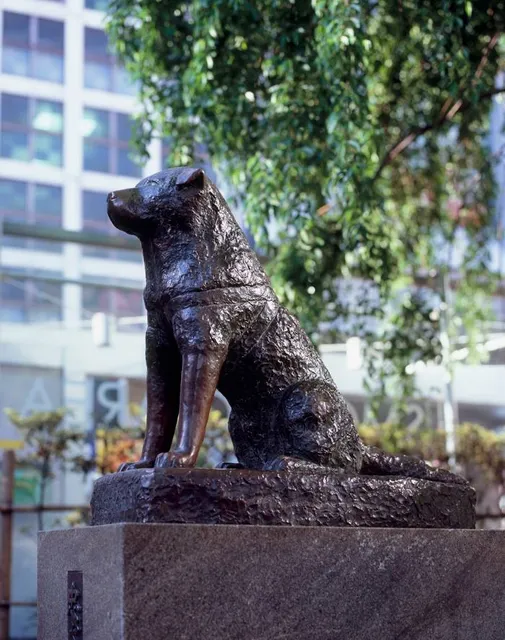
The Hachikō Statue is not just a tourist spot; it is a profound story of loyalty that resonates universally.
Location: It’s located on just outside Shibuya Station (Hachikō exit).
Historical Significance: Professor Hidesaburō Ueno (上野 英三郎 a Japanese agricultural scientist and Hachikō's guardian, was born on January 19, 1872 and passed away on May 21, 1925) at the University of Tokyo took care of Hachikō, who was born in 1923. They had a daily routine that included walking to Shibuya Station, where Hachikō would wait for Ueno to come back from work. Ueno died suddenly in 1925 due to a cerebral hemorrhage. Even after his owner passed away, Hachikō kept waiting at the station every day for until he passed away in 1935. Many people were captivated by this unwavering loyalty, which led to the creation of the statue, which was later replaced after World War II.
Cautions for Visitors:
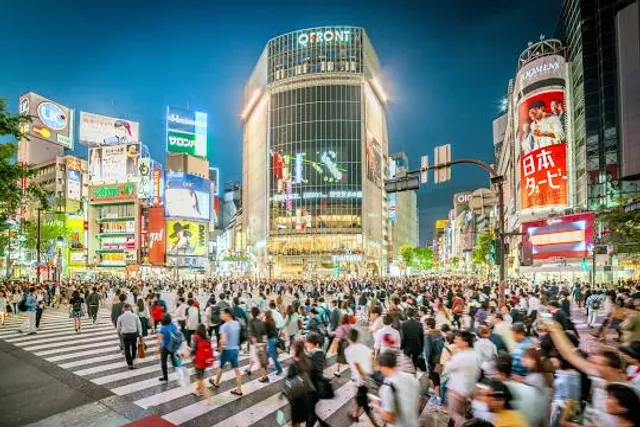
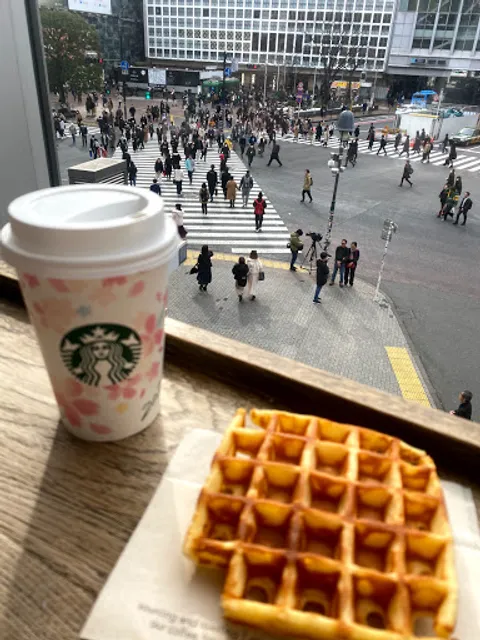
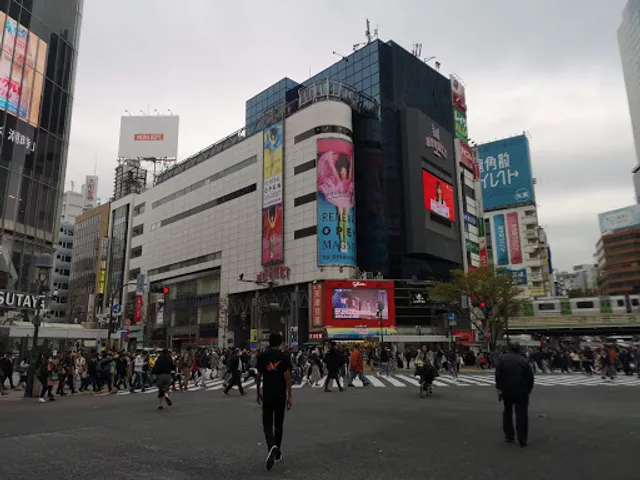
♻︎ Shibuya Station's vicinity can be very crowded. Be ready for huge crowds and think about going early in the morning or late in the evening for a more tranquil experience.
♻︎ Be mindful of your surroundings and keep your belongings secure in any busy urban area.
♻︎ It's important to treat the statue with respect. Stay away from climbing on it or engaging in disruptive behavior when taking photos.
♻︎ When you're taking pictures, be considerate of others who might also want to have a moment with Hachikō. Don't block pathways while waiting for your turn.
Visiting Experience: As you approach the Hachikō Statue, you'll be met by a throng of people, with locals and tourists meeting up and snapping pictures. In front of the statue, you can find a small and cozy tourist information center and souvenir shop.
🎞️ Movie:
♻︎ Seijirō Kōyama's 1987 Japanese film Hachikō Monogatari.
♻︎ Remake_ Hachi: A Dog's Tale, an American drama film released in 2009.
Interesting facts:
♻︎ Professor Ueno named his puppy Hachi because eight is seen as a lucky number in Japan.
♻︎ For a remarkable nine years, nine months, and 15 days, he waited for Ueno until he passed away on March 8, 1935, at the age of 11.
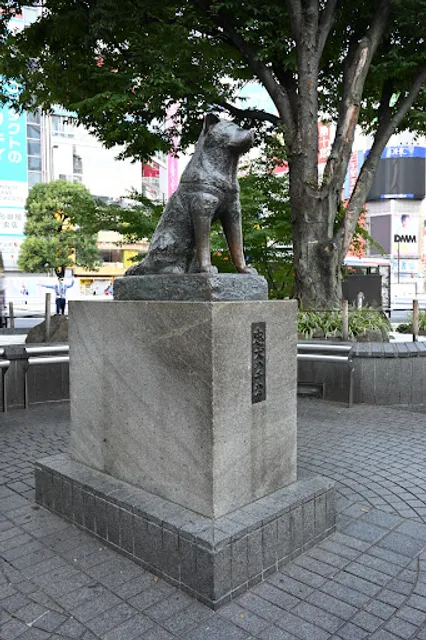
♻︎ In 1934, a bronze statue of the dog was installed in front of Shibuya Station, just a year before his passing on March 8, 1935.
♻︎ At 青山霊園 Aoyama Cemetery in Minami-Aoyama, Minato, Tokyo, there is a grave of Hidesaburō Ueno and a grave of Hachikō (buried next to his owner).
♻︎ On March 9, 2015, Ueno's return to meet Hachikō was depicted in a bronze statue inaugurated by the Faculty of Agriculture of the University of Tokyo in Japan. The placement under a huge tree makes it feel peaceful.
♻︎ In the museum next to Ueno Park, the University of Tokyo's Faculty of Agriculture exhibits Hachikō's liver, heart, and lung in a small setting.
♻︎ Hachikō became a celebrity in Japan after a major Japanese newspaper reporter published his story in 1932.
It was unfortunate that Hachikō was not always treated well while loitering around the station. According to stories, pedestrians, train station staff, and children have beaten and bullied him.
Not only do many people come here to take pictures of Hachikō, but also to honor a story that depicts unconditional love and fidelity.
Shibuya Station holds a memorial ceremony on March 8 every year to honor Hachikō and love...
Read moreHachiko Statue Review – A Tribute to Loyalty at Shibuya
Located just outside the Hachiko Exit of Shibuya Station, the Hachiko Statue is a heartwarming and iconic landmark that draws visitors from all over the world. As soon as I arrived, I could feel the connection between the statue and the many people gathered around it, taking photos and pausing for a moment of reflection. The bronze statue, depicting Hachiko waiting patiently for his owner, stands as a poignant symbol of loyalty and love, and it’s impossible not to be moved by the story behind it.
The tale of Hachiko is well-known in Japan and internationally. Hachiko, an Akita dog, waited for his owner, Professor Ueno, every day at Shibuya Station for their daily commute home. Even after the professor’s untimely death in 1925, Hachiko continued to wait for him at the station every day for nearly 10 years. His unwavering loyalty became a symbol of devotion, and the statue was erected in 1934 to honor him.
When I approached the statue, it was surrounded by a small crowd, many people taking photos or simply standing silently to pay tribute. The statue itself is beautifully crafted, capturing Hachiko’s attentive posture, with his ears perked up as if he’s waiting for his beloved owner to return. It’s a touching and almost surreal sight, especially in such a bustling area like Shibuya, where the busy crowds around the station seem to represent a stark contrast to Hachiko’s quiet devotion.
Visiting the Hachiko Statue felt like stepping into a piece of history. It’s not just a tourist attraction; it’s a spot that holds deep emotional significance for locals and visitors alike. For many Japanese people, the statue represents more than just a tribute to a dog — it’s a reminder of loyalty, patience, and unconditional love. It’s no surprise that people pause to reflect on these values, regardless of how hectic the surrounding Shibuya neighborhood can be.
What I particularly appreciated about the statue is its location. Situated right outside the main Shibuya Station exit, it’s impossible to miss. It’s a perfect spot to take a break from the crowds and enjoy a moment of quiet reflection amidst the frenetic energy of one of Tokyo’s busiest districts. Additionally, the statue is a popular meeting point, with friends and family often gathering around it before heading off to explore the rest of the area.
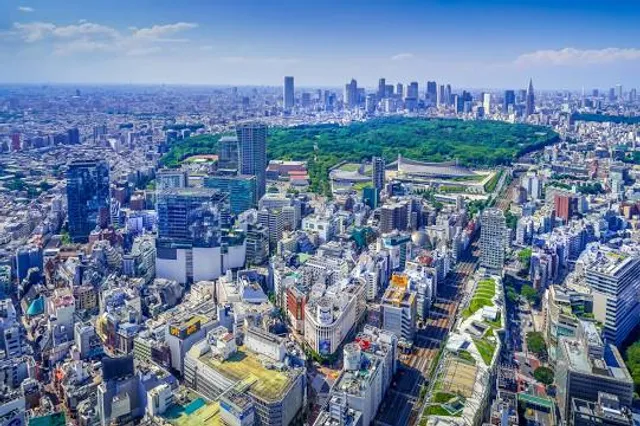
The surrounding Shibuya neighborhood adds to the charm of the Hachiko Statue. After visiting, it’s easy to wander into the nearby streets, where you'll find a vibrant mix of shops, restaurants, and entertainment venues. It’s a great starting point for exploring Shibuya, one of Tokyo’s most energetic and fashionable districts.
In conclusion, the Hachiko Statue is more than just a photo opportunity — it’s a touching tribute to a dog’s unwavering loyalty and an important piece of Tokyo’s cultural fabric. Whether you’re a dog lover, a history enthusiast, or just passing through Shibuya, taking a moment to visit this iconic statue is an experience you won’t forget. It’s a reminder that sometimes the most powerful stories come from the simplest acts of love...
Read moreWhen Loyalty Isn’t Enough Have you ever heard of Hachikō? He was just a dog, but not just any dog. Every day, he waited for his owner at Shibuya Station in Japan. They say he’d walk his owner to the train in the morning, Then wait faithfully at the same spot for him to return in the evening. But one day, his owner didn’t come back. He had passed away suddenly, while at work. Yet Hachikō didn’t know. So he waited. Not for a day. Not for a week. But for nearly 10 years. He returned to the same place every single day, hoping to see the one he loved. He didn’t chase someone new. He didn’t forget. He just waited. Through sun, rain, snow, and years. That’s what love looked like to me. Loyal. Deep. Unshakable. So you can imagine how it felt... When someone I trusted with my heart, Someone I was ready to marry this March, Told me I didn’t trust her. You said I was the one ruining things, Because I had doubts. Because I questioned what was happening between you and him. You said you were innocent. You said he was just a friend. You said I was overthinking. And I believed you. Because I loved you. I wanted to be wrong. But I wasn’t. In the end, you left. And you chose him. The one you told me not to worry about. How could you say I was the problem, While you were already letting go? How could you accuse me of not trusting, When I was the one being betrayed? I wasn’t perfect. But I was loyal. I was the kind of person who would’ve waited for you, Even when the world told me to move on. I loved like Hachikō. But you didn’t. You chose someone new. You moved forward as though we were nothing. Like our promises meant nothing. Like the wedding we planned was just a date to forget. And that hurts more than words can explain. I don’t want pity. I just want to live in a world where people love deeply again. Where love isn’t about convenience or temporary feelings, But about showing up. Staying. Choosing someone, even when it’s hard. Like Hachikō did. Because that’s the love I gave. And despite everything, That’s still the kind of love...
Read more