HTML SitemapExplore
logo
Find Things to DoFind The Best Restaurants

Mosque and University Kairaouine — Attraction in Fez

Name
Mosque and University Kairaouine
Description
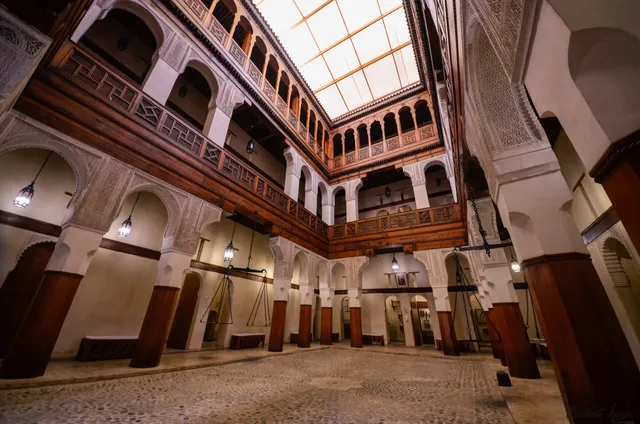
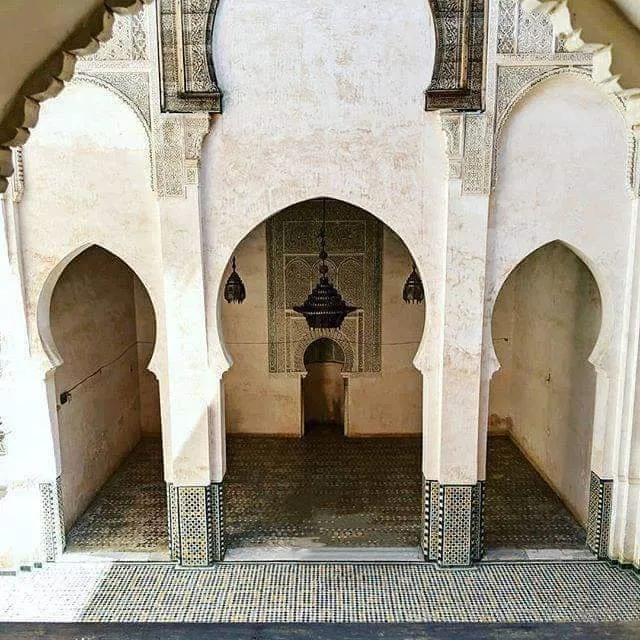
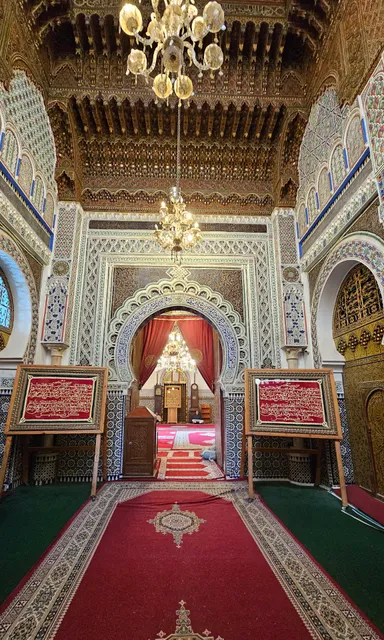
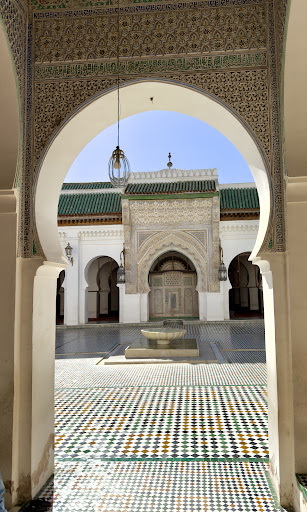
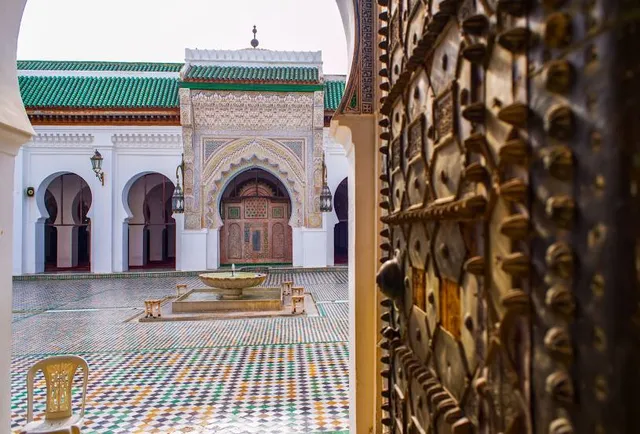
The University of al-Qarawiyyin, also written Al-Karaouine or Al Quaraouiyine, is a university located in Fez, Morocco. It was founded as a mosque by Fatima al-Fihri in 857–859 and subsequently became one of the leading spiritual and educational centers of the Islamic Golden Age.
Nearby attractions
Al Attarine Madrasa
328G+3H2, Rue Talaa Kebira, Fes, Morocco
Place Seffarine
327G+MVH, Fes, Morocco
Nejjarine Museum
327F+WJ5, Fes, Morocco
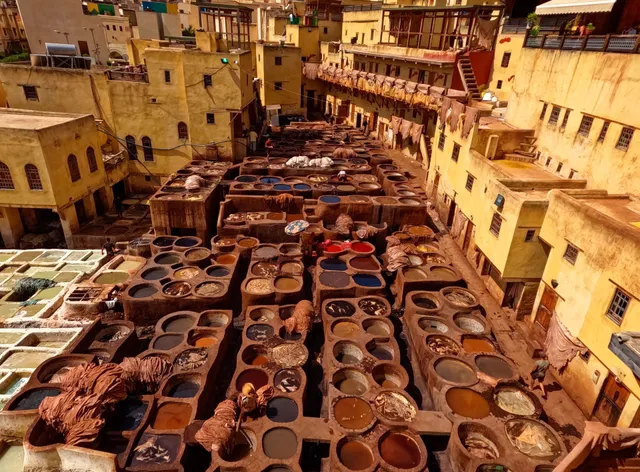
Tanneries de Fes
327F+Q85, Fes, Morocco
مدرسة الشراطين
327G+HFJ, Fes, Morocco
Mausoleum of Sidi Ahmed al-Tijani
328G+GMF, Tafilalete St, Fes, Morocco
خزانة القرويين bibliothèque karaouine
327G+MRW, Fes, Morocco
Nejjarine Fountain
327F+WMH ساحة النجارين, Fes, Morocco
Saffarin Madrasa
327G+MX2, Fes, Morocco
R'cif Mosque
327G+2M9, Fes, Morocco
Nearby restaurants
café Terrasse Riad Kettani
Parking Oued Zhoum، Derb Jamâa، 3 Derb Touil, Fes 30000, Morocco
Restaurant NAYAR
52 Rue SAGHA, Fès, Morocco
Restaurant Dar Hatim
fandak lihoudi, 19 derb zaouia, Fès 30110, Morocco
Les Mystères de Dar Tajine
N 4 derb Hammam Guerniz Fes Ancienne medina، Fes،, 30000, Morocco
Restaurant la famille Zerhouni
fandk lihoudi, 8 derb zaouiya, Fes 30000, Morocco
Dar Alamia & Restaurant
3 Derb Ziat , Nouaariyine, Fès 30110, Morocco
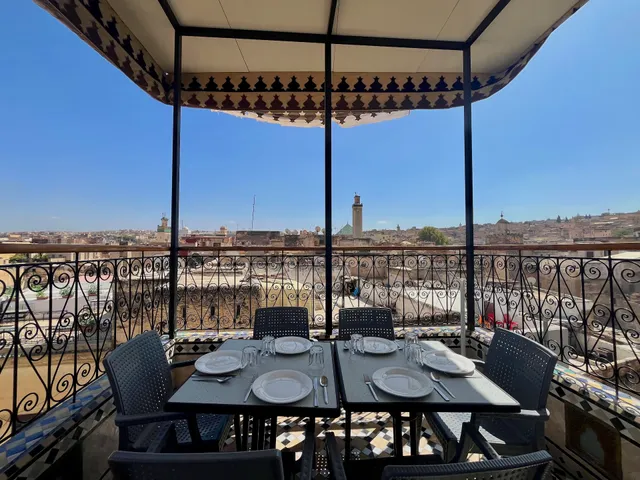
Restaurant Rooftop Patrimoine de Fès - Moroccan Food
9 derb Abdelkrim, Fès 30000, Morocco
Badr Barbeque
19 Rue laqbib naqs, Fès 30110, Morocco
DAR HAMMAD
N 14 ZKAK LAHJAR, Rue Talaa Sghira, Fès 30110, Morocco
Veggie Beldi
Fes 30000, Morocco
Nearby hotels
Dar Seffarine
Fes, Morocco
Riad Zina Fes
29 Derb sbaa louyatte, Rue seffarine, Fes 30000, Morocco
Moroccan Dream Hostel
Aqbet Zarqa, Rcif, Fes 30000, Morocco
Palais Antique
23 Ras Cherratène, Fès, Morocco
Dar 7 Louyat
37 derb sbaa Louyat, Fès 30110, Morocco
Riad Fes Bab Rcif
Bab Rcif, Fès 30000, Morocco
Riad Bleu Ciel
62 Rue Hejjama Garawyen, Fes Medina 3, Fes 30000, Morocco
Dar El Karaweine
64 rue sidi hmed tijani zenket hejama, 30000, Fès, Morocco
Riad Dar Pierre
Aqba Zerqa, Rahbat Zbib, R'cif, 30000,, Fes, Morocco
Riad Hanael Garden & Spa
7 Rue chouara, Fès 30110, Morocco
Related posts
Keywords
Mosque and University Kairaouine tourism.Mosque and University Kairaouine hotels.Mosque and University Kairaouine bed and breakfast. flights to Mosque and University Kairaouine.Mosque and University Kairaouine attractions.Mosque and University Kairaouine restaurants.Mosque and University Kairaouine travel.Mosque and University Kairaouine travel guide.Mosque and University Kairaouine travel blog.Mosque and University Kairaouine pictures.Mosque and University Kairaouine photos.Mosque and University Kairaouine travel tips.Mosque and University Kairaouine maps.Mosque and University Kairaouine things to do.
Mosque and University Kairaouine things to do, attractions, restaurants, events info and trip planning
Mosque and University Kairaouine
MoroccoFez-MeknesFezMosque and University Kairaouine

Basic Info

Mosque and University Kairaouine

327G+XMC, Fes, Morocco
4.6(886)
Open 24 hours
Save
spot

Ratings & Description

Info

The University of al-Qarawiyyin, also written Al-Karaouine or Al Quaraouiyine, is a university located in Fez, Morocco. It was founded as a mosque by Fatima al-Fihri in 857–859 and subsequently became one of the leading spiritual and educational centers of the Islamic Golden Age.

Cultural
Accessibility
attractions: Al Attarine Madrasa, Place Seffarine, Nejjarine Museum, Tanneries de Fes, مدرسة الشراطين, Mausoleum of Sidi Ahmed al-Tijani, خزانة القرويين bibliothèque karaouine, Nejjarine Fountain, Saffarin Madrasa, R'cif Mosque, restaurants: café Terrasse Riad Kettani, Restaurant NAYAR, Restaurant Dar Hatim, Les Mystères de Dar Tajine, Restaurant la famille Zerhouni, Dar Alamia & Restaurant, Restaurant Rooftop Patrimoine de Fès - Moroccan Food, Badr Barbeque, DAR HAMMAD, Veggie Beldi
logoLearn more insights from Wanderboat AI.
Website
uaq.ma

Plan your stay

hotel
Pet-friendly Hotels in Fez
Find a cozy hotel nearby and make it a full experience.

hotel
Affordable Hotels in Fez
Find a cozy hotel nearby and make it a full experience.

hotel
The Coolest Hotels You Haven't Heard Of (Yet)
Find a cozy hotel nearby and make it a full experience.

hotel
Trending Stays Worth the Hype in Fez
Find a cozy hotel nearby and make it a full experience.

Reviews

Nearby attractions of Mosque and University Kairaouine

Al Attarine Madrasa

Place Seffarine

Nejjarine Museum

Tanneries de Fes

مدرسة الشراطين

Mausoleum of Sidi Ahmed al-Tijani

خزانة القرويين bibliothèque karaouine

Nejjarine Fountain

Saffarin Madrasa

R'cif Mosque
Al Attarine Madrasa

Al Attarine Madrasa

4.5

(1.2K)

Open 24 hours
Click for details
Place Seffarine

Place Seffarine

4.6

(327)

Closed
Click for details
Nejjarine Museum

Nejjarine Museum

4.5

(588)

Open 24 hours
Click for details
Tanneries de Fes

Tanneries de Fes

4.3

(390)

Open 24 hours
Click for details

Things to do nearby

Walk Fez’s medina and visit historic landmarks
Sat, Dec 6 • 10:00 AM
Fes, Morocco
View details
Handcraft fresh cheese with a local chef in Fez
Sat, Dec 6 • 4:00 AM
Fes, 65800, Morocco
View details
Guided tour of the old medina of Fez
Sat, Dec 6 • 10:30 AM
Fes, 30000, Morocco
View details

Nearby restaurants of Mosque and University Kairaouine

café Terrasse Riad Kettani

Restaurant NAYAR

Restaurant Dar Hatim

Les Mystères de Dar Tajine

Restaurant la famille Zerhouni

Dar Alamia & Restaurant

Restaurant Rooftop Patrimoine de Fès - Moroccan Food

Badr Barbeque
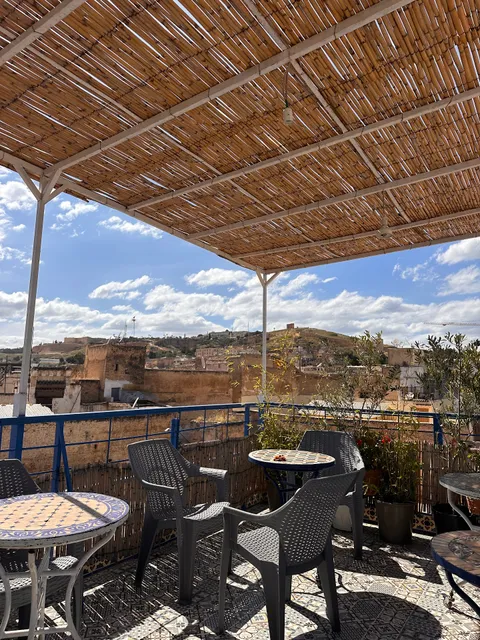
DAR HAMMAD

Veggie Beldi

café Terrasse Riad Kettani

café Terrasse Riad Kettani

4.7

(114)

Click for details
Restaurant NAYAR

Restaurant NAYAR

4.3

(214)

Closed
Click for details
Restaurant Dar Hatim

Restaurant Dar Hatim

4.5

(224)

Click for details
Les Mystères de Dar Tajine

Les Mystères de Dar Tajine

4.4

(322)

$$

Click for details
Get the Appoverlay
Get the AppOne tap to find yournext favorite spots!
Wanderboat LogoWanderboat

Your everyday Al companion for getaway ideas

CompanyAbout Us
InformationAI Trip PlannerSitemap
SocialXInstagramTiktokLinkedin
LegalTerms of ServicePrivacy Policy

Get the app

© 2025 Wanderboat. All rights reserved.
logo

Reviews of Mosque and University Kairaouine

4.6
(886)
avatar
5.0
19w

The University of Al Quaraouiyine in Fez is widely regarded as one of the oldest continuously operating educational institutions in human history. According to both UNESCO and the Guinness Book of World Records, it is recognized as the oldest existing and continually operating degree-granting university in the world. It was founded in 859 AD (245 AH) by a devout woman named Fatima Al-Fihri, who dedicated her entire inheritance to building a grand mosque in the city of Fez—then a thriving center of culture and knowledge. Over time, this mosque evolved into a prestigious institution of higher learning, attracting students from across the Islamic world and even from Europe, thanks to its diverse academic curriculum, which included not only Islamic studies but also medicine, mathematics, astronomy, philosophy, music, and logic. Al Quaraouiyine thus became a global intellectual hub long before the founding of the great European universities. Throughout its illustrious history, the University has hosted some of the most prominent thinkers and scholars, such as Ibn Khaldun, Averroes (Ibn Rushd), Al-Idrisi, and Maimonides, and even Pope Sylvester II, who is believed to have studied there and introduced Arabic scientific knowledge to Europe. Al Quaraouiyine was also the first institution known to grant a structured academic degree known as an “Ijazah,” which required rigorous attendance, scholarly engagement, and formal assessment—precursors to the modern Bachelor’s, Master’s, and Doctorate degrees. Architecturally, the University is housed in one of the most magnificent examples of Islamic-Andalusian design. Its vast prayer hall, ornate stucco work, calligraphy, and intricate geometric patterns reflect centuries of cultural and artistic sophistication. The University is also home to one of the oldest libraries in the Islamic world, the Al Quaraouiyine Library, which contains thousands of rare manuscripts, including hand-copied works by Ibn Sina, Averroes, and classical Qur’anic exegeses. The library was recently restored to preserve its priceless intellectual treasures. Today, despite the transformation of Morocco’s broader educational system, Al Quaraouiyine continues to operate as a center for traditional Islamic scholarship. It is currently overseen by the Ministry of Endowments and Islamic Affairs, and its current president is Dr. Amal Jalal. The university maintains its unique role in training scholars in Islamic sciences, jurisprudence, Qur’anic studies, and theology, while also embracing modern methodologies and academic governance. Thus, Al Quaraouiyine is not merely an educational institution—it is a symbol of Morocco’s cultural, spiritual, and intellectual heritage. For centuries, it has stood as a beacon of knowledge, rational inquiry, and intercultural dialogue, affirming Morocco’s position as a crossroads of civilizations and ideas. Reflecting on the legacy of Al Quaraouiyine today is more than an academic exercise—it is a call to revitalize traditional knowledge systems and to reaffirm the value of intellectual integrity, critical thinking, and cultural rootedness in the face of modern challenges. In this sense, the University of Al Quaraouiyine is not a relic of the past, but a living testament to the enduring power of knowledge and faith. It reminds us that the intellectual glory of Islamic civilization was—and can still be—founded on learning, tolerance, and openness. Reviving the spirit of this historic institution offers a strategic opportunity to rebuild a meaningful educational vision rooted in both authenticity and...

   Read more
avatar
5.0
3y

The Al-Qarawiyyin Mosque in Fez continues to show its glory and grandeur and to attract crowds to perform prayer, assuming its spiritual and civilized function, after many centuries of its foundation. Before the call to prayer is called, hundreds of worshipers who are accustomed to performing the obligatory prayer in a space that is a symbol of the Kingdom’s religious symbols come to the mosque. Since its foundation in 859 AD, at the hands of Fatima al-Fihri, the Qarawiyyin Mosque has preserved its spiritual, devotional and scientific character, and its scholars, who were consulted by the sultans of Morocco in matters of religion and worldly affairs, were respected and appreciated, and they have always been a reference for the city’s residents in seeking advice, advice and sound guidance. . The Qarawiyyin Mosque is an important educational pole, a distinct civilizational edifice, and a center for indoctrination of scientific and religious knowledge. Since its inception, it has attracted a large group of scholars of the caliber of Ibn Rushd, Ibn Arabi, Ibn Baja, Ibn Khaldun, Ibn Harzham, and Abd al-Salam Ibn Mishish. The mosque was built in the first stage on a small area, to benefit from the care given by the successive countries to rule Morocco. And the beating heart of the enemy of the villagers. The mosque has three internal doors and 14 external doors (Bab Al-Hafwa, Bab al-Shama’in, Bab al-Ward, Bab Ibn Omar, Bab Seven Lloyat…) that allow worshipers to enter and exit the mosque in comfort and tranquility without crowding. Al-Qarawiyyin Mosque is located in the center of the old city, where it can be reached easily from the “Rasif” square in no more than a 5-minute walk. The religious landmark is adjacent to a number of historical, religious and cultural landmarks of the city, such as the Misbahiya School, which was built in the fourteenth century AD, the Saffarin Square, and Caesarea al-Kifah. The Qarawiyyin Mosque, which was transformed into a university in a certain period of time, according to its supervisor, Imam Abdul Majeed Al-Mardi, is distinguished by its founding of the concept of a specialized scientific chair, as it became the first university in history to establish the concept of degrees, and it is the first university to discuss a degree in medicine. Abdel Majid al-Mardi said in a statement to the Maghreb Arab News Agency that the Qarawiyyin Mosque was founded during the Idrisid era, that is, during the era of the first Islamic state established in Morocco, and with the passage of time it turned into a university that taught different sciences in many specialized fields, and during the Marinid era, the number of specialized scientific chairs reached more than of 140 chairs. The imam added that the mosque received great attention in the era of the Alawites, who gave it special care and gave it a strong impetus and restored it to it, as the Qarawiyyin Mosque gained a great reputation and radiance. Al-Qarawiyyin Mosque is considered the first university in history, as it contributed to the advancement of thought and science, preserved the Arabic language and the values ​​of enlightened Islam, and contributed to fueling the...

   Read more
avatar
5.0
4y

The University of al-Qarawiyyin (Arabic: جامعة القرويين‎; Berber : ⵜⴰⵙⴷⴰⵡⵉⵜ ⵏ ⵍⵇⴰⵕⴰⵡⵉⵢⵢⵉⵏ; French: Université Al Quaraouiyine), also written Al-Karaouine or Al Quaraouiyine, is a university located in Fez, Morocco. It was founded as a mosque by Fatima al-Fihri in 859 and subsequently became one of the leading spiritual and educational centers of the historic Muslim world. It was incorporated into Morocco's modern state university system in 1963 and was officially renamed "University of Al Quaraouiyine" two years later.1] The mosque building itself is also a significant complex of historical Moroccan and Islamic architecture encompassing elements from many different periods of Moroccan history.[5]Scholars consider that the Qarawiyyin was effectively run as a madrasa[67911] until after World War II and distinguish this status from the status of "university" (similar to how Christian seminaries are not classified as a university), which many view as a distinctly European invention.[12 They date the transformation of the madrasa of al-Qarawiyyin into a university to its modern reorganization in 1963.13] Some sources, however, such as UNESCO and the Guinness World Records cite the Qarawiyyin as the oldest university or oldest continually operating higher learning institution in the world.[14 Education at al-Qarawiyyin University concentrates on the Islamic religious and legal sciences with a heavy emphasis on, and particular strengths in, Classical Arabic grammar/linguistics and Maliki Sharia, although lessons on other non-Islamic subjects are also offered to students. Teaching is still delivered in the traditional methods.[16] Students are seated in a semi-circle (halqa) around a sheikh who prompts them to read certain texts, asks them questions, and explains difficult points to them. The university is attended by students from all over Morocco and Muslim West Africa, with some also coming from further abroad. Women were first admitted to the institution in the 1940's.[17] The Arabic name of the university, جَامِعَةُ الْقَرَوِيِّينَ pronounced [ʒaːmiʕtu lqarawijiːn] means "University of the People from Kairouan (القَيْرَوَان [alqajrawaːn])," the provenance of Fatima al-Fihriya's family in Tunisia .[18] The presence of the letter Qāf (ق), a voiceless uvular plosive which has no equivalent in European languages, as well as the ويّي ([awijiː]) triphthong in the university's name, in addition to the French colonization of Morocco, have introduced a number of different orthographies for the Romanization of the university's name, including al-Qarawiyyin, a standard anglicization; Al Quaraouiyine, following French orthography; and Al-Karaouine, another rendering using French...

   Read more
Page 1 of 7
Previous
Next

Posts

Your browser does not support the video tag.
tourguidemitratourguidemitra
💙The Great Mosque is both fascinating and just happens to be one of the most instagrammable places in Paris! 💚This is the biggest mosque in Paris and the third-largest in Europe. Its outdoor garden, mosaics and characteristic arches might make you feel you've walked into a distant land for a moment. 🇲🇦In fact, it was inspired by the al-Qarawiyyin mosque in Fez, Morocco, one of that country's most important and one of the oldest in the world. The links with Morocco are strong: Sultan Yusef of Morocco attended the inauguration in 1926 in person. 🇹🇳In addition, its 33meter minaret found its own inspiration in the Al-Zaytuna Mosque, in the heart of Tunis, in Tunisia. For the best view of the minaret, head to the mosque's gardens. The garden is surrounded by traditional arches and has beautiful tile work and mosaics. 💙Not only is the design inspired by Maghreb architecture, but specialized craftsmen were brought in from North Africa to build it in a way that would respect its original inspiration. Constructed between 1922 and 1926, the Mosquée de Paris is located in the Latin Quarter, a stone’s throw from Paris’s natural history museum. The building is dominated by a 33-metre-high minaret. It has a patio surrounded by sculpted arcades, as in the Alhambra in Granada. The prayer room is a must-see for its intricate decoration. 💚The mosque is located south of the Seine river, not far from the Pantheon and Jardins du Luxembourg. 📍2bis Place du Puits de l'Ermite, in the 5th arrondissement ————————————————- #grandmosqueparis #secretparis #parishistory #paristour
yassine haddayassine hadda
The University of Al Quaraouiyine in Fez is widely regarded as one of the oldest continuously operating educational institutions in human history. According to both UNESCO and the Guinness Book of World Records, it is recognized as the oldest existing and continually operating degree-granting university in the world. It was founded in 859 AD (245 AH) by a devout woman named Fatima Al-Fihri, who dedicated her entire inheritance to building a grand mosque in the city of Fez—then a thriving center of culture and knowledge. Over time, this mosque evolved into a prestigious institution of higher learning, attracting students from across the Islamic world and even from Europe, thanks to its diverse academic curriculum, which included not only Islamic studies but also medicine, mathematics, astronomy, philosophy, music, and logic. Al Quaraouiyine thus became a global intellectual hub long before the founding of the great European universities. Throughout its illustrious history, the University has hosted some of the most prominent thinkers and scholars, such as Ibn Khaldun, Averroes (Ibn Rushd), Al-Idrisi, and Maimonides, and even Pope Sylvester II, who is believed to have studied there and introduced Arabic scientific knowledge to Europe. Al Quaraouiyine was also the first institution known to grant a structured academic degree known as an “Ijazah,” which required rigorous attendance, scholarly engagement, and formal assessment—precursors to the modern Bachelor’s, Master’s, and Doctorate degrees. Architecturally, the University is housed in one of the most magnificent examples of Islamic-Andalusian design. Its vast prayer hall, ornate stucco work, calligraphy, and intricate geometric patterns reflect centuries of cultural and artistic sophistication. The University is also home to one of the oldest libraries in the Islamic world, the Al Quaraouiyine Library, which contains thousands of rare manuscripts, including hand-copied works by Ibn Sina, Averroes, and classical Qur’anic exegeses. The library was recently restored to preserve its priceless intellectual treasures. Today, despite the transformation of Morocco’s broader educational system, Al Quaraouiyine continues to operate as a center for traditional Islamic scholarship. It is currently overseen by the Ministry of Endowments and Islamic Affairs, and its current president is Dr. Amal Jalal. The university maintains its unique role in training scholars in Islamic sciences, jurisprudence, Qur’anic studies, and theology, while also embracing modern methodologies and academic governance. Thus, Al Quaraouiyine is not merely an educational institution—it is a symbol of Morocco’s cultural, spiritual, and intellectual heritage. For centuries, it has stood as a beacon of knowledge, rational inquiry, and intercultural dialogue, affirming Morocco’s position as a crossroads of civilizations and ideas. Reflecting on the legacy of Al Quaraouiyine today is more than an academic exercise—it is a call to revitalize traditional knowledge systems and to reaffirm the value of intellectual integrity, critical thinking, and cultural rootedness in the face of modern challenges. In this sense, the University of Al Quaraouiyine is not a relic of the past, but a living testament to the enduring power of knowledge and faith. It reminds us that the intellectual glory of Islamic civilization was—and can still be—founded on learning, tolerance, and openness. Reviving the spirit of this historic institution offers a strategic opportunity to rebuild a meaningful educational vision rooted in both authenticity and forward-looking insight.
C KhanC Khan
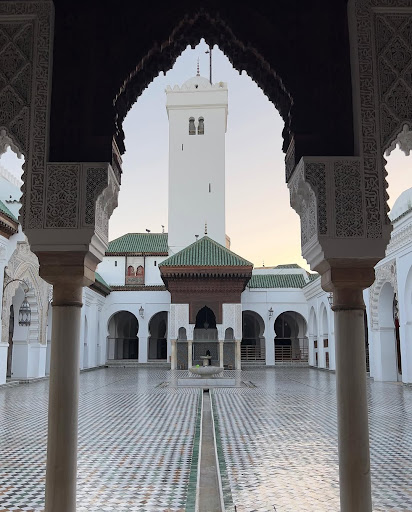
Mosque and University of al-Qarawiyyin is located in Fez, Morocco, The University of Al Quaraouiyine, also known as Al-Karaouine or Al Quaraouiyine, is a renowned institution of higher education. Established as a mosque by Fatima al Fihri between 857–859, it later became a prominent spiritual and educational hub. In 1963, it was integrated into Morocco's modern state university system and officially renamed "University of Al Quaraouiyine" in 1965. The mosque building is a historically significant complex of Moroccan and Islamic architecture. Al Quaraouiyine has been recognized by UNESCO and the Guinness World Records as the oldest university or oldest continually operating institution of higher learning worldwide. The University of al-Qarawiyyin offers an education that is focused on Islamic religious and legal sciences, with a significant emphasis on Classical Arabic. Teaching is delivered using traditional methods. The university draws students from all regions of Morocco. Women were first admitted to the institution in the 1940s. Al-Qarawiyyin University's educational program is centered on Islamic religious and legal sciences. Most students at al-Qarawiyyin fall within the age range of 13 to 30 years old. The University's present form is the outcome of a prolonged historical evolution over the course of more than 1,000 years. Successive dynasties expanded the mosque until it became the largest in Africa, with a capacity of 22,000 worshipers. The present-day mosque covers an extensive area of about half a hectare. Broadly speaking, it consists of a large hypostyle interior space for prayers (the prayer hall), a courtyard with fountains (the sahn), a minaret at the courtyard's western end, and a number of annexes around the mosque itself. Unfortunately the prayer hall was not open for visitors during our visit. The surroundings are and the architectural structure and design are stunningly exotic beautiful. A revelation for all architecture aficionados who appreciate exploring diverse cultural and architectural marvels worldwide.
See more posts
See more posts
hotel
Find your stay

Pet-friendly Hotels in Fez

Find a cozy hotel nearby and make it a full experience.

💙The Great Mosque is both fascinating and just happens to be one of the most instagrammable places in Paris! 💚This is the biggest mosque in Paris and the third-largest in Europe. Its outdoor garden, mosaics and characteristic arches might make you feel you've walked into a distant land for a moment. 🇲🇦In fact, it was inspired by the al-Qarawiyyin mosque in Fez, Morocco, one of that country's most important and one of the oldest in the world. The links with Morocco are strong: Sultan Yusef of Morocco attended the inauguration in 1926 in person. 🇹🇳In addition, its 33meter minaret found its own inspiration in the Al-Zaytuna Mosque, in the heart of Tunis, in Tunisia. For the best view of the minaret, head to the mosque's gardens. The garden is surrounded by traditional arches and has beautiful tile work and mosaics. 💙Not only is the design inspired by Maghreb architecture, but specialized craftsmen were brought in from North Africa to build it in a way that would respect its original inspiration. Constructed between 1922 and 1926, the Mosquée de Paris is located in the Latin Quarter, a stone’s throw from Paris’s natural history museum. The building is dominated by a 33-metre-high minaret. It has a patio surrounded by sculpted arcades, as in the Alhambra in Granada. The prayer room is a must-see for its intricate decoration. 💚The mosque is located south of the Seine river, not far from the Pantheon and Jardins du Luxembourg. 📍2bis Place du Puits de l'Ermite, in the 5th arrondissement ————————————————- #grandmosqueparis #secretparis #parishistory #paristour
tourguidemitra

tourguidemitra

hotel
Find your stay

Affordable Hotels in Fez

Find a cozy hotel nearby and make it a full experience.

Get the Appoverlay
Get the AppOne tap to find yournext favorite spots!
The University of Al Quaraouiyine in Fez is widely regarded as one of the oldest continuously operating educational institutions in human history. According to both UNESCO and the Guinness Book of World Records, it is recognized as the oldest existing and continually operating degree-granting university in the world. It was founded in 859 AD (245 AH) by a devout woman named Fatima Al-Fihri, who dedicated her entire inheritance to building a grand mosque in the city of Fez—then a thriving center of culture and knowledge. Over time, this mosque evolved into a prestigious institution of higher learning, attracting students from across the Islamic world and even from Europe, thanks to its diverse academic curriculum, which included not only Islamic studies but also medicine, mathematics, astronomy, philosophy, music, and logic. Al Quaraouiyine thus became a global intellectual hub long before the founding of the great European universities. Throughout its illustrious history, the University has hosted some of the most prominent thinkers and scholars, such as Ibn Khaldun, Averroes (Ibn Rushd), Al-Idrisi, and Maimonides, and even Pope Sylvester II, who is believed to have studied there and introduced Arabic scientific knowledge to Europe. Al Quaraouiyine was also the first institution known to grant a structured academic degree known as an “Ijazah,” which required rigorous attendance, scholarly engagement, and formal assessment—precursors to the modern Bachelor’s, Master’s, and Doctorate degrees. Architecturally, the University is housed in one of the most magnificent examples of Islamic-Andalusian design. Its vast prayer hall, ornate stucco work, calligraphy, and intricate geometric patterns reflect centuries of cultural and artistic sophistication. The University is also home to one of the oldest libraries in the Islamic world, the Al Quaraouiyine Library, which contains thousands of rare manuscripts, including hand-copied works by Ibn Sina, Averroes, and classical Qur’anic exegeses. The library was recently restored to preserve its priceless intellectual treasures. Today, despite the transformation of Morocco’s broader educational system, Al Quaraouiyine continues to operate as a center for traditional Islamic scholarship. It is currently overseen by the Ministry of Endowments and Islamic Affairs, and its current president is Dr. Amal Jalal. The university maintains its unique role in training scholars in Islamic sciences, jurisprudence, Qur’anic studies, and theology, while also embracing modern methodologies and academic governance. Thus, Al Quaraouiyine is not merely an educational institution—it is a symbol of Morocco’s cultural, spiritual, and intellectual heritage. For centuries, it has stood as a beacon of knowledge, rational inquiry, and intercultural dialogue, affirming Morocco’s position as a crossroads of civilizations and ideas. Reflecting on the legacy of Al Quaraouiyine today is more than an academic exercise—it is a call to revitalize traditional knowledge systems and to reaffirm the value of intellectual integrity, critical thinking, and cultural rootedness in the face of modern challenges. In this sense, the University of Al Quaraouiyine is not a relic of the past, but a living testament to the enduring power of knowledge and faith. It reminds us that the intellectual glory of Islamic civilization was—and can still be—founded on learning, tolerance, and openness. Reviving the spirit of this historic institution offers a strategic opportunity to rebuild a meaningful educational vision rooted in both authenticity and forward-looking insight.
yassine hadda

yassine hadda

hotel
Find your stay

The Coolest Hotels You Haven't Heard Of (Yet)

Find a cozy hotel nearby and make it a full experience.

hotel
Find your stay

Trending Stays Worth the Hype in Fez

Find a cozy hotel nearby and make it a full experience.

Mosque and University of al-Qarawiyyin is located in Fez, Morocco, The University of Al Quaraouiyine, also known as Al-Karaouine or Al Quaraouiyine, is a renowned institution of higher education. Established as a mosque by Fatima al Fihri between 857–859, it later became a prominent spiritual and educational hub. In 1963, it was integrated into Morocco's modern state university system and officially renamed "University of Al Quaraouiyine" in 1965. The mosque building is a historically significant complex of Moroccan and Islamic architecture. Al Quaraouiyine has been recognized by UNESCO and the Guinness World Records as the oldest university or oldest continually operating institution of higher learning worldwide. The University of al-Qarawiyyin offers an education that is focused on Islamic religious and legal sciences, with a significant emphasis on Classical Arabic. Teaching is delivered using traditional methods. The university draws students from all regions of Morocco. Women were first admitted to the institution in the 1940s. Al-Qarawiyyin University's educational program is centered on Islamic religious and legal sciences. Most students at al-Qarawiyyin fall within the age range of 13 to 30 years old. The University's present form is the outcome of a prolonged historical evolution over the course of more than 1,000 years. Successive dynasties expanded the mosque until it became the largest in Africa, with a capacity of 22,000 worshipers. The present-day mosque covers an extensive area of about half a hectare. Broadly speaking, it consists of a large hypostyle interior space for prayers (the prayer hall), a courtyard with fountains (the sahn), a minaret at the courtyard's western end, and a number of annexes around the mosque itself. Unfortunately the prayer hall was not open for visitors during our visit. The surroundings are and the architectural structure and design are stunningly exotic beautiful. A revelation for all architecture aficionados who appreciate exploring diverse cultural and architectural marvels worldwide.
C Khan

C Khan

See more posts
See more posts