HTML SitemapExplore
logo
Find Things to DoFind The Best Restaurants

Haveli Nau Nihal Singh — Attraction in Lahore City Tehsil

Name
Haveli Nau Nihal Singh
Description
The Haveli of Nau Nihal Singh, officially known as Government Victoria Girls' High School, is a haveli that houses a government school located in Lahore, Pakistan.
Nearby attractions
Chowk Jhanda
H8H7+X5M, Kucha Baili Ram Walled City of Lahore, Lahore, 54000, Pakistan
Faqeer Khana Museum
Hakiman Bazar, Kucha Faqirkhana Kucha Astana Sharif Walled City of Lahore, Lahore, 54000, Pakistan
Haveli Barood Khana
H8M7+WRQ, Walled City of Lahore, Lahore, Pakistan
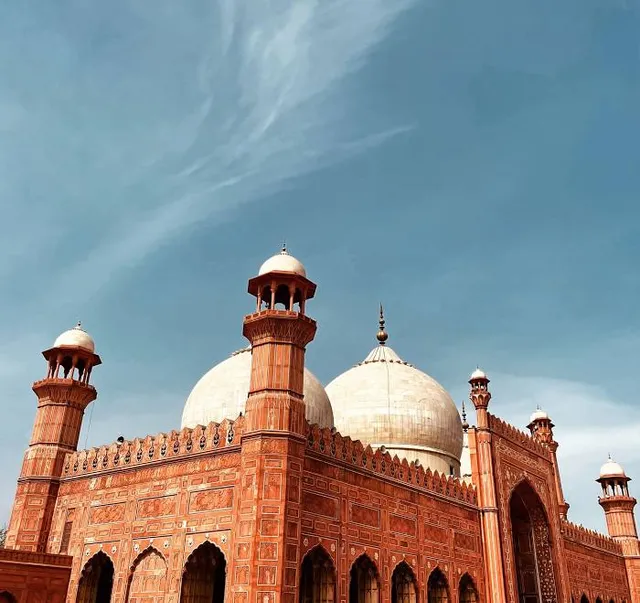
Badshahi Mosque
Fort Rd, Walled City of Lahore, Lahore, 54000, Pakistan
National Bara Market
H8H9+FV7, Shahalmi Bazaar, Mohalla Bela Nawab Sahib Walled City of Lahore, Lahore, 54000, Pakistan
Sunehri Masjid
Usman Center sunehri masjid, Dabbi Bazar, Kucha Jamadaran Walled City of Lahore, Lahore, 54000, Pakistan
Family Park
H8P4+4WP, outside, Taxali Gate Rd, Kucha Faqirkhana Walled City of Lahore, Lahore, 54000, Pakistan
Hazuri Bagh
Badshahi Mosque, Fort Rd, Walled City of Lahore, Lahore, 54000, Pakistan
Lahore Fort Park
H8P7+WQH, Circular Rd, Walled City of Lahore, Lahore, Pakistan
Nearby restaurants
Saleem Butt Chanay Wala
Ganpat Rd, Anarkali Bazaar Lahore, 54000, Pakistan
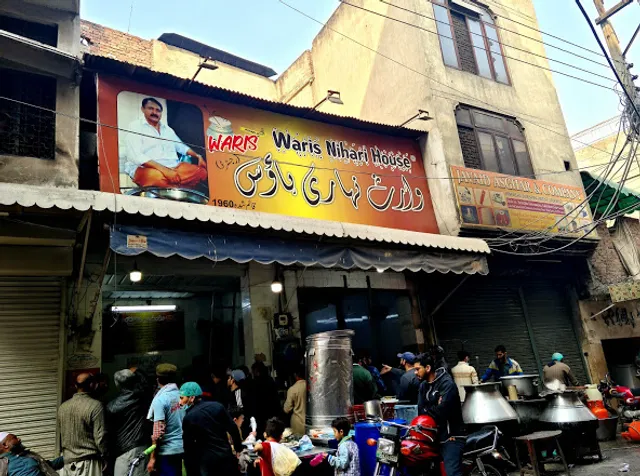
Waris Nihari
7 Abkari Rd, Urdu Bazar Lahore, 54000, Pakistan
Tara Bong Paye Gumti Bazar
H8J8+W34, Gumti Bazar, Walled City of Lahore, Lahore, Pakistan
Arif Chatkhara House
Taxali Gate Rd, Shahi Mohallah Walled City of Lahore, Lahore, 54000, Pakistan
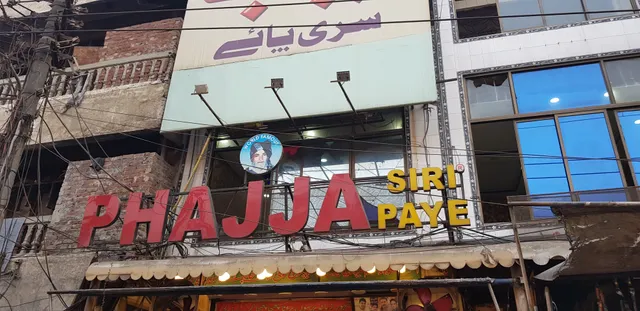
Fazal Din Phajja Siri Paye - Since 1953
taj Mahal saweet, Kali Beri Bazar, Shahi Mohallah Walled City of Lahore, Lahore, Pakistan
Cooco's Den
Roshnai Gate, 2168/A Food St Fort Rd, Shahi Mohallah Walled City of Lahore, Lahore, Pakistan
Andaaz Restaurant
2189 A Fort Rd, Shahi Mohallah Walled City of Lahore, Lahore, Pakistan
Junoon Heritage Restaurant
H8P6+J6V Badshahi Mosque, Fort Rd, Shahi Mohallah Walled City of Lahore, Lahore, 54000, Pakistan
Chand Shahab Sweets
H8P5+9PW, Bazar Sheikhupurian, Shahi Mohallah Walled City of Lahore, Lahore, 54000, Pakistan
Fort Vista (Eatery & Lodges)
Shahi Mohallah Walled City of Lahore, Lahore, 54110, Pakistan
Nearby hotels
Mohni road boys hostel
H8M3+22G, Mohni Rd, Data Gunj Buksh Town, Lahore, Pakistan
Related posts
Keywords
Haveli Nau Nihal Singh tourism.Haveli Nau Nihal Singh hotels.Haveli Nau Nihal Singh bed and breakfast. flights to Haveli Nau Nihal Singh.Haveli Nau Nihal Singh attractions.Haveli Nau Nihal Singh restaurants.Haveli Nau Nihal Singh travel.Haveli Nau Nihal Singh travel guide.Haveli Nau Nihal Singh travel blog.Haveli Nau Nihal Singh pictures.Haveli Nau Nihal Singh photos.Haveli Nau Nihal Singh travel tips.Haveli Nau Nihal Singh maps.Haveli Nau Nihal Singh things to do.
Haveli Nau Nihal Singh things to do, attractions, restaurants, events info and trip planning
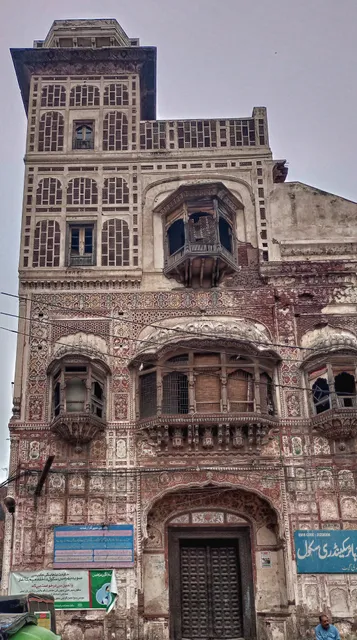
Haveli Nau Nihal Singh
PakistanPunjabLahore City TehsilHaveli Nau Nihal Singh

Basic Info

Haveli Nau Nihal Singh

گلی بازار, Mohalla Sathan Walled City of Lahore, Lahore, 54000, Pakistan
4.5(174)
Open 24 hours
Save
spot

Ratings & Description

Info

The Haveli of Nau Nihal Singh, officially known as Government Victoria Girls' High School, is a haveli that houses a government school located in Lahore, Pakistan.

Cultural
Scenic
Family friendly
Accessibility
attractions: Chowk Jhanda, Faqeer Khana Museum, Haveli Barood Khana, Badshahi Mosque, National Bara Market, Sunehri Masjid, Family Park, Hazuri Bagh, Lahore Fort Park, restaurants: Saleem Butt Chanay Wala, Waris Nihari, Tara Bong Paye Gumti Bazar, Arif Chatkhara House, Fazal Din Phajja Siri Paye - Since 1953, Cooco's Den, Andaaz Restaurant, Junoon Heritage Restaurant, Chand Shahab Sweets, Fort Vista (Eatery & Lodges)
logoLearn more insights from Wanderboat AI.

Plan your stay

hotel
Pet-friendly Hotels in Lahore City Tehsil
Find a cozy hotel nearby and make it a full experience.

hotel
Affordable Hotels in Lahore City Tehsil
Find a cozy hotel nearby and make it a full experience.

hotel
The Coolest Hotels You Haven't Heard Of (Yet)
Find a cozy hotel nearby and make it a full experience.

hotel
Trending Stays Worth the Hype in Lahore City Tehsil
Find a cozy hotel nearby and make it a full experience.

Reviews

Nearby attractions of Haveli Nau Nihal Singh

Chowk Jhanda

Faqeer Khana Museum

Haveli Barood Khana

Badshahi Mosque

National Bara Market

Sunehri Masjid

Family Park

Hazuri Bagh

Lahore Fort Park

Chowk Jhanda

Chowk Jhanda

3.9

(18)

Open 24 hours
Click for details
Faqeer Khana Museum

Faqeer Khana Museum

4.4

(447)

Open 24 hours
Click for details
Haveli Barood Khana

Haveli Barood Khana

4.6

(394)

Open 24 hours
Click for details
Badshahi Mosque

Badshahi Mosque

4.8

(10.9K)

Open 24 hours
Click for details

Nearby restaurants of Haveli Nau Nihal Singh

Saleem Butt Chanay Wala

Waris Nihari

Tara Bong Paye Gumti Bazar

Arif Chatkhara House

Fazal Din Phajja Siri Paye - Since 1953

Cooco's Den

Andaaz Restaurant

Junoon Heritage Restaurant

Chand Shahab Sweets

Fort Vista (Eatery & Lodges)

Saleem Butt Chanay Wala

Saleem Butt Chanay Wala

4.1

(600)

Click for details
Waris Nihari

Waris Nihari

4.3

(3.1K)

Click for details
Tara Bong Paye Gumti Bazar

Tara Bong Paye Gumti Bazar

4.1

(259)

Click for details
Arif Chatkhara House

Arif Chatkhara House

4.1

(3.1K)

Click for details
Get the Appoverlay
Get the AppOne tap to find yournext favorite spots!
Wanderboat LogoWanderboat

Your everyday Al companion for getaway ideas

CompanyAbout Us
InformationAI Trip PlannerSitemap
SocialXInstagramTiktokLinkedin
LegalTerms of ServicePrivacy Policy

Get the app

© 2025 Wanderboat. All rights reserved.
logo

Reviews of Haveli Nau Nihal Singh

4.5
(174)
avatar
5.0
5y

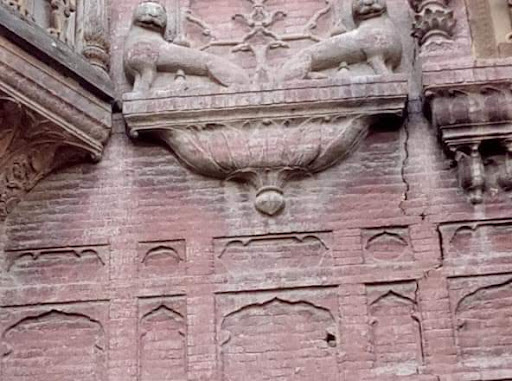
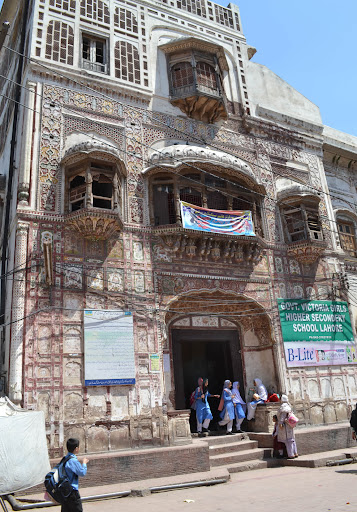
Prince Nau Nehal Singh was the Sikh ruler of Punjab. He was the son of Maharaja Kharak Singh (the eldest son and heir of Maharaja Ranjeet Singh) and Maharani Chand Kaur. After the demise of Maharaja Ranjeet Singh, Kharak Singh became the king but was unable to keep control of the various factions within the kingdom due to the conspiracies and intrigues by Raja Dhiyan Singh. Being convinced by the intriguers Prince Nau Nehal took control of the state himself during the life of his father. The Haveli of Kharak Singh is still seen inside Lahore Fort, which is being used as an archive room by the Archaeology department of Punjab whereas the haveli of Prince Nau Nehal also exists till now and let us move to it now! The Prince built a mansion (Haveli) inside Bhati Gate as the location was close to the Royal Fort. The Haveli was known as Haveli Nau Nehal Singh and still stands as a mark of majesty and splendor of the bygone days. If you ever happen to go inside this haveli you would be welcome by the ringing bells, a colorful vista of fresco work, students in uniform running around, sitting on stairs and reading out loud their lessons, charts on the walls along with black boards chalked with lessons…you must be thinking how all this got into the haveli! Well, at present the haveli of Prince Nau Nehal Singh is serving as Victoria School for Girls. This extravagant Haveli was the private home of the Prince Nau Nehal Singh. The structure is well intact maybe because it remained in use over the passage of time and went through minor repairs. It is far better in condition than the rest of the Havelis in Old Lahore; especially many have been converted into commercial use. You must be thinking how it turned into a school, well, the Haveli was taken over by the British Government when Punjab was annexed in 1849 and converted into the first public school for girls, The Victoria School. Since then the haveli houses this school and the local children study there. The building is so fascinating that it has been used in many films and dramas. Let me take you to the location of this Haveli. It is on the junction of Bhatti and Mori Gates and can be accessed through both gates. A zigzag of narrow streets take you to Bhaiyon ka Medaan (an open square) and there you can see the massive mansion with a stunning façade but slightly damaged with the boards and ugly hanging wires. It is also said that the Bhaiyon ka Medaan was once a garden of this Haveli and the buildings encircling the place were a part of the huge mansion. With the passage of time, division of land and reconstructions only half of the Haveli is left behind today. The buildings we see opposite to the haveli were once a part of this haveli which is full of glamour and decorative patterns. If you are looking for noteworthy and splendid examples of Sikh architecture in Lahore, you would definitely not ignore this Haveli of Nau Nehal Singh. The haveli has more than forty rooms including halls and chambers with most elements of its original ornamentation preserved on the two main elevations and the interior courtyard facades. The haveli like many other havelis of the same era has a basement which is considered haunted and closed for everyone. Rectangular in plan, the Haveli is a fairly large building. Its entrance is on the west side and the façade has been divided into two clear sections, one housing the entrance gate and the other is simple. There might have been some decoration on other area but historians claim that it has been destroyed by the havoc of those times. The entrance façade is decorated with colorful floral designs in fresco along with carved jharokas which have animal and human figures on the pedestal of each. The pedestal of two side jharokas are brilliantly decorated with flower petal deigns. These pedestals are a unique feature of this Haveli and add to the beauty of...

   Read more
avatar
5.0
4y

Haveli Nau Nihal Singh of Lahore

The mansion which deprived the Sikh royal family of its entire true lineage

(Written by Awais Hameed)

Haveli Nau Nihal Singh is the most significant royal building of Sikh era in Lahore. It is situated inside old Lahore almost in the middle of Bhati and Mori gates. Maharaja Ranjit Singh built this mansion when his eldest son Kharak Singh, who succeeded Maharaja Ranjit Singh, was blessed with a son in 1821. The baby boy was given the name of Nau Nihal Singh and the mansion was befittingly named after him as it was built to commemorate his birth. It is a rectengular shaped 4 storey building with one basement. There is an open yard in the middle and 40 rooms surround it on different floors. With its westwards face, the structures' entrance is a master piece of Kangra style. The large ‘jharoka balcony’, with magnificent brickwork served as a ‘darshan jharoka’. Images of exotic animals and reptiles on its ceiling and walls reflect the multicultural influences at play in the 1820s. The building which came into being at a moment of happiness proved to be the place of their sad end. Prominent journalist of Lahore's history Majid Shiekh concluded that this mansion deprived the Sikh royal family of its entire true lineage. Following 4 of Maharaja Ranjit Singh's decedents died of unnatural causes inside this establishment:

Kharak Singh He was the eldest son of Maharaja Ranjit Singh and became Maharaja of the Sikh kingdom after Ranjit Singh's death. He was confided to Haveli Nau Nihal Singh for the treatment of deadly ailment. Kharak Singh passed away on 5th November 1840 at the age of 39. Dr. Martin Honingberger, one of the family doctors of the Sikh royals, wrote later on that 'he was constantly drugged and fed poisoned food.'

Nau Nihal Singh Nau Nihal Singh was only 19 years old when his father, Kharak Singh, died. He was the natural heir to the throne following the protocol of 'eldest son's eldest son.' When he was passing through Roshnai Gate, after his father's funeral, it fell on him. Raja Dhian immediately shifted him to the fort and locked it. He was found dead when his mother, Maharani Chand Kaur, was allowed to see him. Dr. Martin revealed that his head was delibrately smashed later on.

Great-grand Son of Ranjit Singh After losing husband and son on successive days, Maharani Chand Kaur took reign of the empire. She did so by declaring herself custodian of Nau Nihal Singh's soon to be born child. Kharak Singh's step brother tried to claim the throne and started a bloody battle which took life of about 5000 Khalsa army. Soon, Nau Nihal Singh's wife, Maharani Sahib Kaur, gave birth to a dead boy. Maharani Chand Kaur withdrew her claim to throne. It is said that the boy was murdered in the womb by the wet nurse.

Maharani Chand Kaur She was locked inside Haveli Nau Nihal Singh. On June 11, 1842, she was murdered by her servants in a balcony of the same haveli.

Prime Minister Raja Dhian Singh Dogra is believed to had been involved in all these deaths. He was murdered by Sandhawalia brothers, who had also killed Maharaja Sher Singh. The gifting of Kashmir valley to Dhian Singh Dogra's family by the British confirms Dogra's treacherous role in bringing about the end to Sikh rule in Punjab. British snatched Punjab from Sikh rulers in 1849 after the second Anglo-Sikh war at Gujrat. They turned Haveli Nau Nihal Singh into first public school for girls and named it after queen Victoria. It ia running as Government Victoria Girls Higher Secondary...

   Read more
avatar
3.0
4y

The Haveli of Nau Nihal Singh is a haveli mansion located in Lahore, Pakistan. Dating from the Sikh era of the mid-19th century, the haveli is considered to be one of the finest examples of Sikh architecture in Lahore  and is the only Sikh-era haveli that preserves its original ornamentation and architecture. The haveli is located within the Walled City of Lahore, and is located near the Mori Gate in the southern half of the walled city. The haveli is also near the Bhatti Gate and Lohari Gate. The haveli was built around 1830 or 1840 for Nau Nihal Singh,[3] by his grandfather and founder of the Sikh Empire, Maharaja Ranjit Singh. The mansion was intended to be a personal residence for Nau Nihal Singh. The haveli has been used, since the British colonial era, to house the Victoria Girls' High School. The base of the haveli is rectangular in shape, with its entrance on the western side. The façade is divided into two sections, with the portion housing the haveli's entryway profusely decorated with frescoes painted in the vivid Kangra style, and the other pierced with numerous windows.

A large jharoka balcony with sculpted brickwork and a small bulbous half dome is above the haveli's entry,  which acted as a Jharoka-e-Darshan from which the Maharaja could view his subjects gathered below.  The jharoka features 5 small arches, and is embellished imagery of winged humans, parrots, and frontally-viewed fish that are carved in a style which displays East Asian influences.  The winged humans resemble both Islamic descriptions of angels, but also reflect influences of the mythical Hindu garuda. The base of the dome is decorated with a serpent-like figure which echoes the Hindu snake god Naga. The Jharoka-e-Darshan is flanked by two smaller jharokas. Each of the haveli's jharokas is decorated with a floral pedestal.

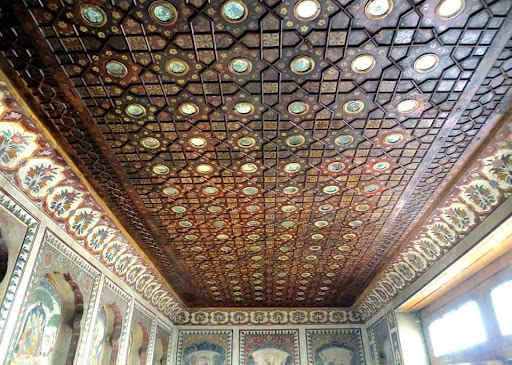
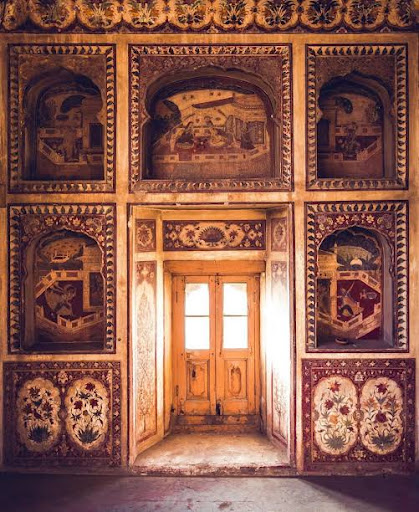
The building has four stories, and a basement level. The fourth level is made of a small room known as Rang Mahal ("Colour palace"), or alternatively as Sheesh Mahal ("Mirror palace"),[6] with large screens that form a space in which to catch breezes.  The remaining floors were built with high ceilings, to exaggerate the height of the structure in order to give the appearance of a citadel, rather than a private residence. The ceilings of the haveli are made of decorated wood inlaid with glass and mirror, as well as sun-motifs in the central portion of the roof. Walls within the haveli are decorated with false arches that each contain a small 18 inch by 18 inch painting, with blues, golds, reds, and oranges dominating the haveli's colour palette. The interior is also decorated with carved wood, brickwork, and floral frescoes.

The haveli features a large 2 storied inner courtyard which was also profusely decorated - the bottom level of which has since been whitewashed. In front of the haveli is a small plaza known as Maydan ka Bhaiyan that was once used as the...

   Read more
Page 1 of 7
Previous
Next

Posts

MickpreetMickpreet
Prince Nau Nehal Singh was the Sikh ruler of Punjab. He was the son of Maharaja Kharak Singh (the eldest son and heir of Maharaja Ranjeet Singh) and Maharani Chand Kaur. After the demise of Maharaja Ranjeet Singh, Kharak Singh became the king but was unable to keep control of the various factions within the kingdom due to the conspiracies and intrigues by Raja Dhiyan Singh. Being convinced by the intriguers Prince Nau Nehal took control of the state himself during the life of his father. The Haveli of Kharak Singh is still seen inside Lahore Fort, which is being used as an archive room by the Archaeology department of Punjab whereas the haveli of Prince Nau Nehal also exists till now and let us move to it now! The Prince built a mansion (Haveli) inside Bhati Gate as the location was close to the Royal Fort. The Haveli was known as Haveli Nau Nehal Singh and still stands as a mark of majesty and splendor of the bygone days. If you ever happen to go inside this haveli you would be welcome by the ringing bells, a colorful vista of fresco work, students in uniform running around, sitting on stairs and reading out loud their lessons, charts on the walls along with black boards chalked with lessons…you must be thinking how all this got into the haveli! Well, at present the haveli of Prince Nau Nehal Singh is serving as Victoria School for Girls. This extravagant Haveli was the private home of the Prince Nau Nehal Singh. The structure is well intact maybe because it remained in use over the passage of time and went through minor repairs. It is far better in condition than the rest of the Havelis in Old Lahore; especially many have been converted into commercial use. You must be thinking how it turned into a school, well, the Haveli was taken over by the British Government when Punjab was annexed in 1849 and converted into the first public school for girls, The Victoria School. Since then the haveli houses this school and the local children study there. The building is so fascinating that it has been used in many films and dramas. Let me take you to the location of this Haveli. It is on the junction of Bhatti and Mori Gates and can be accessed through both gates. A zigzag of narrow streets take you to Bhaiyon ka Medaan (an open square) and there you can see the massive mansion with a stunning façade but slightly damaged with the boards and ugly hanging wires. It is also said that the Bhaiyon ka Medaan was once a garden of this Haveli and the buildings encircling the place were a part of the huge mansion. With the passage of time, division of land and reconstructions only half of the Haveli is left behind today. The buildings we see opposite to the haveli were once a part of this haveli which is full of glamour and decorative patterns. If you are looking for noteworthy and splendid examples of Sikh architecture in Lahore, you would definitely not ignore this Haveli of Nau Nehal Singh. The haveli has more than forty rooms including halls and chambers with most elements of its original ornamentation preserved on the two main elevations and the interior courtyard facades. The haveli like many other havelis of the same era has a basement which is considered haunted and closed for everyone. Rectangular in plan, the Haveli is a fairly large building. Its entrance is on the west side and the façade has been divided into two clear sections, one housing the entrance gate and the other is simple. There might have been some decoration on other area but historians claim that it has been destroyed by the havoc of those times. The entrance façade is decorated with colorful floral designs in fresco along with carved jharokas which have animal and human figures on the pedestal of each. The pedestal of two side jharokas are brilliantly decorated with flower petal deigns. These pedestals are a unique feature of this Haveli and add to the beauty of the structure.
mian aftab alammian aftab alam
Haveli Nau Nihal Singh of Lahore The mansion which deprived the Sikh royal family of its entire true lineage (Written by Awais Hameed) Haveli Nau Nihal Singh is the most significant royal building of Sikh era in Lahore. It is situated inside old Lahore almost in the middle of Bhati and Mori gates. Maharaja Ranjit Singh built this mansion when his eldest son Kharak Singh, who succeeded Maharaja Ranjit Singh, was blessed with a son in 1821. The baby boy was given the name of Nau Nihal Singh and the mansion was befittingly named after him as it was built to commemorate his birth. It is a rectengular shaped 4 storey building with one basement. There is an open yard in the middle and 40 rooms surround it on different floors. With its westwards face, the structures' entrance is a master piece of Kangra style. The large ‘jharoka balcony’, with magnificent brickwork served as a ‘darshan jharoka’. Images of exotic animals and reptiles on its ceiling and walls reflect the multicultural influences at play in the 1820s. The building which came into being at a moment of happiness proved to be the place of their sad end. Prominent journalist of Lahore's history Majid Shiekh concluded that this mansion deprived the Sikh royal family of its entire true lineage. Following 4 of Maharaja Ranjit Singh's decedents died of unnatural causes inside this establishment: Kharak Singh He was the eldest son of Maharaja Ranjit Singh and became Maharaja of the Sikh kingdom after Ranjit Singh's death. He was confided to Haveli Nau Nihal Singh for the treatment of deadly ailment. Kharak Singh passed away on 5th November 1840 at the age of 39. Dr. Martin Honingberger, one of the family doctors of the Sikh royals, wrote later on that 'he was constantly drugged and fed poisoned food.' Nau Nihal Singh Nau Nihal Singh was only 19 years old when his father, Kharak Singh, died. He was the natural heir to the throne following the protocol of 'eldest son's eldest son.' When he was passing through Roshnai Gate, after his father's funeral, it fell on him. Raja Dhian immediately shifted him to the fort and locked it. He was found dead when his mother, Maharani Chand Kaur, was allowed to see him. Dr. Martin revealed that his head was delibrately smashed later on. Great-grand Son of Ranjit Singh After losing husband and son on successive days, Maharani Chand Kaur took reign of the empire. She did so by declaring herself custodian of Nau Nihal Singh's soon to be born child. Kharak Singh's step brother tried to claim the throne and started a bloody battle which took life of about 5000 Khalsa army. Soon, Nau Nihal Singh's wife, Maharani Sahib Kaur, gave birth to a dead boy. Maharani Chand Kaur withdrew her claim to throne. It is said that the boy was murdered in the womb by the wet nurse. Maharani Chand Kaur She was locked inside Haveli Nau Nihal Singh. On June 11, 1842, she was murdered by her servants in a balcony of the same haveli. Prime Minister Raja Dhian Singh Dogra is believed to had been involved in all these deaths. He was murdered by Sandhawalia brothers, who had also killed Maharaja Sher Singh. The gifting of Kashmir valley to Dhian Singh Dogra's family by the British confirms Dogra's treacherous role in bringing about the end to Sikh rule in Punjab. British snatched Punjab from Sikh rulers in 1849 after the second Anglo-Sikh war at Gujrat. They turned Haveli Nau Nihal Singh into first public school for girls and named it after queen Victoria. It ia running as Government Victoria Girls Higher Secondary School these days.
Shahzad SaeedShahzad Saeed
The Haveli of Nau Nihal Singh, nestled within Lahore’s historic Walled City near Mori Gate, stands as a remarkable testament to Sikh-era architecture and the rich cultural tapestry of 19th-century Punjab. Constructed around 1836–37 by Maharaja Ranjit Singh for his grandson, Nau Nihal Singh, this haveli served as his private residence and remains one of the few surviving royal abodes from the Sikh period in Lahore.   Architecturally, the haveli is a harmonious blend of Sikh and Mughal styles, featuring a rectangular base with its western façade adorned in vivid Kangra-style frescoes. A prominent feature is the jharoka-e-darshan—a ceremonial balcony embellished with intricate brickwork and a small bulbous dome—used by the Maharaja to address his subjects. The façade also showcases carvings of winged figures, parrots, and fish, reflecting a fusion of Islamic and Hindu artistic influences.  Inside, the haveli boasts over 40 rooms, including the Rang Mahal (Color Palace) or Sheesh Mahal (Mirror Palace) on the fourth floor, characterized by decorated wooden ceilings inlaid with glass and mirror work. The walls are adorned with false arches housing miniature paintings, and the color palette predominantly features blues, golds, reds, and oranges. A two-storied inner courtyard adds to the architectural grandeur, though the lower level has been whitewashed over time. 
See more posts
See more posts
hotel
Find your stay

Pet-friendly Hotels in Lahore City Tehsil

Find a cozy hotel nearby and make it a full experience.

Prince Nau Nehal Singh was the Sikh ruler of Punjab. He was the son of Maharaja Kharak Singh (the eldest son and heir of Maharaja Ranjeet Singh) and Maharani Chand Kaur. After the demise of Maharaja Ranjeet Singh, Kharak Singh became the king but was unable to keep control of the various factions within the kingdom due to the conspiracies and intrigues by Raja Dhiyan Singh. Being convinced by the intriguers Prince Nau Nehal took control of the state himself during the life of his father. The Haveli of Kharak Singh is still seen inside Lahore Fort, which is being used as an archive room by the Archaeology department of Punjab whereas the haveli of Prince Nau Nehal also exists till now and let us move to it now! The Prince built a mansion (Haveli) inside Bhati Gate as the location was close to the Royal Fort. The Haveli was known as Haveli Nau Nehal Singh and still stands as a mark of majesty and splendor of the bygone days. If you ever happen to go inside this haveli you would be welcome by the ringing bells, a colorful vista of fresco work, students in uniform running around, sitting on stairs and reading out loud their lessons, charts on the walls along with black boards chalked with lessons…you must be thinking how all this got into the haveli! Well, at present the haveli of Prince Nau Nehal Singh is serving as Victoria School for Girls. This extravagant Haveli was the private home of the Prince Nau Nehal Singh. The structure is well intact maybe because it remained in use over the passage of time and went through minor repairs. It is far better in condition than the rest of the Havelis in Old Lahore; especially many have been converted into commercial use. You must be thinking how it turned into a school, well, the Haveli was taken over by the British Government when Punjab was annexed in 1849 and converted into the first public school for girls, The Victoria School. Since then the haveli houses this school and the local children study there. The building is so fascinating that it has been used in many films and dramas. Let me take you to the location of this Haveli. It is on the junction of Bhatti and Mori Gates and can be accessed through both gates. A zigzag of narrow streets take you to Bhaiyon ka Medaan (an open square) and there you can see the massive mansion with a stunning façade but slightly damaged with the boards and ugly hanging wires. It is also said that the Bhaiyon ka Medaan was once a garden of this Haveli and the buildings encircling the place were a part of the huge mansion. With the passage of time, division of land and reconstructions only half of the Haveli is left behind today. The buildings we see opposite to the haveli were once a part of this haveli which is full of glamour and decorative patterns. If you are looking for noteworthy and splendid examples of Sikh architecture in Lahore, you would definitely not ignore this Haveli of Nau Nehal Singh. The haveli has more than forty rooms including halls and chambers with most elements of its original ornamentation preserved on the two main elevations and the interior courtyard facades. The haveli like many other havelis of the same era has a basement which is considered haunted and closed for everyone. Rectangular in plan, the Haveli is a fairly large building. Its entrance is on the west side and the façade has been divided into two clear sections, one housing the entrance gate and the other is simple. There might have been some decoration on other area but historians claim that it has been destroyed by the havoc of those times. The entrance façade is decorated with colorful floral designs in fresco along with carved jharokas which have animal and human figures on the pedestal of each. The pedestal of two side jharokas are brilliantly decorated with flower petal deigns. These pedestals are a unique feature of this Haveli and add to the beauty of the structure.
Mickpreet

Mickpreet

hotel
Find your stay

Affordable Hotels in Lahore City Tehsil

Find a cozy hotel nearby and make it a full experience.

Get the Appoverlay
Get the AppOne tap to find yournext favorite spots!
Haveli Nau Nihal Singh of Lahore The mansion which deprived the Sikh royal family of its entire true lineage (Written by Awais Hameed) Haveli Nau Nihal Singh is the most significant royal building of Sikh era in Lahore. It is situated inside old Lahore almost in the middle of Bhati and Mori gates. Maharaja Ranjit Singh built this mansion when his eldest son Kharak Singh, who succeeded Maharaja Ranjit Singh, was blessed with a son in 1821. The baby boy was given the name of Nau Nihal Singh and the mansion was befittingly named after him as it was built to commemorate his birth. It is a rectengular shaped 4 storey building with one basement. There is an open yard in the middle and 40 rooms surround it on different floors. With its westwards face, the structures' entrance is a master piece of Kangra style. The large ‘jharoka balcony’, with magnificent brickwork served as a ‘darshan jharoka’. Images of exotic animals and reptiles on its ceiling and walls reflect the multicultural influences at play in the 1820s. The building which came into being at a moment of happiness proved to be the place of their sad end. Prominent journalist of Lahore's history Majid Shiekh concluded that this mansion deprived the Sikh royal family of its entire true lineage. Following 4 of Maharaja Ranjit Singh's decedents died of unnatural causes inside this establishment: Kharak Singh He was the eldest son of Maharaja Ranjit Singh and became Maharaja of the Sikh kingdom after Ranjit Singh's death. He was confided to Haveli Nau Nihal Singh for the treatment of deadly ailment. Kharak Singh passed away on 5th November 1840 at the age of 39. Dr. Martin Honingberger, one of the family doctors of the Sikh royals, wrote later on that 'he was constantly drugged and fed poisoned food.' Nau Nihal Singh Nau Nihal Singh was only 19 years old when his father, Kharak Singh, died. He was the natural heir to the throne following the protocol of 'eldest son's eldest son.' When he was passing through Roshnai Gate, after his father's funeral, it fell on him. Raja Dhian immediately shifted him to the fort and locked it. He was found dead when his mother, Maharani Chand Kaur, was allowed to see him. Dr. Martin revealed that his head was delibrately smashed later on. Great-grand Son of Ranjit Singh After losing husband and son on successive days, Maharani Chand Kaur took reign of the empire. She did so by declaring herself custodian of Nau Nihal Singh's soon to be born child. Kharak Singh's step brother tried to claim the throne and started a bloody battle which took life of about 5000 Khalsa army. Soon, Nau Nihal Singh's wife, Maharani Sahib Kaur, gave birth to a dead boy. Maharani Chand Kaur withdrew her claim to throne. It is said that the boy was murdered in the womb by the wet nurse. Maharani Chand Kaur She was locked inside Haveli Nau Nihal Singh. On June 11, 1842, she was murdered by her servants in a balcony of the same haveli. Prime Minister Raja Dhian Singh Dogra is believed to had been involved in all these deaths. He was murdered by Sandhawalia brothers, who had also killed Maharaja Sher Singh. The gifting of Kashmir valley to Dhian Singh Dogra's family by the British confirms Dogra's treacherous role in bringing about the end to Sikh rule in Punjab. British snatched Punjab from Sikh rulers in 1849 after the second Anglo-Sikh war at Gujrat. They turned Haveli Nau Nihal Singh into first public school for girls and named it after queen Victoria. It ia running as Government Victoria Girls Higher Secondary School these days.
mian aftab alam

mian aftab alam

hotel
Find your stay

The Coolest Hotels You Haven't Heard Of (Yet)

Find a cozy hotel nearby and make it a full experience.

hotel
Find your stay

Trending Stays Worth the Hype in Lahore City Tehsil

Find a cozy hotel nearby and make it a full experience.

The Haveli of Nau Nihal Singh, nestled within Lahore’s historic Walled City near Mori Gate, stands as a remarkable testament to Sikh-era architecture and the rich cultural tapestry of 19th-century Punjab. Constructed around 1836–37 by Maharaja Ranjit Singh for his grandson, Nau Nihal Singh, this haveli served as his private residence and remains one of the few surviving royal abodes from the Sikh period in Lahore.   Architecturally, the haveli is a harmonious blend of Sikh and Mughal styles, featuring a rectangular base with its western façade adorned in vivid Kangra-style frescoes. A prominent feature is the jharoka-e-darshan—a ceremonial balcony embellished with intricate brickwork and a small bulbous dome—used by the Maharaja to address his subjects. The façade also showcases carvings of winged figures, parrots, and fish, reflecting a fusion of Islamic and Hindu artistic influences.  Inside, the haveli boasts over 40 rooms, including the Rang Mahal (Color Palace) or Sheesh Mahal (Mirror Palace) on the fourth floor, characterized by decorated wooden ceilings inlaid with glass and mirror work. The walls are adorned with false arches housing miniature paintings, and the color palette predominantly features blues, golds, reds, and oranges. A two-storied inner courtyard adds to the architectural grandeur, though the lower level has been whitewashed over time. 
Shahzad Saeed

Shahzad Saeed

See more posts
See more posts