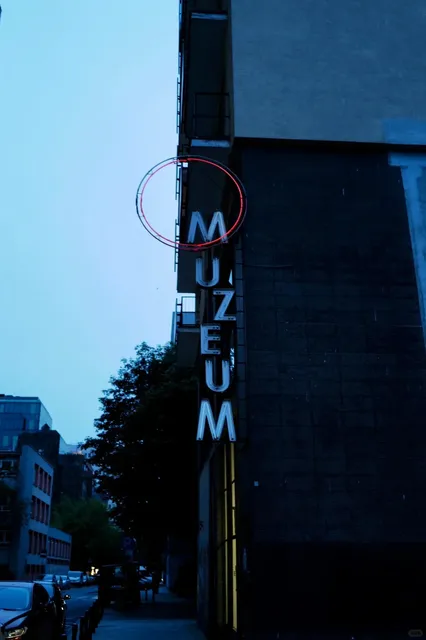
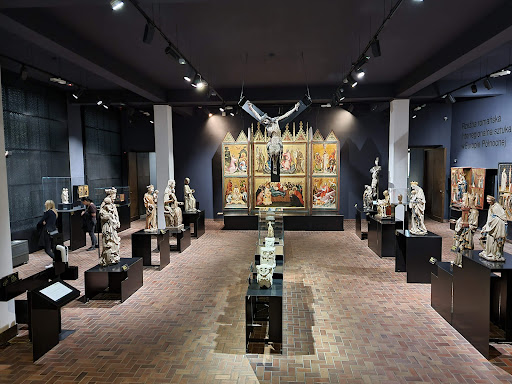
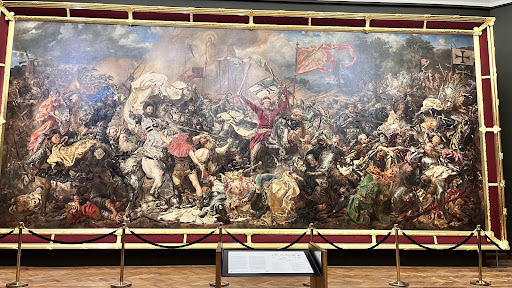
A big number of artefacts which I liked were purchased by the museum in 1946. I could only imagine: the city and the country are entirely devastated after the seven years of war, occupation, suppressed uprising, the museum's collection had been looted by nazis, most likely there was not enough housing for population, food maybe was still scarce and rationed, and yet the country allocated the money to purchase art! What kind of national importance must have been attached to the goal to renew a depleted national art collection!
The displayed part of the museum collection is vast, versatile, impressive, stately; the decorative arts exhibits are handpicked and thematically grouped to tell a story (of a medieval Europe: lives of the nobility, rich citizens, royals, plebeians; art collectors' cabinets and travelers hunting art keepsakes in Venice and painters pitching themselves to prospective art buyers; history of European porcelain; Polish art; artefacts of Nubian Orthodox art saved by Polish archeologists; religious art of a medieval Europe). I have spent there the whole day from 11 a.m. to 7.30 p.m. (the museum open till 8 p.m. on Thu) and have barely seen everything, including a wonderful temporary exhibition from the National Museum of Korea in Seoul.
The art history explanations in the Old Masters gallery offered a deep insight into the politico-cultural background of the medieval Northern European paintings (Flemish, Dutch). Given that Poland is known as a devoted Catholic country I didn't expect so much objective, balanced, brief and comprehensive introduction into the art of a Protestant republic. An intellectual pleasure overall for my little gray cells!
Practicalities: the heavy wooden central entrance doors open and close automatically. A manned cloakroom on the ground floor upon entrance. I handed in my little urban backpack because there was a picture "no backpacks". The takeaway floors plan of the museum is near the ticket desk (-1 level: restaurant; ground floor: Faras gallery; Medieval art gallery; first floor: Polish art, temporary exhibitions, Polish design, shop; second floor: Old Masters gallery). I bought 25 PLN ticket for temp+permanent exhibitions. Photos without a flash were allowed, no questions. For an audioguide (rent for 10 PLN) pay at the ticket desk (on the left from the entrance), then show your receipt and ask for an audioguide on the right side at the information desk.
To rent an audioguide or not: for the Old Masters gallery the audioguide was oftentimes inferior and far less comprehensive than the free to read printouts on 8-10 pages which are found in the walls' niches. Meanwhile in the Polish art, Medieval religious art and Faras art galleries the audioguide was the only source of the background info. There're audioguide records in English for children as well (for permanent exhibitions only). There were no English audioguide recordings for the temporary exhibition of Korean art from Seoul.
Airconditioning: in the Old Masters gallery it began to be felt a bit chilly after having spent there four hours. I visited the museum in December, was warmly dressed to walk a lot outdoors and still was happy at times to employ my winter scarf. But I'm generally very cold sensitive.
WCs on every floor, but some were closed.
Working hours: check the website for the current schedule, I have chosen Thursday as a day with extended operating hours (11 a.m. - 20.00) to spend in the museum the whole day. There were lots and lots of groups of high schoolers, noisy as all the teens, but otherwise are ok.
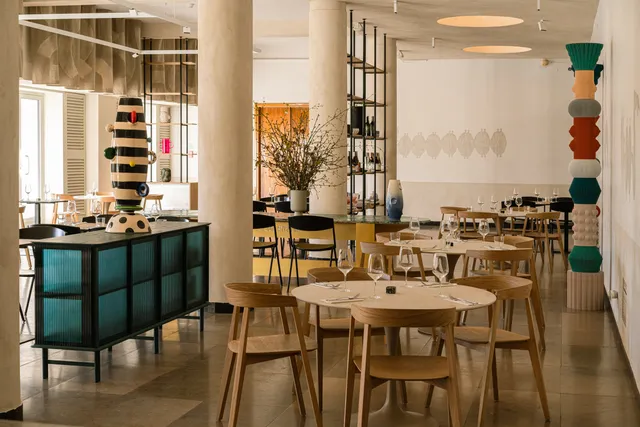
Cafe: according to the floors plan there's a museum cafe somewhere in the courtyard on the ground level, I wasn't looking for it because apparently I had to go outdoors (it's December!) to visit it. There must be a restaurant on -1 level, accessible from within the museum, without...
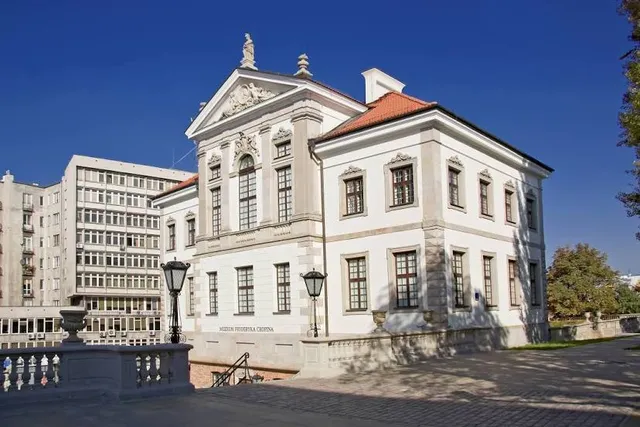
Read moreThe National Museum in Warsaw is a national museum in Warsaw, one of the largest museums in Poland and the largest in the capital. It comprises a rich collection of ancient art (Egyptian, Greek, Roman), counting about 11,000 pieces,an extensive gallery of Polish painting since the 16th century and a collection of foreign painting (Italian, French, Flemish, Dutch, German and Russian) including some paintings from Adolf Hitler's private collection, ceded to the Museum by the American authorities in post-war Germany. The museum is also home to numismatic collections, a gallery of applied arts and a department of oriental art, with the largest collection of Chinese art in Poland, comprising some 5,000 objects.
One of the impressive in the The Museum is the Faras Gallery with Europe's largest collection of Nubian Christian art and the Gallery of Medieval Art with artefacts from all regions historically associated with Poland, supplemented by selected works created in other regions of Europe.
Collections of the National Museum in Warsaw comprise about 830,000 exhibits of Polish and foreign art, from antiquity to the present, and include paintings, sculptures, drawings, engravings, photographs and coins as well as objects of applied art and design.
The Collection of Ancient and East Christian Art numbers some 24,000 exhibits, being the largest and most important of its kind in Poland. The collection of frescoes from the Christian cathedral in Faras (ancient Pachoras in today's Sudan) and a collection of painted Greek vases are among the most important.
It is quite rich in collections and really worth to see if...
Read moreI used to visit the museum very often in the past because I really like the collection of paintings there. Unfortunately, the service and rules have been getting more and more irritating recently, and the staff unfriendly and unhelpful. As an example, I was once asked to leave a bottle of mineral water that I had in my hand before going inside. This was very surprising because nobody checked the bags so you could take anything you like with yourself, I mean, things more dangerous to the paintings than just pure water. Anyway, the air is quite hot and dry in the rooms so after an hour or two, it's very convenient to have a water with you. I wrote a formal complaint, but they didn't answer.
Today, a new surprise. They didn't let me in with my small backpack. Surprised, I told them that it had never been a problem before, and the answer was 'such are the rules'. By the way, they didn't have any problem with two women passing just by with their big handbags. I asked the staff why I am not allowed in with my backpack and the women can take their bags in, and their answer was 'because you have it on your back'. So I answered 'ok, i can have it on my arm' and they said "the rules say you can't take the backpack in because we don't know what you have in". To my suggestion that they can check it and that they also don't know what the women have in their handbags, they answered 'such are the rules'. I must add that the cloakroom attendants gave impolite remarks when I, frustrated, was leaving the museum": you will come back anyway". This was very disrespectful. In short, the museum and its staff are not there for you...
Read more