HTML SitemapExplore
logo
Find Things to DoFind The Best Restaurants

The 1812 Constitution Monument — Attraction in Cádiz

Name
The 1812 Constitution Monument
Description
Nearby attractions
Baluarte y Murallas de San Carlos
C. Honduras, 6, 11004 Cádiz, Spain
Cadiz Museum
Pl. de Mina, s/n, 11004 Cádiz, Spain
Galería Benot
Av. Cuatro de Diciembre de 1977, 10, 11006 Cádiz, Spain
Oratorio de la Santa Cueva
C. Rosario, 10, 11004 Cádiz, Spain
Convent of St Francis
Pl. San Francisco, s/n, 11004 Cádiz, Spain
Catacumbas del Beaterio
C. Valverde, n3, 11004 Cádiz, Spain
Torre Tavira
C. Marqués del Real Tesoro, 10, 11001 Cádiz, Spain
Plaza de la Candelaria
Pl. Candelaria, 3, 11005 Cádiz, Spain
CASA LAMAR
C. Beato Diego de Cádiz, 1, 11004 Cádiz, Spain
Catedral de Cádiz
Pl. Catedral, s/n, 11005 Cádiz, Spain
Nearby restaurants
Restaurante Almanaque Casa de Comidas
Pl. de España, 5 duplicado, local, 11006 Cádiz, Spain
Bar Nuevo Labra SC
C. Antonio López, 15, 11004 Cádiz, Spain
Restaurante Balandro
Alameda Apodaca, 22, 11004 Cádiz, Spain
Restaurante El Artesano
Pl. de la Hispanidad, 1, 11004 Cádiz, Spain
Mesón Cumbres Mayores
C. Zorrilla, 4, 11003 Cádiz, Spain
Restaurante Código de Barra
C. San Francisco, 7, 11004 Cádiz, Spain
Pizzería Osare
C. Rosario, 27, 11004 Cádiz, Spain
Mesón Casa Antonio
C. San Francisco, 3, 11004 Cádiz, Spain
Restaurante Mirador Las Cortes
C. San Francisco, 9, 11004 Cádiz, Spain
Marisqueria Freiduria San Francisco
Pl. San Francisco, 3, 11004 Cádiz, Spain
Nearby hotels
Hotel Casa de las Cuatro Torres
Pl. Argüelles, 3, 11004 Cádiz, Spain
La Casa del Consul | Hotel Boutique
Pl. de España, 6, 11006 Cádiz, Spain
Senator Cádiz Hotel
C. Rubio y Díaz, 1, 11004 Cádiz, Spain
Hotel Argantonio
C. Argantonio, 3, 11004 Cádiz, Spain
Plazuela del Carbón Suites
Pl. de España, 15, 11006 Cádiz, Spain
Tandem Torres de Cádiz Suites
C. Manuel Rancés, 18, 11004 Cádiz, Spain
Hotel de Francia y París
Pl. San Francisco, 6, 11004 Cádiz, Spain
APODACA ROOMS
C. Antonio López, 10, 11004 Cádiz, Spain
Hostal San Francisco
C. San Francisco, 12, 11004 Cádiz, Spain
CASA DEL ANTICUARIO APARTMENTS
C. Antonio López, 7, 11004 Cádiz, Spain
Related posts
Keywords
The 1812 Constitution Monument tourism.The 1812 Constitution Monument hotels.The 1812 Constitution Monument bed and breakfast. flights to The 1812 Constitution Monument.The 1812 Constitution Monument attractions.The 1812 Constitution Monument restaurants.The 1812 Constitution Monument travel.The 1812 Constitution Monument travel guide.The 1812 Constitution Monument travel blog.The 1812 Constitution Monument pictures.The 1812 Constitution Monument photos.The 1812 Constitution Monument travel tips.The 1812 Constitution Monument maps.The 1812 Constitution Monument things to do.
The 1812 Constitution Monument things to do, attractions, restaurants, events info and trip planning
The 1812 Constitution Monument
SpainAndalusiaCádizThe 1812 Constitution Monument

Basic Info

The 1812 Constitution Monument

11006 Cádiz, Spain
4.6(2.2K)
Open 24 hours
Save
spot

Ratings & Description

Info

attractions: Baluarte y Murallas de San Carlos, Cadiz Museum, Galería Benot, Oratorio de la Santa Cueva, Convent of St Francis, Catacumbas del Beaterio, Torre Tavira, Plaza de la Candelaria, CASA LAMAR, Catedral de Cádiz, restaurants: Restaurante Almanaque Casa de Comidas, Bar Nuevo Labra SC, Restaurante Balandro, Restaurante El Artesano, Mesón Cumbres Mayores, Restaurante Código de Barra, Pizzería Osare, Mesón Casa Antonio, Restaurante Mirador Las Cortes, Marisqueria Freiduria San Francisco
logoLearn more insights from Wanderboat AI.
Website
institucional.cadiz.es

Plan your stay

hotel
Pet-friendly Hotels in Cádiz
Find a cozy hotel nearby and make it a full experience.

hotel
Affordable Hotels in Cádiz
Find a cozy hotel nearby and make it a full experience.

hotel
The Coolest Hotels You Haven't Heard Of (Yet)
Find a cozy hotel nearby and make it a full experience.

hotel
Trending Stays Worth the Hype in Cádiz
Find a cozy hotel nearby and make it a full experience.

Reviews

Nearby attractions of The 1812 Constitution Monument

Baluarte y Murallas de San Carlos

Cadiz Museum

Galería Benot

Oratorio de la Santa Cueva

Convent of St Francis

Catacumbas del Beaterio

Torre Tavira

Plaza de la Candelaria
CASA LAMAR

Catedral de Cádiz

Baluarte y Murallas de San Carlos

Baluarte y Murallas de San Carlos

4.6

(447)

Open 24 hours
Click for details
Cadiz Museum

Cadiz Museum

4.5

(1.8K)

Open until 9:00 PM
Click for details
Galería Benot

Galería Benot

4.5

(36)

Closed
Click for details
Oratorio de la Santa Cueva

Oratorio de la Santa Cueva

4.5

(336)

Open 24 hours
Click for details

Things to do nearby

Introduction to the History of Cádiz on foot
Fri, Dec 5 • 2:30 PM
11005, Cádiz, Andalusia, Spain
View details
Learn flamenco with a professional
Sat, Dec 6 • 1:30 PM
11401, Jerez de la Frontera, Andalusia, Spain
View details
Interactive Tour of the Nuevo Mirandilla Stadium
Mon, Dec 8 • 11:00 AM
11010, Cádiz, Andalusia, Spain
View details

Nearby restaurants of The 1812 Constitution Monument

Restaurante Almanaque Casa de Comidas

Bar Nuevo Labra SC

Restaurante Balandro

Restaurante El Artesano

Mesón Cumbres Mayores

Restaurante Código de Barra

Pizzería Osare

Mesón Casa Antonio

Restaurante Mirador Las Cortes

Marisqueria Freiduria San Francisco

Restaurante Almanaque Casa de Comidas

Restaurante Almanaque Casa de Comidas

4.4

(315)

Click for details
Bar Nuevo Labra SC

Bar Nuevo Labra SC

4.5

(291)

Click for details
Restaurante Balandro

Restaurante Balandro

4.4

(3.4K)

Click for details
Restaurante El Artesano

Restaurante El Artesano

4.4

(238)

$

Closed
Click for details
Get the Appoverlay
Get the AppOne tap to find yournext favorite spots!
Wanderboat LogoWanderboat

Your everyday Al companion for getaway ideas

CompanyAbout Us
InformationAI Trip PlannerSitemap
SocialXInstagramTiktokLinkedin
LegalTerms of ServicePrivacy Policy

Get the app

© 2025 Wanderboat. All rights reserved.
logo

Posts

Adam GAdam G
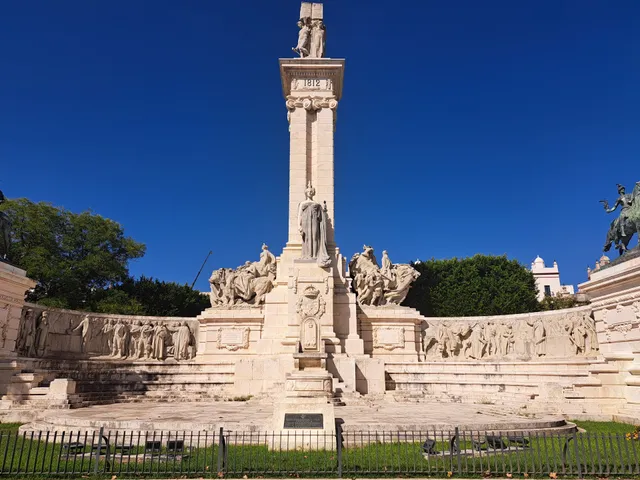
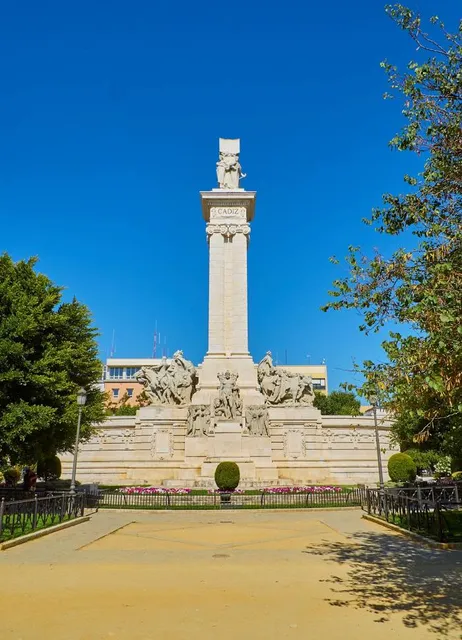
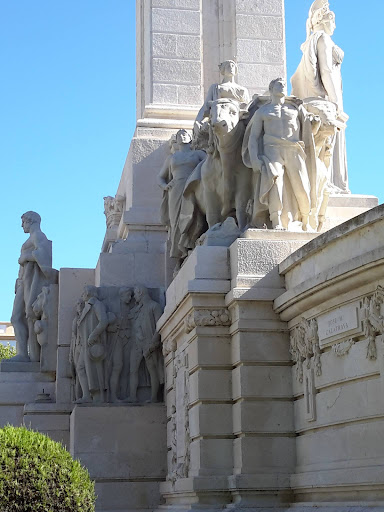
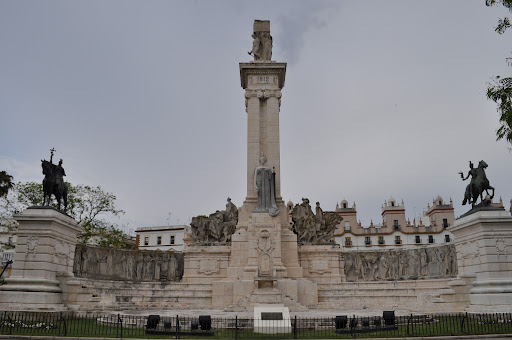
This impressive monument, located near the port in the Plaza of Spain which it dominates, commemorates the Political Constitution of the Spanish Monarchy also known as the Constitution of Cádiz (in Spanish Constitución Política de la Monarquía Española and Constitución de Cádiz, respectively) which was the first Spanish legislature, the Cortes of Cádiz, established on 19 March 1812, a time when much of Spain was ruled by the French. It was one of the earliest constitutions in world history and affirmed such principles as national sovereignty, freedom of the press, free enterprise, abolished feudalism, and established a constitutional monarchy with a parliamentary system. The work of architect Modesto López Otero and sculptor Aniceto Marinas García, the monument and was built in 1912, the first centenary of the proclamation of the Spanish Cortes of 1812. The monument marks the spot where the Constitution was read for the first time. The lower level of the monument is semi-circular shape facing the port and representing a Legislative Chamber with an empty presidential chair. There are bronze equestrian statues on either side that represent war and peace. A pilaster rises in the center, to symbolize, in allegorical terms, the principles expressed in the 1812 constitutional document. At the foot of the pilaster, there is a matron representing Spain, and, to either side, groups of sculptures representing agriculture and citizenship, along with some reliefs alluding to the Cádiz resistance during the 1808-1814 Spanish War of Independence (the Guerra de la Independencia Española).
Bogdan MarcelanBogdan Marcelan
The monument was commissioned by the Spanish government in 1912 to celebrate the centenary of the Constitution of 1812 and the Cortes of Cádiz. The monument was completed in 1929. The lower level of the monument represents the hall and the empty presidential chair. The upper level has various inscriptions covering the hall. On each side are bronze figures representing peace and war. In the center rises a pilaster that allegorically symbolizes the principles expressed in the Constitution of 1812. At the foot of this pilaster is a female figure representing Spain, and on either side are sculptural groups representing agriculture and citizenship.
JOSE LUIS MAQUEDAJOSE LUIS MAQUEDA
Espectacular monumento que hace muy poco (julio de 2024) ha sido declarado "lugar de memoria histórico" junto con otros siete más en Andalucía. Situado en la plaza de España esta orientado hacia el mar con objeto de que fuera visto al llegar al puerto pero con el tiempo ya no lo esta por la construcción de edificios que ocultan la mayor parte. la idea surge desde el mismo momento (1812) pero se va olvidando y en 1910 la comisión provincial de monumentos y la Real Academia Hispanoamericana exigen al gobierno central el cumplimiento de lo estipulado. Un año después se convoca el concurso con premio de un millón de pesetas que ganan el arquitecto Modesto López Otero (muy joven por cierto) y el escultor Aniceto Marinas García. Para la inspiración se supo años más tarde que ambos leyeron repetidas veces la constitución de 1812. La figura central, una escultura de mármol que preside el monumento y, sin duda, es el más llamativo de todos, es una matrona vestida con una larga túnica y, gracias a sus atributos, podemos afinar que es un símbolo de la Constitución que, además, se potencia con la ley escrita, que aparece en su mano derecha, y una espada en la mano izquierda. En el pecho de su túnica aparece el escudo de la nación española, su cabello está recogido y cubierto por un casco, que se remata con una figura parecida a la que corona la parte superior del monumento, símbolo del poder y de la justicia. Podemos afirmar la herencia grecorromana de esta escultura, ya que su aspecto se asemeja mucho al de la diosa Atenea o Minerva, considerada tradicionalmente como diosa de la Justicia y de la Sabiduría. A destacar el pilar de 32 metros de altura con cuatro pilastras jónicas adosadas. Se limpió en profundidad de cara a los fastos del bicentenario de 2012, aunque nunca se ejecutó una restauración en profundidad del conjunto, como han reclamado algunos especialistas
See more posts
See more posts
hotel
Find your stay

Pet-friendly Hotels in Cádiz

Find a cozy hotel nearby and make it a full experience.

This impressive monument, located near the port in the Plaza of Spain which it dominates, commemorates the Political Constitution of the Spanish Monarchy also known as the Constitution of Cádiz (in Spanish Constitución Política de la Monarquía Española and Constitución de Cádiz, respectively) which was the first Spanish legislature, the Cortes of Cádiz, established on 19 March 1812, a time when much of Spain was ruled by the French. It was one of the earliest constitutions in world history and affirmed such principles as national sovereignty, freedom of the press, free enterprise, abolished feudalism, and established a constitutional monarchy with a parliamentary system. The work of architect Modesto López Otero and sculptor Aniceto Marinas García, the monument and was built in 1912, the first centenary of the proclamation of the Spanish Cortes of 1812. The monument marks the spot where the Constitution was read for the first time. The lower level of the monument is semi-circular shape facing the port and representing a Legislative Chamber with an empty presidential chair. There are bronze equestrian statues on either side that represent war and peace. A pilaster rises in the center, to symbolize, in allegorical terms, the principles expressed in the 1812 constitutional document. At the foot of the pilaster, there is a matron representing Spain, and, to either side, groups of sculptures representing agriculture and citizenship, along with some reliefs alluding to the Cádiz resistance during the 1808-1814 Spanish War of Independence (the Guerra de la Independencia Española).
Adam G

Adam G

hotel
Find your stay

Affordable Hotels in Cádiz

Find a cozy hotel nearby and make it a full experience.

Get the Appoverlay
Get the AppOne tap to find yournext favorite spots!
The monument was commissioned by the Spanish government in 1912 to celebrate the centenary of the Constitution of 1812 and the Cortes of Cádiz. The monument was completed in 1929. The lower level of the monument represents the hall and the empty presidential chair. The upper level has various inscriptions covering the hall. On each side are bronze figures representing peace and war. In the center rises a pilaster that allegorically symbolizes the principles expressed in the Constitution of 1812. At the foot of this pilaster is a female figure representing Spain, and on either side are sculptural groups representing agriculture and citizenship.
Bogdan Marcelan

Bogdan Marcelan

hotel
Find your stay

The Coolest Hotels You Haven't Heard Of (Yet)

Find a cozy hotel nearby and make it a full experience.

hotel
Find your stay

Trending Stays Worth the Hype in Cádiz

Find a cozy hotel nearby and make it a full experience.

Espectacular monumento que hace muy poco (julio de 2024) ha sido declarado "lugar de memoria histórico" junto con otros siete más en Andalucía. Situado en la plaza de España esta orientado hacia el mar con objeto de que fuera visto al llegar al puerto pero con el tiempo ya no lo esta por la construcción de edificios que ocultan la mayor parte. la idea surge desde el mismo momento (1812) pero se va olvidando y en 1910 la comisión provincial de monumentos y la Real Academia Hispanoamericana exigen al gobierno central el cumplimiento de lo estipulado. Un año después se convoca el concurso con premio de un millón de pesetas que ganan el arquitecto Modesto López Otero (muy joven por cierto) y el escultor Aniceto Marinas García. Para la inspiración se supo años más tarde que ambos leyeron repetidas veces la constitución de 1812. La figura central, una escultura de mármol que preside el monumento y, sin duda, es el más llamativo de todos, es una matrona vestida con una larga túnica y, gracias a sus atributos, podemos afinar que es un símbolo de la Constitución que, además, se potencia con la ley escrita, que aparece en su mano derecha, y una espada en la mano izquierda. En el pecho de su túnica aparece el escudo de la nación española, su cabello está recogido y cubierto por un casco, que se remata con una figura parecida a la que corona la parte superior del monumento, símbolo del poder y de la justicia. Podemos afirmar la herencia grecorromana de esta escultura, ya que su aspecto se asemeja mucho al de la diosa Atenea o Minerva, considerada tradicionalmente como diosa de la Justicia y de la Sabiduría. A destacar el pilar de 32 metros de altura con cuatro pilastras jónicas adosadas. Se limpió en profundidad de cara a los fastos del bicentenario de 2012, aunque nunca se ejecutó una restauración en profundidad del conjunto, como han reclamado algunos especialistas
JOSE LUIS MAQUEDA

JOSE LUIS MAQUEDA

See more posts
See more posts

Reviews of The 1812 Constitution Monument

4.6
(2,168)
avatar
5.0
6y

This impressive monument, located near the port in the Plaza of Spain which it dominates, commemorates the Political Constitution of the Spanish Monarchy also known as the Constitution of Cádiz (in Spanish Constitución Política de la Monarquía Española and Constitución de Cádiz, respectively) which was the first Spanish legislature, the Cortes of Cádiz, established on 19 March 1812, a time when much of Spain was ruled by the French. It was one of the earliest constitutions in world history and affirmed such principles as national sovereignty, freedom of the press, free enterprise, abolished feudalism, and established a constitutional monarchy with a parliamentary system.

The work of architect Modesto López Otero and sculptor Aniceto Marinas García, the monument and was built in 1912, the first centenary of the proclamation of the Spanish Cortes of 1812. The monument marks the spot where the Constitution was read for the first time. The lower level of the monument is semi-circular shape facing the port and representing a Legislative Chamber with an empty presidential chair. There are bronze equestrian statues on either side that represent war and peace. A pilaster rises in the center, to symbolize, in allegorical terms, the principles expressed in the 1812 constitutional document. At the foot of the pilaster, there is a matron representing Spain, and, to either side, groups of sculptures representing agriculture and citizenship, along with some reliefs alluding to the Cádiz resistance during the 1808-1814 Spanish War of Independence (the Guerra de la...

   Read more
avatar
5.0
2y

The monument was commissioned by the Spanish government in 1912 to celebrate the centenary of the Constitution of 1812 and the Cortes of Cádiz. The monument was completed in 1929. The lower level of the monument represents the hall and the empty presidential chair. The upper level has various inscriptions covering the hall. On each side are bronze figures representing peace and war. In the center rises a pilaster that allegorically symbolizes the principles expressed in the Constitution of 1812. At the foot of this pilaster is a female figure representing Spain, and on either side are sculptural groups representing agriculture and...

   Read more
avatar
5.0
1y

Espectacular monumento que hace muy poco (julio de 2024) ha sido declarado "lugar de memoria histórico" junto con otros siete más en Andalucía. Situado en la plaza de España esta orientado hacia el mar con objeto de que fuera visto al llegar al puerto pero con el tiempo ya no lo esta por la construcción de edificios que ocultan la mayor parte. la idea surge desde el mismo momento (1812) pero se va olvidando y en 1910 la comisión provincial de monumentos y la Real Academia Hispanoamericana exigen al gobierno central el cumplimiento de lo estipulado. Un año después se convoca el concurso con premio de un millón de pesetas que ganan el arquitecto Modesto López Otero (muy joven por cierto) y el escultor Aniceto Marinas García. Para la inspiración se supo años más tarde que ambos leyeron repetidas veces la constitución de 1812.

La figura central, una escultura de mármol que preside el monumento y, sin duda, es el más llamativo de todos, es una matrona vestida con una larga túnica y, gracias a sus atributos, podemos afinar que es un símbolo de la Constitución que, además, se potencia con la ley escrita, que aparece en su mano derecha, y una espada en la mano izquierda. En el pecho de su túnica aparece el escudo de la nación española, su cabello está recogido y cubierto por un casco, que se remata con una figura parecida a la que corona la parte superior del monumento, símbolo del poder y de la justicia. Podemos afirmar la herencia grecorromana de esta escultura, ya que su aspecto se asemeja mucho al de la diosa Atenea o Minerva, considerada tradicionalmente como diosa de la Justicia y de la Sabiduría. A destacar el pilar de 32 metros de altura con cuatro pilastras jónicas adosadas. Se limpió en profundidad de cara a los fastos del bicentenario de 2012, aunque nunca se ejecutó una restauración en profundidad del conjunto, como han reclamado algunos...

   Read more
Page 1 of 7
Previous
Next