HTML SitemapExplore
logo
Find Things to DoFind The Best Restaurants

Segovia Aqueduct — Attraction in Segovia

Name
Segovia Aqueduct
Description
Nearby attractions
Loba Capitolina
Pl. Oriental, 24, 40003 Segovia, Spain
Postigo Del Consuelo
C. del Obispo Gandasegui, 2, 40001 Segovia, Spain
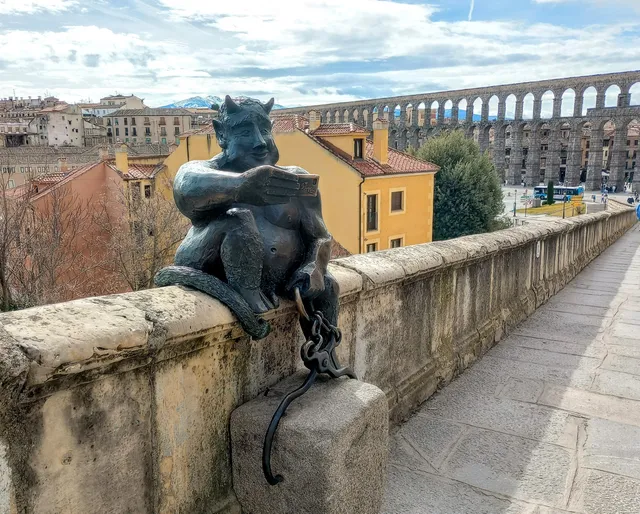
Statue of the Devil
Pl. del Conde de Cheste, 6, 40001 Segovia, Spain
Casa De Los Picos
C. Juan Bravo, 33, 40001 Segovia, Spain
Palacio Quintanar
C. de San Agustín, 40001 Segovia, Spain
Plaza del Azoguejo
Pl. Azoguejo, 40001 Segovia, Spain
Plaza de Medina del Campo
Pl. Medina del Campo, 40001 Segovia, Spain
Iglesia de San Millán
Av. Acueducto, s/n, 40002 Segovia, Spain
Iglesia de San Clemente
Av. Acueducto, 21, 40001 Segovia, Spain
Fundación Torreón de Lozoya
Pl. San Martín, 5, 40001 Segovia, Spain
Nearby restaurants
Restaurante Mesón de Cándido
Pl. Azoguejo, 5, 40001 Segovia, Spain
Restaurante Casares
Av. Padre Claret, 2, 40001 Segovia, Spain
Tuma
C. Sta. Columba, 5, 40001 Segovia, Spain
Restaurante El Cochifrito
Av. Acueducto, 4, 40001 Segovia, Spain
Restaurante El Bernardino
C. Cervantes, 2, bajo, 40001 Segovia, Spain
Restaurante Casa Duque
C. Cervantes, 12, 40001 Segovia, Spain
Restaurante El Secreto de San Clemente
Av. Acueducto, 14, 40001 Segovia, Spain
Trattoria Pizzeria Da Mario
C. Teodosio el Grande, 6, 40001 Segovia, Spain
Asador David Guijarro
Bajada de la Canaleja, 6, 40001 Segovia, Spain
Restaurante Muñoz
C. Ochoa Ondategui, 21, 40001 Segovia, Spain
Nearby hotels
Hotel Eurostars Plaza Acueducto
Av. Padre Claret, 2, 4, 40001 Segovia, Spain
Hospedaje San Francisco
C/ San Francisco, 11, 40001 Segovia, Spain
Hostal Segovia
C/ San Francisco, 5, 40001 Segovia, Spain
Hostal Don Jaime
C. Ochoa Ondategui, 8, 40001 Segovia, Spain
Vizcainos Home Away
Travesía Dr. Sancho, 7, 40001 Segovia, Spain
Hab Urban Hostel
C. Cervantes, 16, 40001 Segovia, Spain
Hotel ELE Acueducto
Av. Padre Claret, 10, 40001 Segovia, Spain
Hostel Económico en Segovia - DUERMEVELA
C. de los Gascos, 7, 40003 Segovia, Spain
Hotel Real Segovia
C. Juan Bravo, 30, 40001 Segovia, Spain
Palacio La Floresta
C. de San Agustín, 21, 40001 Segovia, Spain
Related posts
Keywords
Segovia Aqueduct tourism.Segovia Aqueduct hotels.Segovia Aqueduct bed and breakfast. flights to Segovia Aqueduct.Segovia Aqueduct attractions.Segovia Aqueduct restaurants.Segovia Aqueduct travel.Segovia Aqueduct travel guide.Segovia Aqueduct travel blog.Segovia Aqueduct pictures.Segovia Aqueduct photos.Segovia Aqueduct travel tips.Segovia Aqueduct maps.Segovia Aqueduct things to do.
Segovia Aqueduct things to do, attractions, restaurants, events info and trip planning
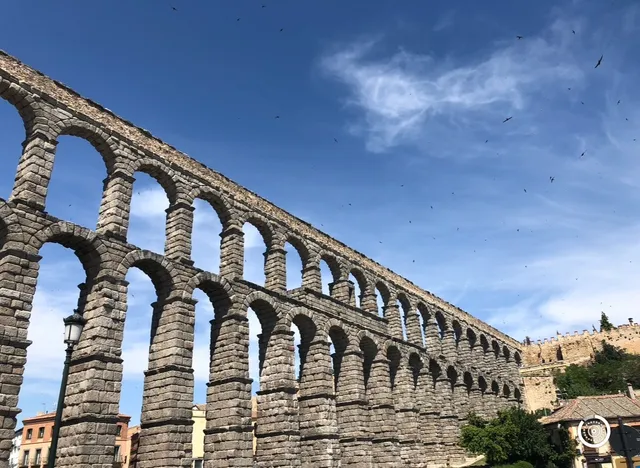
Segovia Aqueduct
SpainCastile and LeónSegoviaSegovia Aqueduct

Basic Info

Segovia Aqueduct

Pl. Azoguejo, 1, 40001 Segovia, Spain
4.8(38.9K)
Open 24 hours
Save
spot

Ratings & Description

Info

Cultural
Scenic
Family friendly
Accessibility
attractions: Loba Capitolina, Postigo Del Consuelo, Statue of the Devil, Casa De Los Picos, Palacio Quintanar, Plaza del Azoguejo, Plaza de Medina del Campo, Iglesia de San Millán, Iglesia de San Clemente, Fundación Torreón de Lozoya, restaurants: Restaurante Mesón de Cándido, Restaurante Casares, Tuma, Restaurante El Cochifrito, Restaurante El Bernardino, Restaurante Casa Duque, Restaurante El Secreto de San Clemente, Trattoria Pizzeria Da Mario, Asador David Guijarro, Restaurante Muñoz
logoLearn more insights from Wanderboat AI.
Phone
+34 921 46 67 20
Website
turismodesegovia.com

Plan your stay

hotel
Pet-friendly Hotels in Segovia
Find a cozy hotel nearby and make it a full experience.

hotel
Affordable Hotels in Segovia
Find a cozy hotel nearby and make it a full experience.

hotel
The Coolest Hotels You Haven't Heard Of (Yet)
Find a cozy hotel nearby and make it a full experience.

hotel
Trending Stays Worth the Hype in Segovia
Find a cozy hotel nearby and make it a full experience.

Reviews

Nearby attractions of Segovia Aqueduct

Loba Capitolina

Postigo Del Consuelo

Statue of the Devil

Casa De Los Picos

Palacio Quintanar

Plaza del Azoguejo

Plaza de Medina del Campo

Iglesia de San Millán

Iglesia de San Clemente

Fundación Torreón de Lozoya

Loba Capitolina

Loba Capitolina

4.7

(97)

Open until 12:00 AM
Click for details
Postigo Del Consuelo

Postigo Del Consuelo

4.8

(124)

Open until 12:00 AM
Click for details
Statue of the Devil

Statue of the Devil

4.6

(198)

Open until 12:00 AM
Click for details
Casa De Los Picos

Casa De Los Picos

4.3

(355)

Open until 9:45 PM
Click for details

Things to do nearby

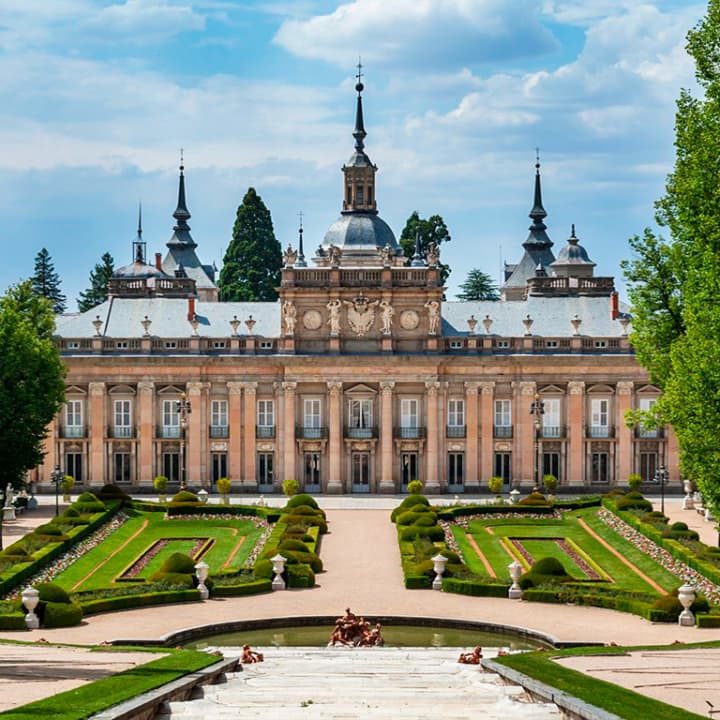
Palacio Real de La Granja de San Ildefonso
Wed, Dec 10 • 10:00 AM
Plaza de España, 15, Real Sitio de San Ildefonso, 40100
View details
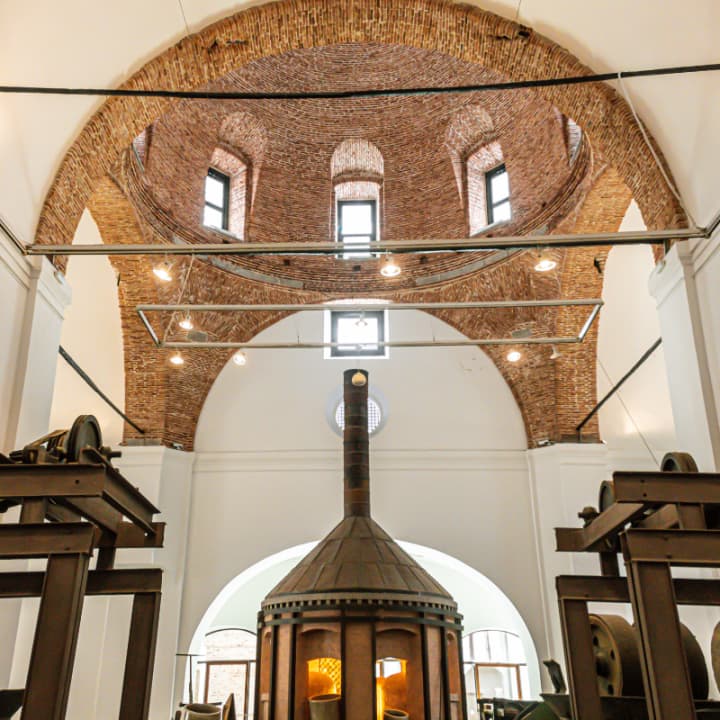
Real Fábrica de Cristales de la Granja
Wed, Dec 10 • 10:00 AM
Paseo Pocillo, 1, Real Sitio de San Ildefonso, 40100
View details
Ruta a caballo en un entorno único
Mon, Dec 1 • 12:00 AM
Calle del Cerrillo del Caño, s/n, El Boalo, Madrid, 28413
View details

Nearby restaurants of Segovia Aqueduct

Restaurante Mesón de Cándido

Restaurante Casares

Tuma

Restaurante El Cochifrito

Restaurante El Bernardino

Restaurante Casa Duque

Restaurante El Secreto de San Clemente

Trattoria Pizzeria Da Mario

Asador David Guijarro
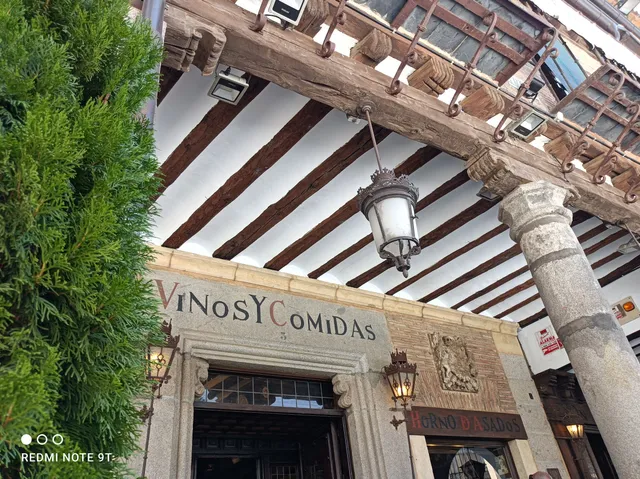
Restaurante Muñoz

Restaurante Mesón de Cándido

Restaurante Mesón de Cándido

4.4

(4.7K)

$$$

Click for details
Restaurante Casares

Restaurante Casares

4.3

(1.7K)

Click for details
Tuma

Tuma

4.4

(540)

Click for details
Restaurante El Cochifrito

Restaurante El Cochifrito

3.7

(724)

$$

Click for details
Get the Appoverlay
Get the AppOne tap to find yournext favorite spots!
Wanderboat LogoWanderboat

Your everyday Al companion for getaway ideas

CompanyAbout Us
InformationAI Trip PlannerSitemap
SocialXInstagramTiktokLinkedin
LegalTerms of ServicePrivacy Policy

Get the app

© 2025 Wanderboat. All rights reserved.
logo

Reviews of Segovia Aqueduct

4.8
(38,913)
avatar
2.0
2y

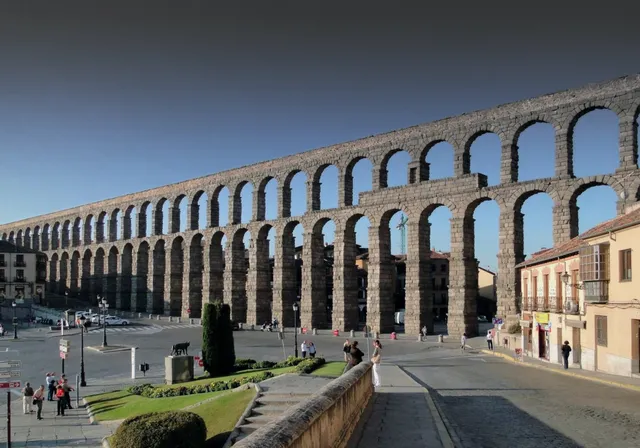
Segovia aqueduct, byname El Puente (Spanish: “The Bridge”), water-conveyance structure built under the Roman emperor Trajan (reigned 98–117 CE) and still in use; it carries water 16 km (10 miles) from the Frío River to the city of Segovia, Spain. One of the best-preserved Roman engineering works, the aqueduct was designated part of the Segovia UNESCO World Heritage site in 1985. The aqueduct was built of some 24,000 dark-coloured Guadarrama granite blocks without the use of mortar. The aboveground portion is 728 metres (2,388 feet) long and consists of some 165 arches more than 9 metres (30 feet) high. In the centre a dip in the terrain necessitated two tiers of arches; there the structure stands 28.5 metres (93.5 feet) above ground level. water supply system, infrastructure for the collection, transmission, treatment, storage, and distribution of water for homes, commercial establishments, industry, and irrigation, as well as for such public needs as firefighting and street flushing. Of all municipal services, provision of potable water is perhaps the most vital. People depend on water for drinking, cooking, washing, carrying away wastes, and other domestic needs. Water supply systems must also meet requirements for public, commercial, and industrial activities. In all cases, the water must fulfill both quality and quantity requirements. ancient Rome, the state centred on the city of Rome. This article discusses the period from the founding of the city and the regal period, which began in 753 BC, through the events leading to the founding of the republic in 509 BC, the establishment of the empire in 27 BC, and the final eclipse of the Empire of the West in the 5th century AD. For later events of the Empire of the East, Rome must be considered one of the most successful imperial powers in history. In the course of centuries Rome grew from a small town on the Tiber River in central Italy into a vast empire that ultimately embraced England, all of continental Europe west of the Rhine and south of the Danube, most of Asia west of the Euphrates, northern Africa, and the islands of the Mediterranean. Unlike the Greeks, who excelled in intellectual and artistic endeavours, the Romans achieved greatness in their military, political, and social institutions. Roman society, during the republic, was governed by a strong military ethos. While this helps to explain the incessant warfare, it does not account for Rome’s success as an imperial power. Unlike Greek city-states, which excluded foreigners and subjected peoples from political participation, Rome from its beginning incorporated conquered peoples into its social and political system. Allies and subjects who adopted Roman ways were eventually granted Roman citizenship. During the principate (see below), the seats in the Senate and even the imperial throne were occupied by persons from the Mediterranean realm outside Italy. The lasting effects of Roman rule in Europe can be seen in the geographic distribution of the Romance languages (Italian, French, Spanish, Portuguese, and Romanian), all of which evolved from Latin, the language of the Romans. The Western alphabet of 26 letters and the calendar of 12 months and 365.25 days are only two simple examples of the cultural legacy which Rome has bequeathed Western civilization. Rise and consolidation of imperial Rome A period of unrest and civil wars in the 1st century BCE marked the transition of Rome from a republic to an empire. This period encompassed the career of Julius Caesar, who eventually took full power over Rome as its dictator. After his assassination in 44 BCE, the triumvirate of Mark Antony, Lepidus, and Octavian, Caesar’s nephew, ruled. It was not long before Octavian went...

   Read more
avatar
5.0
7y

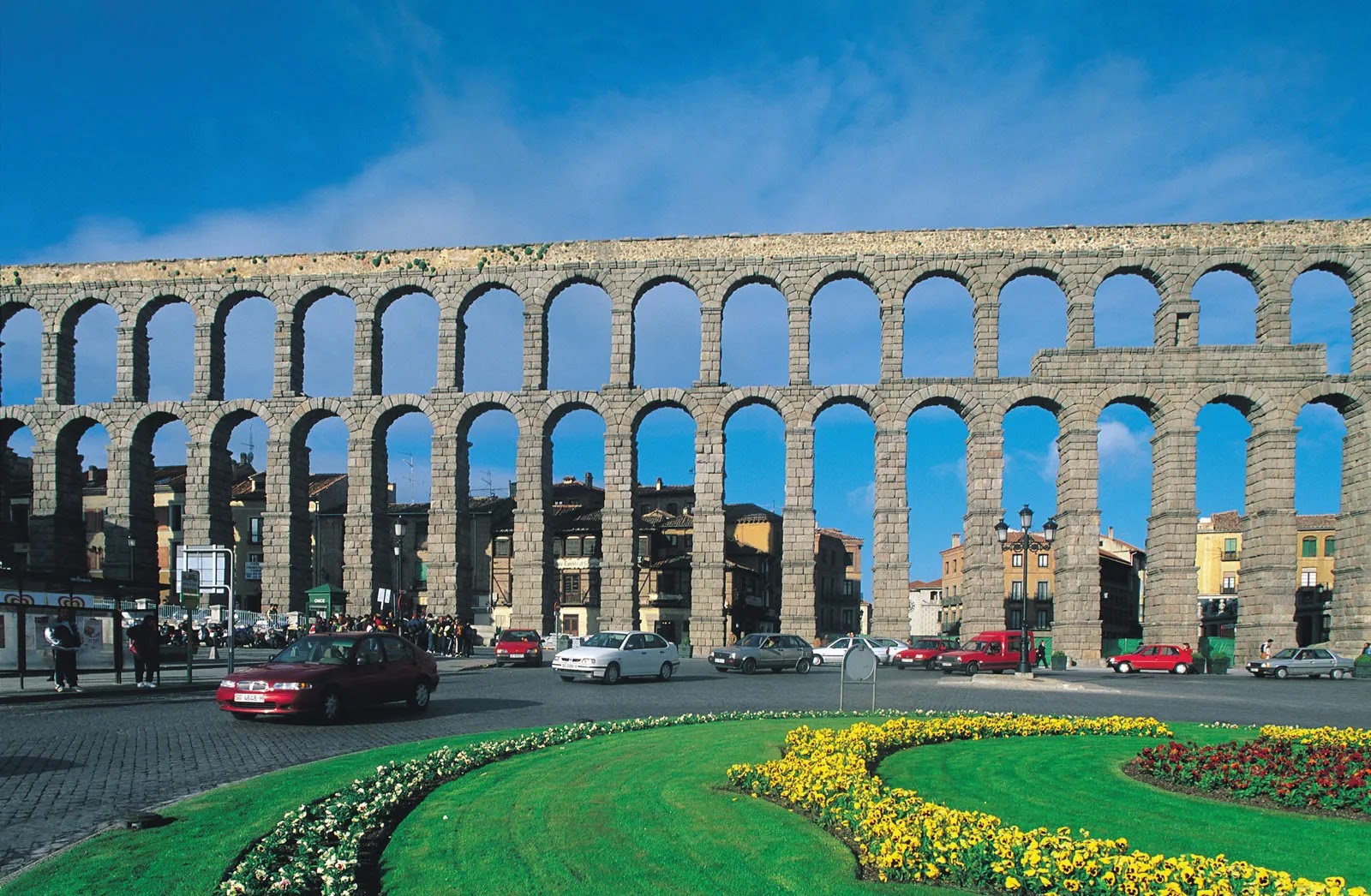
Segovia by itself is a nice old city to visit. Another traditional design where the city is at the top of the hill. Clearly for better defense. You can see the walls, and how the architects used the mountain in their favor: in many places you look down vertical to the river, a natural wall. But the first thing that you see when arriving and looking for a parking place is the aqueduct. There is no other word to describe it rather than Wow!

It is not precise the date of its construction (between 98 and 112 AD), still it makes this construction close to 1900 years old! Not the oldest construction and still up, however another one in a long list of buildings that makes you marvel at the human ingenuity. You have to consider other things when looking at it. The most important in my opinion: this is just a tube to bring water into the city. Put in another way: it is plumbing, the basic plumbing to maintain any city alive and running and operational. So it should have been many, thousands of other similars all over the Roman Empire. Not only engineering ingenuity, it is also a class on state administration! (the other well preserved aqueduct is Pont du Gard, in the south of France, near Vers-Pont-du-Gard)

In Malta you can find other 2 aqueducts: Wignacourt and Gozo, and another one near Manikata (not listed). But they have been built by the order of St John and the British (1600 and 1800 respectively, I do not know the 3rd one). 1500 years later and the engineering is the same! That's a compliment to the engineering Roman geniuses!

Back to Segovia's aqueduct: you can see why: it is a long construction: it run for 17 lm from the spring source into the city! And you have to calculate the right level of inclination: not enough, the water will not go in the direction you want, too steep and you will not be able to control the flow downstream! Also you have to measure precisely that the spring is at a higher level, the city below, and still you will have enough pressure to bring the water to every building, bath and fountain! And do that with rocks, and measurement tools from 100 AD! Each block that supports the pipe is huge, and they are not two alike: so you have to pile them one of top of each other and make sure that at the top you have the right height, at the right interval to have the right inclination.

I recommend to walk the aqueduct in its entirely, maybe a 2 km walk, from the point that it enters the city, and all the way to the "source". Look at the construction and try to find all the tips to build this amazing and lasting structure (it has been many times rebuilt and now maintained of course, still it is a clear sign of the skills of the engineers and constructors and masons...

   Read more
avatar
5.0
32w

The Aqueduct of Segovia is free to visit and located in the Plaza of Azoguejo the historic district of the Segovia. The city is located approximately an hour away from Madrid to the north west, the city is a worthy day trip from the capital due to its excellent cultural heritage, of which the Aqueduct forms a special part.

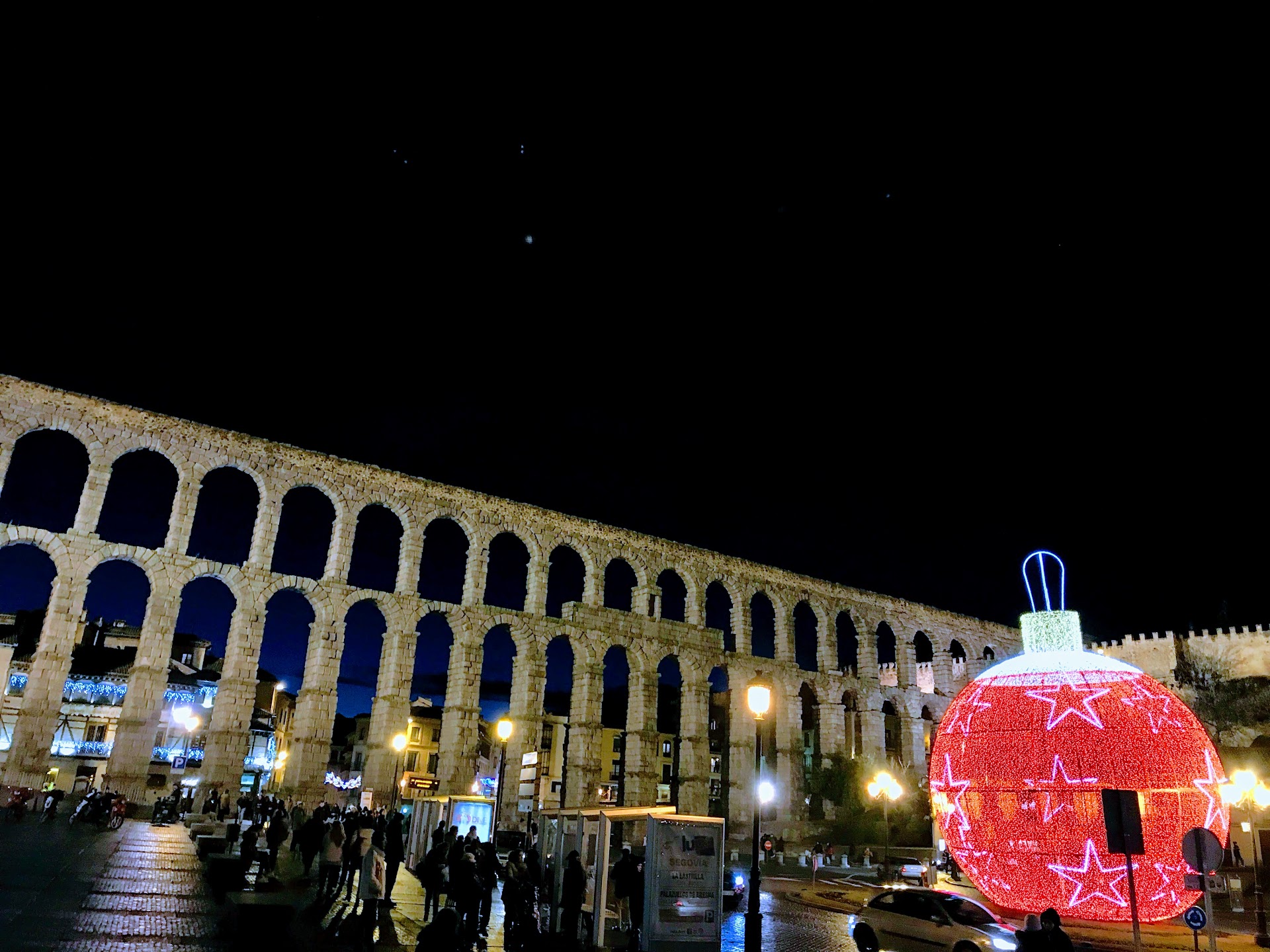
The Aqueduct was originally built by the Romans during the late 1st or early 2nd century AD, it is one of the best-preserved structures of its kind in all of Europe. The Aqueduct originally served transport water from the Frio River a distance of 17km to the city of Segovia. At its highest point the structure stands at a height of 28.5m and originally had a total of 167 arches along the structure, most of which are still extant today. The structure remained in active usage the 1900s when a modern plumbing system was introduced in the city.

Segovia Aqueduct was declared a part of the UNESCO World Heritage site of Segovia (along with the old town and other prominent architectural features) in 1985.

The Plaza of Azoguejo is located just a ten-minute walk from the main bus station and a twenty-minute walk from the train station in Segovia. I would personally recommend visiting the aqueduct at the start of a days exploration in the city as it represents more or the less the eastern most extent of the historical district. Other points of interest to be sure to see in Segovia include the Plaza Mayor/Cathedral of Segovia and...

   Read more
Page 1 of 7
Previous
Next

Posts

Mr. Victorious Jaffar WattooMr. Victorious Jaffar Wattoo
Segovia aqueduct, byname El Puente (Spanish: “The Bridge”), water-conveyance structure built under the Roman emperor Trajan (reigned 98–117 CE) and still in use; it carries water 16 km (10 miles) from the Frío River to the city of Segovia, Spain. One of the best-preserved Roman engineering works, the aqueduct was designated part of the Segovia UNESCO World Heritage site in 1985. The aqueduct was built of some 24,000 dark-coloured Guadarrama granite blocks without the use of mortar. The aboveground portion is 728 metres (2,388 feet) long and consists of some 165 arches more than 9 metres (30 feet) high. In the centre a dip in the terrain necessitated two tiers of arches; there the structure stands 28.5 metres (93.5 feet) above ground level. water supply system, infrastructure for the collection, transmission, treatment, storage, and distribution of water for homes, commercial establishments, industry, and irrigation, as well as for such public needs as firefighting and street flushing. Of all municipal services, provision of potable water is perhaps the most vital. People depend on water for drinking, cooking, washing, carrying away wastes, and other domestic needs. Water supply systems must also meet requirements for public, commercial, and industrial activities. In all cases, the water must fulfill both quality and quantity requirements. ancient Rome, the state centred on the city of Rome. This article discusses the period from the founding of the city and the regal period, which began in 753 BC, through the events leading to the founding of the republic in 509 BC, the establishment of the empire in 27 BC, and the final eclipse of the Empire of the West in the 5th century AD. For later events of the Empire of the East, Rome must be considered one of the most successful imperial powers in history. In the course of centuries Rome grew from a small town on the Tiber River in central Italy into a vast empire that ultimately embraced England, all of continental Europe west of the Rhine and south of the Danube, most of Asia west of the Euphrates, northern Africa, and the islands of the Mediterranean. Unlike the Greeks, who excelled in intellectual and artistic endeavours, the Romans achieved greatness in their military, political, and social institutions. Roman society, during the republic, was governed by a strong military ethos. While this helps to explain the incessant warfare, it does not account for Rome’s success as an imperial power. Unlike Greek city-states, which excluded foreigners and subjected peoples from political participation, Rome from its beginning incorporated conquered peoples into its social and political system. Allies and subjects who adopted Roman ways were eventually granted Roman citizenship. During the principate (see below), the seats in the Senate and even the imperial throne were occupied by persons from the Mediterranean realm outside Italy. The lasting effects of Roman rule in Europe can be seen in the geographic distribution of the Romance languages (Italian, French, Spanish, Portuguese, and Romanian), all of which evolved from Latin, the language of the Romans. The Western alphabet of 26 letters and the calendar of 12 months and 365.25 days are only two simple examples of the cultural legacy which Rome has bequeathed Western civilization. Rise and consolidation of imperial Rome A period of unrest and civil wars in the 1st century BCE marked the transition of Rome from a republic to an empire. This period encompassed the career of Julius Caesar, who eventually took full power over Rome as its dictator. After his assassination in 44 BCE, the triumvirate of Mark Antony, Lepidus, and Octavian, Caesar’s nephew, ruled. It was not long before Octavian went to war against
Silvio CasagrandeSilvio Casagrande
Segovia by itself is a nice old city to visit. Another traditional design where the city is at the top of the hill. Clearly for better defense. You can see the walls, and how the architects used the mountain in their favor: in many places you look down vertical to the river, a natural wall. But the first thing that you see when arriving and looking for a parking place is the aqueduct. There is no other word to describe it rather than Wow! It is not precise the date of its construction (between 98 and 112 AD), still it makes this construction close to 1900 years old! Not the oldest construction and still up, however another one in a long list of buildings that makes you marvel at the human ingenuity. You have to consider other things when looking at it. The most important in my opinion: this is just a tube to bring water into the city. Put in another way: it is plumbing, the basic plumbing to maintain any city alive and running and operational. So it should have been many, thousands of other similars all over the Roman Empire. Not only engineering ingenuity, it is also a class on state administration! (the other well preserved aqueduct is Pont du Gard, in the south of France, near Vers-Pont-du-Gard) In Malta you can find other 2 aqueducts: Wignacourt and Gozo, and another one near Manikata (not listed). But they have been built by the order of St John and the British (1600 and 1800 respectively, I do not know the 3rd one). 1500 years later and the engineering is the same! That's a compliment to the engineering Roman geniuses! Back to Segovia's aqueduct: you can see why: it is a long construction: it run for 17 lm from the spring source into the city! And you have to calculate the right level of inclination: not enough, the water will not go in the direction you want, too steep and you will not be able to control the flow downstream! Also you have to measure precisely that the spring is at a higher level, the city below, and still you will have enough pressure to bring the water to every building, bath and fountain! And do that with rocks, and measurement tools from 100 AD! Each block that supports the pipe is huge, and they are not two alike: so you have to pile them one of top of each other and make sure that at the top you have the right height, at the right interval to have the right inclination. I recommend to walk the aqueduct in its entirely, maybe a 2 km walk, from the point that it enters the city, and all the way to the "source". Look at the construction and try to find all the tips to build this amazing and lasting structure (it has been many times rebuilt and now maintained of course, still it is a clear sign of the skills of the engineers and constructors and masons of that time)
Rohan HearnRohan Hearn
The Aqueduct of Segovia is free to visit and located in the Plaza of Azoguejo the historic district of the Segovia. The city is located approximately an hour away from Madrid to the north west, the city is a worthy day trip from the capital due to its excellent cultural heritage, of which the Aqueduct forms a special part. The Aqueduct was originally built by the Romans during the late 1st or early 2nd century AD, it is one of the best-preserved structures of its kind in all of Europe. The Aqueduct originally served transport water from the Frio River a distance of 17km to the city of Segovia. At its highest point the structure stands at a height of 28.5m and originally had a total of 167 arches along the structure, most of which are still extant today. The structure remained in active usage the 1900s when a modern plumbing system was introduced in the city. Segovia Aqueduct was declared a part of the UNESCO World Heritage site of Segovia (along with the old town and other prominent architectural features) in 1985. The Plaza of Azoguejo is located just a ten-minute walk from the main bus station and a twenty-minute walk from the train station in Segovia. I would personally recommend visiting the aqueduct at the start of a days exploration in the city as it represents more or the less the eastern most extent of the historical district. Other points of interest to be sure to see in Segovia include the Plaza Mayor/Cathedral of Segovia and Alcázar de Segovia.
See more posts
See more posts
hotel
Find your stay

Pet-friendly Hotels in Segovia

Find a cozy hotel nearby and make it a full experience.

Segovia aqueduct, byname El Puente (Spanish: “The Bridge”), water-conveyance structure built under the Roman emperor Trajan (reigned 98–117 CE) and still in use; it carries water 16 km (10 miles) from the Frío River to the city of Segovia, Spain. One of the best-preserved Roman engineering works, the aqueduct was designated part of the Segovia UNESCO World Heritage site in 1985. The aqueduct was built of some 24,000 dark-coloured Guadarrama granite blocks without the use of mortar. The aboveground portion is 728 metres (2,388 feet) long and consists of some 165 arches more than 9 metres (30 feet) high. In the centre a dip in the terrain necessitated two tiers of arches; there the structure stands 28.5 metres (93.5 feet) above ground level. water supply system, infrastructure for the collection, transmission, treatment, storage, and distribution of water for homes, commercial establishments, industry, and irrigation, as well as for such public needs as firefighting and street flushing. Of all municipal services, provision of potable water is perhaps the most vital. People depend on water for drinking, cooking, washing, carrying away wastes, and other domestic needs. Water supply systems must also meet requirements for public, commercial, and industrial activities. In all cases, the water must fulfill both quality and quantity requirements. ancient Rome, the state centred on the city of Rome. This article discusses the period from the founding of the city and the regal period, which began in 753 BC, through the events leading to the founding of the republic in 509 BC, the establishment of the empire in 27 BC, and the final eclipse of the Empire of the West in the 5th century AD. For later events of the Empire of the East, Rome must be considered one of the most successful imperial powers in history. In the course of centuries Rome grew from a small town on the Tiber River in central Italy into a vast empire that ultimately embraced England, all of continental Europe west of the Rhine and south of the Danube, most of Asia west of the Euphrates, northern Africa, and the islands of the Mediterranean. Unlike the Greeks, who excelled in intellectual and artistic endeavours, the Romans achieved greatness in their military, political, and social institutions. Roman society, during the republic, was governed by a strong military ethos. While this helps to explain the incessant warfare, it does not account for Rome’s success as an imperial power. Unlike Greek city-states, which excluded foreigners and subjected peoples from political participation, Rome from its beginning incorporated conquered peoples into its social and political system. Allies and subjects who adopted Roman ways were eventually granted Roman citizenship. During the principate (see below), the seats in the Senate and even the imperial throne were occupied by persons from the Mediterranean realm outside Italy. The lasting effects of Roman rule in Europe can be seen in the geographic distribution of the Romance languages (Italian, French, Spanish, Portuguese, and Romanian), all of which evolved from Latin, the language of the Romans. The Western alphabet of 26 letters and the calendar of 12 months and 365.25 days are only two simple examples of the cultural legacy which Rome has bequeathed Western civilization. Rise and consolidation of imperial Rome A period of unrest and civil wars in the 1st century BCE marked the transition of Rome from a republic to an empire. This period encompassed the career of Julius Caesar, who eventually took full power over Rome as its dictator. After his assassination in 44 BCE, the triumvirate of Mark Antony, Lepidus, and Octavian, Caesar’s nephew, ruled. It was not long before Octavian went to war against
Mr. Victorious Jaffar Wattoo

Mr. Victorious Jaffar Wattoo

hotel
Find your stay

Affordable Hotels in Segovia

Find a cozy hotel nearby and make it a full experience.

Get the Appoverlay
Get the AppOne tap to find yournext favorite spots!
Segovia by itself is a nice old city to visit. Another traditional design where the city is at the top of the hill. Clearly for better defense. You can see the walls, and how the architects used the mountain in their favor: in many places you look down vertical to the river, a natural wall. But the first thing that you see when arriving and looking for a parking place is the aqueduct. There is no other word to describe it rather than Wow! It is not precise the date of its construction (between 98 and 112 AD), still it makes this construction close to 1900 years old! Not the oldest construction and still up, however another one in a long list of buildings that makes you marvel at the human ingenuity. You have to consider other things when looking at it. The most important in my opinion: this is just a tube to bring water into the city. Put in another way: it is plumbing, the basic plumbing to maintain any city alive and running and operational. So it should have been many, thousands of other similars all over the Roman Empire. Not only engineering ingenuity, it is also a class on state administration! (the other well preserved aqueduct is Pont du Gard, in the south of France, near Vers-Pont-du-Gard) In Malta you can find other 2 aqueducts: Wignacourt and Gozo, and another one near Manikata (not listed). But they have been built by the order of St John and the British (1600 and 1800 respectively, I do not know the 3rd one). 1500 years later and the engineering is the same! That's a compliment to the engineering Roman geniuses! Back to Segovia's aqueduct: you can see why: it is a long construction: it run for 17 lm from the spring source into the city! And you have to calculate the right level of inclination: not enough, the water will not go in the direction you want, too steep and you will not be able to control the flow downstream! Also you have to measure precisely that the spring is at a higher level, the city below, and still you will have enough pressure to bring the water to every building, bath and fountain! And do that with rocks, and measurement tools from 100 AD! Each block that supports the pipe is huge, and they are not two alike: so you have to pile them one of top of each other and make sure that at the top you have the right height, at the right interval to have the right inclination. I recommend to walk the aqueduct in its entirely, maybe a 2 km walk, from the point that it enters the city, and all the way to the "source". Look at the construction and try to find all the tips to build this amazing and lasting structure (it has been many times rebuilt and now maintained of course, still it is a clear sign of the skills of the engineers and constructors and masons of that time)
Silvio Casagrande

Silvio Casagrande

hotel
Find your stay

The Coolest Hotels You Haven't Heard Of (Yet)

Find a cozy hotel nearby and make it a full experience.

hotel
Find your stay

Trending Stays Worth the Hype in Segovia

Find a cozy hotel nearby and make it a full experience.

The Aqueduct of Segovia is free to visit and located in the Plaza of Azoguejo the historic district of the Segovia. The city is located approximately an hour away from Madrid to the north west, the city is a worthy day trip from the capital due to its excellent cultural heritage, of which the Aqueduct forms a special part. The Aqueduct was originally built by the Romans during the late 1st or early 2nd century AD, it is one of the best-preserved structures of its kind in all of Europe. The Aqueduct originally served transport water from the Frio River a distance of 17km to the city of Segovia. At its highest point the structure stands at a height of 28.5m and originally had a total of 167 arches along the structure, most of which are still extant today. The structure remained in active usage the 1900s when a modern plumbing system was introduced in the city. Segovia Aqueduct was declared a part of the UNESCO World Heritage site of Segovia (along with the old town and other prominent architectural features) in 1985. The Plaza of Azoguejo is located just a ten-minute walk from the main bus station and a twenty-minute walk from the train station in Segovia. I would personally recommend visiting the aqueduct at the start of a days exploration in the city as it represents more or the less the eastern most extent of the historical district. Other points of interest to be sure to see in Segovia include the Plaza Mayor/Cathedral of Segovia and Alcázar de Segovia.
Rohan Hearn

Rohan Hearn

See more posts
See more posts