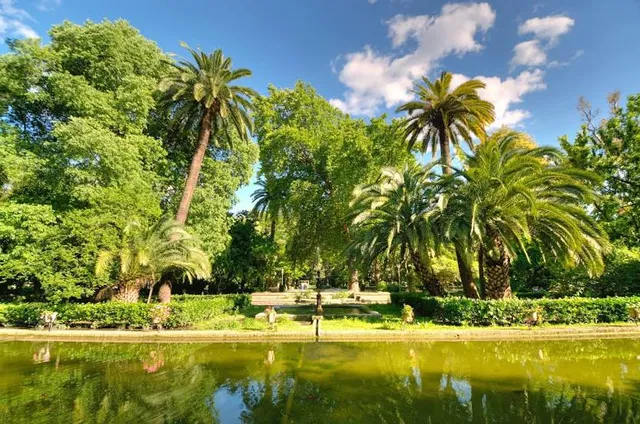
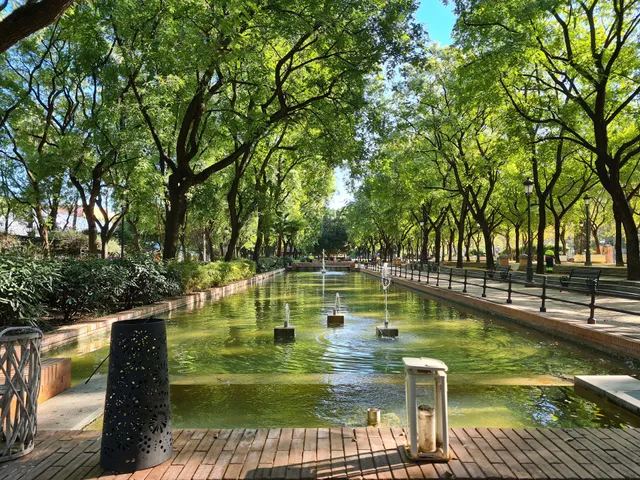
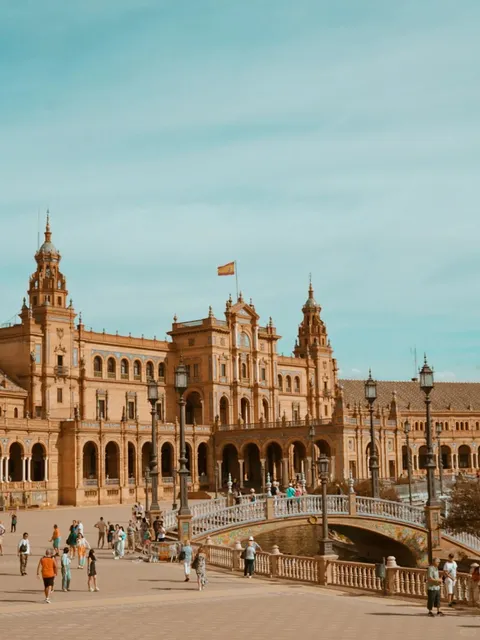
Visiting the Plaza de España is like stepping into a dream where history, architecture, and cultural pride converge in breathtaking harmony. Nestled within the verdant expanse of Parque de María Luisa, this iconic semi-circular plaza is not just one of Seville’s greatest treasures—it is arguably one of the most beautiful public spaces in all of Europe.
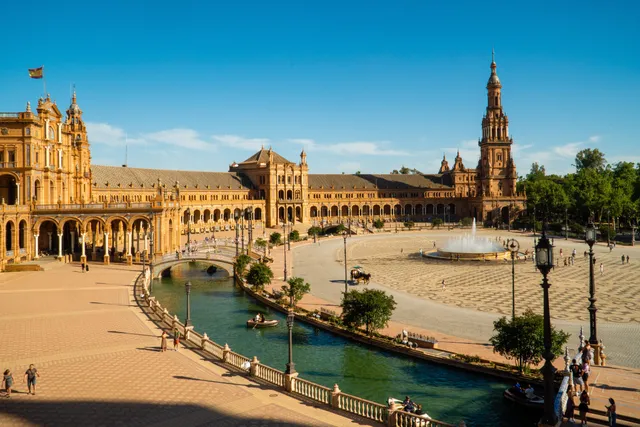
Designed by Aníbal González for the 1929 Ibero-American Exposition, the Plaza is an eloquent symbol of Spain’s unity and diversity. Its majestic crescent shape stretches nearly 200 meters, flanked by two towering baroque-style buildings and a grand central structure. The architecture is an exuberant blend of Renaissance Revival, Moorish Revival (Neo-Mudéjar), and Art Deco styles, resulting in a visual symphony that feels both historically rich and effortlessly modern.
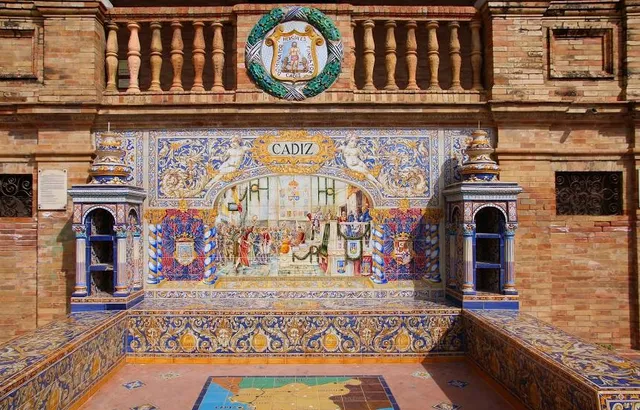
The lavish use of red brick, marble, and ornate ceramic tiles—especially the vivid azulejos—makes every detail sing with craftsmanship. The 52 tiled alcoves, each representing a province of Spain, are particularly compelling. More than just beautiful photo opportunities, they offer a geography lesson steeped in artistry, making the space both educational and emotional. Each one feels like a love letter to the region it represents.
The gentle curve of the canal that hugs the base of the building gives the plaza its unmistakable charm. Often dubbed the “Venice of Seville,” the canal is spanned by four beautiful arched bridges, said to represent the four ancient kingdoms of Spain. Renting a small rowboat is a favorite activity here, and gliding along the water provides a peaceful, almost cinematic perspective of the surroundings.
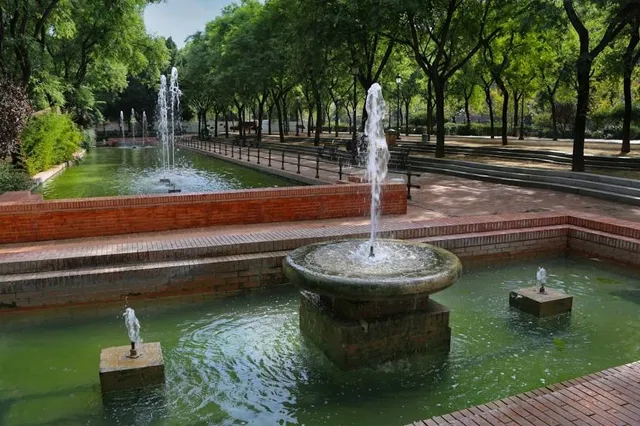
At the center stands a grand fountain, its waters sparkling in the Andalusian sun. The entire space is cleverly aligned so that light plays a starring role throughout the day—golden morning rays, vibrant afternoon sun, and a soft amber glow at sunset each transform the plaza in unique and memorable ways.
What elevates Plaza de España from merely beautiful to truly unforgettable is its living, breathing atmosphere. Local musicians often perform beneath the arcade’s shade, their Spanish guitars and soulful voices echoing off the tiles and brick. Flamenco dancers occasionally appear, offering spontaneous performances that feel like gifts from the spirit of Seville itself. These authentic moments add depth to the visit—reminding you that while the plaza is grand, it is not aloof; it belongs to the people.
Fans of film will delight in recognizing parts of the plaza from major Hollywood productions such as Star Wars: Episode II – Attack of the Clones and Lawrence of Arabia. Despite its silver-screen fame, the space remains refreshingly uncommercialized. There’s an integrity to how the plaza is maintained—not overrun with vendors, but thoughtfully preserved as a civic and cultural space.
While the Plaza is stunning year-round, visiting in the early morning or golden hour is ideal for capturing its serenity and grandeur without the heat or crowds. There are public restrooms nearby, cafes within walking distance, and ample shaded benches for relaxing. Accessibility has improved in recent years, though the cobblestones and steps may still present some challenges.
Ultimately, Plaza de España is not just a place to see—it’s a place to feel. It evokes pride, nostalgia, curiosity, and awe in equal measure. Whether you’re a photographer, a history buff, a casual tourist, or a romantic soul, this plaza offers an experience that is both grand in scale and intimate in feeling. It is a triumph of urban design, a stage for human joy, and a jewel in Seville’s already...
Read moreThe place is beautiful but really crowded it was a shame the fountain was closed for construction works.
BE AWARE THIS IS A TOURIST TRAP:
Where do I start…
First, I want to warn you about pickpockets. Being a tourist attraction, there are many people who WILL take advantage of you. They will try to distract you while their colleague steals from you.
Second, be aware of your surroundings. Keep your bags close and don’t let them go for a second, or they might disappear.
Lastly, do not interact with people you don’t know, especially those carrying rosemary branches. AVOID THEM AT ALL COSTS. They will lure you in by handing you one of their branches. Do not accept it; it is a trap. They will ask you for money, or their colleague will steal from you while they distract you.
I was there the other day, and a woman offered me a branch. I did not accept it and continued on my way. Then another woman appeared in front of me and handed me a rosemary branch. I had no time to react; she was too close. She then asked for some spare change. I told her I didn’t have change and tried to hand the branch back, but she wouldn’t take it. I showed her my wallet was empty of coins, but she saw a €20 bill sticking out. She then grabbed my right hand and told me she was going to “read it” and started saying something from memory. Then another woman approached us and yanked my partner's arm. I told her that he did not speak Spanish and asked her to leave him alone, while the first woman continued chanting in Spanish. Then she asked for my other hand and asked my partner to put his hand up for the second woman. Honestly, I just wanted to leave. They were really annoying, and I didn’t see the point of any of it. Finally, the woman finished her chanting and said that I owed her €5 per hand. She demanded €10 from me, not asked—DEMANDED. She had seen that I had money, and the other woman was big. I felt cornered, so I told her I needed change from my €20. The first woman asked the second woman to hand me a €10 bill, and I had to hand over my €20. Once I had paid the first woman, the other one started asking for money for “reading” my partner’s hand. I was not going to have it. I politely told her that I had asked her to leave my boyfriend alone because he did not understand Spanish. Nevertheless, she continued trying, but I was not going to give in. I already felt ripped off by the first woman who demanded my money. I am a native Spanish speaker, so there was no misunderstanding. She did not ask for permission; she started doing her thing and then demanded money.
I’m sharing my experience so others won’t go through the same thing I went through. AVOID THESE PEOPLE. Do not interact with them.
This experience ruined my week. I felt ripped off and scammed. I couldn’t stop thinking about the interaction and what I could have done differently. Don’t be nice to strangers in the street who give you something. If they put the branch in your hand, throw it on the floor or hand it back and carry on. Don’t worry about being rude to these people; they are scammers.
Do not check your wallet; they might use the opportunity to distract you and take it from...
Read moreThe Plaza de España in Seville is one of those rare places where history, artistry, and sheer beauty converge into an unforgettable experience. Nestled within the lush grounds of María Luisa Park, this architectural masterpiece is not just a plaza—it is a living canvas of Spanish heritage and imagination.
From the very moment you step onto the grand square, the sheer scale and symmetry of the space takes your breath away. Designed by Aníbal González for the Ibero-American Exposition of 1929, the plaza feels both monumental and intimate, blending Renaissance Revival and Moorish-inspired details in a way that is uniquely Andalusian. The sweeping semi-circular building, with its endless rows of arches and towers that gleam in the sunlight, seems to embrace you in a timeless gesture of grandeur.
One of the most captivating features is the ornate tilework that decorates the entire plaza. Each province of Spain is represented through its own alcove, adorned with colorful ceramic tiles that tell stories of the region’s history, culture, and pride. Walking along this stretch is like embarking on a journey across the country without ever leaving Seville. The artistry is so detailed and vibrant that you find yourself pausing at each alcove, drawn in by its unique charm.
Adding to the magic is the serene canal that arcs gracefully through the plaza, crossed by four elegant bridges symbolizing Spain’s ancient kingdoms. Many visitors choose to rent a small rowboat, gliding under the bridges and taking in the panoramic views from the water—an experience that feels almost cinematic. The soft sound of oars on the water and the reflection of the ornate buildings shimmering like a painting make this moment unforgettable.
The towers at each end of the plaza rise proudly into the sky, visible from across the park and drawing you in like beacons. Their design, blending tradition with modernism of the early 20th century, gives the whole square a majestic rhythm and balance. As you move through the space, every angle seems like it was made to be photographed—sunsets here are especially magical, with the golden light dancing on the bricks and tiles.
But beyond its beauty, the Plaza de España holds deep historical significance. Built as a symbol of Spain’s openness to its former colonies and its place in a new world of cultural exchange, it stands as both a reminder of Spain’s past and a celebration of its diversity. Its role in history makes every step across its vast patterned floor feel meaningful, as though you are walking within a story that continues to unfold.
Whether you come to admire its sweeping architecture, marvel at its vibrant tilework, take a peaceful boat ride, or simply soak in the atmosphere, the Plaza de España is a place that imprints itself on your memory. It is more than just a landmark; it is an emotional experience—majestic, historic, and profoundly beautiful.
Visiting this plaza is not only a highlight of Seville but a highlight of Spain itself. It is the kind of place that makes you pause, breathe, and truly appreciate the artistry of human creativity harmonizing with...
Read more