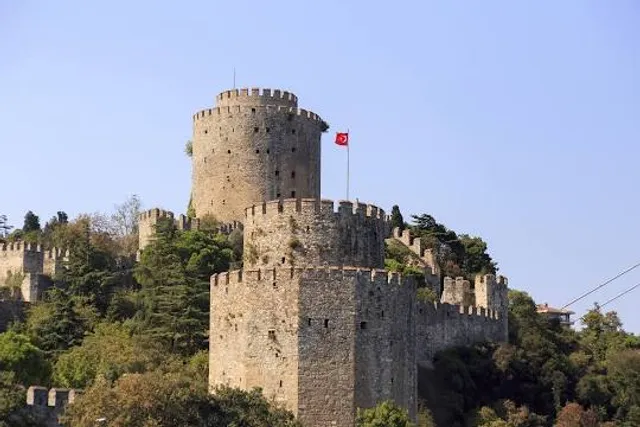
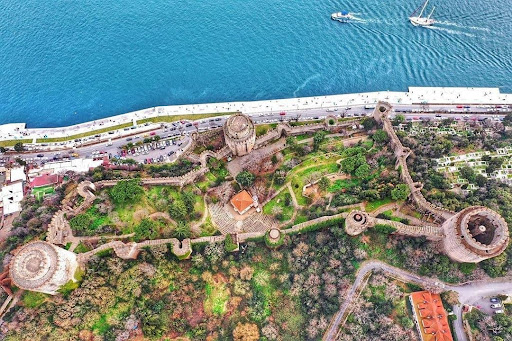
RUMELİHİSARI Rumeli Fortress (Land of Roman Fortress) was built on the narrowest point of Boshporus which is one of the most important water channels in the World. The Asian side of Constantinople was under the control of Turkish forces well before the conquest of the city in 1453. So, in order to conquer the city, Turks first builtAnadolu Fortress (on the Asian side of istanbul) in 1390.Now on the European side, just on the opposite of Anadolu fortress another fortress had to be built to control the channel in to take the city. In 1452, the erection of RumeliHisarı (RumeliFortess) was the herald of the conquest of Constantinople. It was built in less than 4 months on a land of 30.000 metre square.
Thus the two fortresses opposing each other on both sides are the oldest monumental structures in Istanbul standing today. On the other hand the first Turkish settlement/neighbourhood appeared surrounding these two fortresses. This boosted social and economical life around this area.
The purpose of the construction of RumeliHisari was to control the ships passing by The geographical importance of the fortress is clear and indisputable. The place that the fortress was built on is on the narrowest part of the Bosphorus channel. Apart from that the current that is called "current of satan" is very strong and goes towards in front of the fortress.
Every ship that sails in Bosphorus was carried away by that current towards the fortress so ships had to sail parallel to the fortress The construction of RumeliHisari started on the 15th of April 1452 and finished on the 31st of August same year.
It is an amazing achievement that in such a short time to built the fortress in terms of organization, constructiontechniques and the material that was used in that era. During the construction of the fort only 300 master craftsman, 700-800 labourers, 200 carters, boatmen, carriers and deck crew were employed. Looking at these figures aside from the effort to complete the project as soon as possible, there is also the discipline of setting up a strategic military base on enemy land. Building a castle with one of the largest bastions in the world with only 300 master craftsmen, 700-800 labourers, carters, boatmen, carriers is an incredible example of organisation and logistic.
On the other hand, around 57.700 m3ofmasonry was largely obtained from the İstinye quarry and this was shipped by sea. Again the area where the fortress was built masonry was obtained from the locality of Kayalarplus dressed cut stone masonry was shipped by sea from the BlackseaKefken areaand used as a basie material. The spolia material on the floors and walls of the fortress we see today was gathered from the old Roman ruins that was present in the area. While the lumber used was obtained from iznik and BlackseaEreğli, the lime was obtained from the previously established lime pits on the Anatolian side which was burnt in the twelve lime kiins opened in the Çubuklu region.
Considering the challenges faced and the difficulties of all the materials and manpower being transported by sea; alongside the weather conditions at the time of starting the construction the success of the logistics of all this is truly astonishing. The first chief admiral of the period BaltaoğluSüleyman successfully and smoothly managed toship the hardware from Gelibolu. Today The Rumeli fortress is a symbol of the conquest of lstanbul and is the first Islamic structure Fatih Sultan Mehmed erected in the old city of İstanbul. The fortress with its masjids, waterways, hamam's and streets within the walls including the Divanhane tower was built in a short space of 4 months;also includes the biggest bastions in the world with 3 huge towers. The Hisar fortress building began under the management of Fatih Sultan Mehmed and the construction of the fortress was carried out by architect...
Read moreRumeli Hisarı, or the Rumelian Fortress, is a historic landmark situated on the European shore of Istanbul, in the Sarıyer district. Perched on a series of hills, it commands an impressive view of the Bosphorus Strait. The fortress is known for its massive stone towers and walls, which form a triangular layout. Visitors can explore its open courtyards, walk along the well-preserved walls, and enjoy breathtaking views of the waterway. Within the site, a small museum showcases Ottoman-era artifacts and provides insights into the fortress's history. Built between 1451 and 1452 by Sultan Mehmed II, the fortress played a key role in the conquest of Constantinople. Its construction, completed in just four months, involved thousands of workers. The fortress was strategically positioned to control maritime traffic on the Bosphorus and cut off supplies to the Byzantine capital. Alongside Anadolu Hisarı on the Asian side, Rumeli Hisarı allowed the Ottomans to establish complete dominance over the strait. Its name "Boğazkesen," meaning "Strait Cutter," highlights its intended function. After the conquest, Rumeli Hisarı served various purposes. It operated as a customs checkpoint, regulating trade and movement along the Bosphorus, and at times, it was used as a prison. Diplomats from enemy states were occasionally held here during periods of conflict. The fortress suffered significant damage during the earthquake of 1509 but was quickly repaired and continued to be used until the late 19th century. In modern times, it has become a cultural venue, hosting open-air concerts and events, particularly during Istanbul's summer festivals. One of the most striking anecdotes associated with Rumeli Hisarı illustrates its formidable presence. Shortly after its completion, Sultan Mehmed II imposed a toll on ships passing through the Bosphorus. When a Venetian vessel ignored the warning signals, the fortress’s cannons sank it with a single shot. Surviving crew members were executed, and the captain was gruesomely punished as a stark warning to others not to challenge Ottoman authority. This incident solidified the fortress's reputation and the Ottomans' control over the strait. To reach Rumeli Hisarı from Karaköy, take the 25E bus, which travels along the scenic Bosphorus coastline. The journey offers picturesque views of Istanbul’s waterfront, dotted with historic mansions, modern cafés, and vibrant local life. The bus stops near the fortress, providing convenient access for visitors. Along the way, you can catch glimpses of the Bosphorus Bridge and other iconic landmarks, making the trip itself an...
Read moreThe Fortress of Rumeli Hisarı, located on the European shore of the Bosphorus and in the northernmost district of Istanbul, is a striking monument.
Every year, hundreds of thousands of visitors to this great city follow the long-established tradition of taking a Bosphorus cruise and see the impressive castle from afar. Few of them realise that the building played a role in the Siege and Fall of Constantinople in 1453 and that its very shape and details exemplify the historical developments that led to this world-changing event, the end of the Byzantine Empire after over a thousand years and the establishment of the Ottoman Empire as a major player for five centuries.
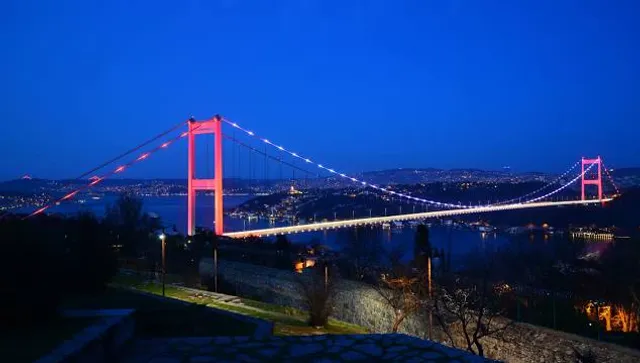
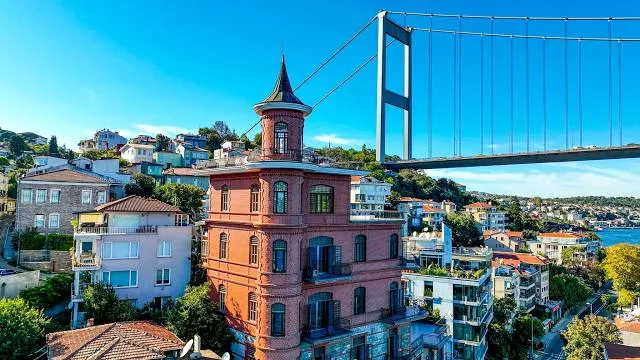
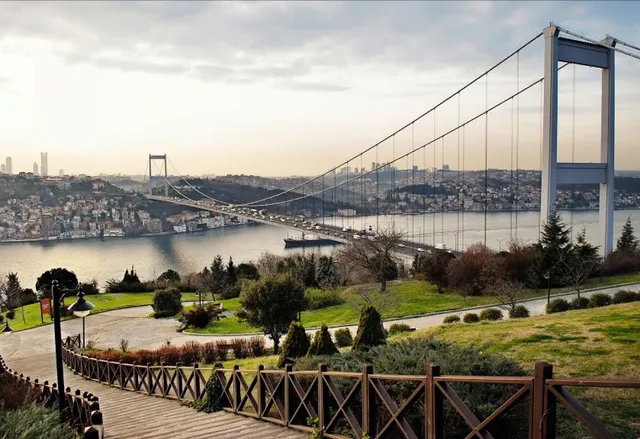
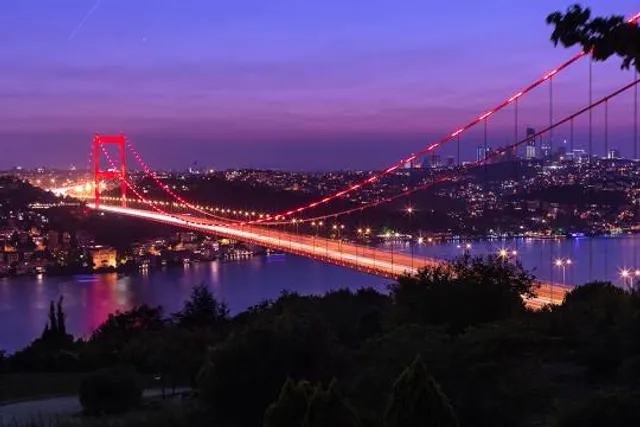
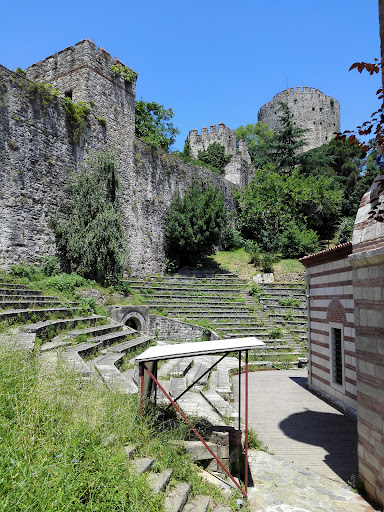
Distinguished by its historical significance, its highly scenic setting overlooking the Fatih Sultan Bridge that links Europe and Asia, and its sheer monumentality, the site includes remains of the fortification walls with towers and gates as well as cisterns, fountains and a mosque. It currently functions as a cultural centre with an open-air theatre and a museum, set within the lower part of the recently built Bosphorus University Campus. In a city where there is so much to visit and discover – Byzantine churches, walls and cisterns, Ottoman palaces and mosques, bazaars, food and spices – and at a place where East meets West, Rumeli Hisarı Fortress is an off-the-beaten-track site.
The name Rumeli Hisarı, meaning “Fortress in the land of the Romans”, i.e. on the European or Byzantine side of the Bosphorus, is an afterthought. Initially, it was called Boğazkesen Castle, literally the “Throat Cutter”, as its purpose was to cut the straits – or the throat – that is the Bosphorus. It was built in 1452 by the order of Fatih Sultan Mehmed, famous as Mehmed the Conqueror or simply Mehmed II, by the narrowest point of the Bosphorus channel, just opposite Anadolu Hisarı – another Ottoman fortress located on the Anatolian side and constructed about 60 years earlier (1390-1395) as an observation post and safe point for a small number of...
Read more