Restoration and alteration of Llandaff Cathedral, 1949-1963 by George Pace.
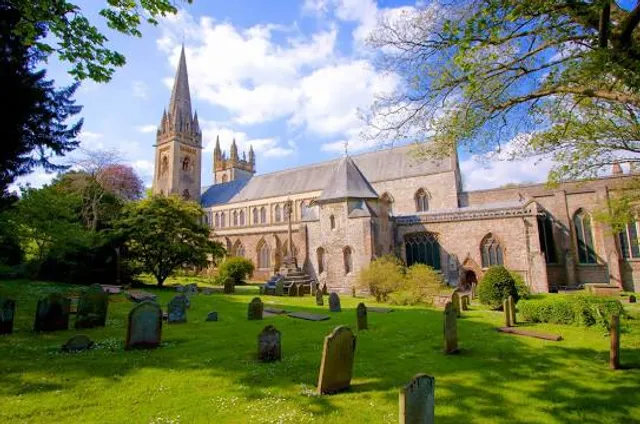
Llandaff cathedral is an important medieval and later building. My visit was specifically to look at the work by George Pace in the rebuilding and re-roofing following extensive war damage.
Pace had little previous work when he was awarded this major project to succeed Sir Charles Nicholson as the cathedral architect. Most architects, when they get the first major job of their career, would tend to be careful, but Pace produced some of his most radical architecture and intervention.
Pace set four principles for his repair and restoration at Llandaff, which are explained in full in Peter Pace's book, in summary;
A - Ancient work and Pritchard's 19th century restoration, where it had survived to be carefully conserved.
B - New work to make good destroyed parts to be clearly and legibly 20th century, but also to integrate with the cathedral in appearance and character
C - everything to be under the aesthetic control of the architect,
D - every part of the cathedral, every intervention, to be a work of art in itself, entire cathedral to be a complete offering to God.
These principles would not be surprising now but quite forward looking for 1949.
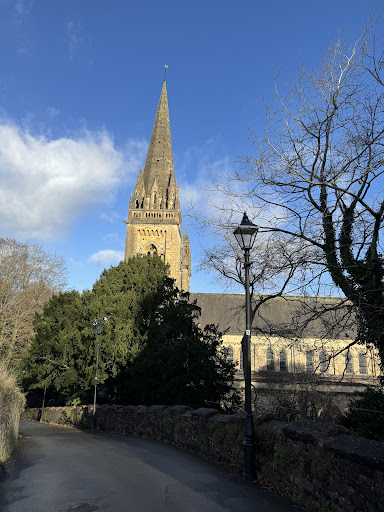
Pace did not agree with previous assessment of the building as being an overgrown parish church. He found that the qualities, particularly in the nave arcade, to be of high quality and worth celebrating. He also highly rated the Pritchard work, including the west tower, which he considered to be a major monument of the Gothic Revival. Pace's contribution started with the nave roof, which was different to Prichard's open timber roof and but similar to the roof that Nicholson had proposed. Pace's response was based On Nicholson's drawings.
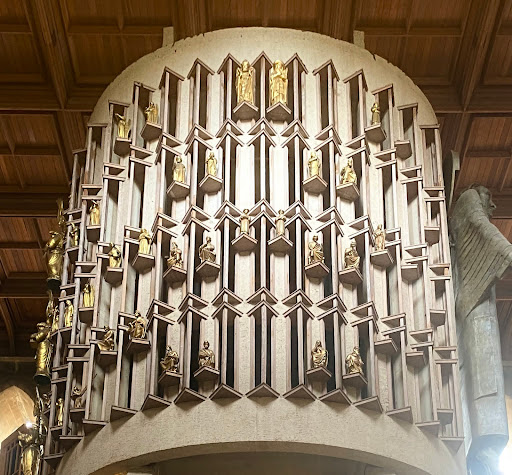
The intervention that everybody knows at Llandaff is the pulpitum. The pulpitum is often roundly criticized when it is posted on sites like this. I can see that it is surprisingly shocking for the 1950s. There is nothing so audacious at Coventry, for instance. I would not like this to happen in all churches but in this one it is wonderful.
In the past, the pulpitum would have been a stone screen at the junction between the choir and the nave. The medieval Llandaff Cathedral had a pulpitum. But this was not rebuilt during Pritchard's restoration. Pace felt that the lack of architectural definition between nave and chancel was the factor that made Llandaff lack the atmosphere of a cathedral. Pace's idea was to produce a new form of pulpitum, a 20th century structure, which is an object rather than a screen. He pointed out that it is traditional to be modern. Each phase of a gothic cathedral built in the style of its time. He took particular inspiration from an 18th century print of Gloucester Cathedral, which had a stone pulpitum.
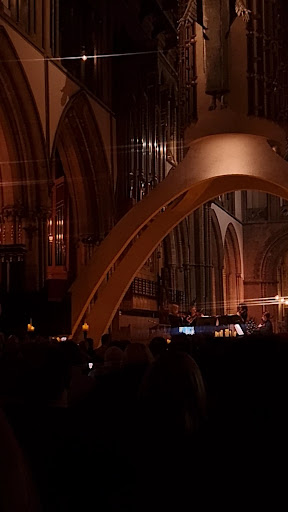
Pace's early schemes for this are quite like a Comper ciborium with what he called a "proper sized" organ on top. The design took four years to develop, including full size plywood mock ups. I think the design is an extraordinary synthesis of a screen which locates the altar, but also keeps the full east views through the Romanesque arch to the Lady chapel beyond. Set onto the pulpitum is the magistas - similar to a traditional rood figure but with Christ, not defeated, but reigning. Pace suggested that Jacob Epstein was the only sculptor, who could realise his vision. Epstein responded, to Pace's inquiry to say that it was the was the greatest thing he had been asked to do, and he was sure that it would result in a in a great act of faith. As with Pace, Epstein was particularly impressed with the 13th century arcade and design...
Read morePositive Review for Llandaff Cathedral
Llandaff Cathedral is a breathtaking gem nestled in a peaceful part of Cardiff. From the moment you approach, the stunning Gothic architecture and serene setting make a lasting impression. It’s a place of beauty, history, and spiritual significance that is truly unforgettable.
Inside, the cathedral is awe-inspiring, with soaring ceilings, intricate stonework, and stunning stained-glass windows that fill the space with colorful light. The iconic “Christ in Majesty” statue by Epstein is a powerful centerpiece that adds to the sense of wonder and reverence.
The cathedral is rich in history, and the staff and volunteers are warm, welcoming, and incredibly knowledgeable, eager to share fascinating stories about its past. Whether you’re attending a service, enjoying a concert, or simply exploring, the atmosphere is peaceful and uplifting.
The surrounding grounds are equally beautiful, perfect for a quiet walk or moment of reflection. It’s clear that the cathedral is lovingly cared for, making every visit a special experience.
Llandaff Cathedral is a must-visit for anyone in the area, whether you’re drawn by its spiritual significance, historical importance, or architectural beauty. A...
Read moreJust had a call from my eldest brother who lives in Cardiff and loves exploring places ,And he's visiting Llandaff cathedral and grounds today, And I'm not very happy with the way the commonwealth grave yard/soldiers off wars resting places are being kept when they have spent millions on restoring the cathedral and the part where a bomb had gone off, and just left this part to become over grown and in disrepair, my brother didn't even know if he was walking across these soldiers grave sites, I mean really how long has remembrance Sunday BEEN 11th NOVEMBER ,And children of this day an age are meant to have respect for the generation whom battled and still are to this day for this country and this is how they are remembered because they were buried in the commonwealth grave yard owed and supposed to be looked after by CARDIFF CITY COUNCIL ,I absolutely am disgusted with this and I Will be emailing...
Read more