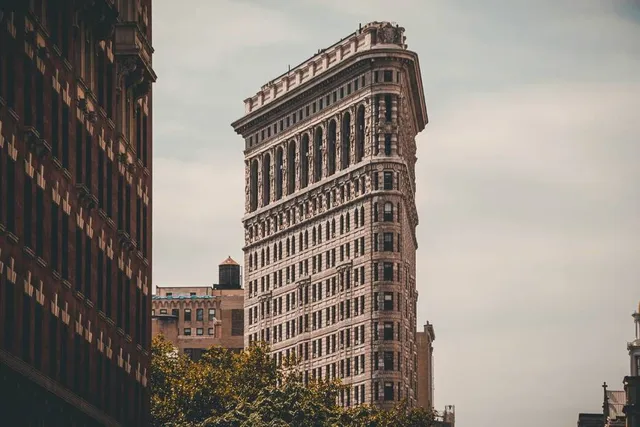
The Flatiron Building is an architectural gem nestled in the heart of Manhattan, New York City. Its distinctive triangular shape and prominent location make it an iconic symbol of the city's skyline. Here's a review based on its historical significance, architectural beauty, location, and overall experience:
Historical Significance: Constructed in 1902, the Flatiron Building holds great historical significance. It represents a pivotal era in New York City's development and showcases the innovative architectural designs of the time. The building's triangular shape was a response to the challenging site and has since become an emblem of the city's unique spirit and ambition.
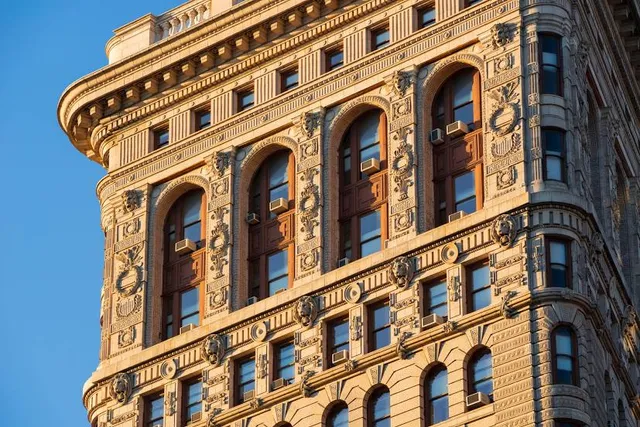
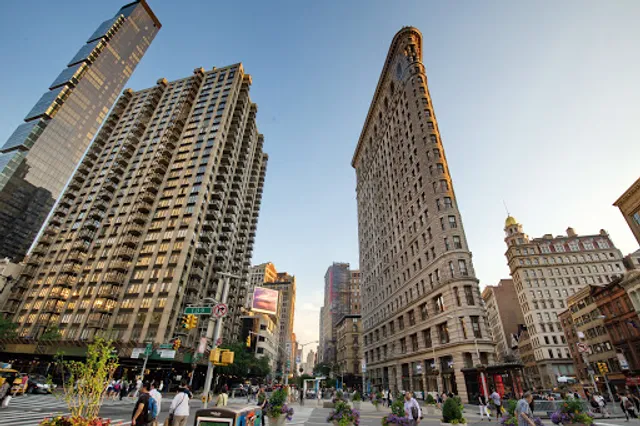
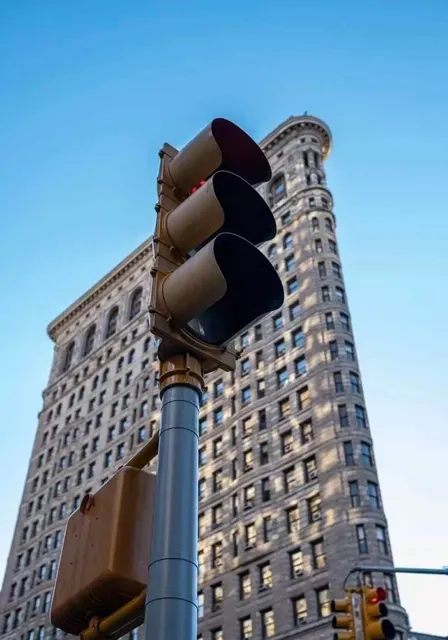
Architectural Beauty: The Flatiron Building's design is a masterclass in Beaux-Arts architecture. Its elegant facade, adorned with ornamental details, displays a harmonious blend of classical and Renaissance influences. The building's slender form and intricate details draw the eye and create a striking visual impact. It's especially captivating when viewed from nearby Madison Square Park, where its distinct shape stands out against the surrounding landscape.
Location: Situated at the intersection of Fifth Avenue and Broadway, the Flatiron Building boasts a prime location. Its proximity to other notable landmarks, such as Madison Square Park and the Empire State Building, adds to its appeal. The surrounding neighborhood is vibrant, with a bustling atmosphere, numerous shops, restaurants, and cultural attractions, making it an excellent area to explore before or after visiting the Flatiron Building.
Overall Experience: Visiting the Flatiron Building provides a unique opportunity to appreciate its architectural grandeur up close. While access to the interior of the building is limited, the exterior alone is worth the trip. Observing the structure from different angles reveals its dynamic form and highlights the meticulous attention to detail. Photographers and architecture enthusiasts will find plenty of inspiration here.
Additionally, the area surrounding the Flatiron Building offers a wealth of activities and attractions. Strolling through Madison Square Park or exploring the nearby Flatiron District with its trendy boutiques and eateries adds to the overall experience. It's worth noting that the sidewalk in front of the building can get crowded, so visitors may want to plan their visit during less busy times to fully appreciate the view and take photographs.
In conclusion, the Flatiron Building is a captivating architectural marvel that continues to captivate locals and tourists alike. Its historical significance, architectural beauty, and prime location make it a must-visit destination in New York City. Whether you're an architecture enthusiast, a history buff, or simply seeking an iconic photo opportunity, the Flatiron Building will leave you with lasting memories of its...
Read moreI've never been inside the Flatiron Building. But one doesn't need to enter in order to experience it.
BACKGROUND: Before the invention of electric steam irons, clothes irons were called flatirons. And here in NYC, when two roads cross at acute angles, triangular sidewalk islands were also nicknamed 'flatirons.' A big one stretched south from the sharp angle of Broadway and Fifth Avenue, from 23rd Street. The Fuller Company (not Fuller Brush) built an office building in the flatiron, so the Fuller Building became known as the Flatiron Building. It opened in 1903.
Another, smaller 'flatiron' is directly across 23rd Street, to the north. Go stand on it and admire the Flatiron Building. Maybe you'll lean against the 1895 streetlamp to make photos. That streetlamp not only predates the Flatiron Building, but it's kind of 'city famous' being one of the world's oldest electric streetlamps! All the others were replaced long ago.
IN FICTION The headquarters of The Boys (TV show) is on the top floor. And every Spider-Man fan knows that The Daily Bugle newspaper is in the Flatiron! In fact, a car crash was staged outside Eisenberg's Sandwich Shop across Fifth, for one of the movies. John Wick was NOT filmed here. The Continental Hotel is shaped like the Flatiron, but it's at that five-way intersection near Wall & Pearl streets. And where is the hotel roof, on which John spoke to the owner? Why, it's on one of the Rockefeller Center buildings, some five miles north!
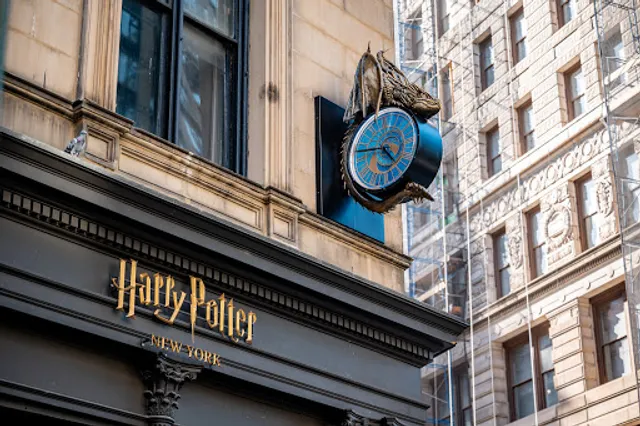
And in fiction that's been franchised, New York's Harry Potter Store is on Broadway just across 22nd Street from The Flatiron.
Oh, wait, there's a nearby fictional location. Just halfway down the block on west 23rd from the Flatiron Building is a big white cast-iron gem marked Home Depot. Nowadays it's a hardware store. But back in 1988, Tom Hanks, got a job there - it was a toy company - in Big! Why would filmmakers choose that particular building in which to film? Well for one thing, it's cast iron, built before electric lights. That means plenty of natural sunlight. And large spaces. Even the [bunk]bedroom scene was filmed there.
The other reason that building was chosen was that it was then the HQ of Mattel Toys. Barbie! This area was the Toy District. Marx, Kenner, Ideal, Schaper, Wham-o, they were all here too.
Eataly, a food palazzio, is right on the corner of 23rd & Fifth. But do yourself a favor if you arrive at lunchtime. Enter at the 23rd Street side. Much less crowded.
If you're in the mood for simpler fare, the original Shake Shack is located just inside the south end of Madison Square, across 23rd from The Flatiron.
If you'd like to take a walking tour of this and the Ladies Mile, I know some excellent guides who will...
Read moreThe Flatiron Building was designed by Chicago's Daniel Burnham as a vertical Renaissance palazzo with Beaux-Arts styling.53 Unlike New York's early skyscrapers, which took the form of towers arising from a lower, blockier mass, such as the contemporary Singer Building (built 1902–08), the Flatiron Building epitomizes the Chicago school conception:D] like a classical Greek column, its facade – limestone at the bottom changing to glazed terra-cotta from the Atlantic Terra Cotta Company in Tottenville, Staten Island as the floors rise[48 – is divided into a base, shaft, and capital.
Early sketches by Daniel Burnham show a design with an (unexecuted) clockface and a far more elaborate crown than in the actual building. Though Burnham maintained overall control of the design process, he was not directly connected with the details of the structure as built. That task was performed by his designer Frederick P. Dinkelberg, a Pennsylvania-born architect in Burnham's office, who first worked for Burnham in putting together the 1893 World's Columbian Exposition in Chicago, for which Burnham was the chief of construction and master designer.[E] Working drawings for the Flatiron Building, however, remain to be located, though renderings were published at the time of construction in American Architect and Architectural Record.[56]
Steel skeleton
Building the Flatiron was made feasible by a change to New York City's building codes in 1892, which eliminated the requirement that masonry be used for fireproofing considerations. This opened the way for steel-skeleton construction.[8] Since it employed a steel skeleton[F] – with the steel coming from the American Bridge Company in Pennsylvania[57] – it could be built to 22 stories (285 feet) relatively easily, which would have been difficult using other construction methods of that time.[58] It was a technique familiar to the Fuller Company, a contracting firm with considerable expertise in building such tall structures. At the vertex, the triangular tower is only 6.5 feet (2 m) wide; viewed from above, this pointed end of the structure describes an acute angle of about 25...
Read more