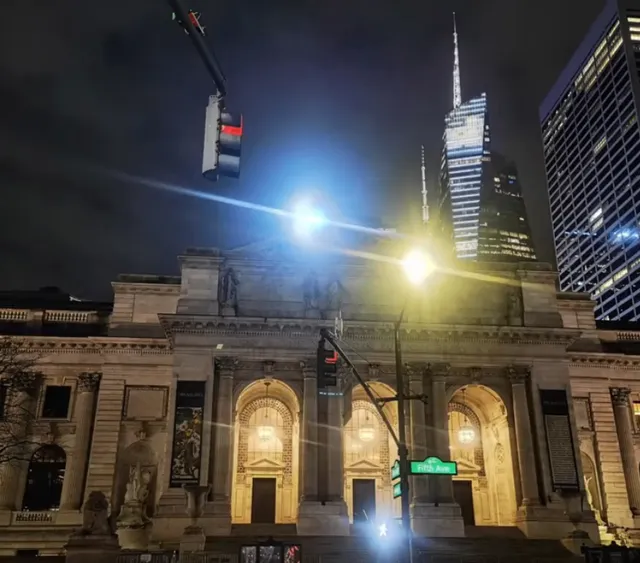
The New York Public Library (NYPL) is a beautiful and revered institution that attracts a respectful and diverse group of people. It stands as a beacon of knowledge and community in a bustling city, offering a safe and welcoming environment for all visitors.
In today's world, we heavily rely on energy to power our networks and the internet, which in turn fuels our research and daily activities. The NYPL provides a vital resource for many, especially during these challenging times when many people live without the comforts of a stable home. The library's infrastructure supports the essential needs of these individuals, from access to information to basic necessities like water and electricity.
As someone who has traveled across the country, documenting my journey from San Francisco via I-70, I have witnessed firsthand the diverse landscapes and cultures that make up our nation. Jack Kerouac's "On the Road" encapsulates the spirit of life on the road and the literature of the Beat Generation, which reflects the freedom and challenges of nomadic life. However, this lifestyle also highlights our collective carbon footprint and the urgent need for sustainable living practices. If we adjusted our habits, we could create a more sustainable world for future generations.
Unfortunately, many careers today do not offer sufficient compensation to cover basic living expenses, leaving some individuals in precarious situations. This economic disparity often forces people to seek refuge in public spaces like libraries. Public libraries across the country, including the Denver County Library, have become safe havens for those without stable housing. These libraries provide essential resources such as shade, energy, water, and internet access. However, they also bear the burden of accommodating a growing number of people in need.
In Denver, for example, the public library has become a stopover for many travelers looking to regroup. Sadly, it has also become a place where unhoused individuals gravitate to for basic resources, leading to overcrowded and sometimes chaotic conditions. In contrast, the New York Public Library remains an institution that has not been overrun by the destitute, offering a safe and family-friendly environment.
Libraries across the country are frequented by individuals with nowhere else to go. This phenomenon is a reflection of the broader societal issues, including a mental health crisis and economic challenges. Many work opportunities fail to provide adequate compensation, leading some individuals to self-medicate with drugs to cope with their harsh realities. In NYC, Xylazine use is prevalent among the homeless population, allowing them to sleep standing up in a state of sleep paralysis. These individuals often turn to public libraries for a semblance of safety and resources.
Sleeping in urban outdoor spaces is challenging, and substances like heroin are often used to numb the physical and emotional pain of such conditions. Public libraries inadvertently become places where these individuals administer their necessary resources. Those who understand the high cost of housing and choose not to support exorbitant rents often find creative solutions to their living situations. Libraries offer basic human resources such as water, bathroom facilities, and energy supplements, making them invaluable to this population.
The NYPL is not just an oasis for those seeking knowledge but also a sanctuary for those in need. The respectful security presence ensures a safe environment for all visitors. I visit the library approximately twice a week and find it to be a haven of peace and learning. Education has the power to set individuals free, and the NYPL plays a crucial role in cultivating intelligence and providing opportunities for personal growth.
The New York Public Library is a sacred place that must be preserved and cherished. It is a testament to the importance of public institutions in supporting and uplifting our...
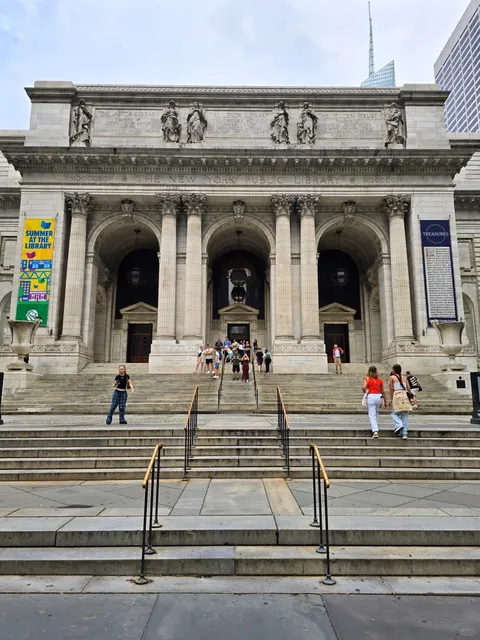
Read moreThe Stephen A. Schwarzman Building, located at 476 Fifth Avenue in Manhattan, is the flagship of the New York Public Library system. Opened in 1911, it was designed by Carrère and Hastings in the Beaux-Arts style and built on the site of the former Croton Reservoir. The exterior is clad in Vermont marble and features two iconic lion statues named Patience and Fortitude, sculpted by Edward Clark Potter. Above the entrance, six allegorical figures by Paul Wayland Bartlett represent philosophy, novel, religion, poetry, drama, and history.
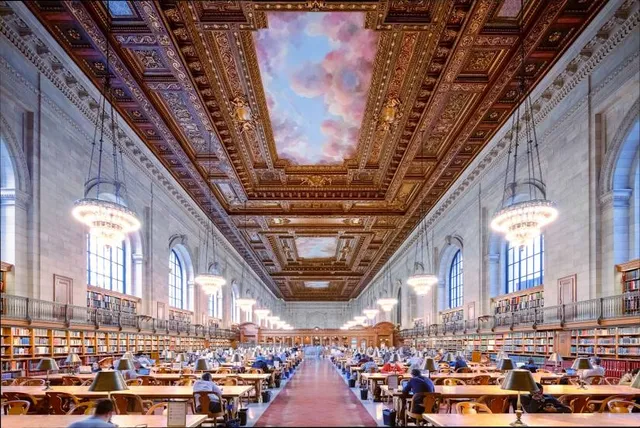
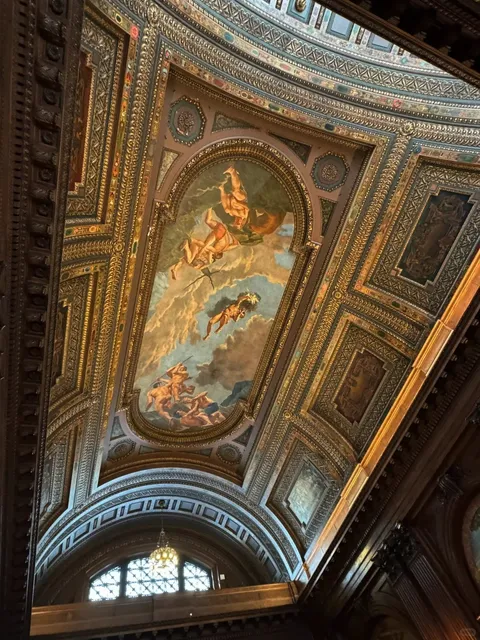
Inside, visitors are greeted by Astor Hall, a grand marble space with sweeping staircases. The Rose Main Reading Room, measuring 297 feet long with a 52-foot ceiling, is adorned with a coffered wood and painted ceiling. It serves as a serene space for study and research. The building houses over 2.5 million volumes and is one of four research centers in the NYPL system.
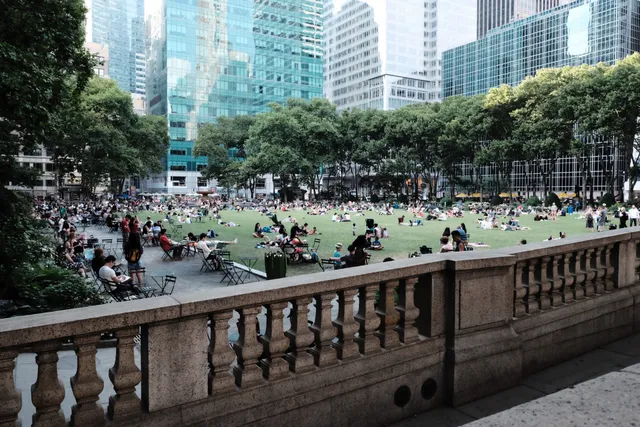
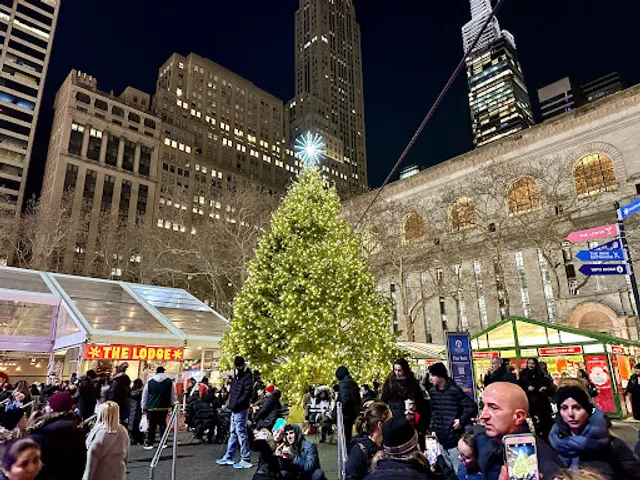
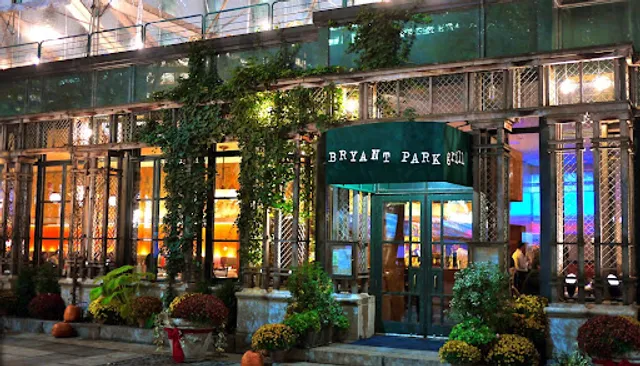
In the late 1980s, facing space constraints, the library expanded underground beneath Bryant Park, adding 64 kilometers of shelving. This innovative solution preserved the building’s historic integrity while dramatically increasing storage capacity.
The library’s origins trace back to 1895, when the Astor Library, Lenox Library, and Tilden Foundation merged. Today, it holds rare treasures including a Gutenberg Bible, Jefferson’s handwritten draft of the Declaration of Independence, and manuscripts by Galileo. The Polonsky Exhibition showcases highlights from the library’s 56 million-item collection, including maps, prints, and rare books.
The building is a designated National Historic Landmark and a New York City Landmark, recognized for both its exterior and interior spaces, including Astor Hall, McGraw Rotunda, and the Rose Main Reading Room. It attracts millions of visitors annually, offering free access to knowledge and culture.
The Vartan Gregorian Center for Research in the Humanities supports scholars with long-term access to collections and research programs. A free digital guide via Bloomberg Connects allows self-guided tours, enhancing visitor engagement.
Beyond its architectural grandeur, the Schwarzman Building symbolizes intellectual freedom and public service. It remains a vital cultural institution, blending history, innovation, and accessibility in the heart...
Read moreThe New York Public Library Main Branch aka, the Stephen A. Schwarzman Building is a beautifully designed Beaux Arts style building and one of the most prominent and iconic landmarks of New York City.
Located in Midtown Manhattan, New York and designed by the renowned architectural firm, Carrère & Hastings, the library opened to the public on May 23rd 1911. The New York Public Library Main Branch is one of the four research libraries of New York’s City’s Library system and contains an estimated 2.5 million volumes in its awesome collection.
Due to its rich and storied heritage, its impressive architectural features, its vast collection of books, manuscripts, tablets, and papers, and its appearance in numerous shows and films such as “Breakfast At Tiffany’s (1961), “Ghostbusters” (1984), “The Thomas Crown Affair” (1999), & Spider-Man (2002), the New York Public Library Main Branch has been listed on the U.S. National Register Of Historic Places, and was declared a U.S. National Historic Landmark.
In January of 2019, I brought my wife and myself for a visit to the library and we very much enjoyed our exploration of this remarkable institution. We were in awe of the building’s grand marble facade and its 2 stunning lion statues, nicknamed “Patience” & “Fortitude” both of which are located near the library’s main entrance. Other points of interest that we enjoyed seeing were “The Rose Main Reading Room” the “Astor Hall” the Wallace Periodical Room & the “McGraw Rotunda.” Each of these areas are immaculately designed, and are unquestionably worth visiting and viewing!!!
When traveling to New York, both my wife and I highly recommend for everyone to stop by and explore the New York Public Library Main Branch!!! You’ll have fun and will certainly bedazzled by this...
Read more