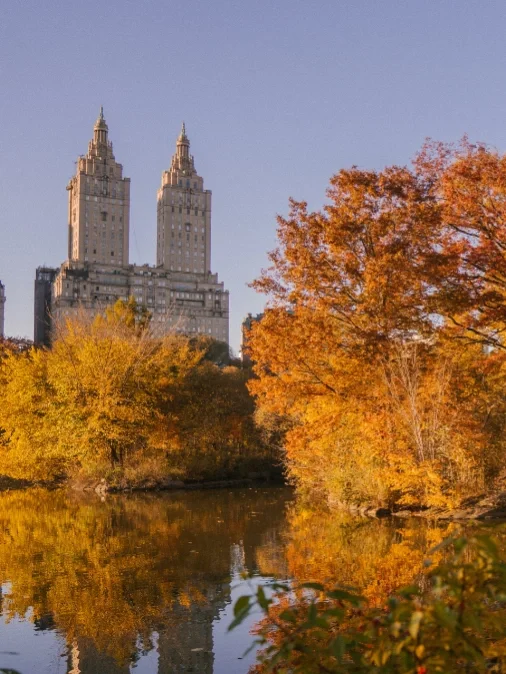
10 things to see in Central Park in New York ❤️❤️❤️
At 4 km long and 800 meters wide, Central Park is New York's immense green lung. Here's what you absolutely must see!
During your stay in New York, I strongly advise you to devote a half day or a day to Central Park, the most legendary and the largest park in Manhattan! but what should be seen in this huge park, covering an area of 3.41 km²? Here are the 10 places I recommend you!
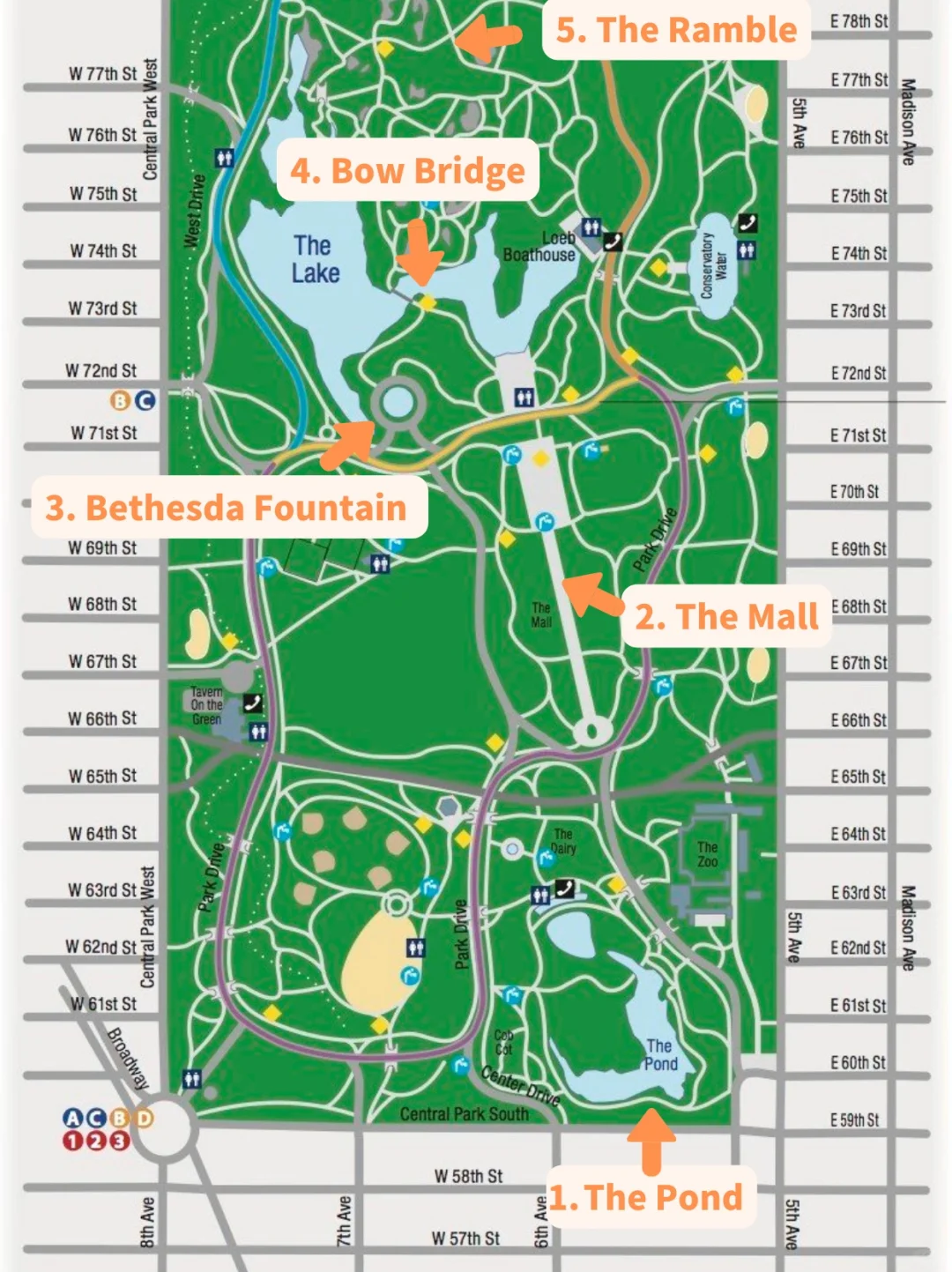
1 / The Mall
This grand, tree-lined pedestrian avenue is emblematic of Central Park. New Yorkers call it the "promenade". Especially remember to review the benches, each with a small personalized plaque. Some quotes are worth a look!
2 / Bethesda Fountain
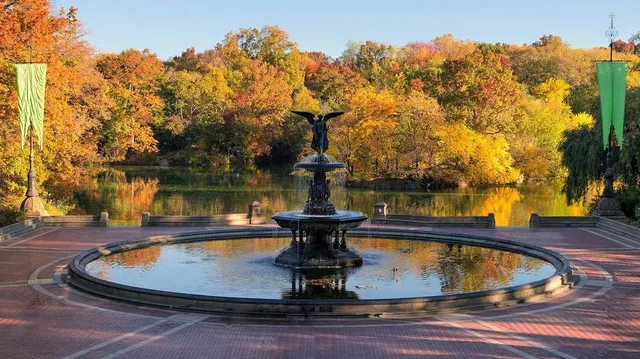
North of the Mall, you will come out in front of the monumental Bethesda Fountain, the most beautiful fountain in Central Park. This plaza was laid out from 1859 to 1864 and opens onto The Lake, one of the lakes in Central Park. on weekends, guaranteed atmosphere around the fountain… and traffic jams with a view of the lake! If you feel like it, don't hesitate to rent your boat in Central Park.
3 / Bow Bridge
a short walk from Bethesda Fountain, following the lake west, you will find the Bow Bridge, Central Park's most iconic bridge. this bridge, built in 1862 and 26.5 meters long, is indeed one of the most romantic places in the park.
4 / Strawberry Fields
continuing west along the lake you will come to Strawberry Fields, a small, very peaceful wooded area. Since 1985, the site has housed a memorial to John Lennon, the former Beatles singer who was murdered in 1980 in front of the entrance to the Dakota building, a stone's throw from here. the memorial is intended to be very simple: a mosaic with the word "imagine", in reference to one of the most famous songs written by the artist.
5 / Alice in Wonderland
Returning to the east side of the park, at 75th Street, you will discover one of Central Park's most amazing sculptures: Alice in Wonderland. this sculpture, inaugurated in 1959, is one of the places to do absolutely if you are with children. Just in front of the sculpture, take a look at the Conservatory Water body: a mini-lake reserved for model ships. to see also going down towards the South: the small statue of the dog Balto, at the level of the 67th Street. And while we're talking about children, go to our page dedicated to great deals with kids in New York.
6 / Belvedere Castle
this is one of my favorite places in Central Park. Firstly, because there is something completely surreal about this reproduction of a medieval castle in the middle of New York! second, because the lookout offers a superb view of the Turtle Pond below, the park and the buildings of the Upper East Side. I advise you to visit this place in the afternoon to have the sun behind your back. more information on the Belvedere Castle page.
7 / The Ramble
Between Bethesda Fountain and Belvedere Castle, take the time to get lost in The Ramble. this wooded area, with its rugged topography, will give you the impression of walking in the middle of the forest. And yet you are in the heart of Manhattan! Certainly one of the wildest places in the park.
8 / Jacqueline Kennedy Onassis Reservoir
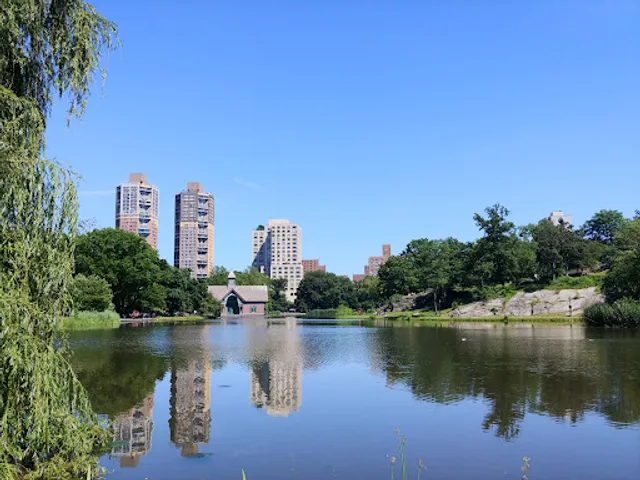
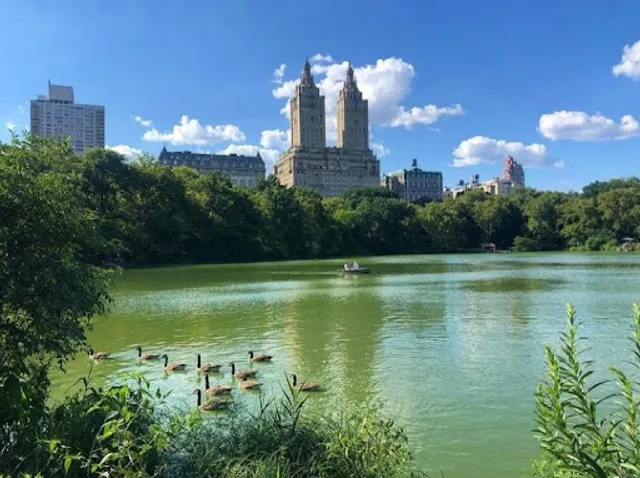
North of Belvedere Castle, the Reservoir is the largest body of water in Central Park. unlike the Lake, next to the Bethesda Fountain, this time you will not see any boats on the water: the reservoir is used to supply two other lakes in Central Park, The Pool and the Harlem Meer, the lake in the far north of the park. if you are a photographer, you will enjoy the view of the water and the buildings.
9 / Sheep Meadow
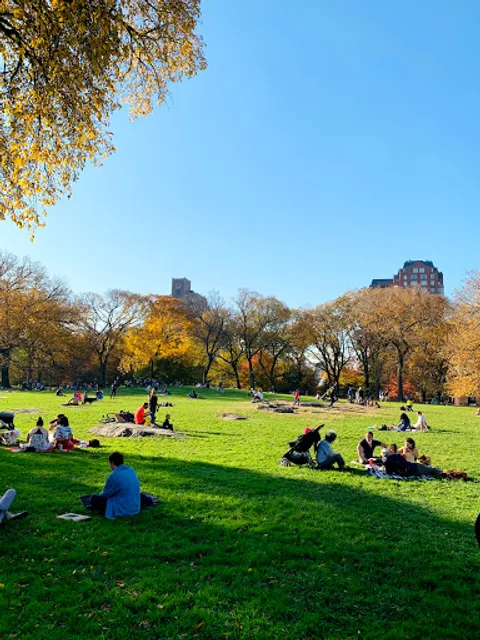
One of my other favorite places in Central Park is the “Sheep Lawn”. But I'm not the only one who loves this place! on weekends, when the weather is nice, crowds of New Yorkers come to lay their towels on these lawns and sunbathe. a very nice place also for photos because you will have the necessary distance to photograph the park and the buildings in the background.
10 / Central Park Zoo
Finally, you are...
Read moreThe recent alterations to the park exemplify the negative consequences of excessive human intervention in natural spaces. Actions taken by certain nonprofit and conservation groups have significantly disrupted the park’s inherent essence.
For example, the construction of numerous pathways has resulted in a loss of privacy for both visitors and wildlife. These pathways are visible throughout the park, eliminating any secluded areas that previously offered solace and a connection to nature. This has led to a noticeable decrease in wildlife activity, as animals are continually disturbed by the constant human presence.
While the intention behind these changes may have been to improve accessibility and aesthetics, the outcome has been a stark departure from the park’s original, untouched beauty. For individuals who seek inspiration and rejuvenation from natural environments, visiting this park may now prove to be a disappointment.
It is essential for organizations involved in such projects to strike a balance between accessibility and conservation. Unfortunately, in this case, the modifications have prioritized aesthetics over the park's natural essence. Moving forward, these groups should reflect on the impact of their actions and strive to preserve the intrinsic value of such...
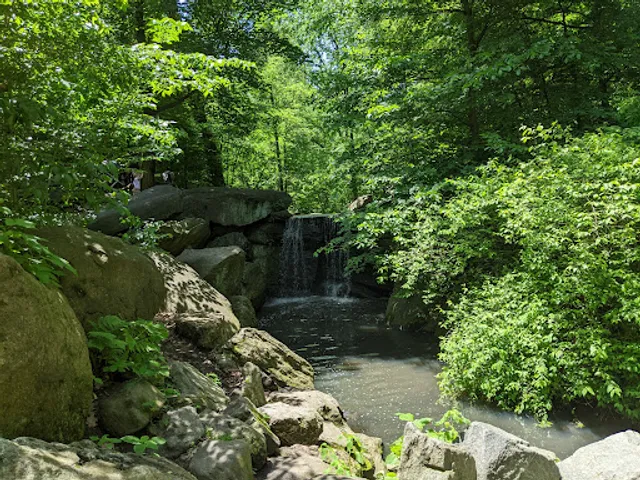
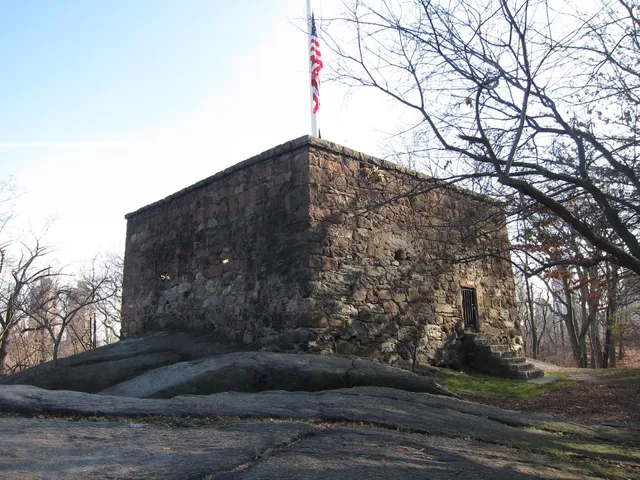
Read moreThe North Woods encompasses a variety of landscapes and experiences, including the Ravine and the area surrounding the Blockhouse, a fortification built during the War of 1812 that is the oldest structure in the Park. The North Woods is an ideal place for wandering and exploring—and escaping the hustle and bustle of the City. It’s also a popular spot for birdwatching and other forms of nature observation. Inspired by the well-known forested landscapes in the northeast such as the Catskills and Adirondacks, the Park’s designers created woodlands such as the Ramble and the North Woods to provide opportunities for a more intimate and immersive experience of nature. They made these landscapes specifically for New Yorkers who could not afford a vacation to these places—to offer them an escape from urban life that was closer to home. To create the North Woods, designers Frederick Law Olmsted and Calvert Vaux incorporated the area’s existing dramatic topography (including hills and large rock outcrops); added trees and other vegetation; and designed new features such as water bodies, cascades, rustic bridges, and a network of paths for exploring it all. Their goal was to create an impression of a rugged wilderness in the heart...
Read more