Second Amendment
The Second Amendment states that the right to bear arms is intrinsic to a free state. Free citizens will always carry weapons — it’s part of freedom itself. But that freedom also attracts danger. Armed individuals create risk, crime, and instability. That’s why the amendment begins with the militia: the militia exists to counterbalance domestic threats caused by those same individual rights.
The Supreme Court tries to regulate individual rights. It treats the amendment as a government permission slip, not a recognition of natural freedom. In my interpretation, “well regulated” doesn’t mean restricted — it means robust, functioning, and prepared. A well regulated militia is one that’s capable, strong, and ready — not one limited by government control.
My interpretation is better because “well regulated” needs no further explanation. It already means what it says: well equipped, well trained, and effective. No legal acrobatics or historical guesswork required.
The Court’s interpretation of “well regulated” does the opposite — it heaps endless regulations onto the individual’s right to bear arms without ever defining what those regulations are. It uses vagueness as authority. By pretending to clarify, it only confuses.
The framers tied freedom and order together in one sentence; the Court split them apart. The result isn’t balance — it’s bureaucracy.
Thirteenth Amendment
The Thirteenth Amendment is often celebrated as the moral cornerstone of the United States — the line that separates the old nation of bondage from the new nation of freedom. But when read closely, it is one of the most vague, careless, and dangerous sentences in American law.
“Neither slavery nor involuntary servitude, except as a punishment for crime whereof the party shall have been duly convicted, shall exist within the United States, or any place subject to their jurisdiction.”
At first glance, it looks absolute — slavery shall not exist. But the moment you reach the comma, everything collapses. The phrase “except as punishment for a crime” empties the amendment of its own moral power. It doesn’t abolish slavery; it redefines it as legal under a new condition. The government that once allowed men to be enslaved by private owners now allows them to be enslaved by the state.
The problem begins with what an amendment is supposed to be. Legally, an amendment is a minor adjustment or correction to an existing framework — a refinement of language or principle, not a total reconstruction. But the Thirteenth Amendment attempts something enormous without rewriting the foundation beneath it. It adds a single line to a Constitution that never defined slavery, servitude, or freedom in the first place. That omission makes it a legal illusion: a change in words, not in structure.
Because neither slavery nor crime are defined, the amendment leaves the door open for endless manipulation. If any act can be made a “crime,” then any person can legally become a slave. The entire amendment depends on the meaning of words that were never given meaning. It reads like a promise written in disappearing ink — visible in principle, erased in practice.
The result is that the amendment functions more like a loophole than a safeguard. It permits exploitation under the cover of law, especially through mass incarceration, forced prison labor, and the criminalization of poverty. Its authors built a monument to freedom on the same foundation that once justified ownership of human beings.
There is no poetry in that. Where the Second Amendment, for all its flaws, balances freedom and danger in one breath, the Thirteenth only pretends to balance morality and law — and in doing...
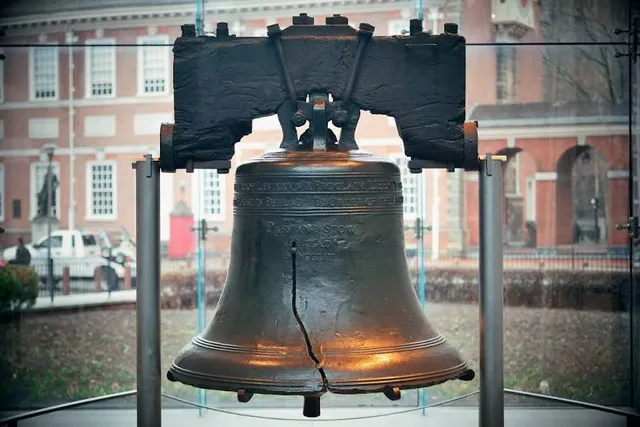
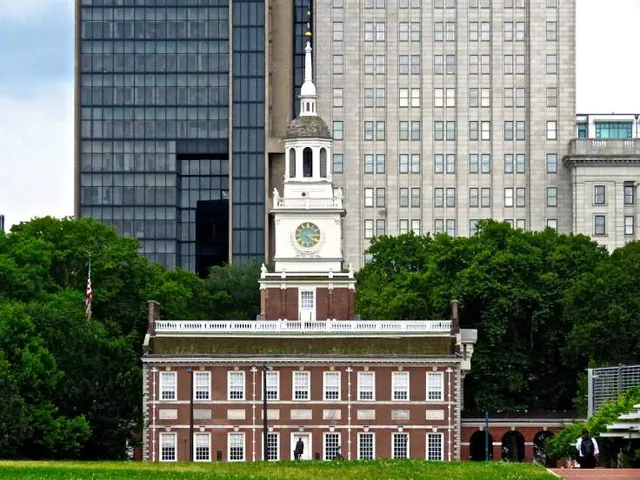
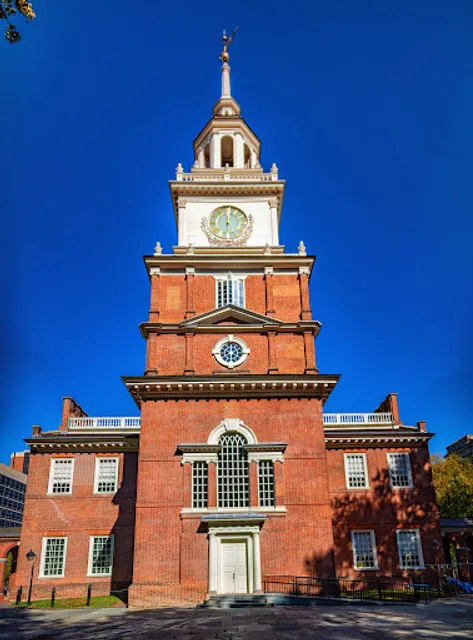
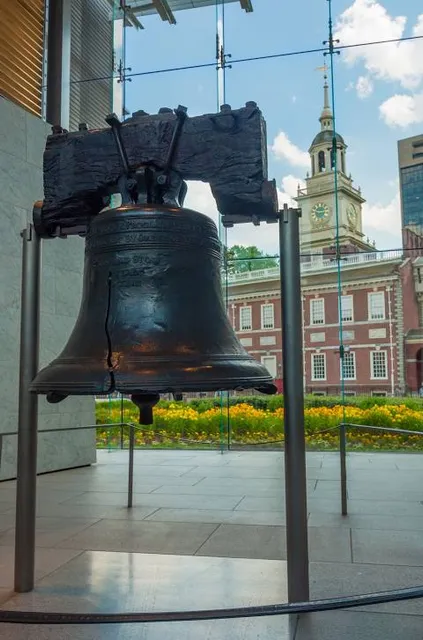
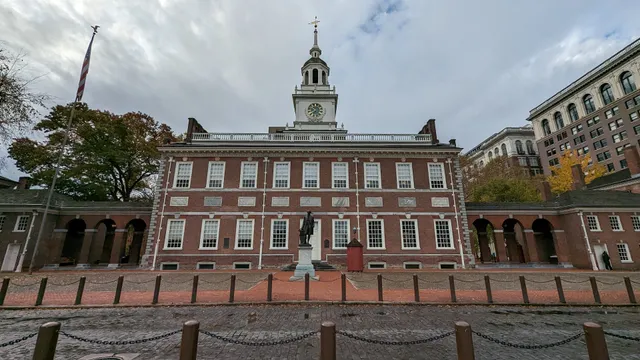
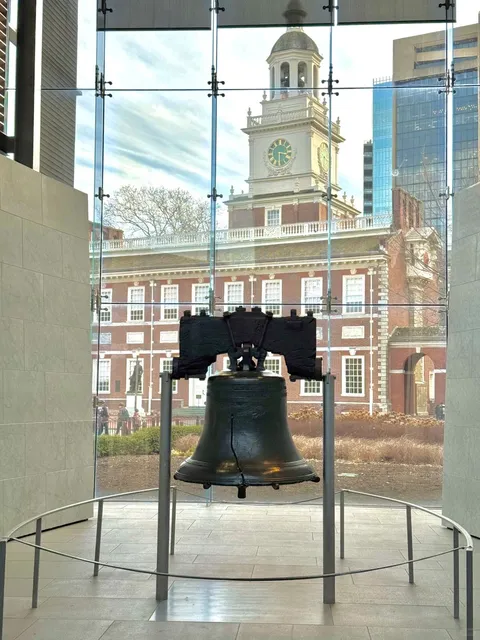
Read moreThe Liberty Bell: An Iconic Sign of Liberty History comes to life when you visit the Liberty Bell, located at 526 Market St., Philadelphia, PA. It's an experience you won't soon forget. With its well-known crack and profound biblical inscription, this iconic 2,080-pound bell is a timeless representation of democracy and freedom. The Liberty Bell is a must-see landmark that captures the essence of American independence, regardless of your interest in history or level of travel. Everyone can access the site because it is free to use and well-structured. Interesting historical exhibits describing the bell's beginnings, significance, and development into a timeless emblem of the abolitionist movement and the struggle for civil rights can be found as you stroll through the exhibit before the bell. With interactive features, artifacts, and educational panels that offer context beyond the bell itself, the presentation is captivating. Everyone can access the site because it is free to use and well-structured. Interesting historical exhibits describing the bell's beginnings, significance, and development into a timeless emblem of the abolitionist movement and the struggle for civil rights can be found as you stroll through the exhibit before the bell. With interactive features, artifacts, and educational panels that offer context beyond the bell itself, the presentation is captivating. The sight of the Liberty Bell is truly breathtaking once you arrive at it. Reading the inscription, "Proclaim Liberty Throughout All the Land Unto All the Inhabitants Thereof," and getting a close-up look at the crack are both potent moments. Excellent photo opportunities are provided by the location, and the friendly staff is more than willing to answer inquiries and offer advice. The Liberty Bell's ideal location in Independence National Historical Park, only a short distance from Independence Hall, the site of the Declaration of Independence's signing, is another benefit of visiting. This facilitates the exploration of several historic sites during a single visit. A must-see destination in Philadelphia is the Liberty Bell. It is a poignant experience for tourists of all ages because of its rich history, educational value, and symbolic significance. This landmark serves as a reminder of the timeless principles of justice and liberty, regardless of whether you are a...
Read moreThe Liberty Bell – A Timeless Symbol of Freedom!
No trip to Philadelphia is complete without seeing the Liberty Bell, one of the most powerful symbols of independence and democracy in the world. Housed in the Liberty Bell Center across from Independence Hall, this iconic bell has stood the test of time as a reminder of the fight for liberty and justice.
Standing before the massive, cracked bronze bell, you can’t help but feel the weight of history. Once used to call lawmakers to meetings, the Liberty Bell became an enduring emblem of the abolitionist movement and later the Civil Rights movement, inspiring generations to seek freedom. The inscription on the bell, “Proclaim LIBERTY Throughout all the Land unto all the Inhabitants thereof,” from Leviticus 25:10, echoes the ideals on which America was founded.
Why visit the Liberty Bell? 🔔 A Historic Icon – A powerful reminder of America’s ongoing journey toward freedom and equality. 📜 Deep Symbolism – Once used in the fight against slavery and later for civil rights. 🏛 Free to Visit – No tickets needed, and the Liberty Bell Center provides fascinating exhibits on its history. 📸 A Must-See Landmark – A perfect place for a photo with Independence Hall in the background.
The bell’s famous crack only adds to its legend, proving that while time may wear down even the strongest metal, the spirit of liberty never breaks. Whether you’re a history lover or just looking to stand in the presence of a national treasure, the Liberty Bell is an absolute must-see!
#LibertyBell #SymbolOfFreedom #PhiladelphiaHistory #VisitPhilly #HistoricPhilly...
Read more