After nine years as an active member of this church, my family and I were forced to leave by a bully, an old geezer in the choir named Harry Leich. He told me flat out, “If you don’t like it, you can leave.” After he bullied and harassed me for many months and refused to respect the boundaries I put up to prevent him from speaking to me, I finally had enough and left. I used every connection and tool I had to stop him from bullying me, and he was temporarily banned from the building for other reasons on a handful of occasions over several months. But he would always decide on his own when he was done with those bans and just show up and start harassing me again. His reasoning was that he “has been a member of this congregation for 29 years.” I don’t see how being a member that long (or anything else) entitles anyone to treat others with meanness, disrespect and disdain. A large part of the problem was the refusal of the leaders to go as far as kicking him out permanently and just plain apathy of many other people toward resolving this problem.
This all adds up to this church not being a safe place emotionally. This church can't keep people safe from bullies like Harry even in its main space, its main time of gathering - Sunday morning worship. I was attacked psychologically every time I entered that space and he was there, and very few people spoke up to stop it on the spot, and nobody could resolve this problem for good. Therefore, the leaders are accepting of this church being a hostile environment to even its own members.
In that and other situations, this is the church of “no.” Instead of following the biblical principle of building people up and supporting each other, this church has a culture of tearing people down. As with many churches, there is a high expectation for members to be involved in some activity beyond attending Sunday worship (membership very much equals involvement). Even so, the parish has a way of discouraging volunteers when they try to contribute and carry out tasks in certain operational areas. Often when initiative is shown or somebody doesn’t do something the “right” way, people are very quick to say no and put others in their place in a shameful and disrespectful way. Or they even go as far as removing people from their volunteer roles in a very unbusinesslike and humiliating way, with no explanation given. People will speak up directly to others in order to block their efforts and it’s usually not done in a constructive way – not in the spirit of collaboration or encouragement in a gently corrective way. One reason for this seems to be an unspoken desire to control on the part of many members, an atmosphere of constant competition, a very political climate in a subversive way.
This church is one of the most un-church-like and un-Christian places I have ever been part of. Many people are more concerned about maintaining the church rules and integrity of the institution than being loving and supportive of its individual members. This church is more concerned about being “orthodox” or for procedures or a rite/ritual being done in the proper way – more of a focus on preserving the tradition, institution or way of operating over creating community and being open to the contributions of members as individuals. Many people won’t hesitate to tell you that you’re wrong or that what you bring or offer to the community is not welcome.
This place is very inward-facing. As a community, they have spent a lot of time dealing with internal conflicts. With these years-long challenges, the parish is very much stuck on itself and trying to manage its own internal struggles rather than being an outward-looking Christian community that could be a beacon in the neighborhood. It’s as if it wants to prove to itself that it is right. There is a lot of self-righteous attitude and pride over being right or proper in their church ways over valuing what individuals bring or contribute to...
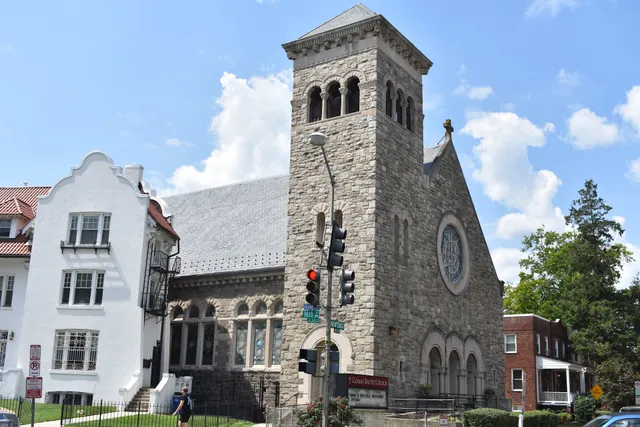
Read moreAfter being ordained the first black female Episcopal priest in 1977, Pauli Murray served as a priest at St Stephen and the Incarnation. The church has also played a role in climate change activism. The church has also been used by climate change activists in their work protesting the Keystone XL Pipeline.
It’s just my way of saying that I see evidence of good civic engagement by this church, and that they are correctly, assessing the things of value worth caring about, and honoring and fighting for in this world are fights that are never about things they are always always about people. The fight is to care, and to organize, and to engage in the concentrated, compassionate caring for the unfortunate the poor the orphans n the widows.
. Pure religion and undefiled before God and the father is this to visit the fatherless, and the widows in their afflictions.
I was up at an Episcopal seminary in Virginia outside of Washington DC and they had a Pauli Murray building and it’s nice to follow that great legal mind who ultimately and wisely found higher law to be of the most value. That is why she now is a saint. A literal saint think about what that means. Especially if you’re from New Orleans.
On route to becoming a saint, born in Baltimore, brought to bull Durham as an orphan to be raised by episcopal aunts, and Episcopal grandparents, and I am not an Episcopalian, but I can’t help to have a little love in my heart for any faith that gave faith and hope and charity and such abundance to Pauli Murray
And she serves st this congregation on route to Pittsburgh, and then on to glory and Brooklyn. Anyway, final thought is why in 1977 Pauli Murray became ordained minister, and then in about seven or eight years banged out a life of service and education reflection in Elegiac wisdom. It can only be called a solid path toward Saint hood for i suppose Latter Day Saints and any living through the ladder days it is so encouraging to be able to orient to such a Saints and servants of god such as a Pauli Murray.
I’m recognizing that whether you believe in God, or not their wisdom in her two aunts in raising Pauli Murray from a child attending church south of Durham Durham south the Episcopal church there their values really are an important and overlooked structural core of Pauli Murray and their Pauli Murray boots on the ground work with the compendium of racial laws state by state, but in teaching and training the students at the Law School of Ghana, the generation of Ghanaian lawyers and legal scholars that would serve in the judicial branch and interpret the new and young constitution for it free Ghana. From Accra their work with the 14th amendment as a basis for equal protection, on route to equal rights Pauli Murray leaves the world better wherever yhey find it. Which is recognized by both RBG and Thurgood Marshall and, I suppose in a roundabout way, Lewis Brandeis also would be a third Supreme Court justice that could testify of Pauli...
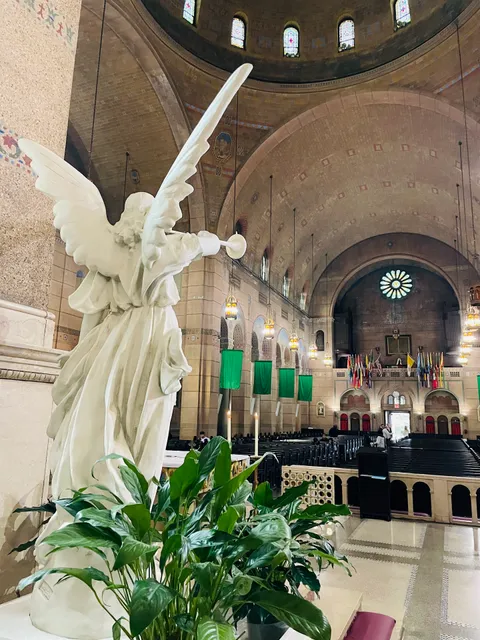
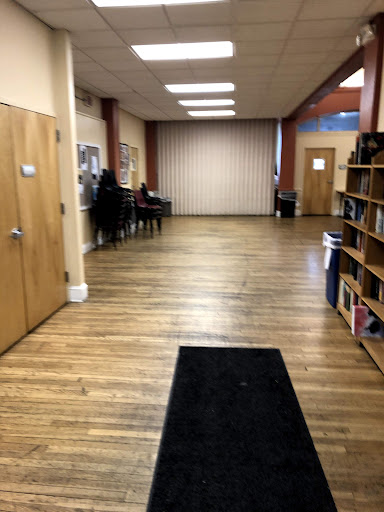
Read moreAlthough I have not visited this church during service hours I am having both my wedding ceremony and reception there. The sanctuary is one of the most beautiful I have ever seen. It has a very rustic vibe and I love the fact that although they have pews on the right side, chairs are centered and used during service. This set up is an added perk since the sanctuary can be used as a reception hall as well. The fact the church is very community based makes it a more attractive place to visit. Thrive DC is held in the basement as well as a soup kitchen for the homeless and in times of need they also serve as a shelter for those that need it. Mike is a great contact person who is always available to help and answer...
Read more