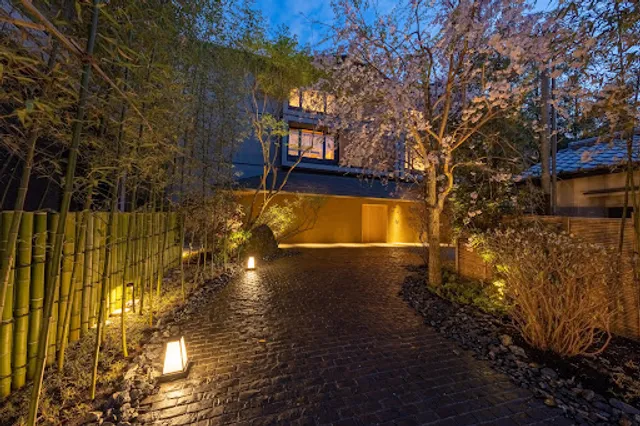
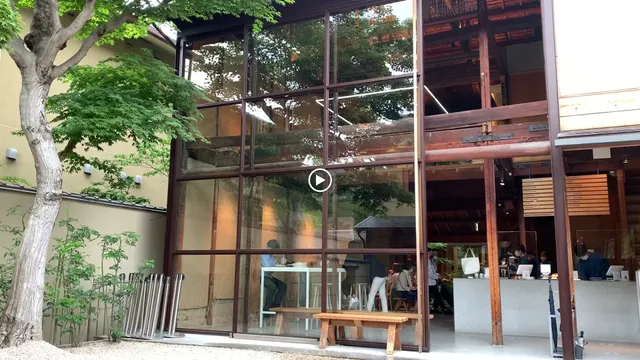
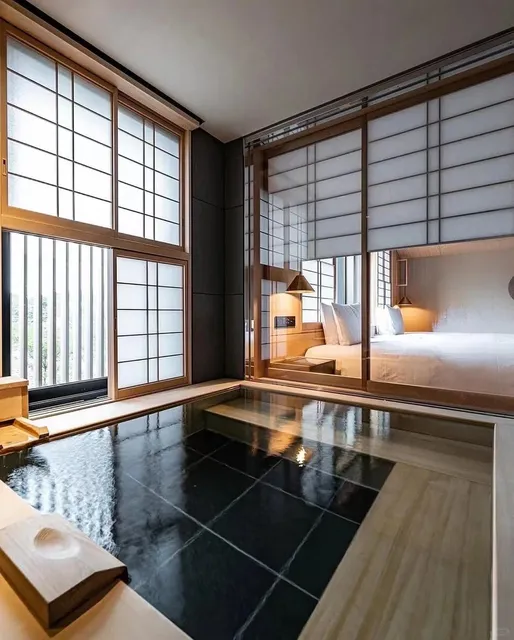
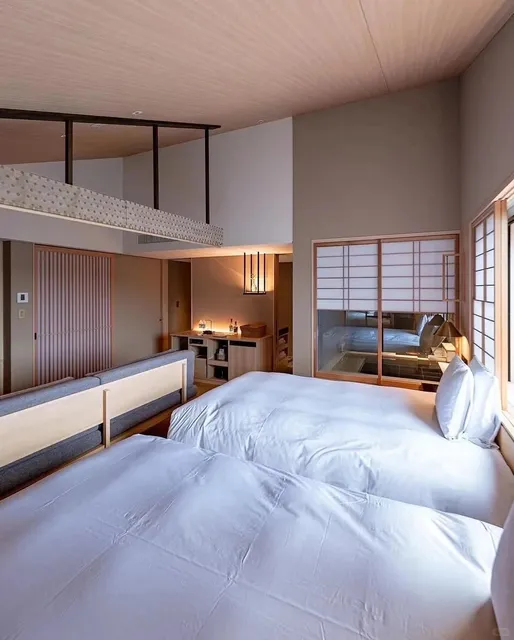
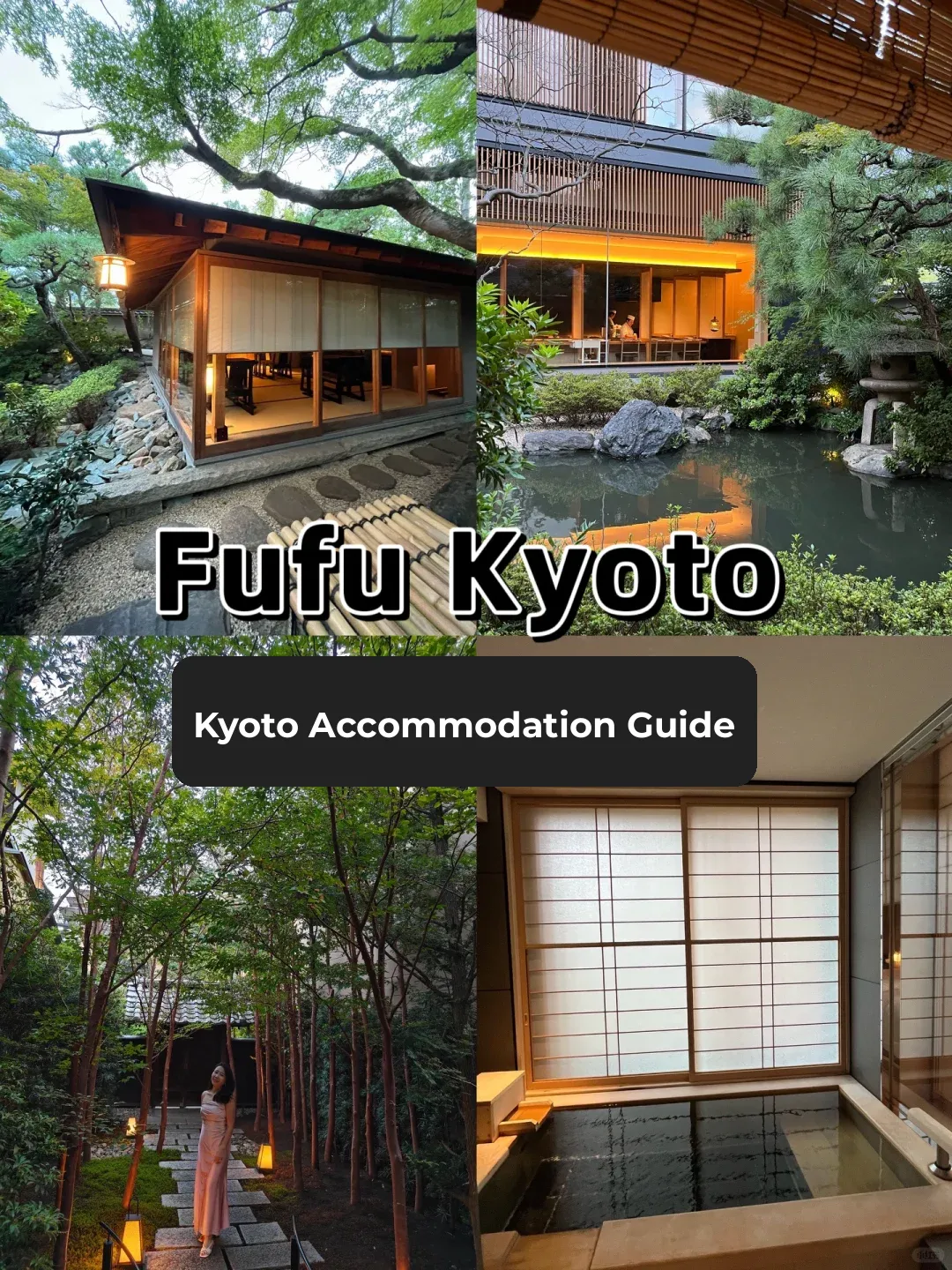
Newly opened in April of 2021, Fufu Kyoto attempts to straddle the fence between a boutique luxury hotel and a Japanese ryokan. As is the case with their other properties (we've previously stayed at Fufu Nikko and Fufu Kawaguchiko), they manage to pull it off... in most respects.||||Located at the foot of Higashiyama, this 40-room property is within walking distance of Nanzenji Temple, Eikando (Zenrin-ji) Temple, Heian Jingu Shrine and Philosopher's Path, and is less than a 10-minute drive from Kiyomizu-dera, Kodaiji Temple, Yasaka Jinja Shrine and the Gion district. In my opinion, it's a tad better situated than the Ritz-Carlton, Aman Tokyo or Four Seasons, although I feel that the Park Hyatt has them all beat when it comes to location.||||Aesthetics wise, Fufu Kyoto does a pretty good job in dishing out a Japan/Kyoto vibe without being so traditional as to feel like it's from the Meiji era like some of the famous ryokans in the area (i.e. Tawaraya and Hiiragiya.) Furnishings are decidedly Western, with beds rather than futons, wooden rather than tatami mat floors, and real beds. Given that it's new, it has all of the in-room tech that one would come to expect from an international-standard luxury hotel, including power plugs everywhere, fast WiFi, and a giant, flat-screen TV. However, there are some pretty Japanese touches such as shoji (sliding rice paper door, window divider or room divider) trimmings in numerous places as well as a small rock fountain in the corner of the living room (at least in our Suite.) It's all done with Japanese-style restraint, and - unlike at their Kawaguchiko property - it's not so cluttered that it almost feels claustrophobic.||||Other aspects that are hotel (rather than ryokan) like: shoes don't come off as soon as you enter Fufu Kyoto, and you can book a room without meals (many ryokans only offer half-board rates.) Also - while there is a pretty garden that can be viewed from the reception lobby as well as the restaurant, it's not the central feature of this property.||||One major difference between Fufu Kyoto and just about any other top property in the city is the fact that every single room has its own Onsen (hot springs) bath. Most other hotels and ryokans that do offer Onsen only have them in their higher category rooms (Suiran), or require guests to go to the on-site communal bathing facility (Aman Kyoto).. and that's if they offer Onsen at all (Hoshinoya, Park Hyatt, Ritz-Carlton, Four Seasons.) Kyoto is not known for being an Onsen haven, so this is a huge Fufu advantage. It should be noted, however, that it's not what is known as "kakenagashi" (where the hot springs water is constantly poured into the bathtub and overflows without being reused.) At Fufu, they truck in the Onsen water from the Fushimi area, and route the Onsen water via a methodd called "circulation filtration" - a form of reusing the water after disinfecting it. If you want a pure, kakenagashi Onsen luxury ryokan experience, you're best off heading further afield to places like Arima Onsen or Kurama.||||We booked their top room type, the Fufu Luxury Premium Suite, which offers 91m² of indoor space that has a separate bedroom/living room and a nice view of the nearby mountains. I also had a chance to inspect a lower category room - the Comfort Twin room, which was 42m² in size - comparable to a standard or deluxe room in most international brand hotels in Japan. It's obviously much smaller, but still had an Onsen bath, all of the tech and most of the amenities found in the Luxury Premium Suite. What was missing was any view to speak of - the "windows" were covered by a sliding shoji, and when I slid the shoji aside, there was a mosaic-ed window that I couldn't see out of. This was most likely due to the window immediately facing an adjacent building, meaning they block off the view both ways for privacy's sake. Whether it's a deal-breaker or not depends on your own priorities.||||We choose a package that included a Japanese breakfast served in our own room, and it was among the best breakfast meals we've had in a ryokan. It was not the run-of-the-mill stuff that's found in many ryokans ("himono" sun-dried then grilled fish, boiled tofu, etc.) Fufu actually makes a creative attempt at offering something distinctly Japanese without being exactly the same as other breakfasts. For instance, rather than offer up the typical red miso soup, they prepared a white miso soup with yuba (tofu skin), and it was very tasty (I generally don't like white miso, by the way.) And for dessert, rather than simply providing few slices of fruit like 90% of Japanese breakfasts, they provided a sweet and tangy fruit jelly (with real fruit mixed in.)||||Overall, Fufu has done a good job in enabling a ryokan-style experience while offering hotel-like amenities (and flexibility) that will allow most people to be comfortable in staying multiple nights at the property. There are a few drawbacks, however. For starters, there is no direct phone line to Fufu Kyoto itself; it might exist somewhere, but it's not published on their website nor could I find it even after calling their central reservations office and asking for the number. The agent said that they'd route me to the appropriate personnel depending on what I was requesting. Seems very impersonal to me. Additionally (and very curiously), their main corporate line does not offer the option to choose an English agent - all of the explanations are in Japanese, so you'd have no idea what option to select to get to the right person. When I mentioned it to the agent, she said "foreigners can simply press 1 or two, then ask for an English-speaking agent, and we'll route the call to someone that speaks English." To men, that's a major hack job and woefully inadequate for a luxury property that aims to compete with the very best hotels and ryokans in Kyoto, if not all of Japan. Finally, there is no gym, no pool and no laundry service. I mentioned to the Fufu Kyoto manager that the lack of laundry service might put off foreign travelers that intend to stay in Kyoto for most than a few nights, especially ones that have the disposable yen to stay at a luxury property. I'm not sure if I believe him or not, but he told me that "they're in discussions with a few establishments that they could potentially outsource this service to."||||Overall, we had a very nice stay and enjoyed the spacious and attractive room, the soothing Onsen and wonderful Japanese breakfast. With dynamic pricing in place at most major properties in Kyoto, it's never certain how the price will compare between different properties. At the time we booked, however, Fufu was expensive, but was quite a bit cheaper than comparable suite rooms at competing hotels like the Park Hyatt, Suiran, Aman, Ritz-Carlton and Four Seasons. If this disparity will persist in the future, then for people looking for a luxury Onsen ryokan experience and want it in Kyoto, Fufu is a top contender. It's not nearly as amazing as Fufu Nikko, but Kyoto commands much higher prices than just about anywhere else in Japan (due to it being a major travel destination); if you think it's a ripoff, then you're probably better off staying somewhere in...
Read moreNewly opened in April of 2021, Fufu Kyoto attempts to straddle the fence between a boutique luxury hotel and a Japanese ryokan. As is the case with their other properties (we've previously stayed at Fufu Nikko and Fufu Kawaguchiko), they manage to pull it off... in most respects.||||Located at the foot of Higashiyama, this 40-room property is within walking distance of Nanzenji Temple, Eikando (Zenrin-ji) Temple, Heian Jingu Shrine and Philosopher's Path, and is less than a 10-minute drive from Kiyomizu-dera, Kodaiji Temple, Yasaka Jinja Shrine and the Gion district. In my opinion, it's a tad better situated than the Ritz-Carlton, Aman Tokyo or Four Seasons, although I feel that the Park Hyatt has them all beat when it comes to location.||||Aesthetics wise, Fufu Kyoto does a pretty good job in dishing out a Japan/Kyoto vibe without being so traditional as to feel like it's from the Meiji era like some of the famous ryokans in the area (i.e. Tawaraya and Hiiragiya.) Furnishings are decidedly Western, with beds rather than futons, wooden rather than tatami mat floors, and real beds. Given that it's new, it has all of the in-room tech that one would come to expect from an international-standard luxury hotel, including power plugs everywhere, fast WiFi, and a giant, flat-screen TV. However, there are some pretty Japanese touches such as shoji (sliding rice paper door, window divider or room divider) trimmings in numerous places as well as a small rock fountain in the corner of the living room (at least in our Suite.) It's all done with Japanese-style restraint, and - unlike at their Kawaguchiko property - it's not so cluttered that it almost feels claustrophobic.||||Other aspects that are hotel (rather than ryokan) like: shoes don't come off as soon as you enter Fufu Kyoto, and you can book a room without meals (many ryokans only offer half-board rates.) Also - while there is a pretty garden that can be viewed from the reception lobby as well as the restaurant, it's not the central feature of this property.||||One major difference between Fufu Kyoto and just about any other top property in the city is the fact that every single room has its own Onsen (hot springs) bath. Most other hotels and ryokans that do offer Onsen only have them in their higher category rooms (Suiran), or require guests to go to the on-site communal bathing facility (Aman Kyoto).. and that's if they offer Onsen at all (Hoshinoya, Park Hyatt, Ritz-Carlton, Four Seasons.) Kyoto is not known for being an Onsen haven, so this is a huge Fufu advantage. It should be noted, however, that it's not what is known as "kakenagashi" (where the hot springs water is constantly poured into the bathtub and overflows without being reused.) At Fufu, they truck in the Onsen water from the Fushimi area, and route the Onsen water via a methodd called "circulation filtration" - a form of reusing the water after disinfecting it. If you want a pure, kakenagashi Onsen luxury ryokan experience, you're best off heading further afield to places like Arima Onsen or Kurama.||||We booked their top room type, the Fufu Luxury Premium Suite, which offers 91m² of indoor space that has a separate bedroom/living room and a nice view of the nearby mountains. I also had a chance to inspect a lower category room - the Comfort Twin room, which was 42m² in size - comparable to a standard or deluxe room in most international brand hotels in Japan. It's obviously much smaller, but still had an Onsen bath, all of the tech and most of the amenities found in the Luxury Premium Suite. What was missing was any view to speak of - the "windows" were covered by a sliding shoji, and when I slid the shoji aside, there was a mosaic-ed window that I couldn't see out of. This was most likely due to the window immediately facing an adjacent building, meaning they block off the view both ways for privacy's sake. Whether it's a deal-breaker or not depends on your own priorities.||||We choose a package that included a Japanese breakfast served in our own room, and it was among the best breakfast meals we've had in a ryokan. It was not the run-of-the-mill stuff that's found in many ryokans ("himono" sun-dried then grilled fish, boiled tofu, etc.) Fufu actually makes a creative attempt at offering something distinctly Japanese without being exactly the same as other breakfasts. For instance, rather than offer up the typical red miso soup, they prepared a white miso soup with yuba (tofu skin), and it was very tasty (I generally don't like white miso, by the way.) And for dessert, rather than simply providing few slices of fruit like 90% of Japanese breakfasts, they provided a sweet and tangy fruit jelly (with real fruit mixed in.)||||Overall, Fufu has done a good job in enabling a ryokan-style experience while offering hotel-like amenities (and flexibility) that will allow most people to be comfortable in staying multiple nights at the property. There are a few drawbacks, however. For starters, there is no direct phone line to Fufu Kyoto itself; it might exist somewhere, but it's not published on their website nor could I find it even after calling their central reservations office and asking for the number. The agent said that they'd route me to the appropriate personnel depending on what I was requesting. Seems very impersonal to me. Additionally (and very curiously), their main corporate line does not offer the option to choose an English agent - all of the explanations are in Japanese, so you'd have no idea what option to select to get to the right person. When I mentioned it to the agent, she said "foreigners can simply press 1 or two, then ask for an English-speaking agent, and we'll route the call to someone that speaks English." To men, that's a major hack job and woefully inadequate for a luxury property that aims to compete with the very best hotels and ryokans in Kyoto, if not all of Japan. Finally, there is no gym, no pool and no laundry service. I mentioned to the Fufu Kyoto manager that the lack of laundry service might put off foreign travelers that intend to stay in Kyoto for most than a few nights, especially ones that have the disposable yen to stay at a luxury property. I'm not sure if I believe him or not, but he told me that "they're in discussions with a few establishments that they could potentially outsource this service to."||||Overall, we had a very nice stay and enjoyed the spacious and attractive room, the soothing Onsen and wonderful Japanese breakfast. With dynamic pricing in place at most major properties in Kyoto, it's never certain how the price will compare between different properties. At the time we booked, however, Fufu was expensive, but was quite a bit cheaper than comparable suite rooms at competing hotels like the Park Hyatt, Suiran, Aman, Ritz-Carlton and Four Seasons. If this disparity will persist in the future, then for people looking for a luxury Onsen ryokan experience and want it in Kyoto, Fufu is a top contender. It's not nearly as amazing as Fufu Nikko, but Kyoto commands much higher prices than just about anywhere else in Japan (due to it being a major travel destination); if you think it's a ripoff, then you're probably better off staying somewhere in...
Read moreKai chat||FUFU Kyoto is, without question, a beautiful property. Set amid modernized traditional Japanese architecture and lush gardens, it offers the promise of a serene and refined escape. The brand prides itself on personalized hospitality and cultural immersion, but our experience unfortunately fell short, leaving us consistently disappointed, especially given the resort’s prestige and price point, as well as our experience with other Fufu properties which have all been beyond-excellent.||Criticisms|The most persistent issue was the quality of service, which lacked the professionalism and attentiveness expected at a luxury ryokan. More to the point, we have visited several Fufu properties and the standard has been set by those and failed at Fufu Kyoto. While staff were polite and well-meaning, they seemed poorly trained and unprepared. We often felt sorry for them; their lack of confidence and frequent confusion made interactions feel awkward. This went beyond language barriers—it reflected deeper issues with internal communication and staff training.||Although the hotel conducted a pre-arrival interview to understand our preferences, nearly all of those requests were lost in execution. Service errors were frequent: long delays for simple drink orders, forgotten courses, and basic questions about food and beverages often went unanswered. Espresso and cappuccino were unavailable at breakfast, and bafflingly, there was no matcha—an especially glaring omission for a Kyoto property.||Some policies felt unnecessarily rigid. We opted out of housekeeping in exchange for drink credits, but were told that bottled water would still incur extra charges. This made us feel poorly. Even more frustrating, the credits weren’t applied to our final bill and had to be corrected manually. At this level, such oversights reflect poorly on the brand.||Disappointments|Our visit began with an unexpectedly impersonal welcome. We arrived as a group of four with luggage in hand, but there was no greeting at the door. Despite having stayed at another FUFU property just before, there was no acknowledgment of our previous visit, and staff took time to locate our reservation. Check-in was courteous but lacked the warm, anticipatory service we had come to associate with the brand.||Dinner that evening continued the letdown. We were led past the beautiful garden and into a small, windowless private room for our first kaiseki meal—a decision that felt tone-deaf given the setting. After voicing our disappointment, we were given garden-view rooms for subsequent meals, which we appreciated, though this level of consideration shouldn’t require special requests.||Suggestions|FUFU Kyoto needs stronger internal coordination and more confident, better-trained staff to truly deliver on its promise of personalized hospitality. Following through on pre-arrival preferences and improving basic communication would make a meaningful difference.||The absence of matcha and the staff’s confusion over something as basic as green tea felt especially out of place in Kyoto. Culturally rooted hospitality should be a highlight, not an afterthought. Similarly, charging for bottled water (a mere 200 yen) was just absurd to us.||From a design standpoint, the use of transparent doors between bedroom and living areas was also a misstep—it looks elegant but compromises both privacy and blackout conditions, as any morning light spills through the entire suite when a partner wakes up and the other sleeps.||After Feedback|To their credit, after we raised our concerns, the staff made a visible effort to improve. Our final dinner was thoughtfully prepared with a customized menu and felt much more in line with the FUFU standard. We appreciated this gesture and the care shown in that experience. However, our final breakfast the following morning and day of departure, was a significant letdown with embarrassing missteps and omissions and junior-staff-like service.||Conclusion|We’ve had wonderful experiences at other FUFU properties—especially FUFU Nikko, where the service was heartfelt and seamless and impeccable. By comparison, FUFU Kyoto felt unpolished and undertrained, and at times we felt offended. While we remain fans of the brand, we would not return to this location and encourage others to explore different options for a truly...
Read more