Due to a longstanding interest in Japan and its culture, I have been studying Japanese in my home country for about five years. I spent thousands of hours in memorizing hundreds of kanjis, nouns and grammatical patterns and eventually, in December 2013, I passed the JLPT N4 exam fairly well.
Even so, in all that time I never had opportunities to practice my Japanese effectively, so I ended up forgetting quickly what I was studying. As a matter of fact, while having been in Japan many times before, until last November I was not able to engage an even basic, daily conversation.
Finally, I decided to go one step further and on November 2014 I went to Tokyo for a 45-days stay to attend a four-weeks intensive course at Coto Language School, plus nearly 24 hours of private lessons.
I came up with my choice after screening various Tokyo based language schools’ websites, and Coto’s inspired me positively in many aspects. For instance, what really took my attention was the availability of short-term, 30 days courses at various level, which seemed to be something different from the typical “study-abroad-vacation” thing, packed with those fancy cultural extra-activities which I am definitely not interested in.
Secondarily, but not less important, Coto’s website looks fresh and well presented (type of courses, private lessons, staff members, ecc), so I had an impression of a small yet very client-oriented business, while many other schools seemed kind of old fashioned “course factories”. Eventually, my positive impression was exact and I am totally satisfied with my choice with both the intensive course and the private lessons, which met my expectations also in terms of tangible results.
I attended an upper-begginer course and, despite I had already studied almost all the covered topics, I experienced a totally new level of engagement as well as an actual improvement of my conversational skills.
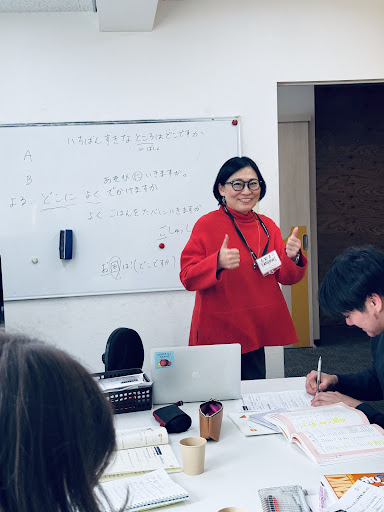
Lessons at Coto are fully conducted in Japanese, which was a mandatory requirement to me. Each lesson (daily, monday to friday) provides a well balanced mix of grammar and new vocabulary explanation, lectures, conversational engagement and pair works, with some room for free chatting.
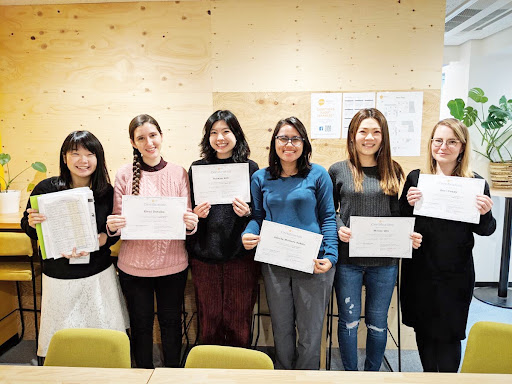
Very likely, many other schools follow similar instructional approaches, but since classes are Coto are pretty small sized (maximum 5-6 pupils each) lessons are strongly focused on engaging in participated interactions. I guess I also had a certain degree of luck since the other pupils in my classroom were more or less on my same level, not to mention they were all nice and well motivated people.
I was initially surprised by the daily turnover of the teachers in a single week, but this wasn’t really an issue. On the contrary, I think that it has been an opportunity to benefit of different teaching styles, while maintaining a coherent progression of the course. All teachers I met were professional and very dedicated and supportive, and the whole staff at Coto is very kind and helpful.
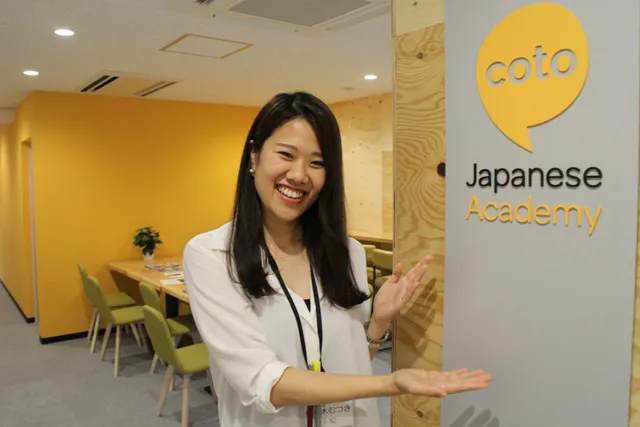
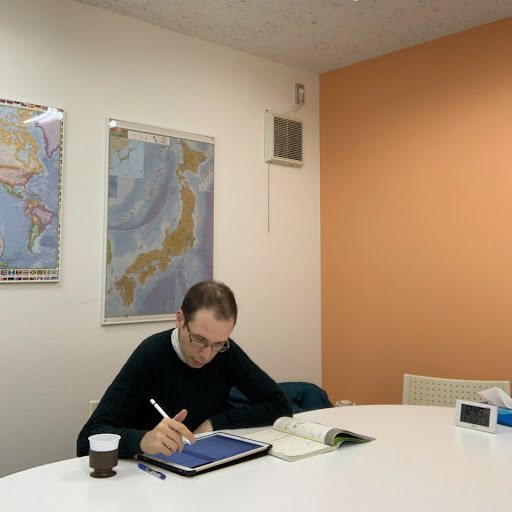
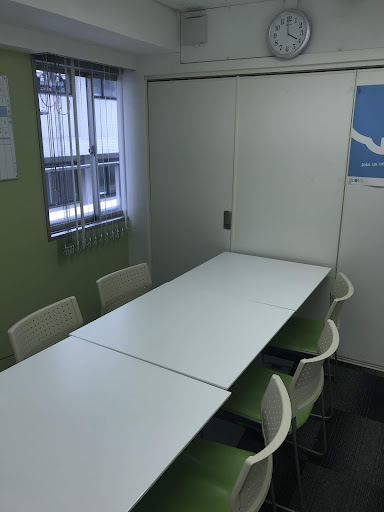
In regard to the environment, the school spaces are pretty small, yet pleasant and cozy. I never had the feeling that spaces were “too” small. I read another comment here complaining about the noise coming from other classes, but in my experience, while it was pretty natural to hear voices from outside the room, it has never been a problem really, nor it never happened that I could not concentrate because of the noise.
I am planning to go back to Tokyo for another 1-month stay sometime in 2015, and for sure I will attend a new course at...
Read moreI have attended a three-weeks intensive course at the Coto Language Academy, Tokyo.
It was not the first time I came to Japan to take intensive Japanese classes but as I used to go to Osaka for this purpose before, this time I wanted to experiment Tokyo.
So I was looking for a Japanese language school that enables to take intensive classes on a very short period, which is very convenient to people who takes holiday to travel and learn the language.
Most Japanese language schools do not offer this flexibility and you need to enrol for at least three months and to be able to start either on April or on October.
On the contrary, I was able to enrol at the Coto Language Academy for an intensive three-weeks class, that start once every month. I don't know, whether there are other schools in Tokyo that offer such flexibility but the Coto Language Academy was the only one I could find while searching Google.
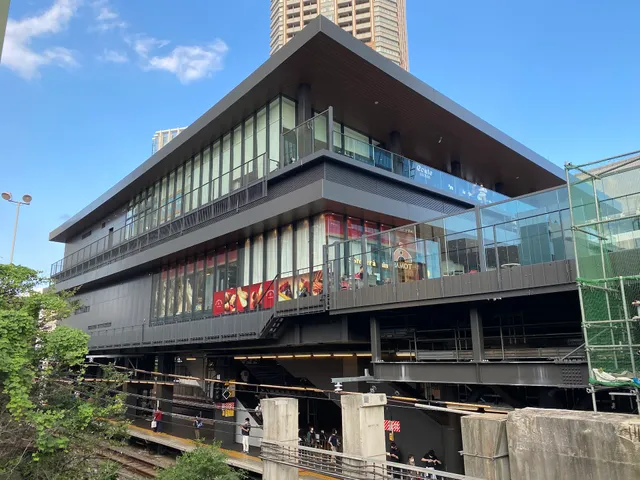
ABOUT THE SCHOOL The school is pretty well situated : it is located in Iidabashi, near every convenience (train and subway station, post office, numerous restaurants and supermarkets).
The building is easily accessible to disabled people. The school also has a powerful wifi connection.
ABOUT THE COURSES I choosed the intermediate intensive Japanese class. Each class has 2 to 8 pupils, which is a great plus to learn Japanese in an efficient way (in most Japanese language schools, you will experience an average size of 20 pupils per class).
On top of regular and intensive courses, you also have the possibility to train for the JLPT, to improve your conversational skills and also to learn Business Japanese, which is very important for people who aim to work in Japan. I visited those and it was very useful for my jobsearch there.
ABOUT THE CULTURAL ACTIVITIES Regularly, the school organizes cultural activities. I cannot talk about them, I have been to none of them since I was to busy with trying to find a job in Japan ...
ABOUT THE STAFF ... and for this purpose, the teaching staff has been very helpful to help me writing my Japanese resume.
Near the reception desk, there is a big room where you can stay all day long to work your resume. You can also borrow books at the reception ; there are plenty of various books about professional and technical terms : IT, law, business, ...
One teacher especially is a former IT engineer, so that he can help IT people write their resumes.
Another important thing is to be able to visit jobfairs and to take interviews in Japanese : even if my Japanese was not perfect, the progress I made during the three-weeks intensive course and the Business Japanese class were very helpful for this purpose.
CONCLUSION I strongly recommand this school for people looking to improve their Japanese rapidly and who cannot afford to take more than two or three weeks because of their job in home country.
Also for pupil living in Japan and taking either regular classes or evening classes, this school is...
Read moreI think Coto is one of the best places in Tokyo to learn Japanese:
Pros: Professional and friendly teachers - ask whichever question you may have and they will do their best to give an answer as detailed as possible (verbally/by drawing/by showing pictures on the Internet etc). Relaxed atmosphere during the classes, which makes the learning process very enjoyable. Good value for the money - cheaper than most language schools that I have seen so far. Frequently organized fun language/culture-related events/workshops. I have attended several of them and absolutely loved the experience! Professional staff - great communication, fast responses, very attentive to each person's needs. Flexible course plan - many options to choose from, tailored for many schedules.
Cons: Some teachers cannot easily communicate in English, so they resort to explaining things entirely in (simple) Japanese. While this is a good thing for training the listening skills, it may also be a bit difficult to understand unless one already has a basic understanding of Japanese. It may sometimes also be a bit too time-consuming for explanations that would otherwise take a few seconds to understand, in English. I do appreciate, however, that all the teachers are putting serious efforts into giving explanations as detailed and as clear as possible. The lessons that I have had seemed to be designed to be independent from each other by follow the "sentence pattern" style (which seems to be a standard teaching practice in Japan). While this is a good thing because one can easily catch up if one cannot make it to the class, in practice there is often little knowledge reinforcement between the classes. So one may learn a sentence pattern today and return to it after several weeks, by which time it will already have been forgotten. In time, this often leads to the feeling that the things one learns during the class don't really "stick". I think more knowledge reinforcement is needed - periodic evaluation may be one solution for this purpose. There is little to no hiragana/katakana/kanji study/practice during the course, so one needs to find resources on their own. While there are tons of books out there covering the essentials, it would be nice to give a bit of guidance into different learning styles. For example, when I started to learn kanji, I was memorizing individual character along with their pronunciation, only to realize that it was more effective (for me) to learn to learn how to write entire words. Then, by reading some materials on the Internet, I learned that kanji are composed of building blocks called "radicals", which can make memorizing easier. I wish I had learned these "tips and tricks" during the course instead of digging by my own.
Sorry for my long review - I only tried to provide a very detailed explanation. I think the pros of Coto classes outweigh the cons and, as I said in the beginning, I think it is one of the best places in Tokyo to...
Read more