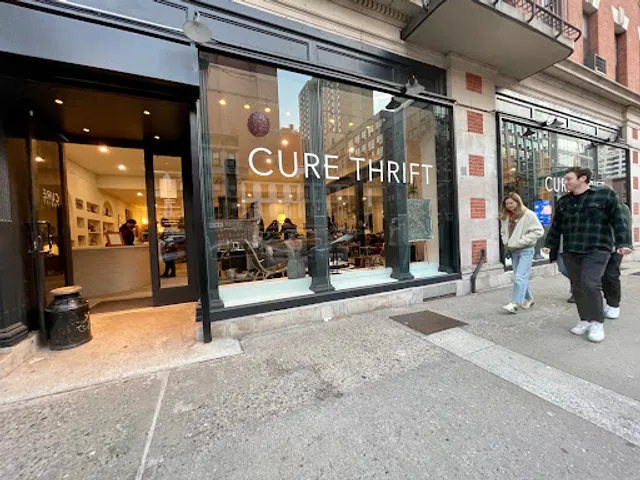
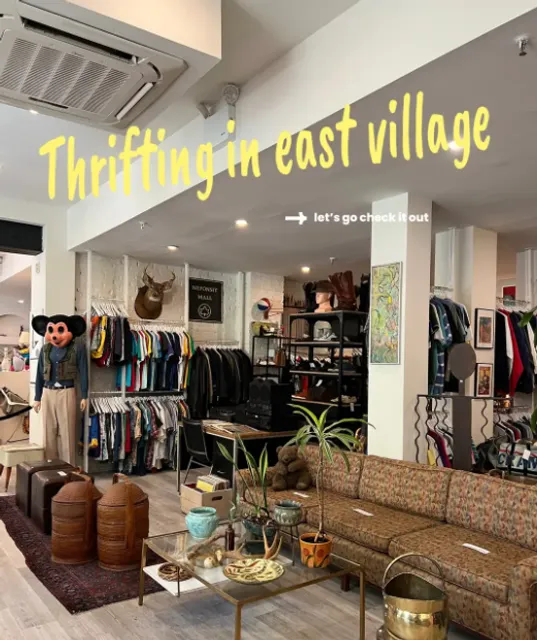
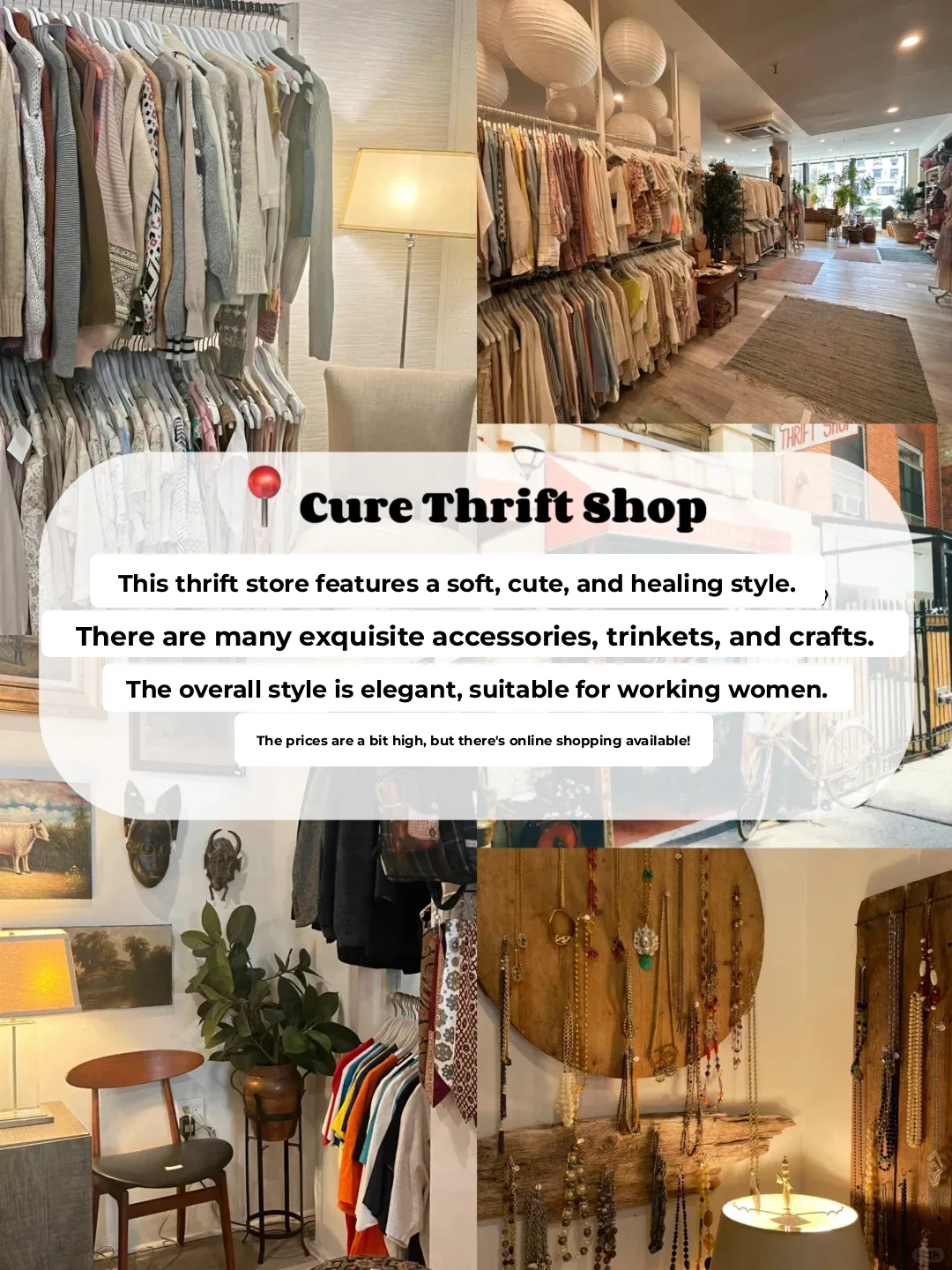
I've been visiting Cure Thrift since it opened. It is an emporium of generally well-organized merchandise, its decor a monument to studied quirkiness and calculated whimsy. The employees are welcoming, if a bit watchful at times. Their hovercrafting lacks finesse (crying “Can somebody go downstairs?” as I descend to the lower level, unconvincingly pretending to straighten a clothing rack near where I'm browsing, etc.), but I don’t take their inelegant loss prevention efforts personally. From its inception, Cure was never cheap: it's a curated higher-end Manhattan thrift store, not Goodwill. Nevertheless, I usually left satisfied, a purchase in hand.
That was until sometime in the past few years, when prices embarked on a baffling journey from sorta highish to stratospheric. Many prices are now gasp-inducing and hilariously ambitious. I once emitted an audible guffaw upon glimpsing the dizzying cost of one bit of DIY mediocrity. (I am a NYC vintage dealer and collector with decades of experience in several categories. I'm not of the “If it’s a thrift store, everything must be under $10!” school. My concern is value, not dollars. I have paid thousands for pieces when such prices are reasonable.)
But much of Cure’s pricing isn't reasonable. In fact, it can border on unconscionable. Cure's sometimes dismissive and patronizing responses to reviewers explain that its merchandise has been “researched” “with consideration to its unique value” to “raise as much as possible” for type 1 diabetes (a commendable endeavor, of course). The shop prices “each item thoughtfully” to “honor each piece”. In addition, Cure implies, many items gain value by dint of being “one-of-a-kind”. But that does not, in and of itself, add monetary value to something—the necklace I made from masking tape and toilet paper is one-of-a-kind, too. And it’s worthless. Unless Cure’s much-ballyhooed research centers around what something might be worth in, say, 40 years, I can only conclude that Cure’s dedicated investigative team gravely misinterprets the fruits of their inquiries with unfailing consistency (and often risible results).
I have discovered used designer goods embarrassingly priced higher than they still cost new. I recently spotted a piece of homemade jewelry for $150, a pedestrian thing that I could stitch together with $9 in materials from the Garment District. Clothes that are worn or stained frequently cost as much as pristine examples offered by upscale etailers like 1stdibs. My description to some fellow dealers of how Cure is now seeking a grievous $1000 for a rather insipid (but designer-branded!) blazer elicited gales of laughter (among some dealers I know, Cure is a laughingstock due it its delusional pricing).
If you're on a budget and looking for a garden variety vase or a couple of Gap button-downs, wares of that ilk can be found here for under $20 (this down-market merchandise is perhaps Cure’s justification for calling itself a “thrift shop”). Alas, nearly everything “good” or “interesting” (and much that isn’t) carries an absurd price tag. I appreciate maximizing income for a worthy charity. But Cure is in fact losing money—doing a disservice to its very cause—by pricing itself out of the market. Many of its goods are hopelessly overvalued, condemned to remain unsold on the shelves for years, targets of mockery and derision.
Finally, if you are lured to the store by the huge shabby plank of plywood emblazoned with that bargain-hunter’s siren song, “HALF OFF”, don’t start unbuttoning your coin purse just yet. As can be surmised from the sign’s weatherbeaten appearance, the sale has run uninterrupted for years (could it be that items are priced with the inevitable 50% discount in mind?). The sale applies to “clothing, shoes, and clothing accessories” (as employees dutifully inform each visitor), but, in a flagrant display of false advertising, most of the better pieces carry an infuriating “NO DISCOUNT” disclaimer (the previously mentioned $1000 blazer, source of such irrepressible mirth, is one such...
Read moreAs someone who considers myself to be a purveyor of unique and handmade vintage goods and clothing and loves a fun brick-and-mortar shopping experience whenever I am traveling to major cities, I have absolutely had the time of my life both times I've stopped in to shop here. No, this is not a Goodwill. It's curated with high-end and some hard-to-find vintage goods, some of which sometimes come out of celebrity's closets, and is priced accordingly. The first time I came here I bought an insane handmade 70s floor length crochet dress with matching purse, along with a 60s afghan velvet embroidered vest. Last night, I had the chance to visit again and was elated to figure out after I had been shopping for a few minutes that they were doing another 50% off clothing sale. I ended up with an LL Bean vintage chore coat, a 1970s fringe suede jacket very similar to one I've been coveting from Khaite, AMAZING handmade patchwork overalls, a cool corduroy jacket, and a vintage sorority sweatshirt from the 50s. Yes, staff are stationed throughout the store and they make you lock your bag in a locker before trying on, but it's easy to understand that in a huge retail space in NYC, overhead is high, and theft probably makes that much worse. It is also worth noting and stressing that Cure Thrift is a nonprofit that donates proceeds to benefit Type 1 Diabetes research. As a Type 1 diabetic for 20 years, it definitely makes the purchases that much easier to justify! I'd highly recommend making a stop in here, even if just to gather inspiration if you find it's not in your budget (though I'm inclined to think they've got something for everyone)....
Read moreVery well designed store, however, it's extremely overpriced compared to other charity shops I've been to. Prices 2x what I've seen at other NYC stores that have proceeds go to causes. Could be rent related.
As I'd say with stores like these, if you want to donate more by paying more go ahead, it feels good to contribute, but I've always been a deal hunter and there certainly a few diamonds in the rough with an unlabeled tie I knew was made by a well known company or a nice scarf. Everything was 50% off today so it made more price sense. Alot of things were still far out of what I'd be willing to pay even after any discount. It makes me sad as they could move alot of really nice stuff if they didn't charge Brand New prices on some things.
One bad example of note were a pair of Brooks Brothers Peal & Co shoes. They were from the 70s. I know my Oeals very well as I own vintage Peals from the 70s (I am 25 and a fashion enthusiast). They were completely and utterly destroyed. The inner heel lining was peeling and the leather was cracked beyond repair. I struggled to figure out how they could price it at $300. I sold a pair of modern Peal & Cos for $300 brand new that I decided I didn't need myself. Even then, those took 3 months to sell. To fully repair a shoe in the condition it was in is impossible. Even to repair a shoe with good upppers but damaged insole, heel, sole, welt etc would be $300+
I'd recommend being an educated shopper on pricing. I'd say 80% of the store wasn't worth it but the other 20% was if you caught a sale. They had a wonderdul pair of Victorian era shoes that would be unusable but great...
Read more