Bees are among the most fascinating and essential creatures in the natural world. Known primarily for their role in pollination, they are vital to the health of ecosystems and agriculture alike. By transferring pollen from flower to flower, bees enable plants to reproduce, ensuring the growth of fruits, vegetables, and seeds. This process not only sustains countless plant species but also supports the animals and humans who rely on those plants for food. Without bees, much of the global food supply would be at risk, making their survival crucial to our own.
The social structure of bees, especially honeybees, is highly organized and efficient. A hive typically contains one queen, thousands of worker bees, and a smaller number of drones. Each member of the colony has a specific role: the queen lays eggs, workers gather food and maintain the hive, and drones exist primarily to mate with the queen. Communication within the hive is surprisingly advanced—bees use dances and pheromones to share information about food sources and coordinate their activities. This cooperative behavior has made bees a symbol of hard work and community across many cultures.
Beyond pollination, bees are also prized for the resources they produce. Honey, their most famous product, has been valued for thousands of years not only as food but also for its medicinal properties. Beeswax, another byproduct, is used in candles, cosmetics, and even as a component in some industrial applications. Propolis, a resinous substance bees collect from trees, has antibacterial qualities and is used by the bees to seal and protect their hive. These contributions further highlight the diverse ways bees benefit both nature and human society.
Unfortunately, bee populations worldwide are under serious threat. Habitat loss, pesticides, diseases, and climate change have led to alarming declines in their numbers. The phenomenon known as Colony Collapse Disorder, where large numbers of worker bees abandon their hives, has drawn global concern. Conservation efforts, including planting pollinator-friendly gardens, reducing pesticide use, and supporting sustainable farming practices, are essential to reversing these trends. Protecting bees is not just about saving a single species—it is about safeguarding entire ecosystems.
Culturally, bees have long captured human imagination. From ancient Egyptian hieroglyphs to modern literature, they have been portrayed as symbols of diligence, unity, and even immortality. Their hexagonal honeycomb design has inspired mathematicians and engineers, admired for its efficiency and strength. Whether admired as tiny architects, hardworking gatherers, or crucial environmental stewards, bees embody the deep interconnectedness of life on Earth. Their story is a reminder of how even the smallest creatures can have the...
Read moreI recently had the pleasure of experiencing exceptional customer service while dealing with an issue regarding the delivery of my package. The level of support I received surpassed my expectations, and I am delighted to share my positive review.
From the moment I reached out to the customer service team regarding the delay in my package delivery, I was greeted with utmost professionalism and attentiveness. The representative who assisted me displayed a deep understanding of the situation and promptly addressed my concerns. Their expertise and knowledge instilled a sense of confidence that my issue would be resolved efficiently.
What truly set this customer service experience apart was the remarkable dedication displayed throughout the entire process. The representative exhibited exceptional attention to detail, actively listening to my concerns and ensuring that every aspect of the issue was thoroughly addressed. They provided regular updates, keeping me informed about the progress and taking proactive steps to expedite the resolution.
This customer service experience has reaffirmed my faith in the company's commitment to excellence. The dedication, professionalism, and exceptional support I received surpassed my expectations. It is evident that the company places a high value on customer satisfaction, and the efforts of their customer service team are a testament to that.
Thank you to the entire customer service team for their remarkable efforts in ensuring my satisfaction. I am truly appreciative of the exceptional customer service experience I received. Keep up the...
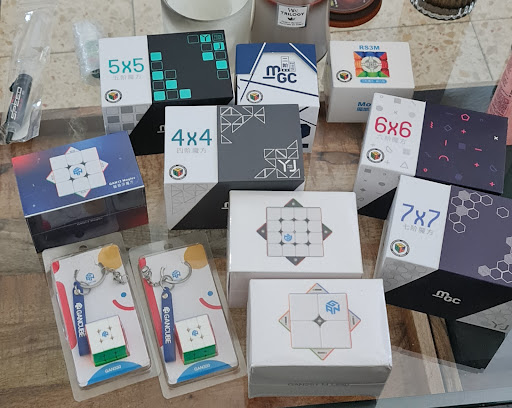
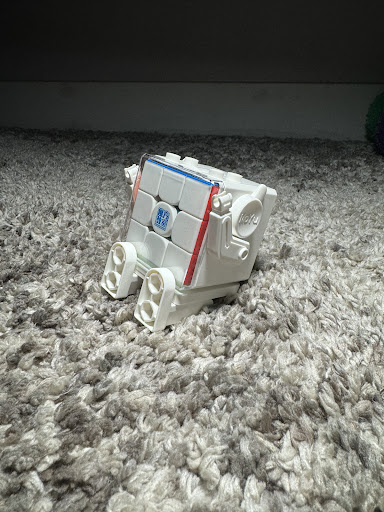
Read moreHappy overall. No troubles with the shipping, everything arrived in good order. Really happy with the GAN 251M.
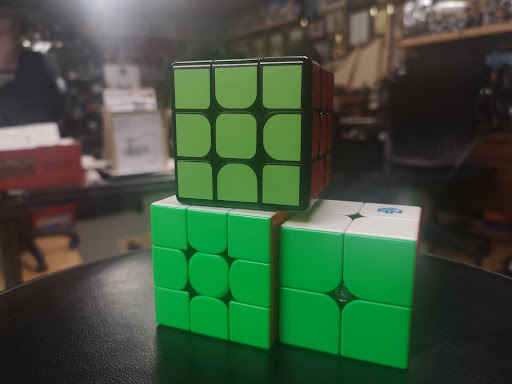
But I'm not terribly happy with the "Rubik's Connected replacement stickers", for 3 main reasons. This is not intended to be a rant, just want to capture the points as clearly as I can :) 1 - I don't like the clear applicator tape - it's frosted, which made it very reflective, and difficult to see the placement. Also I seemed to have the opposite problem from what was mentioned in the helpful sticker-application video: my stickers would not leave the backing and adhere to the clear tape - even rolling it back didn't work; I had to almost ply each sticker off the backing and make sure it didn't shift on the clear tape. 2 - I find the sticker placement extremely biased towards the center, where there is around 1/2mm to all the touching-edges, and more like 2-3mm to the outside edges. Made placement extremely challenging and could afford a little more spread in the placement. 3 - I went with the "Bright" color scheme to try to match my GAN 11 M pro and GAN 251M - and comparing the stickers to those stickerless, it's pretty close....except for the GREEN - the "lime tree green" is much more dull and sickly looking compared to what I saw in the Sticker Picker and on my GANs (which I believe are the "bright" scheme?). (eg. Blue is really close, as are red/yellow/orange - green is different, and difficult to capture in the...
Read more