âA Disappointing Experience at a Little Hong Kong Restaurantâ I visited this restaurant once, and it will certainly be my last. I cannot recommend it to anyone. The space itself is tiny, better suited for a quick takeaway than a proper sit-down meal, and parking is a hassle. The kitchen looks cramped, the ambience is unremarkableâyet these physical shortcomings are tolerable. The real problem lies in the service, which was not just inattentive, but actively unwelcoming. The servers, Hongkongness looking staff, were stern-faced and cold. When I politely asked one waitress in Mandarin whether she spoke Mandarin, her reaction was striking: she frowned and immediately switched to English, saying she did not understand me. Yet the words I usedââNÇ huĂŹ shuĆ zhĆngwĂ©n ma?ââare basic, six simple syllables, many of which sound similar to Cantonese. Her refusal to even acknowledge them suggested not a genuine language barrier but a deliberate dismissal. It felt less like inability than unwillingnessâa disdain toward Mandarin speakers, expressed through body language and tone. This experience is not unique. I have encountered the same behaviour with Cathay Pacific cabin crew, where some attendants flatly refuse to speak Mandarin even for simple requests like âapple juiceâ or âhello.â Such behaviour has drawn widespread backlash on Chinese social media, where many see it as a symptom of Hong Kongâs lingering colonial mentality: deferential to English speakers, yet condescending to Mandarin speakers. This reflects something deeper than individual rudeness. Hong Kong still carries the colonial legacy of English-style class stratification, where social status is tied to language and wealth, unfortunately, one vice that the more egalitarian Mainland Chinese donât have, the English have and Honkongess learnt. Hong Kong inherited from Britain a culture of hierarchy and snobbery, rather than humility or community spirit. Geography and history matter. Hong Kong is a small island, once managed by another small island. Insularity, provincialist or bigot and exclusivity became ingrained habits. The British did not endow Hong Kong with true democracy or social equality; they left behind a sharpened sense of class, hierarchy, inequality and colonial mentality in contrast to what much of mainland China has retained â a sense of community, humility egalitarian and solidarity. I wonât have space to expand on the so-called democracy as a I studied the subject for decades as I donât have big space to comment on such a heavy topic. The irony is that Hong Kongâs prosperity has never been its own achievement in isolation, but is inseparable from the strength of the mainland. Without the immense political and economic backing of Chinaâthrough trade, investment, manufacturing ties, entrepreneurial dynamism, and now capital flowsâHong Kong could never have become what it is today. Its role as a so-called âsuper-connectorâ exists only because of its integration with the mainlandâs vast market and resources. By contrast, many former British colonies remain mired in poverty, left with broken institutions, arbitrary borders, entrenched inequality, and economies designed for exploitation and extraction. From India to Africa, Burma to Jamaica, Egypt to South Africa, the colonial legacy has been poverty and stratification, not prosperity. Hong Kong is the exception not because Britain bestowed something unique, but because of its proximity and connection to the mainlandâs enormous market and resources. Without China, Hong Kong would have been just another struggling colony. My suggestion to this restaurant, then, is simple: train your staff not only in basic customer service, but also in humility and inclusiveness. Treat customers as guests, not as nuisances. To refuse service in Mandarin within a Hong Kong Chinese restaurant is not just poor hospitalityâit is arrogance. Whether one speaks English, Mandarin, Cantonese, English, French, even the local Aberdonian dialect, respect must remain the foundation of...
   Read moreNestled discreetly in Aberdeenâs evolving culinary landscape, A Taste of Hong Kong delivers a remarkably authentic Cantonese dining experience that bridges tradition and indulgence with unassuming charm.
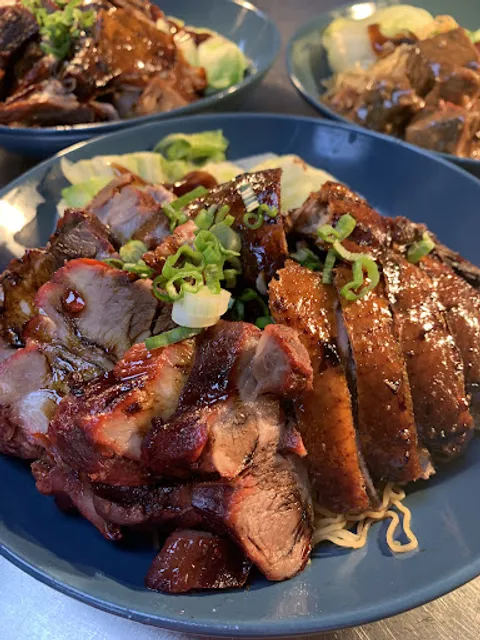
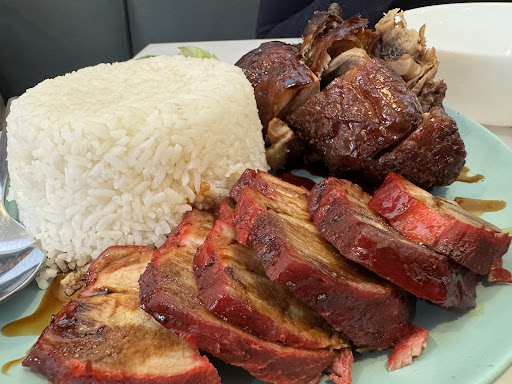
The meal opens with their char siu rice plate, a composition that speaks to balance and precision. The char siu is luxuriously lacquered, with a ruby red hue and a deeply caramelized glaze that hints at honey and five-spice. The pork itself is moist, marbled, and tender, offering just the right chew without losing its succulence. Paired with perfectly steamed jasmine rice molded into a compact form, this dish evokes the heart of a Hong Kong lunch hourâhonest, flavorful, and comforting.
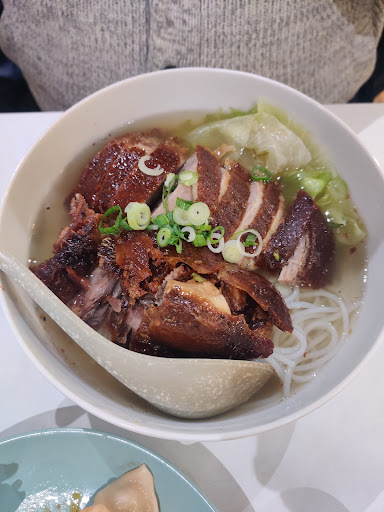
Next, the roast duck portion of the mixed rice plate impresses with its crisped, mahogany skin and deeply savory undertones. The flesh pulls away effortlessly from the bone, revealing rich layers of fat and lean that melt in the mouth. A subtle soy-based jus pools beneath, enriching each bite with umami depth.
A standout dish arrives in the form of stir-fried prawn ho fun, where thick, chewy noodles are tangled among plump prawns, aromatic spring onions, and fresh bean sprouts. A smoky wok hei envelopes the dish, as the soy-based sauce clings to each strand with a light sheen. The prawnsâsnappy and sweetâserve as a vibrant counterpoint to the noodlesâ bold, savory notes. A whisper of heat from sliced red chili punctuates the umami, without overpowering.
Finally, a separate plate of char siu slices provides a focused study in craft. Without distraction, the porkâs intricate flavors are allowed to shine, revealing hints of Shaoxing wine, hoisin, and clove. Each piece is tender, glistening with glaze, and executed with precision that wouldnât be out of place in the kitchens of Kowloon.
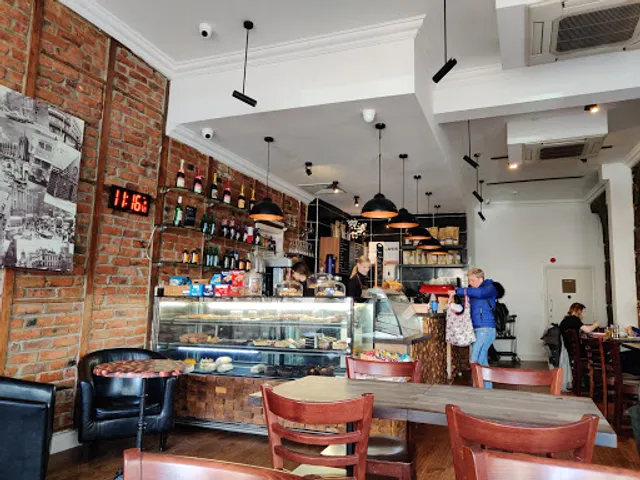
Service is brisk yet warm, mirroring the efficiency of a traditional Hong Kong cha chaan teng. The ambiance is casual, allowing the food to take center stage, which it...
   Read moreI recently had the pleasure of dining at a Hong Kong cuisine place that was hidden away in the midst of a busy city center.
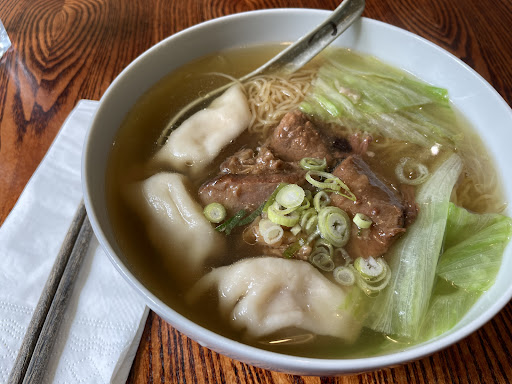
One of my favorite dishes at this restaurant is their noodle soup. It's incredibly flavorful and always hits the spot. The beef brisket is soft and tender, with a delicious taste that complements the soup perfectly. I usually choose dumplings or wantons to go with my soup, and they never fail to disappoint. They're generously filled and marinated really well, making them a perfect complement to the soup.
Recently, I decided to try something new and ordered the king prawn belacan fried noodles. Belacan is a Malaysian-style shrimp paste that has a strong, pungent aroma and a savory, umami flavor. The noodles were perfectly cooked and had just the right amount of chewiness. The king prawns were large and succulent, and the belacan added a unique and delicious flavor that really elevated the dish.
Overall, this Hong Kong cuisine place is a hidden gem that I highly recommend to anyone looking for some amazing Asian cuisine. The noodle soup and dumplings are a must-try, and the king prawn belacan fried noodles are a great option for those looking to try something new...
   Read more