Visit Bangabandhu Museum in the month of mourning
Mohammad Shipon
Published at 03:38 am May 11th, 2019

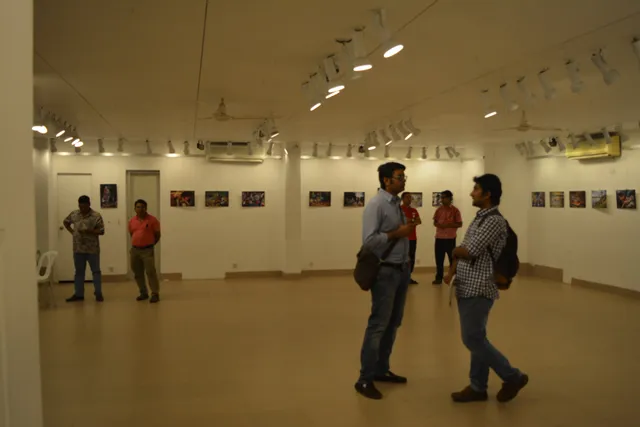
Visitors at Bangabandhu Memorial Museum in Dhanmondi, Dhaka Syed Zakir Hossain/Dhaka Tribune
Even decades later, the brutality of the violence has not gone away. The house has made its mark on the history of Bangladesh
The house stands quietly and silently—a reminder of the bloody history of August 15, 1975. The building remains shrouded in the memories of that gruesome and shocking night.
Even decades later, the brutality of the violence has not gone away. The house has made its mark on the history of Bangladesh.
Bangabandhu Sheikh Mujibur Rahman spent most of his life in this home, and from here he led the Anti-Ayub Movement of 1962, the Six-Point Movement of 1966, the general election of 1970, and the Non-Cooperation Movement leading up to the country’s struggle for independence in 1971.
The house was the centre of all of Bangabandhu’s activities, including planning activities, exchanging views with leaders and activists, and listening the grievances of the people.
Bangabandhu had prepared the framework of the historic March 7 speech at the conference table of this house. In the upstream days of 1971, local and foreign journalists had rushed to this house.
After the Liberation War, when Bangabandhu served as the president of an independent Bangladesh, he used his home as a base of operations to make decisions on running the government.
How a home became a museum
Prime Minister Sheikh Hasina, who is the daughter of Bangabandhu, returned to this home in 1981, after she was elected the President of Awami League.
Within a year of her return, Sheikh Hasina received an action notice issued against the house from the House Building Finance Cooperation. She paid the due Tk12,000 and saved her home from being auctioned off.
Later, she handed over her ancestral house to the Bangabandhu Memorial Trust. On August 14, 1994, the trust turned the house into a museum. The home became the Father of the Nation Bangabandhu Sheikh Mujibur Rahman Memorial Museum, the pride of the Bangladeshi people.
What’s in the museum?
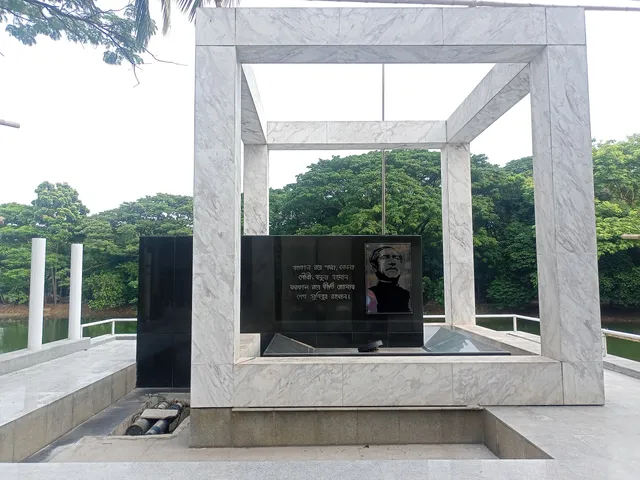
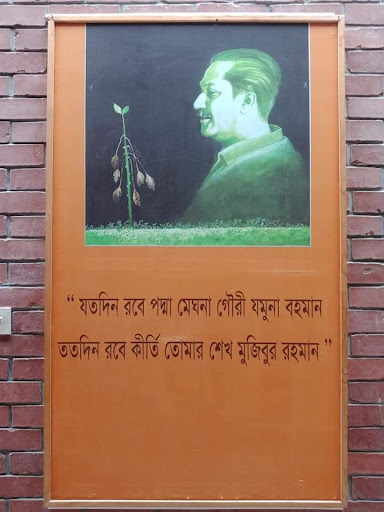
At the entrance, a poem about the life and impact of Bangabandhu greets visitors, along with his portrait.
The poem- “Jotokal robe Padma, Meghna, Jamuna, Gauri bohoman, totokal robe kirti tomar Sheikh Mujibur Rahman,” which roughly translates to, “As long as the rivers Padma, Meghna, Jamuna and Gauri continue to flow, the legend of Sheikh Mujibur Rahman will remain alive in the hearts of the people.”
The first room of the museum features many photos of Bangabandhu—alongside his conversations and interactions with heads of state and government representatives from across the globe.
This room was previously used as a drawing room by Bangabandhu, where he held meetings with different political personalities visiting from both home and abroad.
The adjacent room was the reading room of Sheikh Mujibur Rahman. During the liberation war of 1971, he drafted and released the declaration of Independence from this room.
The remnants of the black night of August 15 become painfully apparent while ascending the stairs. Blood stains on the windows, and a painting of bullet-riddled Bangabandhu, can be found here.
The bedrooms of the father of the nation, and his daughter Rehana showcase images and memorabilia related to Bangabandhu and his family members. Bangabandhu’s son Sheikh Russel’s bloodstained t-shirt, and his sports equipment, are also displayed here.
These rooms also house objects belonging to Bangabandhu, such as his glasses, diary, and tobacco pipe.
From the second to the fourth floor of the six-storey building, there are photographs depicting different periods of Bangabandhu’s life. A library and research center are housed on the fifth floor.
The museum has a book of mourning, where visitors may write about their feelings. There is also a visitor’s guide to provide people...
Read moreIt was the residents of The great leader Bangabandhu Sheikh Mujibur Rahman. Who lead the bangalis to the way of freedom. In 1975,he was killed by some dishonest Army Officer here. The house has been transformed into the Bangabandhu Memorial Museum.Bangabandhu Memorial Trust was handed the house to turn into a museum on 6 September 1994. The museum was inaugurated on 14 August 1994 . The trust operates the museum. On 15 August 1975, some disgruntled Army officers carried out the Assassination of Sheikh Mujibur Rahman. His wife Sheikh Fazilatunnesa Mujib his sons Sheikh Kamal, Sheikh Jamal, Sheikh Russel were killed in the attack on their residence. On 12 June 1981, the house was handed over to the surviving family members of Sheikh Mujibur Rahman. Sheikh Hasina found Sheikh Mujib's diaries in the building after the handover and these were later published om the form of memoirs. After the brutal killing of Father of the Nation Bangabandhu Sheikh Mujibur Rahman along with his family members on August 15, 1975, the house was under military authority till 10th June 1981. In 1956, when Bangabandhu Sheikh Mujibur Rahman was the Minister, at the request of Private Secretary Nuruzzaman Begum Mujib, he submitted an application to the Public Works Department for land in Dhanmondi area. There were no people to take land in those days. In 1956, one bigha of land was allotted in Dhanmondi for six thousand rupees. After Bangabandhu Sheikh Mujibur Rahman was released from jail in 1970, Bangabandhu and Begum Mujib decided to go home in consultation and started doing housework in the same year. On 1 October 1971, Bangabandhu Sheikh Mujibur Rahman moved into this house under construction with his family. At that time, the one-storey house had only two bedrooms, one of which was occupied by the Bangabandhu couple. The Bangabandhu couple lived in this room on the ground floor until the construction of the second floor was completed in 1976. When he started living on the second floor, he used this room as a library. Sheikh Hasina and Sheikh Rehana lived in the adjoining room on the north side. Sheikh Kamal and Sheikh Jamal lived on one side of this room. Upon entering the house there was a small room, which was used as a...
Read moreThe Father of the Nation Bangabandhu Sheikh Mujibur Rahman Memorial Museum, located at House# 10, Road# 32 (Old), 11 (New) in Dhaka, Bangladesh, is a remarkable tribute to one of the country's most influential leaders. The museum offers a captivating journey through the life and legacy of Bangabandhu Sheikh Mujibur Rahman, the visionary leader who played a pivotal role in the birth of Bangladesh.
Upon entering the museum, visitors are greeted with an impressive collection of artifacts, photographs, and personal belongings of Bangabandhu, which provide a deep insight into his life and struggles for the nation's independence. The exhibits are thoughtfully curated, and the museum layout enhances the overall experience, making it engaging for both history enthusiasts and casual visitors.
The museum not only commemorates the significant events of Bangladesh's independence movement but also sheds light on Bangabandhu's remarkable leadership, inspiring speeches, and unwavering commitment to his people. The exhibits beautifully capture the moments that shaped the nation's destiny, making the museum a must-visit for anyone interested in the history and culture of Bangladesh.
The ambiance of the museum is serene and respectful, allowing visitors to reflect on the sacrifices made by Bangabandhu and the countless others who fought for the country's freedom. The museum staff is knowledgeable and friendly, adding to the overall positive experience.
Although the location might be a bit challenging to find for first-time visitors, the effort is undoubtedly worth it. The museum stands as a testament to Bangabandhu's enduring legacy and serves as a beacon of inspiration for future generations.
In conclusion, the Father of the Nation Bangabandhu Sheikh Mujibur Rahman Memorial Museum is an essential cultural landmark in Dhaka, paying homage to an extraordinary leader who shaped the destiny of Bangladesh. It is a deeply moving and educational experience that leaves visitors with a profound appreciation for the nation's history and the visionary leader who played an integral role in...
Read more